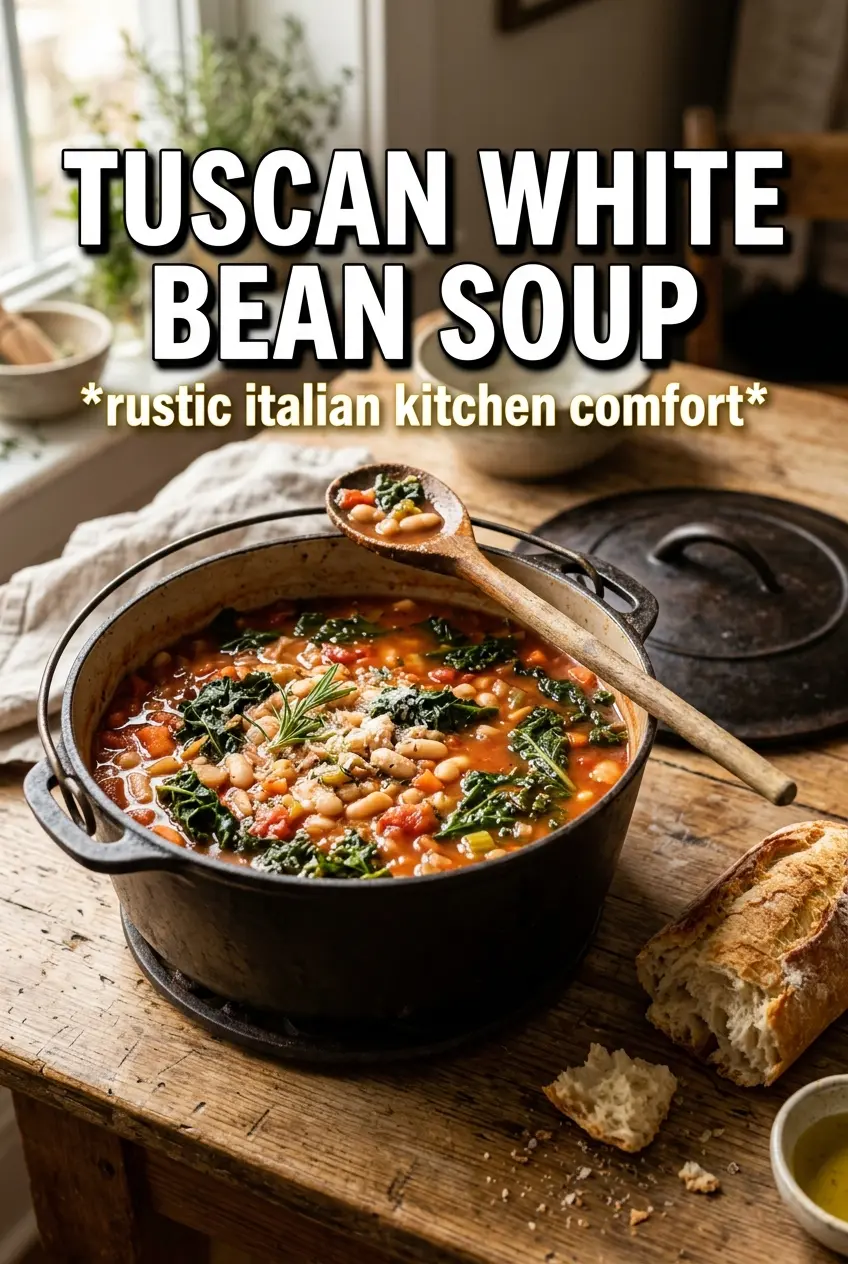
Cannellini beans, kale, and rosemary broth come together here in a bowl that eats like a full meal without feeling heavy. The beans get creamy, the tomatoes bring just enough brightness, and the pancetta gives the whole pot a salty backbone that keeps each spoonful interesting. It’s the kind of soup that tastes like it simmered all afternoon, even though it lands on the table in under an hour.
What makes this version work is the way the soup builds its body. Instead of adding cream, you mash a portion of the beans right in the pot, which thickens the broth without dulling the flavor. The parmesan rind does quiet, important work too; it rounds out the broth and gives it that savory depth you notice most when it’s missing. If you’re using bacon instead of pancetta, cook it until crisp but not brittle so it still holds its shape in the finished bowl.
Below, I’ve included the small details that keep the kale tender instead of stringy and the broth balanced instead of flat. Those are the pieces that turn a good bean soup into one you’ll want to make again next week.
The beans got perfectly creamy after I mashed a few in the pot, and the rosemary broth tasted even better the next day. I used bacon and added the kale at the end like you said, and it stayed tender without turning mushy.
Save this Tuscan White Bean Soup for a creamy, rosemary-scented one-pot dinner with kale and parmesan.
The Trick to Thickening Bean Soup Without Turning It Heavy
Bean soup gets muddy fast when the broth is overworked or thickened with flour too early. The better move is to let the beans simmer until they’re soft enough to break down on their own, then mash only part of them in the pot. That gives you a broth that clings to the spoon without losing the clean, savory taste of the vegetables and herbs.
The other mistake is adding the kale too soon. Kale needs enough time to turn tender, but not so long that it goes dull and stringy. Add it after the beans are cooked and the broth is already where you want it, then simmer just until the leaves soften and darken.
- Mashed cannellini beans — This is the main thickener, and it works better than cream or cornstarch because it keeps the soup rustic and naturally hearty.
- Parmesan rind — Optional, but it gives the broth a deeper, rounder finish. If you don’t have one, add a little extra parmesan at the table, not too much salt in the pot.
- Rosemary — Fresh rosemary gives the soup its Tuscan character. Dried rosemary works in a pinch, but use less and crush it between your fingers before adding it so it releases more aroma.
What Each Ingredient Is Doing in the Pot

- Cannellini beans — These are the body of the soup. They stay creamy without falling apart completely, which is why they’re better here than firmer beans like chickpeas.
- Pancetta or bacon — This gives you the fat that starts the soup and the salty bite that keeps the broth from tasting flat. Bacon is easier to find and works well; pancetta has a slightly cleaner pork flavor.
- Kale — Add it near the end so it stays green and tender. If you use curly kale, chop it a little finer since those ruffled edges take longer to soften.
- Diced tomatoes — They don’t make the soup tomato-heavy; they brighten the broth and keep the beans from tasting one-note.
- Broth — Use a broth you’d actually drink on its own. Since there aren’t a lot of ingredients, a weak broth will show immediately.
Building the Soup in the Right Order
Rendering the Pancetta
Start by cooking the pancetta until the fat has rendered and the pieces are crisp around the edges. You want a golden base in the bottom of the pot, not burnt bits; if the heat is too high, the meat tightens up before the fat has a chance to release. Pull the pancetta out and leave the fat behind, because that’s what seasons the onions and celery.
Softening the Aromatics
Add the onion, celery, and garlic to the hot fat and cook until the onion turns translucent and the edges look glossy, about 5 minutes. If the garlic starts to brown, the heat is too high and the pot needs a quick stir and a lower flame. This stage should smell sweet and savory, not sharp.
Simmering the Beans and Herbs
Pour in the tomatoes, broth, rosemary, parmesan rind, and Italian seasoning, then bring the pot to a boil before lowering it to a steady simmer. Add the beans and let them cook until they’re fully tender and some are starting to split at the seams. That’s the sign they’re ready to thicken the soup from the inside out.
Finishing with Kale and the Final Texture
Remove the rosemary and parmesan rind, then mash about a third of the beans against the side of the pot with a spoon or potato masher. Stir in the kale and simmer just until the leaves wilt and turn deep green, 5 to 8 minutes. Season at the end with salt and pepper, because the pancetta and parmesan can already bring a lot of salt to the bowl.
How to Adjust This Soup for Different Kitchens and Different Tastes
Make it vegetarian without losing depth
Skip the pancetta and use vegetable broth, then keep the parmesan rind if you eat dairy. The soup will be a little lighter, but the mashed beans and rosemary still give it plenty of character. A drizzle of good olive oil at the end matters more in the vegetarian version.
Make it dairy-free
Leave out the parmesan rind and finish each bowl with olive oil instead of cheese. You’ll lose a little of the savory roundness, so taste the broth before serving and add a pinch more salt only if it needs it. The soup still comes out rich because the beans do the heavy lifting.
Use bacon instead of pancetta
Bacon brings a smokier edge, which changes the soup a bit but still works well. Cook it just until crisp, then remove most of the pieces before sautéing the vegetables so the smokiness doesn’t overwhelm the broth. Add the bacon back at the end for texture.
Storage and Reheating
- Refrigerator: Store in an airtight container for up to 4 days. The soup thickens as it sits, so expect a sturdier texture after chilling.
- Freezer: It freezes well for up to 3 months. Cool it completely first, then freeze without the kale if you want the best texture; add fresh kale when reheating if possible.
- Reheating: Warm it slowly over medium-low heat with a splash of broth or water. A hard boil can make the kale dull and can leave the beans a little grainy, so heat it gently until steaming.
Answers to the Questions Worth Asking
Tuscan White Bean Soup
Ingredients
Equipment
Method
- Cook the pancetta in a large pot over medium heat until crispy, about 6 to 8 minutes, then remove and set aside as a topping.
- Sauté the onion, celery, and garlic in the rendered fat over medium heat for 5 minutes, stirring until softened and fragrant.
- Add the diced tomatoes, broth, rosemary sprigs, parmesan rind (if using), and Italian seasoning, then bring to a boil with active bubbling around the edges.
- Add the cannellini beans and simmer for 20 minutes until the beans are tender and the broth looks slightly thickened.
- Remove the rosemary sprigs and parmesan rind, then mash about a third of the beans in the pot until the soup turns creamier and more cohesive.
- Add the kale and simmer for 5 to 8 minutes until wilted and deep green.
- Season with salt and pepper to taste, then drizzle with olive oil and top with parmesan shavings and pancetta for serving.


