Silky garlic soup turns mellow and rich when the cloves are cooked slowly enough to lose their bite. What lands in the bowl is not sharp or heavy. It’s warm, golden, and almost custardy, with enough roasted garlic flavor to feel comforting without overwhelming the rest of the dish. The poached egg gives it body, the toasted bread soaks up the broth, and the whole bowl eats like a full meal.
The key is patience at the beginning. Garlic needs low heat in olive oil until it softens and turns pale gold; if it browns fast, the flavor goes bitter before the broth even goes in. A little smoked paprika and cayenne add depth, but they stay in the background. Blending most of the garlic smooth while leaving a few cloves whole gives the soup a better texture than pureeing it completely.
Below you’ll find the timing that keeps the garlic sweet, plus the easiest way to poach the eggs right in the soup so they stay tender. I’ve also included a few smart swaps if you want to change the broth or make the bowl vegetarian.
The garlic turned sweet and mellow instead of harsh, and the egg yolk made the broth taste almost creamy without adding any cream.
Save this garlic soup for the night you want a silky broth, sweet softened garlic, and a poached egg on toasted bread.
The Step Most Garlic Soups Rush Past
If the garlic goes in hot oil and is allowed to brown before it softens, the soup can turn harsh and flat no matter how good the broth is. The goal here is not color for its own sake. It’s sweetness. Slow-cooking the cloves over medium-low heat lets their sharp edges disappear and their texture turn soft enough to blend into the broth.
This is the part that decides whether the soup tastes rounded or burnt. The garlic should look golden and almost jammy, not spotted brown. If the pan seems dry before the cloves soften, lower the heat instead of adding more color. Too much heat at this stage is the fastest way to ruin the whole pot.
What Each Ingredient Is Actually Doing In This Bowl

- Garlic — Two whole heads sound like a lot, but the long, gentle cook turns them sweet instead of sharp. Peeled cloves are worth the effort here because they cook evenly and soften fully before the broth goes in.
- Broth — Chicken broth gives the soup a deeper, rounder finish, while vegetable broth keeps it lighter and fully vegetarian. Use a broth you’d drink on its own; weak broth makes the garlic taste thin.
- Olive oil — This carries the garlic as it softens and helps it turn silky before any liquid is added. A good everyday olive oil is fine, but very peppery oil can dominate the soup.
- Toast — Crusty bread gives the soup structure and keeps it from feeling like a thin puree. Day-old bread works especially well because it holds up under the hot broth instead of collapsing immediately.
- Eggs — Poaching them directly in the soup gives you a rich yolk that naturally thickens the bowl. If you prefer a cleaner presentation, soft-boil them separately and add them at serving time.
Building the Soup So the Garlic Stays Sweet
Softening the Garlic First
Warm the olive oil over medium-low heat and add the peeled garlic cloves. They should sizzle gently, not fry aggressively. Stir them often and watch for a pale golden color around the edges with a soft, tender center. If they start to brown in spots before they’ve gone soft, pull the pan lower on the heat; bitter garlic can’t be fixed later.
Waking Up the Spices
Stir in the smoked paprika and cayenne for just a minute. That brief contact with the oil blooms the spices and takes away any raw edge. Longer than that, and the paprika can scorch, which gives the broth a dusty, burnt taste. You want the fragrance to smell warm and slightly smoky before the liquid goes in.
Simmering Into a Broth
Add the broth and water, bring everything up to a boil, then drop it back to a steady simmer for about 15 minutes. This gives the garlic time to fully soften and lets the flavors settle into one another. A hard boil can break the soup’s gentle texture and make the garlic taste harsher than it should.
Blending for Body, Not a Purée
Use an immersion blender to smooth most of the garlic while leaving a few cloves whole. That mix of textures is what keeps the soup interesting in the bowl. If you blend it completely, it can turn pasty instead of silky. If you don’t blend enough, the soup stays thin and reads more like broth with garlic in it than an actual meal.
Finishing With the Eggs
Season with thyme, salt, and pepper, then poach the eggs right in the simmering soup for 3 to 4 minutes. Keep the soup at a bare simmer so the whites set without getting rubbery. The yolk should still be soft enough to spill into the broth when you cut into it. Spoon the soup over toasted bread and top with parsley while it’s hot.
How to Adapt the Bowl Without Losing What Makes It Work
Vegetarian Garlic Soup
Use vegetable broth instead of chicken broth. Choose one with enough body to stand up to the garlic; a very light broth can make the soup taste flat. The rest of the method stays the same, and the poached egg still adds richness without needing any dairy.
Gluten-Free Bowl
Skip the bread or use a sturdy gluten-free loaf toasted until crisp. Softer gluten-free breads can dissolve too quickly, so the best version is one with a firm crust and a little chew. The soup itself is naturally gluten-free as long as the broth is too.
Extra-Rich Finish
If you want a more luxurious bowl, blend in an extra drizzle of olive oil at the end or top each serving with a little more. I don’t recommend cream here; it mutes the garlic and makes the soup feel heavier than it needs to be. The egg already gives you a rich finish.
Storage and Reheating
- Refrigerator: Store the soup without the eggs for up to 4 days. The garlic flavor deepens a little as it sits, and the broth may thicken slightly.
- Freezer: The soup base freezes well for up to 2 months, but freeze it before adding the eggs and bread. Thaw overnight in the fridge for the best texture.
- Reheating: Reheat gently over low heat until steaming, not boiling. If you boil it hard, the garlic can turn sharp again and the soup can separate a bit, especially if you’ve blended it very smooth.
Answers to the Questions Worth Asking
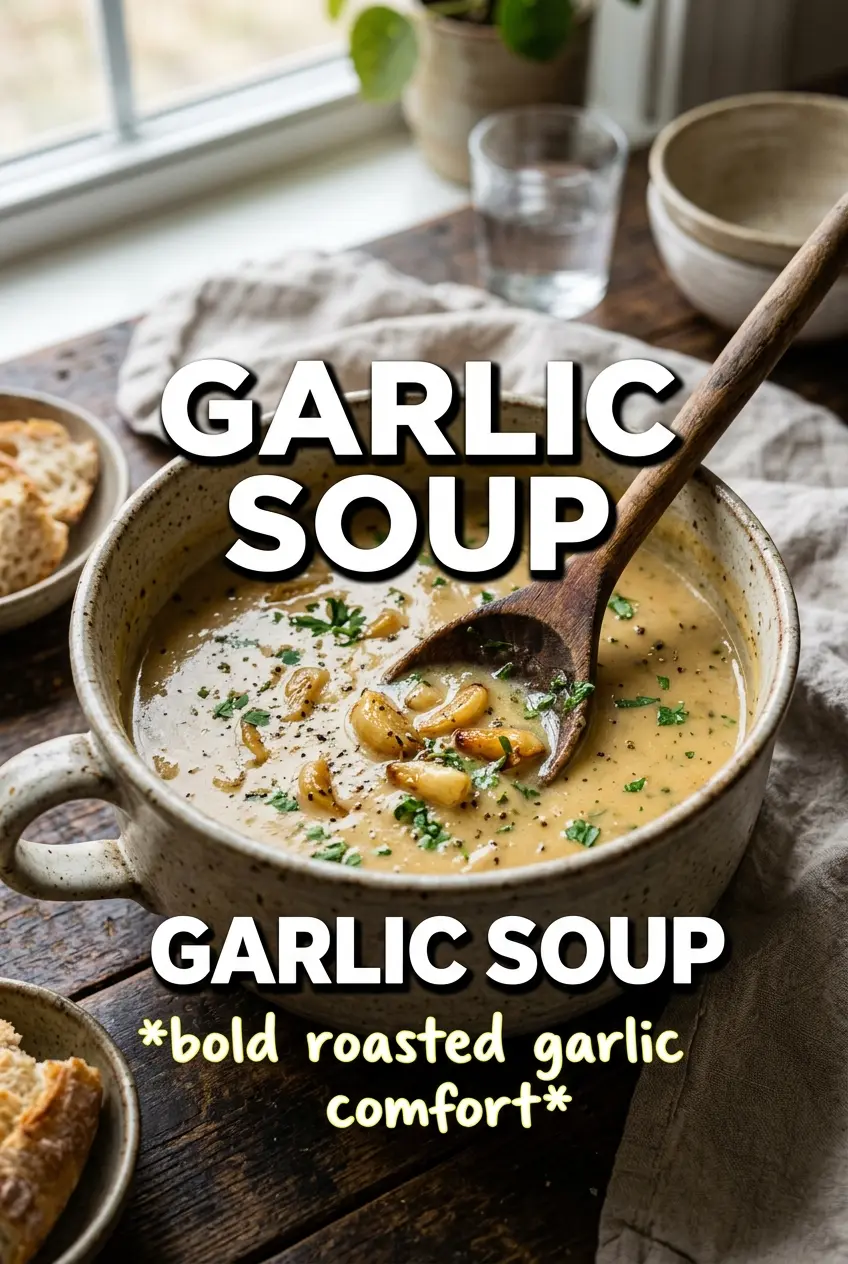
Garlic Soup
Ingredients
Equipment
Method
- Heat the olive oil in a large saucepan over medium-low heat, then add the garlic cloves and gently cook for 12–15 minutes until soft and golden but not brown, stirring as needed. The garlic should look tender and lightly golden, not caramel-dark.
- Add the smoked paprika and cayenne and cook for 1 minute, stirring, until fragrant. Keep the heat gentle so spices don’t burn.
- Add the broth and water, bring the mixture to a boil, then simmer for 15 minutes. You should see steady bubbles across the surface.
- Use an immersion blender to blend most of the garlic smooth, leaving a few cloves whole. Stop when the broth looks silky with some visible garlic pieces.
- Season the soup with salt, pepper, and thyme leaves, stirring until evenly distributed. Taste and adjust so the flavor is balanced.
- Gently crack the eggs into the simmering soup and poach for 3–4 minutes. The whites should be set while the yolks stay soft.
- Ladle the soup into bowls and serve with the toasted crusty bread, a poached egg centered in each bowl, and fresh parsley for garnish. Aim for a glossy, golden broth with visible garlic flecks.


