Tuscan chickpea soup lands in that sweet spot between cozy and light: a brothy bowl with enough body to feel satisfying, enough garlic and rosemary to taste like it simmered all afternoon, and just enough tomato to keep every spoonful bright. The chickpeas soften into the broth, the kale turns silky without going mushy, and the finish of olive oil and parmesan gives it that restaurant-style depth people always try to copy at home.
What makes this version work is the layering. Onion goes in first for sweetness, then garlic and red pepper flakes wake up the pot before the broth ever hits the pan. Mashing a portion of the chickpeas near the end gives the soup a thicker, more spoon-coating texture without relying on cream, flour, or anything fussy. The parmesan rind is optional, but if you have one, it quietly adds the kind of savory backbone you notice more by its absence than its presence.
Below, I’ve included the little details that matter most: how to keep the kale tender instead of dull, what to do if you want the soup thicker, and the swaps that still keep the broth tasting rich and balanced.
The chickpeas broke down just enough to make the broth feel hearty, and the lemon at the end made the rosemary and tomato pop. My husband asked if I wrote this one down because he wants it again next week.
Love the rosemary, chickpeas, and lemony finish in this Tuscan Chickpea Soup? Save it to Pinterest for a hearty bowl that eats like a meal.
The Step That Keeps Chickpea Soup Thick Instead of Thin
The biggest mistake in chickpea soup is treating it like a brothy vegetable soup and leaving all the beans intact. That tastes fine, but it eats flat. Mashing or blending a third of the chickpeas changes the whole bowl because it gives the broth natural body without turning it heavy or starchy.
That extra texture also helps the tomatoes and rosemary cling to the spoon instead of sinking to the bottom. If your soup ever feels watery after simmering, it usually means the broth had nowhere to grab onto. A quick mash fixes that in the same pot, with no separate sauce, no flour, and no extra cleanup.
What Each Ingredient Is Actually Doing in the Pot
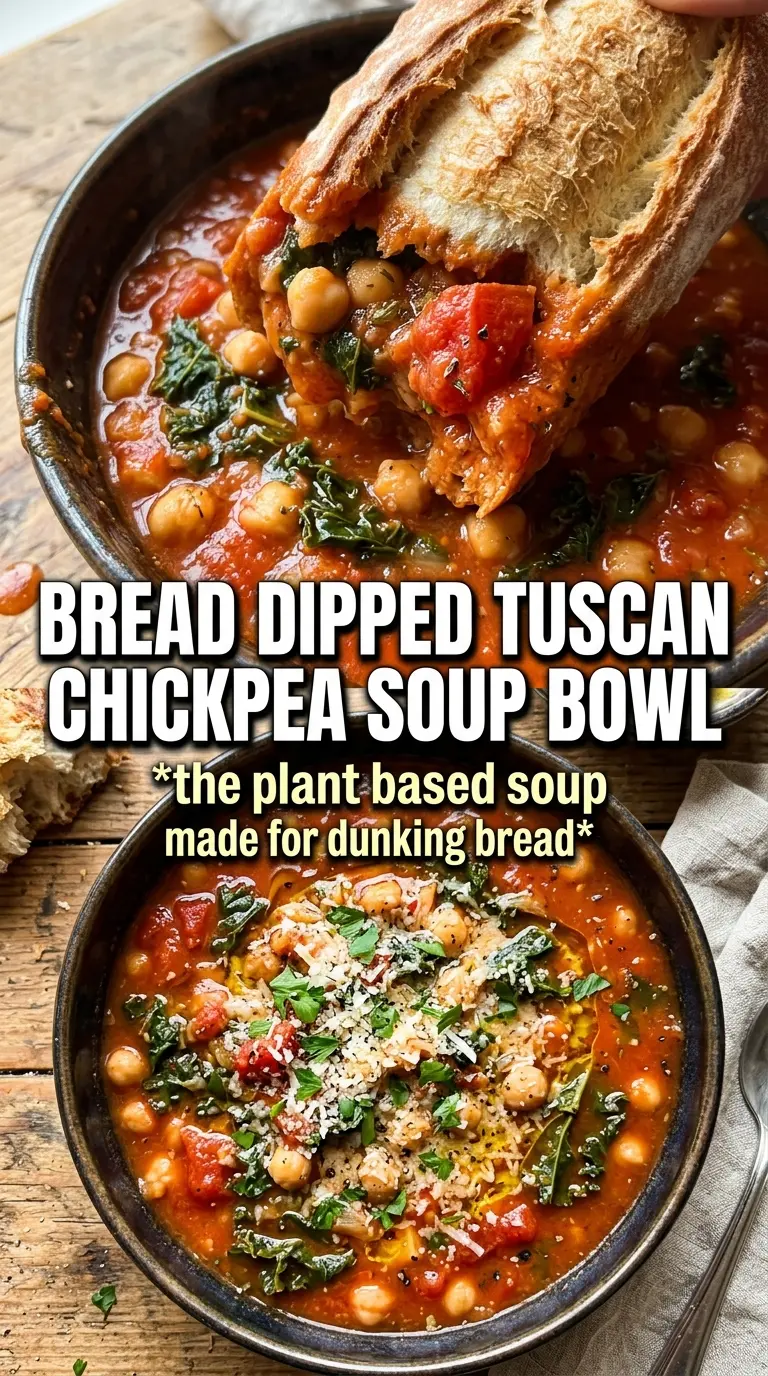
- Chickpeas — These are the body of the soup. Canned chickpeas are perfect here because they soften quickly and mash easily; dried chickpeas would need to be cooked first, which changes the timing completely.
- Fire-roasted tomatoes — They add sweetness, smoke, and acidity at the same time. Regular diced tomatoes work in a pinch, but the fire-roasted version gives the broth a deeper, more cooked flavor without extra steps.
- Rosemary — Fresh rosemary carries the Tuscan character of the soup. Use fresh if you can, because dried rosemary can turn woody and can taste sharp if it simmers too long.
- Parmesan rind — This is the quiet flavor booster. It melts just enough to season the broth from within, and if you’ve got one in the fridge, this is exactly the kind of soup that benefits from it.
- Kale — Add it near the end so it stays tender and green instead of drab and limp. Lacinato kale or curly kale both work; just strip out the tough stems first so the final texture stays pleasant.
- Olive oil and lemon — Olive oil rounds out the broth at the end, and lemon lifts everything. Skip the lemon and the soup still works, but it tastes less lively.
How to Build the Broth Without Overcooking the Greens
Start the Base Slowly
Heat the olive oil and cook the onion until it turns soft and translucent with a little color at the edges. That first five minutes matters because raw onion would stay sharp in the finished soup. Once the garlic and red pepper flakes go in, keep them moving; garlic burns fast, and burnt garlic will make the whole pot taste bitter.
Let the Soup Simmer, Not Boil Aggressively
After the chickpeas, tomatoes, broth, rosemary, Italian seasoning, and parmesan rind go in, bring everything to a boil just long enough to start the simmer, then lower the heat. You want small bubbles breaking the surface, not a hard rolling boil. If the soup boils too hard, the chickpeas can split apart too soon and the broth can taste harsh instead of rounded.
Thicken With a Quick Mash
Scoop out a ladle of chickpeas, mash them with the back of a spoon, and stir them back in, or use an immersion blender for just a few pulses. Stop before the soup turns puree-thick; you still want whole chickpeas in the bowl. This is the move that gives the soup a hearty texture without making it heavy.
Finish the Kale at the End
Stir the chopped kale into the hot soup and cook it just until it turns deep green and collapses. If it simmers too long, it loses its shape and starts tasting muddy. Finish with salt, pepper, and a squeeze of lemon, then drizzle with olive oil and shaved parmesan for the last layer of flavor.
How to Adjust This Soup When You Want It Richer, Lighter, or Completely Dairy-Free
Dairy-Free Version
Leave out the parmesan rind and skip the parmesan finish. The soup still tastes full because the rosemary, garlic, tomatoes, and olive oil carry plenty of flavor. If you want a little extra savory depth, add a pinch of nutritional yeast at the end, but keep it subtle so it doesn’t take over.
Thicker, More Satisfying Bowl
Mash half the chickpeas instead of a third, or simmer the soup uncovered for the last 5 to 10 minutes. That concentrates the broth and makes the texture closer to a stew. Don’t add extra broth unless it feels too dense after the kale goes in, because the vegetables release a little liquid as they cook.
Extra-Green Vegetable Swap
Spinach works if that’s what you have, but add it in the last minute because it wilts almost instantly. Swiss chard is a better swap if you want more texture, especially the stems sliced thin and cooked with the onion. Both keep the soup light, but kale holds up best for reheating.
Storage and Reheating
- Refrigerator: Keeps well for 4 days. The broth thickens as it sits, and the chickpeas soften a little more overnight.
- Freezer: Freezes well for up to 3 months. Leave a little space at the top of the container because the broth expands, and wait to add fresh parmesan until serving.
- Reheating: Warm it gently on the stove over medium-low heat with a splash of broth or water if needed. A hard boil can break down the chickpeas and make the kale dull, so heat it just until steaming.
Answers to the Questions Worth Asking
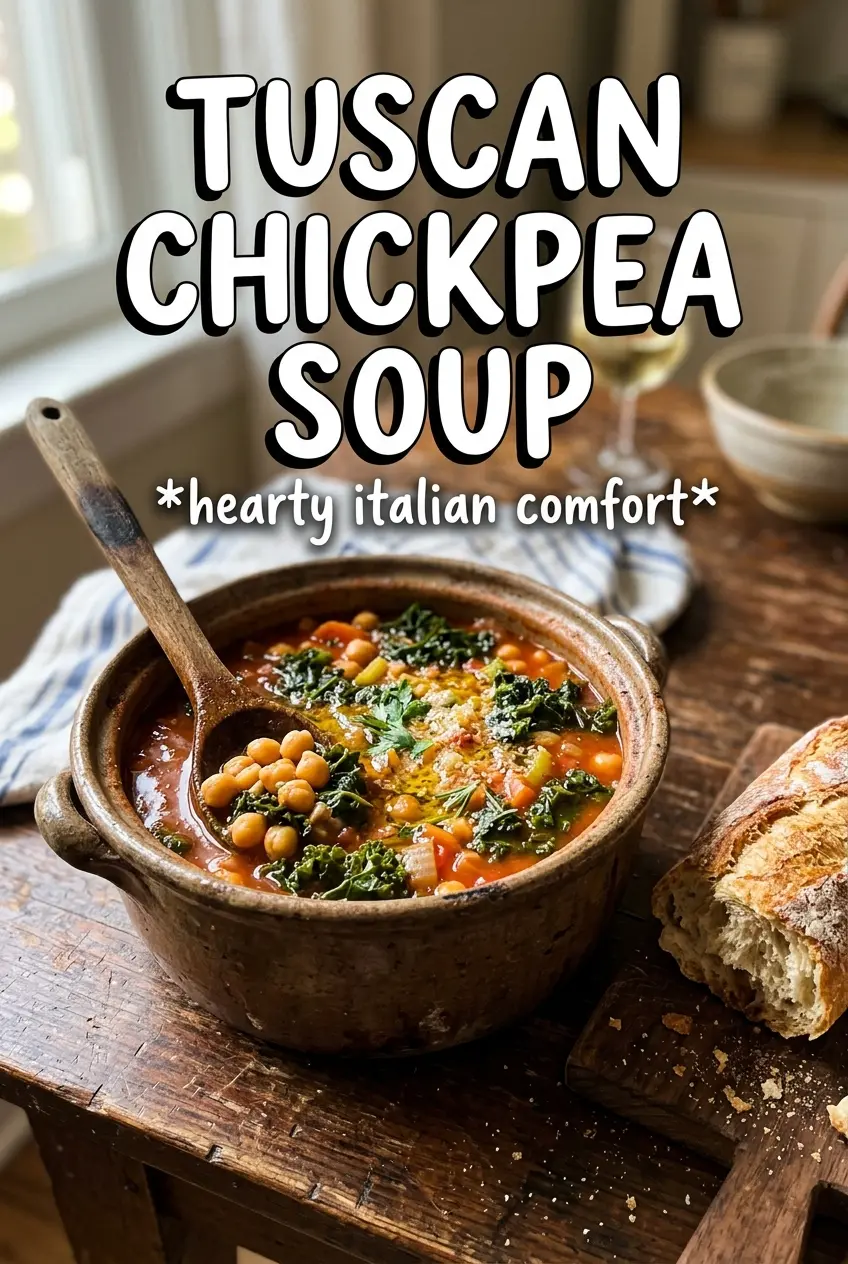
Tuscan Chickpea Soup
Ingredients
Equipment
Method
- Heat 2 tablespoons olive oil in a large pot over medium heat. Sauté the diced onion for 5 minutes, stirring, until softened and lightly translucent.
- Add the minced garlic and red pepper flakes. Cook for 2 minutes, stirring, until fragrant without browning.
- Add the drained chickpeas, fire-roasted diced tomatoes, vegetable broth, rosemary sprigs, Italian seasoning, and the parmesan rind (if using). Bring the mixture to a boil, then keep it hot and active.
- Reduce to a simmer and cook for 20 minutes. Remove the rosemary sprigs and parmesan rind after simmering.
- Mash or blend about a third of the chickpeas for a thicker consistency. Keep the rest whole for texture.
- Add the chopped kale to the pot. Cook for 5 minutes until wilted and tender.
- Season with salt, black pepper, and lemon to taste. Drizzle with olive oil and top with parmesan before serving.


