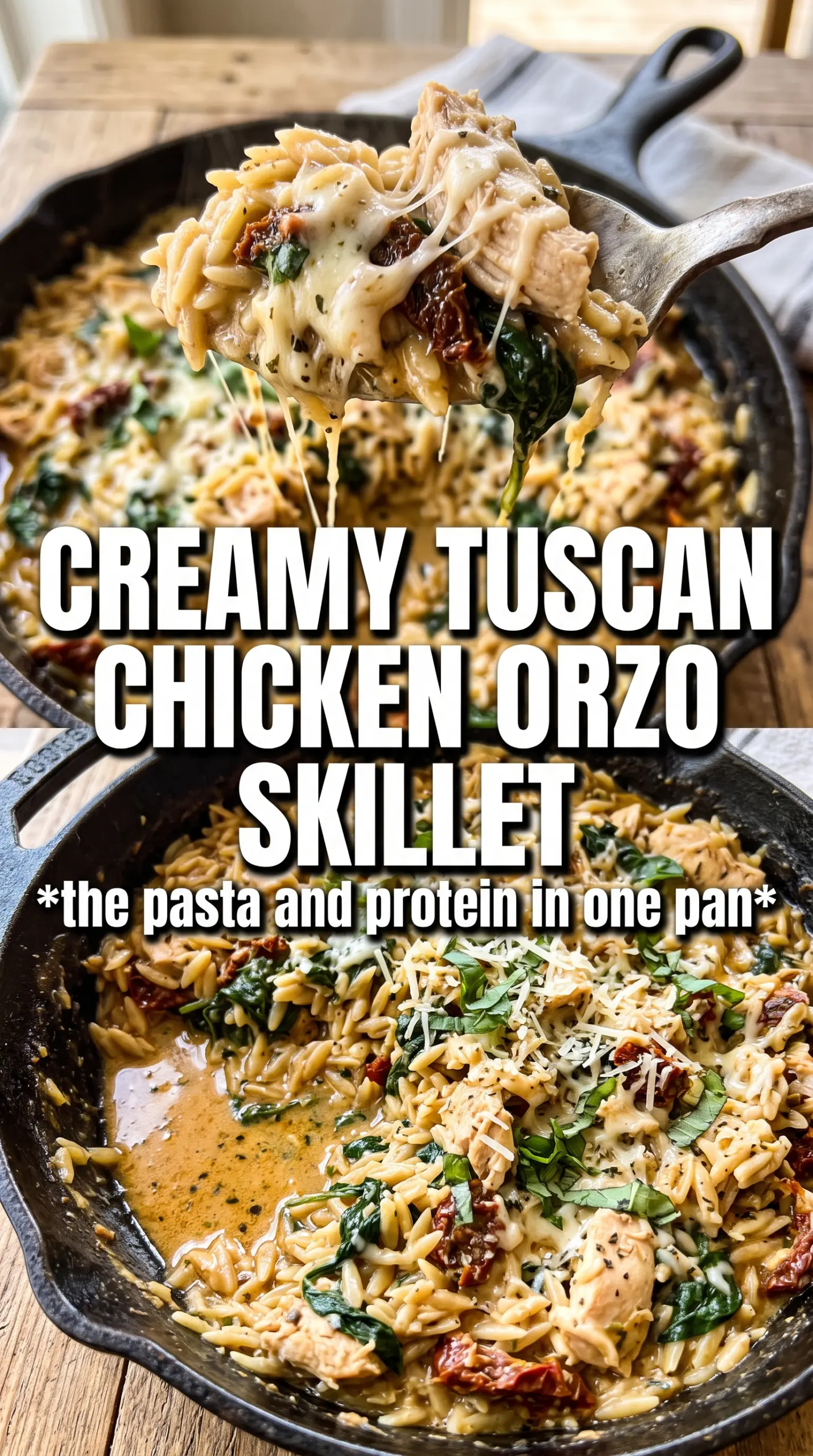
Golden chicken thighs over creamy orzo is the kind of skillet dinner that disappears fast because it eats like a complete meal, not a side dish dressed up as supper. The orzo turns silky as it simmers in broth and cream, then picks up the garlicky onion, sun-dried tomatoes, parmesan, and the juices from the chicken. Every bite lands with a little richness, a little tang, and enough spinach to keep the whole pan from feeling heavy.
What makes this version work is the order. The chicken gets a proper sear first, so it builds flavor before anything goes into the pan. Then the orzo is toasted briefly before the liquid is added, which gives it a little more body and keeps it from turning soft and muddy. The sun-dried tomatoes do more than add color; they bring the concentrated, savory-sweet note that makes the whole dish taste like it simmered for much longer than it did.
Below, I’ve included the timing cues that matter most, plus a few swaps for when you want to lighten it up or work with what’s already in the pantry.
The orzo turned out creamy without getting gummy, and the chicken stayed juicy after the final simmer. I loved how the sun-dried tomatoes gave the whole skillet a deeper flavor without needing a long sauce.
Save this Tuscan chicken and orzo skillet for a one-pan dinner with creamy pasta, golden chicken, and a sauce that finishes in one skillet.
The Reason the Orzo Stays Creamy Instead of Turning to Paste
Orzo cooks fast, which is exactly why it can go wrong fast. If the pan runs too hot or the liquid boils too hard, the pasta can swell unevenly and the cream can tighten before the orzo is tender. This skillet works because the broth and cream simmer at a steady pace, and the pasta gets stirred often enough to release starch without sticking in a heavy layer at the bottom.
The other mistake to avoid is adding the cheese too early. Parmesan melts cleanly when the orzo has already absorbed most of the liquid and the heat is moderate. If you dump it in while the pan is still at a hard boil, it can clump and make the sauce look grainy instead of glossy.
- Searing first matters. The chicken leaves browned bits behind, and those bits become part of the sauce instead of disappearing into a bland broth.
- Orzo needs gentle heat. A calm simmer gives you tender pasta with a creamy coating, not a broken, overreduced pan.
- Parmesan goes in near the end. That keeps it smooth and helps the sauce thicken without turning stringy.
What Each Ingredient Is Actually Doing in This Skillet
- Boneless chicken thighs — These stay juicy through the sear and the final simmer. Breasts can work, but they dry out faster and need less time in the skillet, so watch them closely if you swap.
- Orzo — This is the pasta that gives the dish its risotto-like texture without constant stirring. Regular rice or larger pasta shapes won’t absorb liquid the same way, so the sauce won’t finish with the same creamy body.
- Sun-dried tomatoes — They bring concentrated tomato flavor and a little chew. Use the oil-packed kind if you can, then drain them well; they’re softer and more flavorful than the dry-packed version.
- Heavy cream — This keeps the sauce stable and plush. Half-and-half can work in a pinch, but it won’t coat the orzo as richly and is more likely to thin out during simmering.
- Parmesan — Grated parmesan helps thicken the sauce and adds saltiness. Freshly grated melts more smoothly than the shelf-stable kind, which can clump when the heat is too high.
- Spinach and basil — Spinach wilts into the sauce and softens the richness, while basil gives the finish a clean, fresh lift. Add both late so they stay bright instead of cooking down to nothing.
Building the Skillet So the Sauce Finishes in One Pan
Season and Sear the Chicken
Pat the chicken thighs dry, then season them well with paprika, Italian seasoning, salt, and pepper. The dry surface helps them brown instead of steaming, and that browning is where a lot of the flavor starts. Heat the olive oil until it shimmers, then lay the chicken in and let it sit long enough to form a deep golden crust before turning it. If the pan is crowded, the chicken will steam and you’ll lose that browned edge, so cook in batches if you need to.
Build the Aromatic Base
After the chicken comes out, the skillet should still have browned bits stuck to the bottom. Add the onion and cook until it softens and starts to turn translucent, then stir in the garlic and sun-dried tomatoes just long enough to wake them up. Garlic burns fast, so keep this stage moving and don’t let it sit dry in the pan. You want the kitchen to smell savory and slightly sweet, not sharp or bitter.
Cook the Orzo Until It’s Nearly There
Add the orzo and stir it around for a minute so it picks up some of the fat and toastiness from the pan. Pour in the broth and cream, then keep the heat at a steady simmer instead of a boil. Stir every so often, especially along the bottom edges, because orzo likes to settle and catch. When it’s nearly tender and the liquid has thickened to a loose, creamy sauce, you’re at the right point to move on.
Finish with Cheese, Greens, and the Chicken
Stir in the parmesan first, then add the spinach and let it collapse into the sauce. Nestle the chicken back on top and cover the skillet so the thighs finish gently without drying out. The chicken is done when the center is no longer pink and the juices run clear, and the orzo underneath should look creamy, not soupy. Let it sit for a minute before serving so the sauce settles into a silky coating.
How to Adapt This Tuscan Chicken and Orzo Skillet Without Losing the Point
Make it dairy-free
Use full-fat canned coconut milk in place of the cream and skip the parmesan, or use a dairy-free parmesan-style cheese if you have one that melts well. The sauce will be a little less savory and a little more rounded, but the skillet still comes together with a creamy finish.
Use chicken breasts instead of thighs
Chicken breasts work if that’s what you have, but they cook faster and dry out more easily. Sear them just until golden, then let them finish gently in the covered skillet so they stay tender instead of stringy.
Swap in kale for the spinach
Chopped kale holds up well here, but it needs more time than spinach to soften. Stir it in a few minutes earlier, before the parmesan, so it has time to lose its raw edge and blend into the sauce.
Storage and Reheating
- Refrigerator: Store in an airtight container for up to 3 days. The orzo will tighten as it sits, but it stays flavorful.
- Freezer: It freezes, but the cream-based sauce can lose some of its smooth texture after thawing. Freeze in portions for up to 2 months if you don’t mind a slightly less silky finish.
- Reheating: Warm it slowly on the stove over low heat with a splash of broth or water. High heat is the fastest way to split the cream and turn the orzo dry on the edges before the center is hot.
Questions I Get Asked About This Recipe
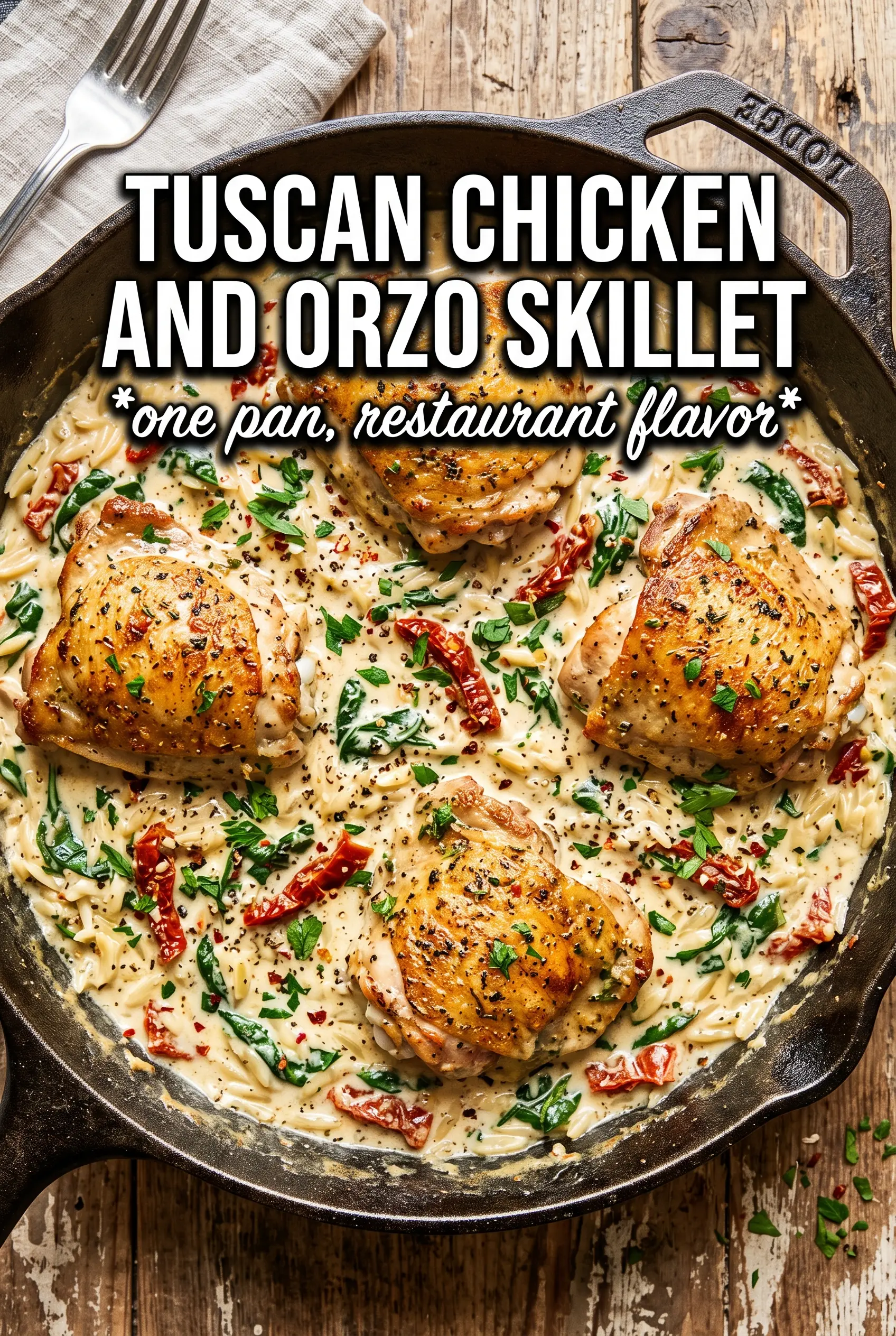
Tuscan Chicken And Orzo Skillet
Ingredients
Equipment
Method
- Season the boneless chicken thighs with smoked paprika, Italian seasoning, salt, and pepper.
- Heat olive oil in a large skillet over medium-high heat; sear chicken 5-6 minutes per side until golden, then remove.
- Sauté the onion for 3 minutes in the same skillet.
- Add the garlic and chopped sun-dried tomatoes and cook for 2 minutes.
- Add the orzo and toast briefly, then pour in the chicken broth and heavy cream.
- Simmer for 10 minutes, stirring occasionally, until the orzo is nearly tender.
- Stir in the grated parmesan and baby spinach until the spinach wilts.
- Nestle the seared chicken back on top, cover, and cook 5 more minutes until chicken is cooked through.
- Garnish with fresh basil before serving.