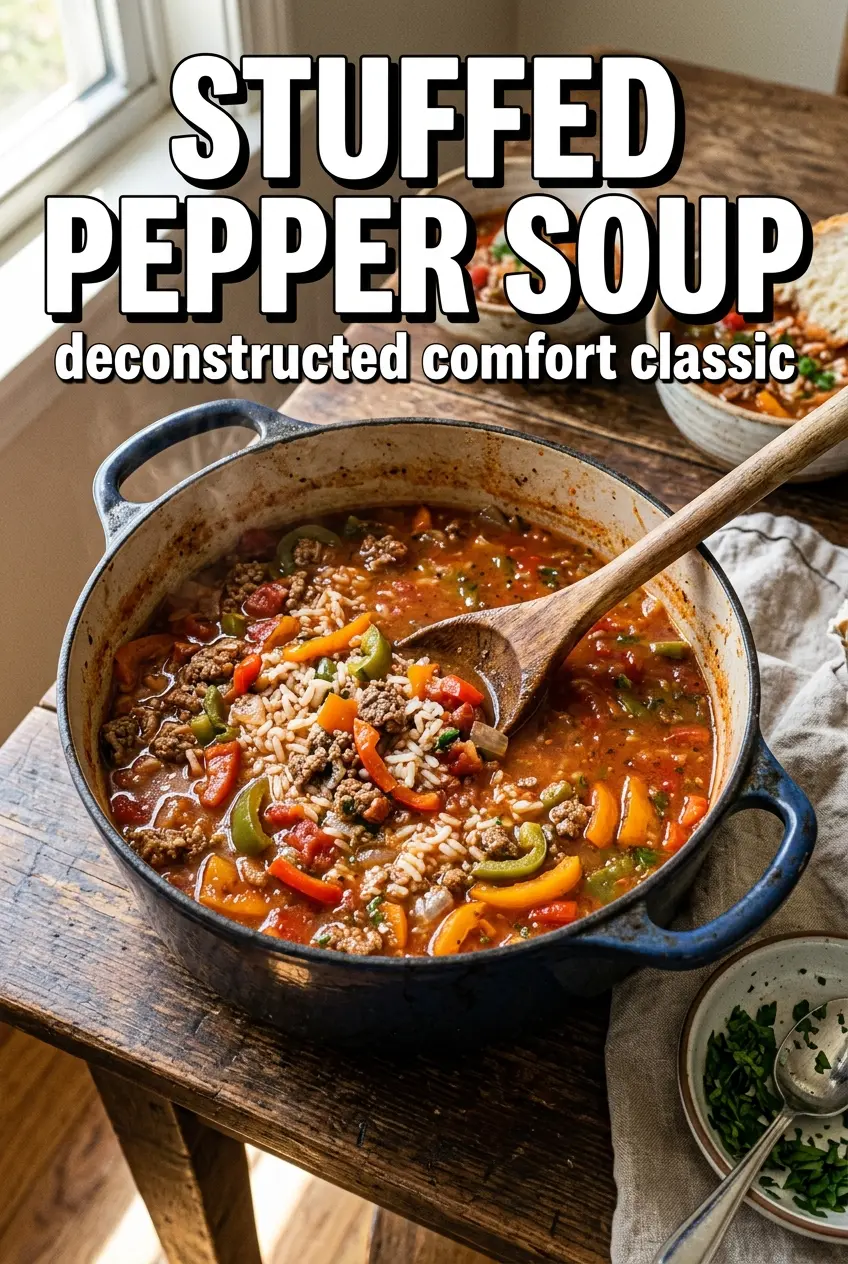
Stuffed pepper soup hits the same comforting notes as classic stuffed peppers, but in a bowl that’s easier to make on a weeknight and even better the next day. You get tender rice, soft peppers, savory beef, and a tomato broth that tastes rich without feeling heavy. The payoff is a soup that eats like a full meal, especially with a handful of cheddar melted over the top.
What makes this version work is the order. Browning the beef first gives the broth a deeper base, and cooking the tomato paste with the onions and peppers pulls out its sweetness before the liquid goes in. The rice simmers right in the soup, which helps thicken the broth naturally, but it also means timing matters because overcooked rice can turn the whole pot soft if you let it sit too long.
Below, I’ve included the little details that keep the peppers tender, the broth balanced, and the rice from going mushy. If you’ve ever had stuffed pepper soup that tasted flat or came out too thick, the notes here will help.
The rice cooked up perfectly in the tomato broth and didn’t turn gummy, and the cheddar on top made it taste just like stuffed peppers without all the work.
Save this stuffed pepper soup for nights when you want the stuffed-pepper flavor without the extra assembly.
The Reason the Rice Goes In Uncooked Here
The rice is doing more than filling out the soup. As it simmers, it releases starch into the broth and helps create that hearty, spoon-coating texture that makes this feel like a full dinner. If you pre-cook the rice and stir it in at the end, the soup stays thinner and the rice can go mushy faster once it sits.
The other thing that matters is keeping the simmer gentle once the rice is in. A hard boil can split the tomatoes a little and beat up the rice, which is how you end up with a grainy broth and broken texture. Low heat and a covered pot give the rice enough time to cook through without turning the whole pot heavy.
- Ground beef — Use an 80/20 blend if you can. It brings flavor, but drain the fat after browning so the soup doesn’t get greasy. Leaner beef works too; you just lose a little richness.
- Tomato paste — This is the depth builder. Cooking it for a minute or two before adding the broth takes the raw edge off and gives the soup a more cooked, rounded tomato flavor.
- Bell peppers — Green peppers give you that classic stuffed-pepper taste. The red pepper softens the edge and adds a little sweetness, so this isn’t just a beef-and-tomato soup with peppers thrown in.
What Each Ingredient Is Actually Doing in the Pot
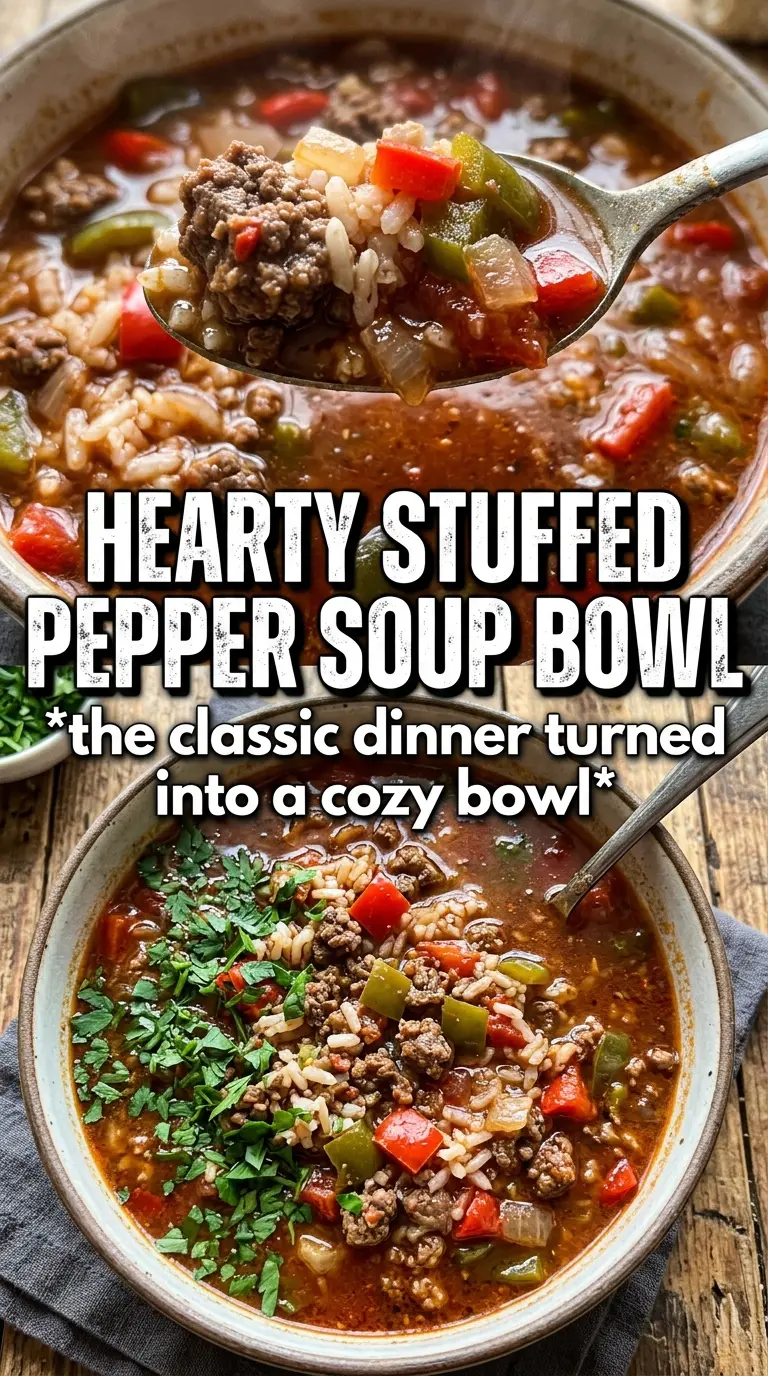
- Ground beef — Browning it first gives the soup its savory base. If you rush this part, the meat steams instead of sears and the broth tastes flatter.
- Onion, garlic, and bell peppers — These build the stuffed-pepper flavor. Cook them until the onion turns translucent and the peppers start to soften, not until they collapse.
- Crushed tomatoes and diced tomatoes — The crushed tomatoes make the broth thick and lush, while the diced tomatoes give you little bursts of texture. Using both keeps the soup from tasting one-note.
- Beef broth — This stretches the tomatoes into soup and deepens the savory flavor. A good broth matters more here than a fancy one; just avoid anything overly salty so you can season at the end.
- Shredded cheddar and parsley — The cheddar melts into the hot soup and adds a creamy finish, while parsley cuts through the richness. Don’t skip the garnish if you want the bowl to taste complete.
How to Keep the Soup Thick, Hearty, and Not Mushy
Browning the Beef Properly
Cook the beef in a large pot over medium-high heat until it loses its pink color and starts to pick up some browned bits on the bottom. Those bits matter because they flavor the broth later. If there’s a lot of fat in the pot, drain it off before adding the vegetables so the finished soup doesn’t feel oily.
Softening the Vegetables and Toasting the Tomato Paste
Add the onion and peppers to the same pot and cook them just until they soften and the onion looks glossy. Stir in the garlic and tomato paste and let them cook for about 2 minutes. That short step keeps the garlic from tasting harsh and gives the tomato paste time to darken a little, which makes the broth taste fuller.
Simmering the Rice Without Overcooking It
Once the broth and tomatoes go in, bring the soup to a boil, then add the uncooked rice and drop the heat to a steady simmer. Cover the pot and cook until the rice is tender, about 18 to 20 minutes. If the soup starts boiling hard, the rice can split and soak up too much liquid too quickly, so keep the heat low enough that you see only small bubbles.
Finishing With the Right Texture
Season at the end with salt and pepper after the rice has cooked. The broth tightens up as the rice absorbs liquid, and that last adjustment keeps the flavor balanced. Ladle it into bowls right away and top with cheddar and parsley while the soup is hot enough to melt the cheese.
Three Ways to Make This Soup Fit What You’ve Got
Make It Dairy-Free
Skip the cheddar on top or use a dairy-free shredded cheese that melts well. The soup itself is already dairy-free, so this swap is easy and doesn’t change the body of the broth.
Use Brown Rice Instead of White
Brown rice works, but it needs more time and more liquid. Plan on a longer simmer and check the broth as it cooks, since brown rice will thicken the soup more aggressively than white rice.
Turn It Into a Lower-Carb Bowl
Leave out the rice and add a little extra broth if needed. You’ll get a lighter soup with the same stuffed-pepper flavor, though it won’t have the same hearty thickness that the rice brings.
Storage and Reheating
- Refrigerator: Store in an airtight container for up to 4 days. The rice will keep absorbing broth, so expect the soup to thicken.
- Freezer: It freezes, but the rice softens after thawing. For the best texture, freeze it without the rice and cook fresh rice when you reheat it.
- Reheating: Warm it gently on the stove over medium-low heat with a splash of broth or water. A hard boil will make the rice bloated and the tomatoes taste cooked down too far.


