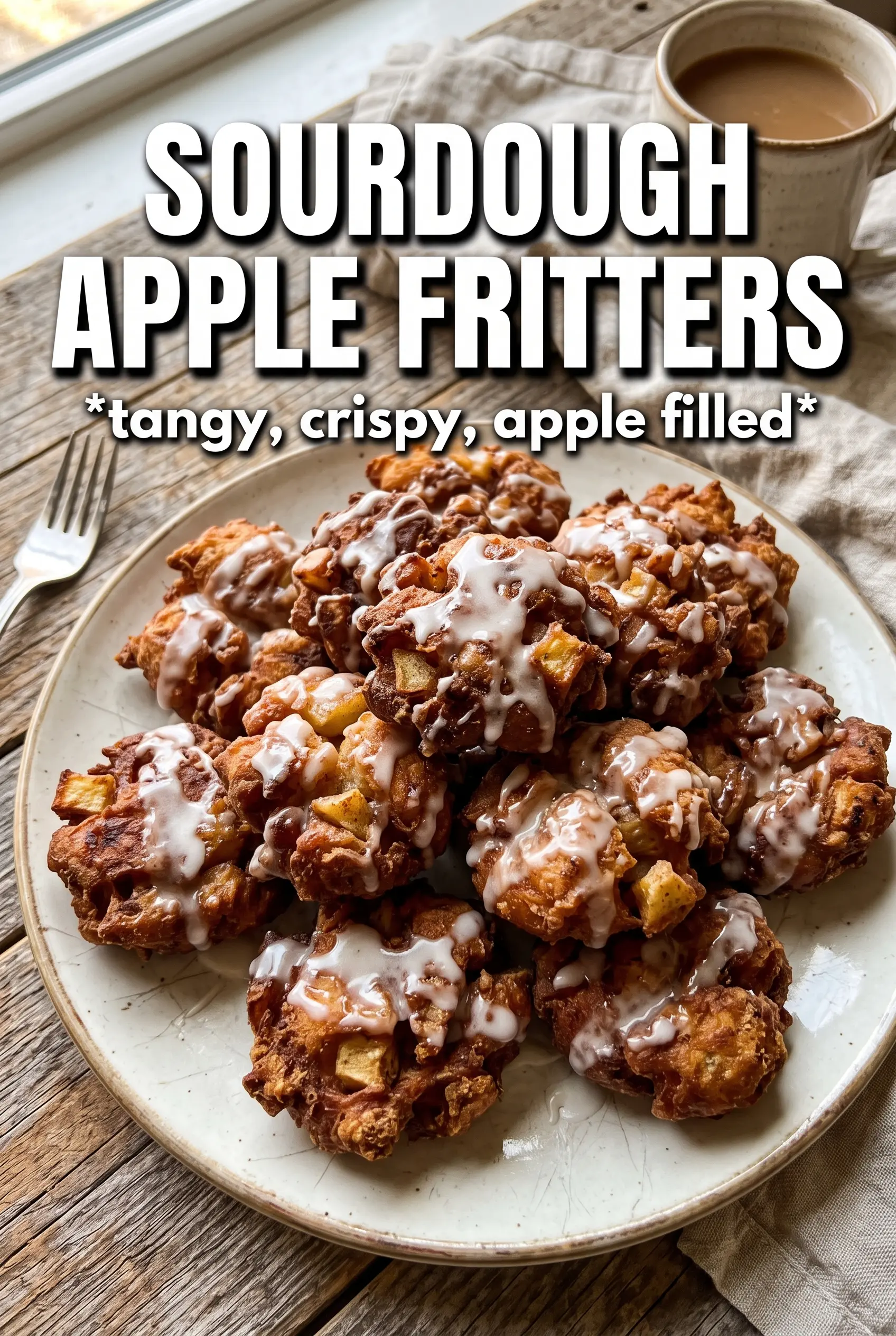
Golden, craggy sourdough apple fritters hit that sweet spot between bakery treat and old-school homemade comfort. The outside fries up crisp and deeply browned while the inside stays tender, with soft bits of apple tucked through the batter and just enough sourdough tang to keep every bite from feeling heavy. A dusting of powdered sugar or a thin cider glaze finishes them off without covering up the apples.
What makes this version work is the batter balance. The starter brings flavor and a little structure, while the baking powder gives the fritters enough lift to stay light after frying. The batter should be thick enough to hold the apples in place, which means you get those irregular, rustic shapes instead of flat, greasy pancakes. That thickness matters. Too loose, and the apples sink; too stiff, and the fritters cook up dense in the center.
Below, I’ve included the cue I use to know the oil is ready, plus the small swap I reach for when I want a glaze instead of a sugar finish. That’s the kind of detail that keeps a batch of fritters from going from promising to disappointing in about thirty seconds.
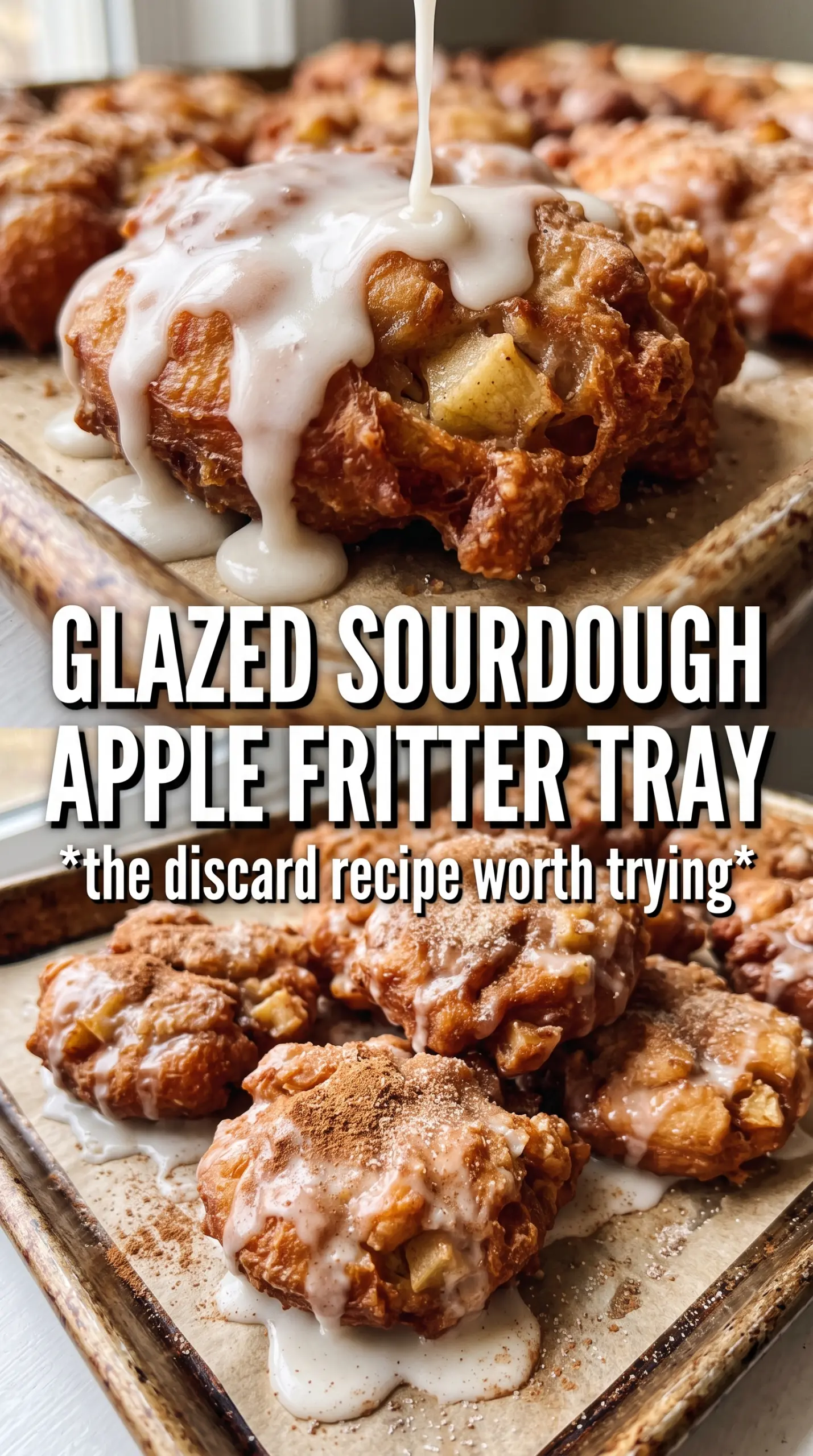
The batter was thick enough to hold the apples in place, and the fritters fried up with crisp edges and a soft middle. The cider glaze set beautifully and didn’t run off the fritters like I expected.
Save these sourdough apple fritters for the mornings when you want crisp edges, soft apple pockets, and a quick cider glaze.
The Batter Needs to Stay Thick or the Apples Disappear
This is the part most fritter recipes gloss over. A loose batter looks easier to handle, but it spreads in the oil, leaks apple juice, and fries up greasy instead of crisp. Here, the sourdough starter and flour make a sturdy base, and the diced apples need to be folded in at the very end so they stay suspended instead of sinking to the bottom of the bowl.
Oil temperature matters just as much as batter thickness. If the oil is too cool, the fritters absorb it and turn heavy. If it’s too hot, the outside browns before the center cooks through. A steady 350°F gives you that sweet spot where the outside sets into a crisp shell while the inside has enough time to cook around the apple pieces.
What Each Ingredient Is Actually Doing in These Fritters
- Sourdough starter — Active starter gives the fritters a little lift and a tangy edge, while discard still works well if it isn’t overly sour. Either way, it brings moisture and flavor that plain milk can’t replace. If your starter is very thin, the batter may need a spoonful more flour to hold together.
- All-purpose flour — This is what gives the batter enough structure to fry into craggy fritters instead of pancake batter. Bread flour makes them a touch chewier, but all-purpose keeps the crumb lighter. Stir only until the flour disappears or the fritters can turn tough.
- Apples — Peel and dice them finely so they soften fast in the hot oil and give you little sweet pockets instead of hard chunks. Tart apples hold their shape better and balance the sugar. If the dice are too large, the batter won’t cook through evenly.
- Baking powder — This gives the fritters their lighter texture after frying. It works with the sourdough instead of replacing it. Don’t skip it, or the fritters lean dense.
- Cinnamon and nutmeg — These don’t just add warmth; they make the apple flavor read more clearly. Fresh cinnamon matters more than expensive cinnamon here, but if your nutmeg has lost its smell, replace it. Old nutmeg tastes dusty, not aromatic.
- Powdered sugar or cider glaze — Powdered sugar is the fastest finish, but the glaze gives you a brighter apple note. If you use the glaze, drizzle it on while the fritters are still warm so it sets instead of sliding off.
Frying Them Fast Enough to Stay Light
Mixing the Base
Whisk the sourdough starter, eggs, milk, and sugar until the mixture looks smooth and a little loose. That step matters because it helps the starter disperse evenly before the flour goes in. Once you add the dry ingredients, stir just until no pockets of flour remain. Overmixing tightens the batter and gives you fritters that feel bready instead of tender.
Folding in the Apples
Add the diced apples last and fold them through gently. The batter will be thick, almost scoopable, and that’s exactly what you want. If it seems too stiff to spoon, don’t thin it with extra milk right away; the apples will release moisture as they sit, and a loose batter will fry up flat. Let it rest for a few minutes if it feels stubborn.
Watching the Oil
Heat about 2 inches of vegetable oil in a heavy pot until it reaches 350°F. A candy or deep-fry thermometer takes the guesswork out of this. If you don’t have one, a small drop of batter should sizzle immediately and float within a few seconds without turning dark right away. Keep the heat steady between batches, because the oil drops fast when the batter goes in.
Frying and Finishing
Drop heaping tablespoons of batter into the oil and fry in batches until the fritters are deeply golden, about 2 to 3 minutes per side. Don’t crowd the pot or the temperature falls and the fritters soak up oil instead of crisping. Drain them on paper towels while they’re still hot, then dust with powdered sugar or drizzle with glaze before they cool completely. That’s when the finish grabs on best.
Make Them Gluten-Free Without Losing the Crisp Edge
A good 1:1 gluten-free flour blend can work here, but the batter usually needs a few extra minutes to hydrate before frying. The fritters will be a little more delicate, so use a small scoop and don’t rush the turn. The result is still crisp and apple-forward, just slightly more tender.
Use Discard for a Softer Tang
Discard gives the fritters a more rounded sourdough flavor and works well if it’s not overly acidic. If your discard is thin, reduce the milk slightly so the batter stays thick enough to hold the apples. The texture stays the same, but the flavor gets a little deeper.
Swap the Sugar Finish for a Cider Glaze
Whisk powdered sugar with cider until it’s thick enough to drizzle. That adds a sharper apple note and gives the fritters a bakery-style finish. If the glaze is too thin, it runs off the fritters instead of clinging in a glossy layer, so add the cider slowly.
Storage and Reheating
- Refrigerator: Store leftovers in an airtight container for up to 2 days. The crust softens in the fridge, but the flavor stays good.
- Freezer: Freeze fritters in a single layer, then transfer to a bag for up to 1 month. They freeze better before glazing.
- Reheating: Warm them in a 350°F oven or air fryer until the outside crisps back up. Don’t microwave them unless you’re fine with a soft, steamy texture.
Questions I Get Asked About This Recipe
Sourdough Apple Fritters
Ingredients
Equipment
Method
- Whisk the sourdough starter, eggs, whole milk, and sugar together until smooth and fully combined.
- Stir in the all-purpose flour, cinnamon, nutmeg, salt, and baking powder until just combined, then stop mixing as soon as the dry streaks disappear.
- Fold in the finely diced apples and keep mixing only until the apples are evenly distributed, with a thick batter consistency.
- Heat about 2 inches of vegetable oil in a heavy pot to 350F so it maintains steady frying temperature.
- Drop heaping tablespoons of batter into the hot oil and fry for 2-3 minutes per side until deeply golden.
- Work in batches and avoid crowding the pot so the oil temperature stays close to 350F and the fritters cook evenly.
- Drain the fritters on paper towels and dust with powdered sugar while hot so it sticks.
- Whisk powdered sugar with cider until smooth, then drizzle the glaze over the warm fritters.


