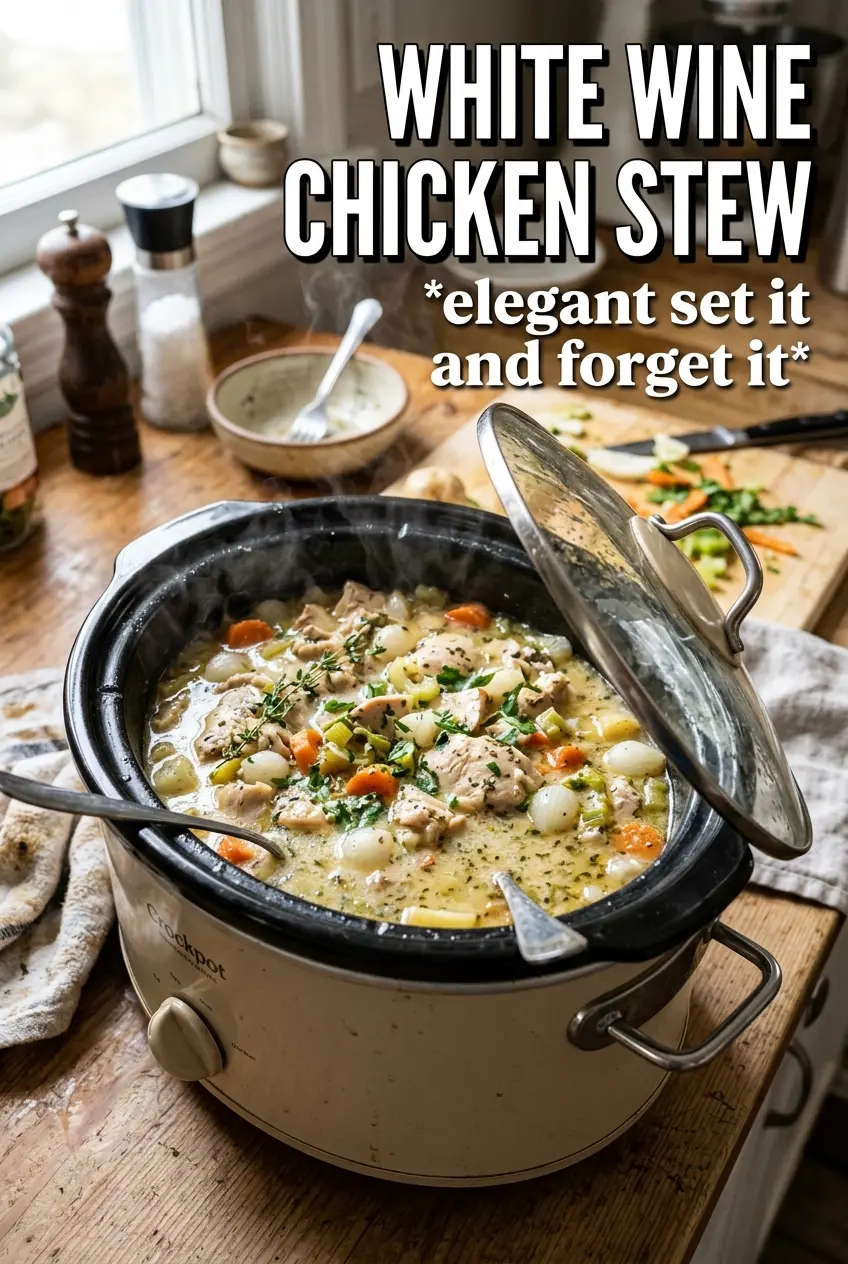
Slow cooker white wine chicken stew lands in that sweet spot between rustic and elegant: tender chicken thighs, mushrooms that soak up the broth, and a sauce that turns silky without needing constant attention. The slow cooker does the long work here, but the flavor tastes like you stood over the stove building a proper braise.
The key is starting with bone-in thighs and enough aromatics to carry the broth. White wine adds brightness, but it needs tomato paste and Dijon to keep the stew from tasting thin or flat. A little cornstarch at the end thickens the liquid without turning it heavy, and butter gives the sauce a rounded finish that plain broth never has.
Below, I’ve included the details that matter most: why the wine choice changes the final taste, how to keep the sauce from tasting watery, and the small finish that makes this stew feel complete with crusty bread on the side.
The sauce thickened up beautifully at the end, and the chicken stayed so tender it pulled apart with a spoon. The white wine and Dijon gave it a rich, savory taste that felt a lot fancier than the effort involved.
Save this slow cooker white wine chicken stew for the nights when you want a rich, thyme-scented dinner with almost no hands-on time.
The Reason the Broth Stays Rich Instead of Tasting Watery
The most common mistake in slow cooker stew is treating the liquid like it’s just there to cover the ingredients. That gives you a bland, brothy result instead of a sauce with backbone. Here, the wine, broth, tomato paste, and Dijon work together from the start, so the liquid already has depth before the chicken releases anything.
The other key is not rushing the finishing step. Cornstarch thickens best near the end of cooking, after the stew has had time to concentrate. If you add it too early, the sauce can thin back out or turn a little gluey after hours of heat.
- Bone-in chicken thighs — These stay juicy through a long cook and add more flavor than boneless thighs. Breasts can work in a pinch, but they dry out sooner and need less time.
- Dry white wine — Pick something you’d actually drink. A crisp Sauvignon Blanc or Pinot Grigio keeps the stew bright; anything sweet will throw the balance off.
- Tomato paste — This is what keeps the broth from tasting flat. It doesn’t make the stew taste like tomatoes; it deepens the color and gives the wine something savory to grab onto.
- Dijon mustard — A spoonful sharpens the whole pot and helps the sauce taste finished. There’s no good swap for the exact tang, but whole-grain mustard works if that’s what you have.
- Pearl onions and mushrooms — They bring the old-school stew feel and hold up well in the slow cooker. Frozen pearl onions are a smart shortcut and behave almost exactly like fresh once they’re in the pot.
What Each Ingredient Is Actually Doing in This Recipe

- Primary ingredient (the star) — Quality matters most. Choose the best you can find.
- Cooking medium (oil, butter, or broth) — This carries flavors and prevents dryness.
- Seasonings (salt, pepper, spices, herbs) — Layer flavors so nothing overpowers. Build depth gradually.
- Aromatics (garlic, onion, herbs) — Cook with fat to bloom flavors. Become the foundation.
- Supporting ingredients — Complement the main ingredient without overpowering it.
- Sauce or liquid (if applicable) — Brings flavors together. Balance richness with acid.
- Acid (lemon, vinegar, wine, or other) — Brightens and prevents flat-tasting results.
- Final finish (garnish, glaze, or sauce) — Prevents one-dimensional taste and adds visual appeal.
Building the Stew So the Sauce Turns Silky at the End
Seasoning the Chicken and Loading the Pot
Season the chicken thighs well with salt and pepper before they go into the slow cooker. That first layer of seasoning matters because the stew never gets the chance to reduce the way a stovetop braise does. Add the mushrooms, pearl onions, carrots, and garlic around the chicken so everything sits in the broth and picks up flavor as it cooks.
Whisking the Wine Base
Whisk the white wine, chicken broth, tomato paste, and Dijon until the tomato paste is fully dissolved. If you leave it in clumps, you’ll get uneven spots of sharpness and color in the finished stew. Pour the mixture over the chicken and vegetables, then tuck in the thyme and rosemary sprigs so they can perfume the broth without breaking apart.
Cooking Until the Meat Gives Cleanly
Cook on Low for 6 to 7 hours, or High for 3 to 4 hours if you’re short on time. The chicken should be very tender and pull away from the bone easily, but not so broken down that it disappears into the stew. If your slow cooker runs hot, check early; overcooking here can make the vegetables mushy before the sauce has time to settle.
Thickening and Finishing the Sauce
Stir in the cornstarch slurry and cook on High for about 20 minutes, just until the liquid turns glossy and lightly coats a spoon. If the stew still looks thin, give it a few more minutes before adding more slurry, because cornstarch thickens as it heats. Pull out the herb sprigs, stir in the butter off heat, and finish with parsley so the sauce tastes round instead of heavy.
How to Adapt This for a Different Pantry or a Different Diet
Make It Dairy-Free
Skip the butter at the end and finish with a small drizzle of olive oil instead. You’ll lose a little of that glossy, round finish, but the stew still tastes full if you keep the seasoning sharp and don’t under-salt the broth.
Gluten-Free Without Changing the Texture
This recipe is naturally gluten-free as written, as long as your broth and Dijon are certified gluten-free. Cornstarch does the thickening here, so you don’t need flour and won’t lose the silky finish.
Swap the Wine When You Don’t Want to Use Alcohol
Replace the wine with more chicken broth plus 1 tablespoon of white wine vinegar or lemon juice. That keeps the stew bright, though it won’t have the same mellow depth that real wine brings after six hours of cooking.
Use Boneless Thighs for Easier Serving
Boneless thighs work if you want a cleaner bowl and faster shredding, but reduce the cook time and check early. They won’t give quite the same rich broth as bone-in thighs, so the stew benefits from the butter finish and a little extra parsley.
Storage and Reheating
- Refrigerator: Store in an airtight container for up to 4 days. The stew thickens as it sits, so expect the broth to set up a little more overnight.
- Freezer: It freezes well for up to 2 months. Let it cool completely first, and freeze in portions so the chicken and vegetables reheat more evenly.
- Reheating: Warm gently on the stove or in the microwave with a splash of broth to loosen the sauce. Don’t boil it hard, or the chicken can turn stringy and the vegetables can collapse.
Questions I Get Asked About This Recipe
Slow Cooker White Wine Chicken Stew
Ingredients
Equipment
Method
- Season the bone-in chicken thighs with salt and pepper, then place them in the slow cooker along with the halved cremini mushrooms, pearl onions, sliced carrots, and minced garlic.
- Add the thyme sprigs and rosemary sprig on top of the chicken and vegetables.
- Whisk together the dry white wine, chicken broth, tomato paste, and Dijon mustard until smooth.
- Pour the wine mixture over the chicken so it’s mostly covered.
- Cook on Low for 6–7 hours, or High for 3–4 hours, until the chicken is very tender and the vegetables are softened.
- Stir cornstarch slurry (cornstarch mixed with water) into the stew, then cook on High for 20 minutes until thickened.
- Remove the thyme and rosemary herb sprigs, then stir in the unsalted butter to finish.
- Taste and adjust seasoning with salt and pepper, then serve with fresh parsley and crusty bread.


