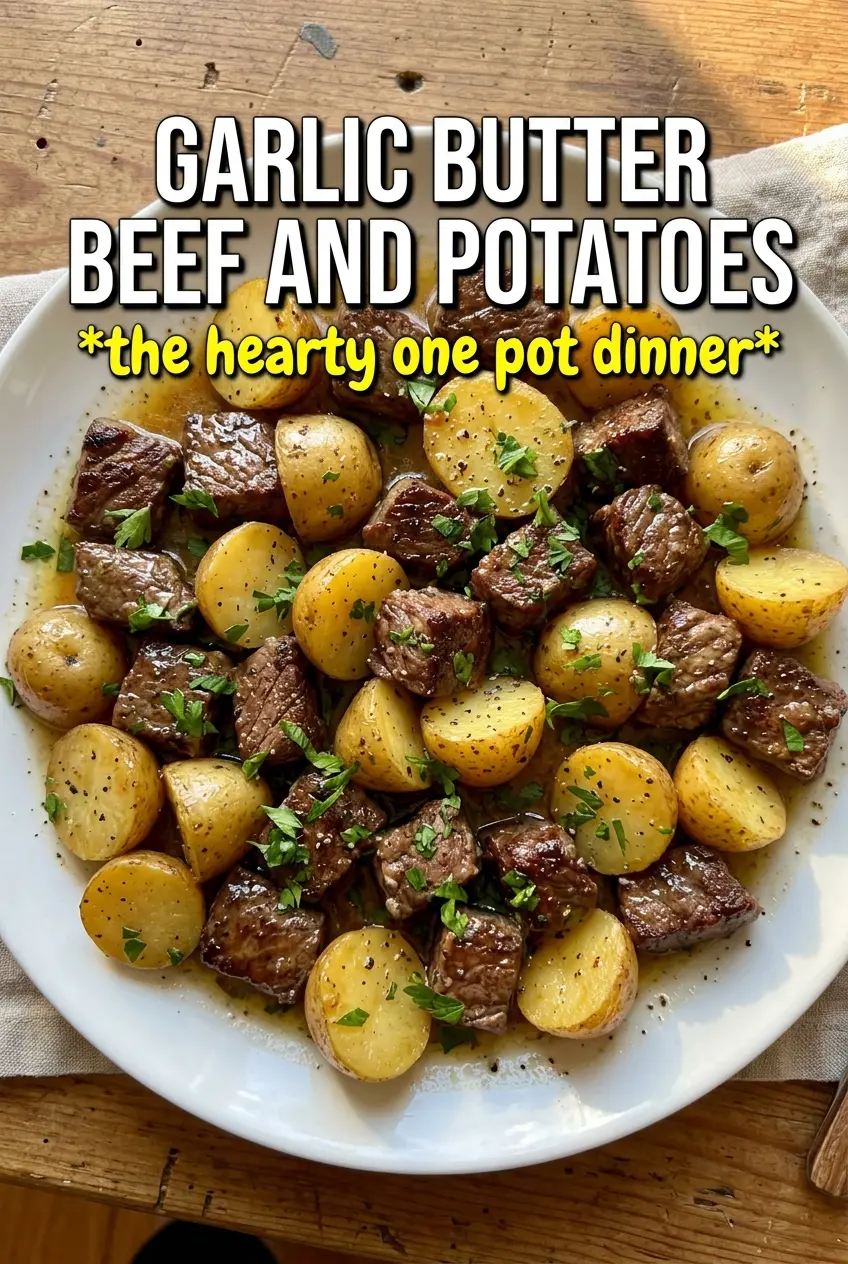
Garlic butter beef bites and tender baby potatoes are the kind of slow cooker dinner that disappears fast because every bite lands with the same payoff: deeply seasoned beef, buttery sauce, and potatoes that soak up all that flavor without turning mushy. The best part is that the whole dish finishes with a glossy pan-style sauce even though it never sees a skillet. You get comfort-food texture with almost no hands-on work.
What makes this version work is the layering. The potatoes go on the bottom so they sit closest to the heat and soften evenly, while the beef rests on top and braises in the broth mixture instead of boiling. The butter is divided too: most of it melts in while cooking, and the last bit gets stirred in at the end for a richer, silkier finish.
Keep reading for the small timing details that keep the beef tender, plus the swaps that still give you a good result if you need to use a different cut of meat or change up the seasoning.
The beef came out fork-tender and the potatoes held their shape, which never happens for me in the slow cooker. Stirring in that last bit of butter at the end made the sauce glossy instead of thin.
Save this Slow Cooker Garlic Butter Beef Bites with Potatoes recipe for a hands-off dinner with tender beef, buttery potatoes, and a glossy garlic sauce.
The Trick to Keeping the Beef Tender Instead of Stringy
Slow cooker beef gets tough when it’s cooked hot for too long or when the cut is too lean for the method. Stew meat is usually the safer choice because it has enough connective tissue to soften over time, but sirloin works too if it’s cut into large chunks and cooked only until tender. The goal is soft, buttery beef that holds together when you scoop it, not meat that has gone dry and fibrous at the edges.
The other mistake is stirring too early. Let the potatoes sit on the bottom and the beef stay on top so the heat and liquid do their work in layers. If you keep opening the lid, the cooker loses heat and the beef needs more time, which is how a tender dinner turns into an overcooked one.
- Beef stew meat or sirloin — Stew meat gives you the most forgiving slow-cooked texture. Sirloin is a little leaner, so use it if you want cleaner slices and keep an eye on it near the end of cooking.
- Baby Yukon Gold potatoes — These hold their shape better than russets and turn creamy instead of grainy. Halving them gives enough surface area to soak up the sauce without falling apart.
- Butter — This is what turns the cooking liquid into garlic butter sauce instead of thin broth. The last two tablespoons matter most because they finish the sauce with shine.
- Soy sauce and Worcestershire sauce — These give the dish the savory backbone it needs. They add depth without making the recipe taste like either ingredient on its own.
Building the Garlic Butter Sauce in the Slow Cooker
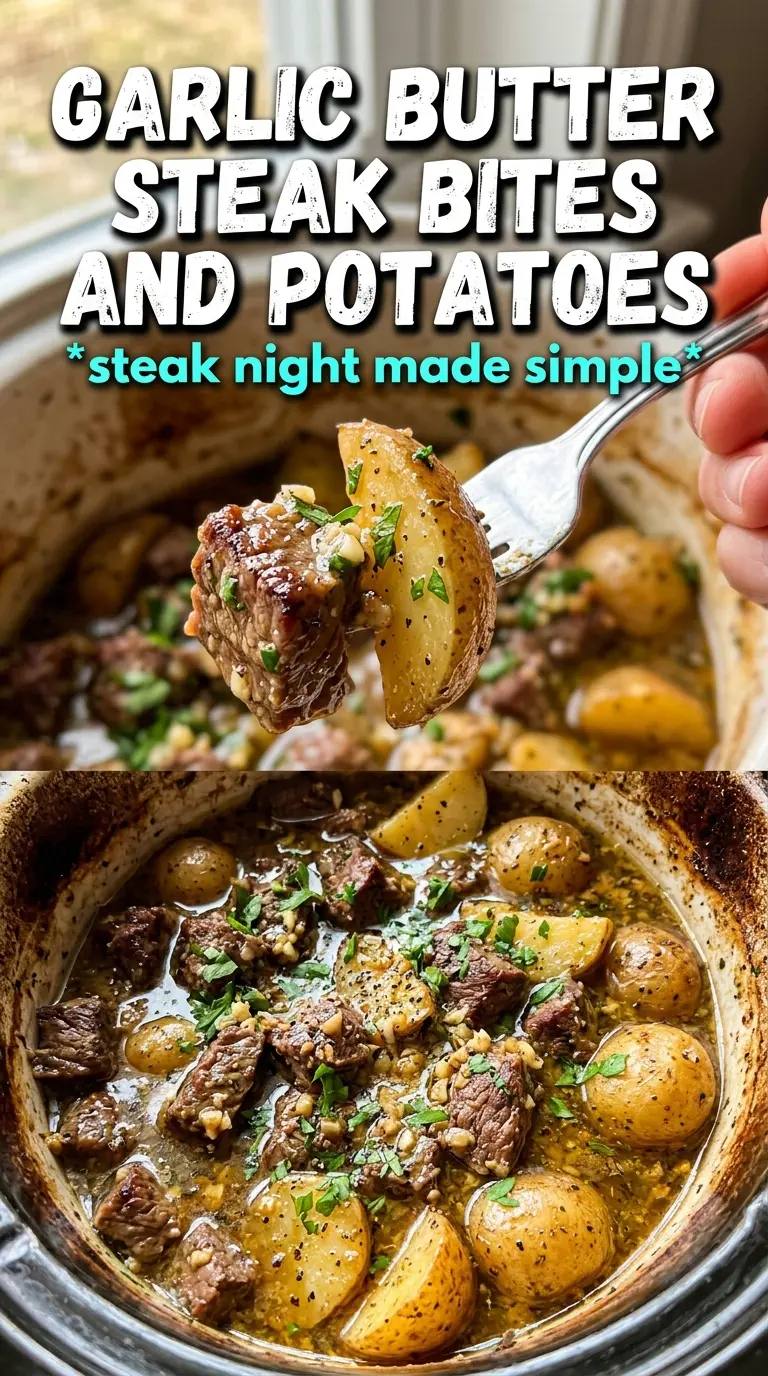
- Garlic — Fresh minced garlic is worth using here because it perfumes the whole sauce as it cooks. Jarred garlic can taste flat in a dish this simple.
- Beef broth — This keeps the pot juicy enough for braising without drowning the potatoes. A low-sodium broth gives you more control over the final salt level.
- Smoked paprika and Italian seasoning — These add a quiet background complexity that keeps the sauce from tasting one-note. There’s no need to buy anything fancy; the point is balance, not heat.
- Fresh parsley — This is the garnish that lifts the finished dish. It adds a fresh note right at the end, which matters because the sauce is rich.
The Slow Cooker Timing That Gives You Tender Beef and Intact Potatoes
Layer the Potatoes First
Spread the halved potatoes across the bottom of the slow cooker in an even layer. That puts them where the heat is most direct, which helps them cook through without sitting in the same amount of direct liquid as the beef. If they’re piled up too high, the bottom pieces get soft before the top ones are ready.
Add the Beef and Pour Over the Seasoned Liquid
Set the beef on top of the potatoes, then pour the whisked broth mixture over everything. You want the liquid to coat the meat and drift down around the potatoes, not submerge the whole pot. The surface should look glossy and wet, not soupy.
Finish with Butter and Serve Hot
Lay most of the butter over the top so it melts slowly into the sauce as the beef cooks. When the beef is fork-tender and the potatoes are tender all the way through, stir in the remaining butter until the sauce looks shiny and slightly thickened. If the sauce seems thin at first, give it a couple of minutes after stirring; that last bit of butter needs a moment to emulsify.
How to Adapt This for Different Tastes and Pantry Gaps
Make it dairy-free
Swap the butter for a good plant-based butter stick. You’ll still get richness and a glossy finish, though the sauce will taste a little less round than the original because dairy butter brings its own sweetness.
Make it gluten-free
Use a certified gluten-free soy sauce or tamari and check that your Worcestershire sauce is gluten-free. The texture doesn’t change, and the sauce still develops the same savory depth.
Use a different potato
Red potatoes work if that’s what you have. They stay a bit firmer than Yukon Golds, so they’re a good pick if you want chunks that hold their shape all the way through.
Use chuck instead of stew meat
Chuck roast cut into bite-size pieces works well and often tastes beefier than packaged stew meat. It needs the full low-and-slow cook time, though, because the connective tissue needs patience before it turns tender.
Storage and Reheating
- Refrigerator: Store leftovers in an airtight container for up to 4 days. The potatoes soften a bit more as they sit, but the flavor gets deeper.
- Freezer: This freezes well for up to 2 months. Cool it completely first, then freeze in portions with some of the sauce so the beef doesn’t dry out.
- Reheating: Reheat gently on the stove over low heat or in the microwave in short bursts. High heat can tighten the beef and make the butter separate, so add a splash of broth if the sauce looks too thick.