Slow cooker corned beef and cabbage turns out best when the brisket gets long, gentle heat and the vegetables stay out of the way until they’re ready. That’s what gives you slices that hold together at the edge but pull apart with a fork in the center, plus cabbage that tastes sweet instead of tired and gray.
The trick is building the pot in layers. Potatoes, carrots, and onion go on the bottom so they can soften without getting shredded, while the brisket sits fat-side up above them and bastes itself as it cooks. A little apple cider vinegar and brown sugar sharpen the broth enough to keep the meat from tasting flat, and the cabbage goes in late so it stays tender with a little structure instead of collapsing for hours.
Below, you’ll find the timing that keeps the cabbage from overcooking, the best way to slice the brisket so it stays tender, and a few smart swaps if you need to work with what’s in your kitchen.
The brisket sliced cleanly and the cabbage held its shape instead of turning mushy. I added the cabbage halfway through and everything came out tender with great flavor from the broth.
Save this slow cooker corned beef and cabbage for the kind of dinner where the brisket turns tender and the cabbage stays neatly wedge-shaped.
The Reason the Cabbage Goes In Late
Cabbage is the part most people overthink, then overcook. If it goes in at the beginning, it spends the whole cook time submerged in hot liquid and falls apart into something soft, sulfurous, and dull. Adding it during the last 2 hours gives it enough time to turn tender while keeping a little structure at the core, and that makes the whole plate taste cleaner.
The other place this dish goes wrong is the brisket itself. Corned beef needs time, but it also needs restraint. Low heat gives the connective tissue time to relax without squeezing the meat dry, and letting it rest before slicing keeps the juices in the slices instead of running straight onto the cutting board.
- Cook on low, not high. High heat makes the brisket tighten before it has time to soften.
- Keep the fat-side up so the rendered fat drips through the meat and into the vegetables below.
- Add the cabbage late so it stays intact and sweet instead of turning limp and bitter.
- Slice against the grain. That’s the difference between tender slices and chewy ones.
What Each Ingredient Is Doing in the Pot
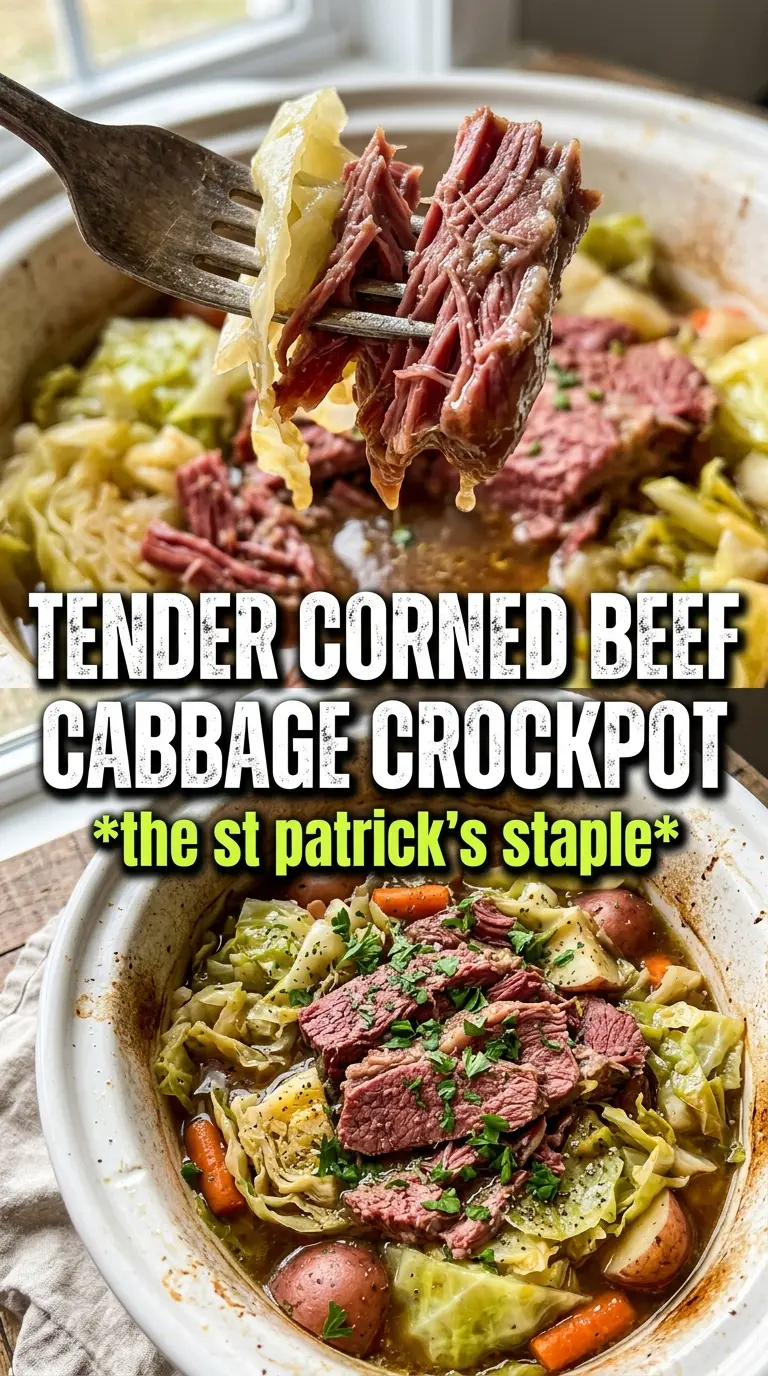
- Flat-cut corned beef brisket — Flat-cut brisket gives you neat, sliceable pieces, which matters here because you want the meat to fan out on the plate instead of shredding into the broth. If you can only find point-cut, it will be fattier and a little more ragged, but it will still taste good. Don’t skip rinsing it under cold water first; that knocks off some of the excess curing salt so the broth doesn’t taste harsh.
- Beef broth — This gives the vegetables something savory to cook in and keeps the slow cooker from tasting watery. A good boxed broth works fine, but if yours is very salty, use low-sodium so the corned beef doesn’t push the dish over the edge. The meat is already seasoned, so the broth should support it, not compete with it.
- Apple cider vinegar — A little acid brightens the pot and keeps the flavors from going muddy during the long cook. You can swap in white vinegar in a pinch, but cider vinegar gives a softer tang that fits the dish better. Don’t add much more than written or the broth will start tasting sharp instead of rounded.
- Brown sugar — This doesn’t make the dish sweet; it balances the brine and rounds off the vinegar. A tablespoon is enough to smooth out the edges without turning the broth into glaze. Packed light brown sugar or dark brown sugar both work, though dark brown sugar adds a slightly deeper molasses note.
- Yukon Gold potatoes — These hold their shape better than russets and come out creamy instead of chalky. Quarter them so they cook through at the same pace as the carrots. Waxy potatoes are the right move here because they won’t dissolve into the broth.
Building the Slow Cooker in the Right Order
Layering the Vegetables First
Start with the potatoes, carrots, onion, garlic, broth, and vinegar in the bottom of the slow cooker. That base acts like a rack and a braising liquid at the same time, which keeps the brisket from sitting directly on the ceramic insert. If the vegetables go in on top, they steam unevenly and the meat doesn’t get the same steady heat underneath.
Putting the Brisket Where It Cooks Best
Rinse the corned beef under cold water, then set it fat-side up over the vegetables. The fat renders slowly and bastes the meat as it cooks, and that’s what keeps the slices moist after nine hours in the cooker. Sprinkle the spice packet and brown sugar over the top so the seasoning gets pulled into the liquid as it heats.
Timing the Cabbage So It Stays Worth Eating
Add the cabbage wedges during the last 2 hours and press them into the liquid. They need enough heat to soften through the core, but not so much time that they collapse. If your wedges are small, check them at the 90-minute mark; once the leaves are tender and the stem gives easily with a fork, they’re done.
Resting and Slicing the Brisket
Take the brisket out and let it rest for 10 minutes before slicing. If you cut it straight from the cooker, the juices run out and the slices look dry even when they aren’t. Slice against the grain with a sharp knife, and keep the slices a little thicker than deli meat so they stay tender on the plate.
How to Adjust This Pot for Your Table
Make It a Little Lighter
Use low-sodium broth and skim off any fat from the surface before serving. You’ll still get the same tender brisket and soft vegetables, but the broth will taste cleaner. This is the easiest way to keep the dish from feeling heavy without changing the core recipe.
Swap the Potatoes for a Lower-Carb Plate
Replace the potatoes with extra cabbage and more carrots, or use turnips if you want something that still feels hearty. Turnips keep their shape and bring a mild earthy note that fits the broth. The dish won’t be quite as creamy, but it will still eat like a full dinner.
If You Want a Stronger Mustard Finish
Serve with whole grain mustard at the table and spoon a little broth over the meat before adding it. That gives the mustard something warm and savory to cling to instead of sitting on top in a harsh bite. Dijon works too, but whole grain mustard gives you the best texture against the soft brisket.
Storage and Reheating
- Refrigerator: Store the brisket and vegetables in their cooking liquid for up to 4 days. The meat stays moister this way, and the flavors deepen overnight.
- Freezer: The brisket freezes well for up to 2 months, especially if you freeze it with a little broth. The potatoes can turn mealy after thawing, so freeze those only if you don’t mind a softer texture.
- Reheating: Warm gently in a covered pan over low heat or in the microwave with a spoonful of broth. Don’t blast it on high heat or the brisket will tighten up and the vegetables will fall apart before the center is hot.
Questions I Get Asked About This Recipe
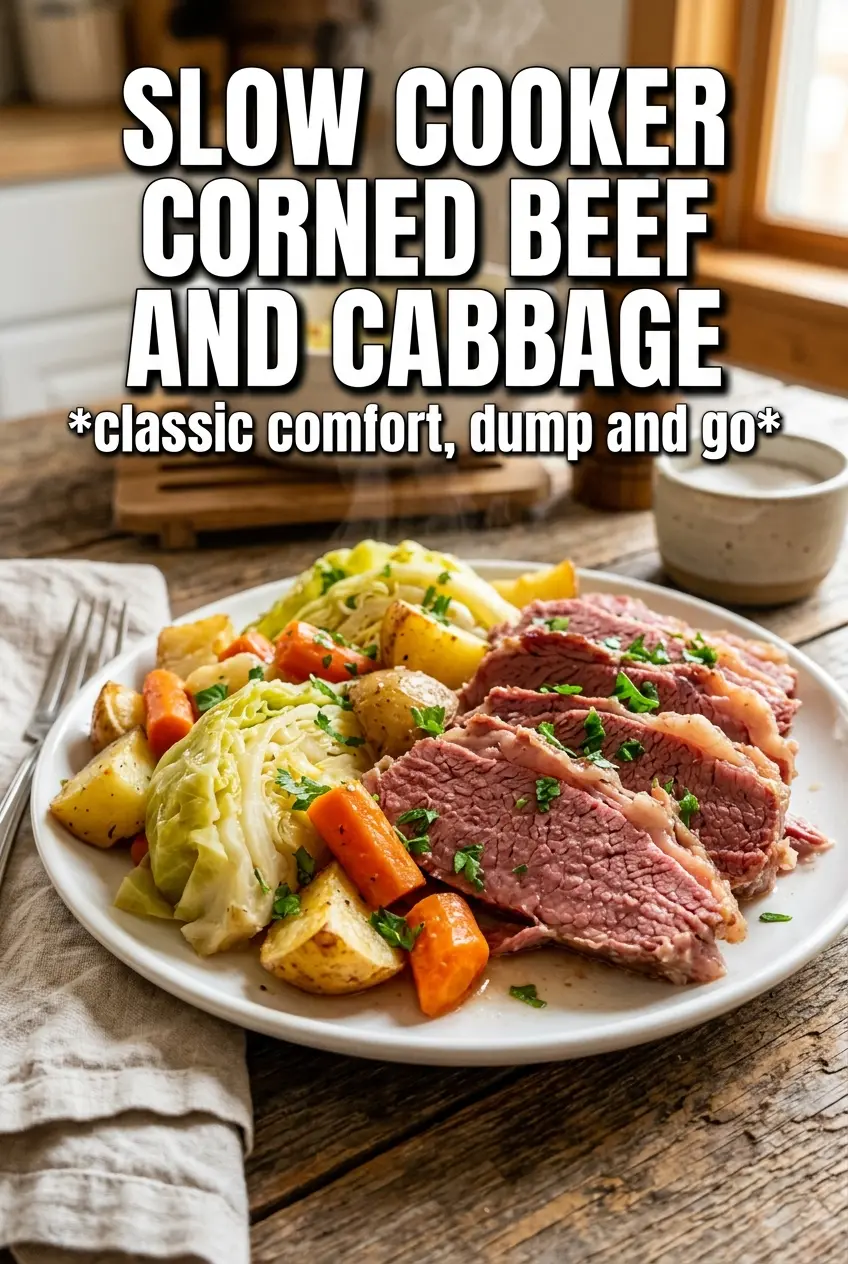
Slow Cooker Corned Beef and Cabbage
Ingredients
Equipment
Method
- Add the quartered onion, quartered potatoes, and cut carrots to the bottom of the slow cooker.
- Add the smashed garlic, then pour in the beef broth and apple cider vinegar so the vegetables are well moistened.
- Rinse the corned beef brisket under cold water and place it fat-side up over the vegetables.
- Sprinkle the included spice packet and brown sugar over the brisket.
- Cook on low for 8–9 hours, until the brisket is very tender.
- During the last 2 hours, add the cabbage wedges and press them into the cooking liquid.
- Remove the brisket and rest it for 10 minutes.
- Slice the brisket against the grain and serve with the vegetables, spooning over cooking liquid, and pass whole grain mustard on the side.