Coconut curry chicken turns deep golden and silky in the slow cooker, with chicken thighs that stay tender instead of drying out and a sauce that tastes like it simmered all afternoon. The coconut milk softens the heat of the curry paste, while ginger, garlic, and lime keep the whole pot bright enough to keep you going back for another spoonful.
This version works because the coconut milk and broth are whisked together before they ever hit the chicken, which helps the curry paste disperse instead of clumping in one bitter streak. Chicken thighs are the right cut here; they hold up to long, gentle heat and soak in the sauce without turning stringy. The peas go in near the end so they stay sweet and green, not dull and mushy.
Below you’ll find the small timing details that matter, the swaps that still keep the curry balanced, and the one reheating trick that keeps the sauce from breaking the next day.
The sauce stayed creamy all the way through, and adding the peas at the end kept them bright instead of overcooked. I served it over jasmine rice and my husband went back for seconds before I even sat down.
Save this slow cooker coconut curry chicken for nights when you want a creamy Thai-inspired dinner with almost no hands-on time.
The Part That Keeps the Coconut Sauce Smooth Instead of Splitting
The slow cooker can handle this curry, but it can’t rescue a sauce that starts off too hot or too thick. Coconut milk is stable when it cooks gently with broth, but if you crank the heat and let it boil hard, the sauce can separate and the curry paste can taste sharp instead of rounded.
The other thing that matters is how the ingredients go in. Chicken thighs sit in the sauce and release flavor as they cook, while onion softens into the background and gives the curry body. If you’ve ever ended up with curry that tasted thin, it’s usually because the sauce never had enough fat or the spices never had a chance to disperse evenly through the liquid.
- Chicken thighs — These are worth using here. They stay juicy over a long cook and give you that rich, shreddable texture that chicken breast can’t match after six hours.
- Full-fat coconut milk — Light coconut milk makes the curry watery and less silky. If you need a substitute, use another full-fat canned coconut milk; cartoned coconut beverage won’t behave the same way.
- Red curry paste — This is the backbone of the dish. Different brands vary a lot in heat and salt, so start with the amount listed, then adjust at the end with lime juice or brown sugar rather than dumping in more paste early.
- Fish sauce — Don’t skip it unless you have to. It doesn’t make the curry taste fishy; it makes it taste fuller and more savory. If you need a substitute, use soy sauce, but expect a slightly flatter finish.
- Fresh ginger and garlic — Fresh is worth it here. Powders won’t give the same brightness or aroma in a long-cooked sauce.
- Frozen peas — They’re better than fresh here because they hold their shape and sweetness. Add them at the end so they stay tender and green.
Building the Curry So the Flavor Stays Balanced All the Way Through
Whisking the Sauce First
Combine the coconut milk, red curry paste, broth, garlic, ginger, fish sauce, brown sugar, lime juice, and turmeric before it goes into the slow cooker. That step matters because it breaks up the curry paste and spreads the seasoning through the liquid instead of leaving you with pockets of spice. The sauce should look evenly tinted and smell fragrant right away. If you see clumps of paste, keep whisking until they disappear.
Letting the Chicken and Vegetables Cook Undisturbed
Once the sauce is poured over the chicken, onion, and bell pepper, leave the lid on. Opening the slow cooker drops the temperature and adds time, which is how chicken thighs end up taking on a stringy texture instead of turning silky. On low, the chicken should be very tender at 6 to 7 hours; on high, it usually needs about 3 hours, but the real cue is that it pulls apart easily with a fork.
Finishing with Peas and Final Seasoning
Stir in the frozen peas during the last 20 minutes so they warm through without losing their pop. Then taste the sauce. If it feels flat, it usually needs lime juice for brightness, a little more fish sauce for depth, or a pinch more brown sugar if the curry paste brought more heat than you wanted. Adjusting at the end is what makes the dish taste finished instead of just cooked.
Three Smart Ways to Adapt This Curry
Make It Dairy-Free and Gluten-Free Without Changing the Dish
This recipe is already naturally dairy-free and can be gluten-free if you check the labels on your curry paste and fish sauce. Some curry pastes include shrimp paste or additives that aren’t always obvious, so a quick label check keeps the whole pot safe for more people. Serve it with jasmine rice and nothing about the texture suffers.
Swap in Chicken Breast Only If You Shorten the Cook Time
Chicken breast can work, but it needs much less time. Add it in larger chunks and start checking early, because the breast dries out faster than thighs in a long slow cook. The curry will still taste good, but the texture won’t be as rich or forgiving.
Use Vegetables to Stretch It Further
You can add sliced carrots, snap peas, or chopped zucchini if you want more vegetables in the pot. Firmer vegetables go in at the beginning; quick-cooking vegetables should be stirred in near the end so they don’t collapse into the sauce. The curry will feel heartier without losing its balance.
Make It Milder for Kids or Heat-Sensitive Eaters
Use less curry paste at the start, then add a little more after tasting if you want more heat. The coconut milk and brown sugar will keep the curry from tasting one-note, but pulling back on the paste is the cleanest way to control spice. Lime at the end keeps the flavor lively even when the heat is lower.
Storage and Reheating
- Refrigerator: Store leftovers in an airtight container for up to 4 days. The sauce may thicken as it sits, and the flavors usually get even better by day two.
- Freezer: This freezes well for up to 2 months. Cool it completely first, then freeze in portions; the texture of the bell pepper softens a little after thawing, but the curry stays satisfying.
- Reheating: Warm it gently on the stove over low heat or in the microwave at medium power, stirring once or twice. If it looks too thick, add a splash of broth or water. High heat is the mistake here because it can cause the coconut sauce to separate.
Answers to the Questions Worth Asking
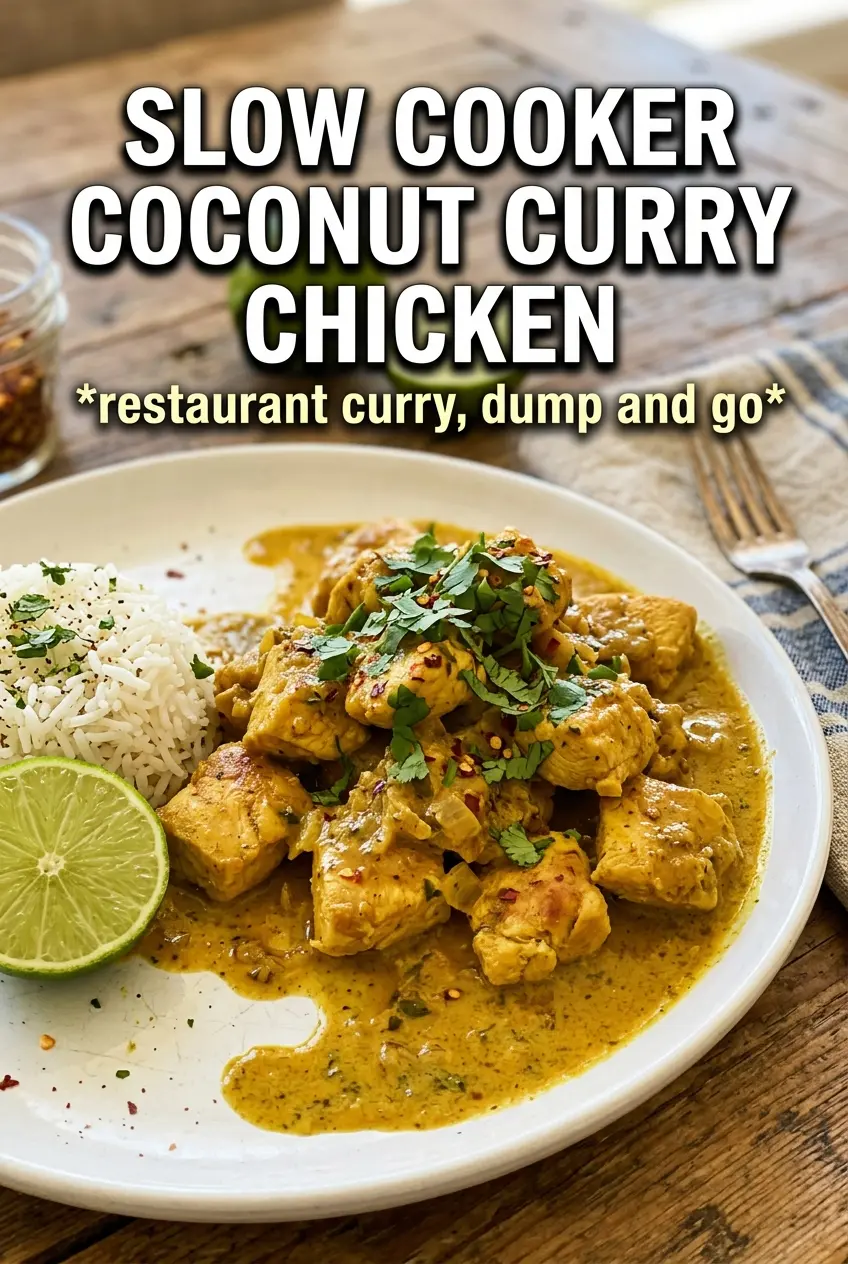
Slow Cooker Coconut Curry Chicken
Ingredients
Equipment
Method
- Place the chicken thighs in the slow cooker as an even layer so they cook through uniformly.
- In a bowl, whisk together the coconut milk, red curry paste, chicken broth, garlic, ginger, fish sauce, brown sugar, lime juice, and turmeric until smooth.
- Pour the sauce over the chicken, then add the diced onion and sliced red bell pepper so everything is coated.
- Cook on low for 6–7 hours (or high for 3 hours) until the chicken is very tender and the sauce looks thick and golden.
- Stir in the frozen peas and cook for the last 20 minutes until bright green and heated through.
- Taste and adjust seasoning with additional fish sauce, lime juice, or brown sugar as needed until the flavors balance.
- Serve the coconut curry chicken over jasmine rice, topped with fresh Thai basil and lime wedges for squeezing.