Slow cooker chicken stew lands in that sweet spot between cozy and practical: thick broth, tender chicken that falls off the bone, and vegetables that hold their shape instead of turning to mush. By the time it’s ready, the gravy has picked up the flavor of the chicken, herbs, and tomato paste, so every spoonful tastes cooked all the way through instead of watered down.
The trick is in the order. The potatoes, carrots, celery, and onion go in first so they can sit in the liquid and soften evenly, while the chicken thighs rest on top and slowly baste everything below. Bone-in thighs are worth using here because they stay juicy through a long cook and give the stew a deeper, richer broth than lean chicken breasts ever can.
Below, I’ve included the exact moment to add the cornstarch slurry so the stew thickens cleanly, plus a few smart swaps if you need to use what’s already in your kitchen.
The gravy thickened up perfectly at the end and the chicken was fall-apart tender without the potatoes going grainy. I added a little extra parsley on top and it tasted like something that had been simmering all day.
Save this slow cooker chicken stew for the nights when you want thick gravy, tender chicken thighs, and a one-pot dinner that practically finishes itself.
The Part That Keeps This Stew Thick Instead of Brothy
The difference between a stew and a pot of soup comes down to when you thicken it. If the cornstarch goes in too early, especially with a long slow cook, it can break down and leave you with a thinner sauce than you expected. The better move is to let the stew cook until the chicken is fully tender, then stir in the slurry at the end and give it a short blast of heat to tighten everything up.
That final twenty minutes on High matters because cornstarch needs active heat to activate cleanly. The stew should go from loose and glossy to spoon-coating, not gluey. If it looks a little thin right after you stir in the slurry, give it time. It thickens as it comes back to a simmer.
What Each Ingredient Is Actually Doing in the Pot
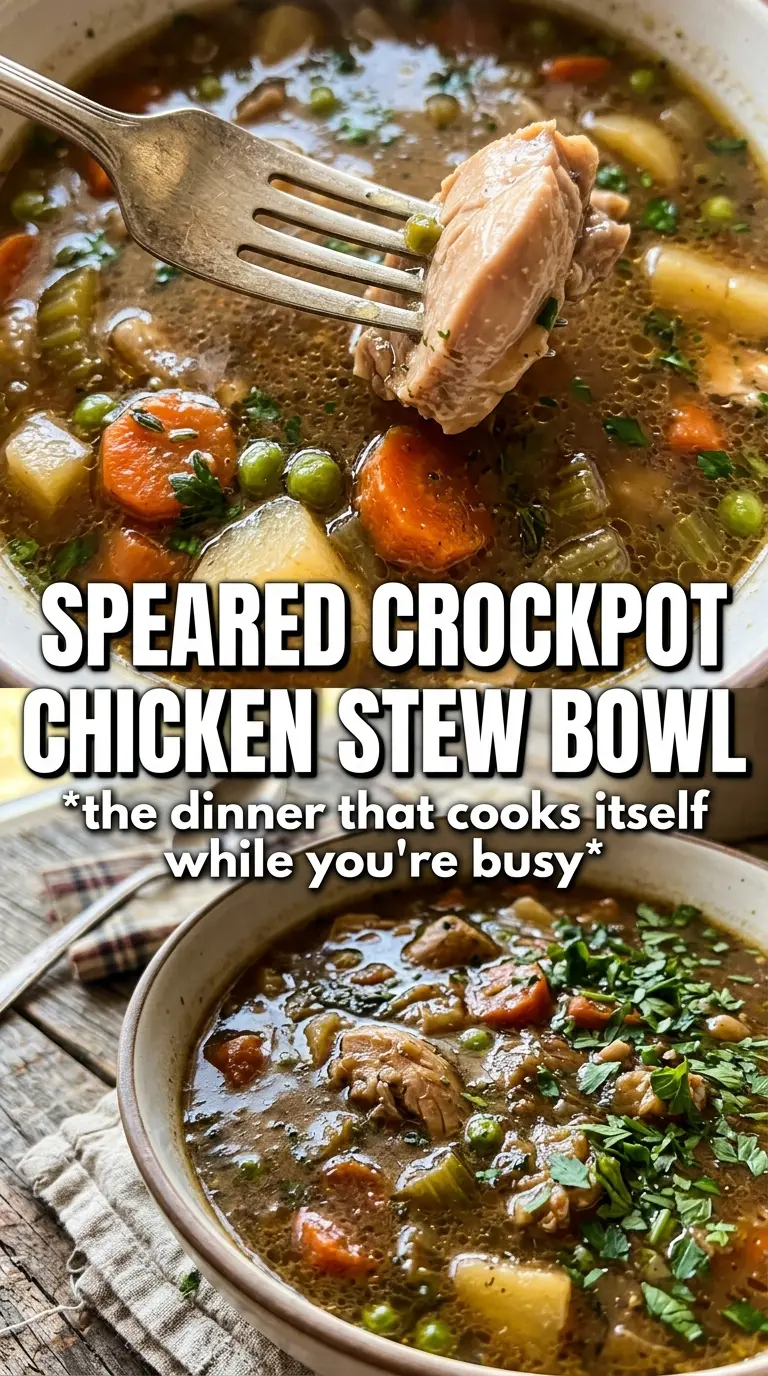
- Bone-in chicken thighs — These stay juicy through a long cook and give the broth more body than boneless thighs or breasts. If you swap in boneless thighs, cut the cook time a little and watch closely so they don’t string out and dry at the edges.
- Baby potatoes — Halved baby potatoes hold their shape better than big starchy potatoes and don’t need peeling. If you use Russets, they’ll soften faster and some will break down into the broth, which makes the stew thicker but less chunky.
- Chicken broth + cream of chicken soup — This combination gives you both liquid and built-in body. The canned soup is doing a lot of the creamy heavy lifting here, so this isn’t the place to swap in plain milk unless you’re ready to lose that classic stew texture.
- Tomato paste — You don’t taste tomato; you taste depth. It adds a savory roundness that keeps the stew from leaning flat or one-note after hours in the slow cooker.
- Dried thyme, rosemary, and bay leaf — These herbs hold up well over a long cook, especially rosemary. Fresh herbs won’t give you the same all-day backbone, but parsley at the end wakes everything up again.
Let the Slow Cooker Do the Work, Then Finish Like You Mean It
Building the Vegetable Base
Start with the potatoes, carrots, celery, and onion in the bottom of the slow cooker. They need the longest time in the heat, and placing them underneath keeps the chicken from sitting directly on the insert. The vegetables will soften gradually in the broth instead of drying out on top.
Layering the Chicken and Seasoning
Set the chicken thighs over the vegetables, then add the garlic, broth, cream of chicken soup, tomato paste, thyme, rosemary, and bay leaf. Don’t worry about stirring it aggressively at this stage; a gentle nudge is enough. Overmixing can knock the chicken pieces around and leave you with uneven cooking.
Waiting for the Meat to Release Cleanly
Cook on Low until the chicken is very tender and the vegetables are cooked through, usually 6 to 8 hours. The chicken should pull apart easily with two forks, and the potatoes should give without collapsing. If the stew still looks pale and thin, it’s not done yet; the slow cooker needs time for the flavors to meld before the finish.
Thickening and Finishing the Stew
Remove the chicken, discard the skin and bones, and shred the meat. Pull out the bay leaf, stir in the cornstarch slurry, and cook on High for about 20 minutes until the broth turns glossy and coats a spoon. Add the chicken back in at the end, then season with salt, pepper, and parsley. If you salt too early, the stew can taste heavy before it’s fully reduced.
How to Change It Without Losing the Comfort of the Dish
Use boneless chicken thighs for easier serving
Boneless thighs work well if you want to skip the bone-removal step, and they still stay moist in the slow cooker. Pull them out a little earlier than bone-in thighs so they don’t dry out, then shred and return them at the end. The stew will taste a touch less rich, but the texture stays close.
Make it gluten-free with a few smart swaps
Use a gluten-free cream of chicken soup and check that your broth is certified gluten-free. The cornstarch slurry already works in your favor here, so you don’t need flour to get the stew thick. The flavor stays the same, and the texture still finishes silky.
Add peas or green beans near the end
Frozen peas or cut green beans can go in during the last 20 to 30 minutes so they keep their color and bite. Add them too early and they lose their freshness and turn dull. This is the easiest way to stretch the stew without changing its structure.
Skip the canned soup if you want a lighter broth
Replace the cream of chicken soup with an extra 1/2 cup broth and 1/2 cup heavy cream, then plan to thicken carefully at the end. The stew will taste a little cleaner and less old-fashioned, and you’ll lose some of that built-in comfort-food body. It still works, but the finished texture is softer and less plush.
Storage and Reheating
- Refrigerator: Keep in an airtight container for up to 4 days. The stew thickens as it chills, so expect a much denser texture the next day.
- Freezer: It freezes well for up to 3 months. Cool it completely first, then freeze in portions so the potatoes and chicken reheat more evenly.
- Reheating: Warm gently on the stove over medium-low or in the microwave in short bursts, stirring between intervals. Add a splash of broth if it’s too thick, because the biggest mistake is blasting it hard enough to make the chicken stringy and the gravy split.
Questions I Get Asked About This Recipe
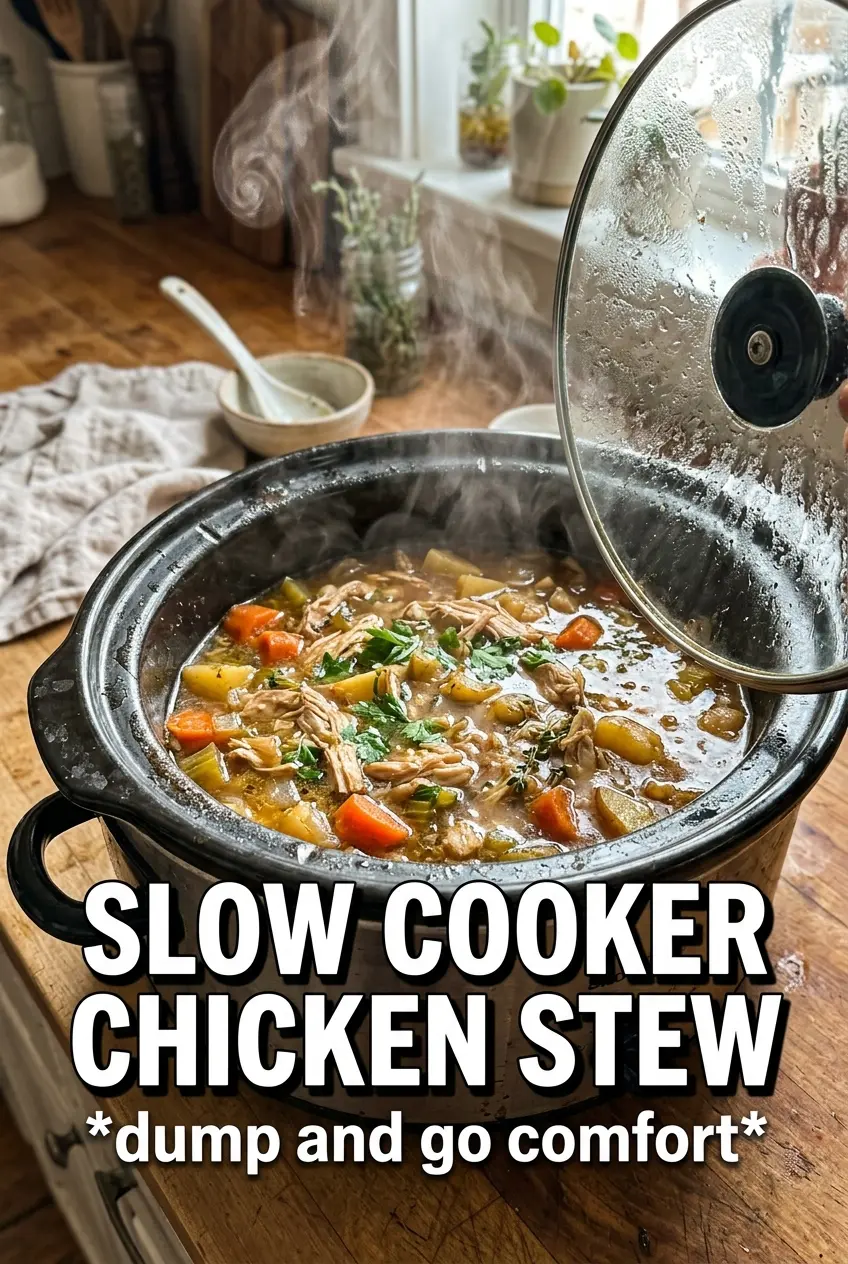
Slow Cooker Chicken Stew
Ingredients
Equipment
Method
- Add the baby potatoes, carrots, celery, and onion to the bottom of the slow cooker so they form an even layer, then nestle the chicken thighs on top and spread the vegetables around the edges.
- Add the minced garlic, chicken broth, cream of chicken soup, tomato paste, dried thyme, dried rosemary, and bay leaf over the chicken so everything is mostly submerged and seasoned.
- Cover and cook on LOW for 6–8 hours, until the chicken thighs are very tender and the vegetables are easily pierced with a fork.
- Remove the chicken thighs, discard the skin and bones, and shred the meat, then return the shredded chicken to the slow cooker.
- Remove the bay leaf, then stir the cornstarch slurry into the hot stew and switch to HIGH for 20 minutes, until the gravy turns glossy and thick enough to lightly coat a spoon.
- Season the stew with salt and pepper to taste, then garnish with fresh parsley for a bright green finish before serving.


