Slow cooker beef ragu turns a tough chuck roast into a deep, silky sauce that clings to every ribbon of pasta. The beef comes out spoon-tender, the tomatoes cook down into something rich and rounded, and the whole pot tastes like it simmered all day because, well, it did. What I love most about this version is that the slow cooker does the heavy lifting while the wine, tomato paste, and aromatics build a sauce with real depth instead of a one-note tomato base.
The key is starting with a cut that wants time, not a quick sear-and-done cut. Chuck roast has enough connective tissue to break down slowly, which gives the ragu that lush texture you want for pappardelle or rigatoni. The red wine matters here too; it doesn’t make the sauce taste boozy, it gives the tomatoes a darker, more savory edge that keeps the finished dish from tasting flat.
Below, I’m walking through the small details that make a big difference, from the seasoning balance to the moment when the beef should go back into the sauce. If you’ve ever ended up with a thin or bland ragu, the notes here will help you fix that.
The sauce thickened up beautifully and the beef shredded into perfect chunks. I served it over pappardelle and my husband said it tasted like a restaurant meal.
Save this slow cooker beef ragu for the kind of night when you want a deep tomato sauce, fall-apart beef, and almost no hands-on work.
The Reason Chuck Roast Beats Lean Beef Every Time
Beef ragu falls apart when the meat is too lean. Lean cuts can shred, but they don’t give you that silky, unctuous sauce because they’re missing the connective tissue that melts during a long cook. Chuck roast is built for this kind of dish. It stays sturdy long enough to flavor the sauce, then breaks down into tender strands that soak up the tomato base instead of turning dry and stringy.
The other place people lose flavor is rushing the sauce. The wine, tomato paste, and aromatics need time together so the sharp edges cook off and the tomatoes taste fuller. If the ragu seems thin near the end, that’s normal. Once the beef is shredded and stirred back in, the sauce settles into a thicker, richer texture as it rests.
What Each Ingredient Is Actually Doing in the Pot
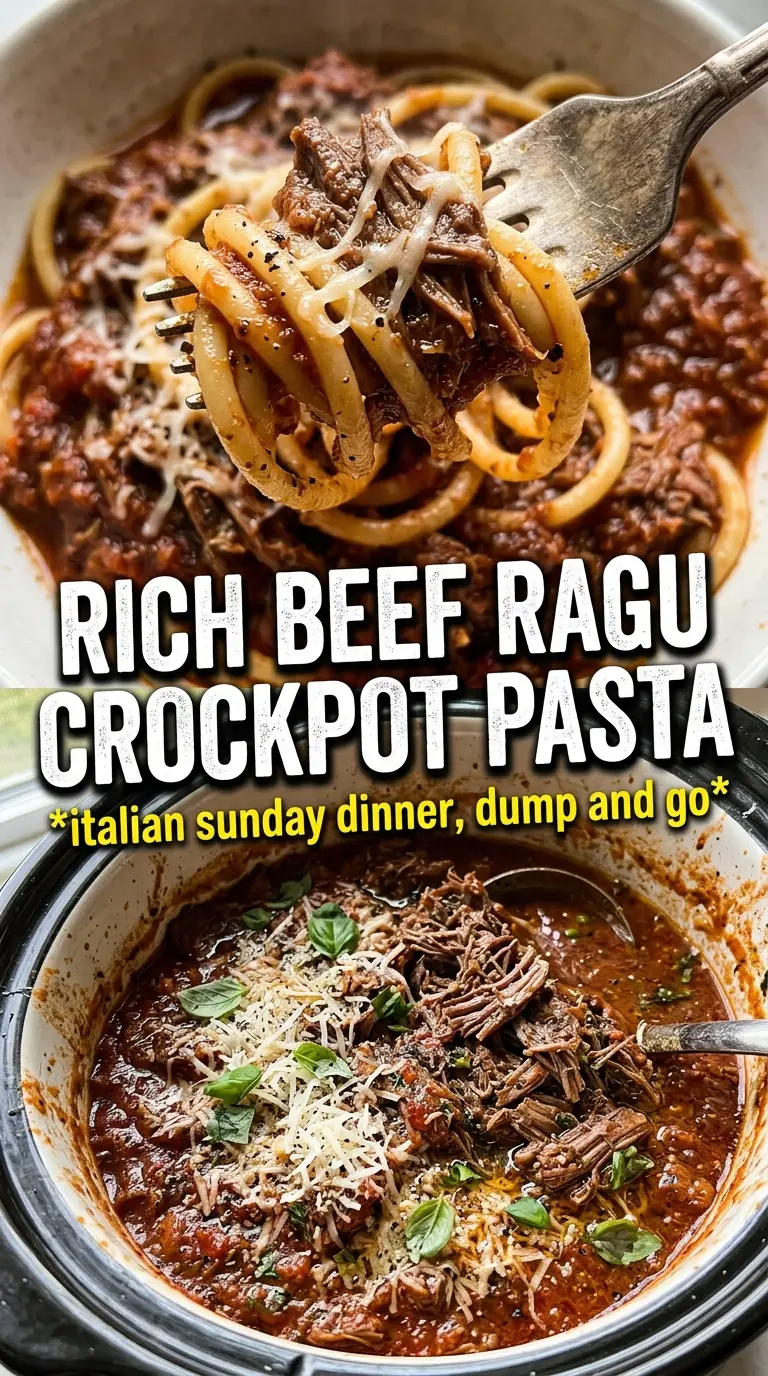
- Beef chuck roast — This is the backbone of the dish. It gets tender over a long cook and gives the sauce body that ground beef can’t match. If you swap in a leaner cut, you’ll lose that luscious texture.
- Crushed San Marzano tomatoes — They bring sweetness and a cleaner tomato flavor than many standard canned tomatoes. Use a good canned tomato here; this is one of the places quality matters because the sauce is built around it.
- Dry red wine — Chianti or Cabernet Sauvignon adds depth and helps the sauce taste less acidic and more rounded. If you need to skip it, use beef broth plus 1 tablespoon red wine vinegar, but the finished ragu will be a little less layered.
- Tomato paste — It deepens the color and gives the sauce a concentrated savory note. Don’t skip it; it does more than thicken the sauce.
- Onion, celery, and carrots — This is the soffritto, and it quietly builds sweetness and balance into the sauce. Dice them finely so they melt into the background instead of leaving chunky bits.
Building the Ragu So It Tastes Cooked, Not Just Heated
Seasoning the Beef First
Salt and pepper the chuck roast before it goes into the slow cooker so the meat itself tastes seasoned, not just the sauce around it. The beef doesn’t need to be browned for this version, but it does need enough salt to carry flavor through eight hours of cooking. If the roast looks pale at this stage, that’s fine; the slow cooker handles the transformation.
Mixing the Sauce Before It Hits the Meat
Whisk the tomatoes, wine, tomato paste, garlic, onion, celery, carrots, herbs, and sugar together before pouring them over the beef. That keeps the tomato paste from clumping and helps the herbs distribute evenly. The sauce should look loose and chunky going in; it thickens as the vegetables soften and the beef releases flavor.
Cooking Until the Beef Fights Back, Then Gives In
Cook on low until the roast is completely fall-apart tender. If you try to shred it and it still resists, it needs more time, not more heat. The turning point is obvious: a fork should slip in with almost no pressure, and the meat should separate into large, moist pieces instead of tight slices.
Shredding and Returning the Meat
Pull the beef out, remove the bay leaves, and shred it into big pieces with two forks. Don’t mince it too fine or the ragu loses that hearty texture. Stir the meat back into the sauce so every strand gets coated, then let it sit a few minutes before serving; that pause helps the sauce cling better to the pasta.
How to Adapt This for a Lighter Pot or a Different Pantry
Gluten-Free Serving
The ragu itself is naturally gluten-free. Serve it over gluten-free pasta, polenta, or mashed potatoes, and keep an eye on the pasta texture because gluten-free shapes can go soft faster than durum wheat pasta.
Dairy-Free Bowl
Skip the Parmesan garnish and finish with chopped basil and a drizzle of olive oil instead. You’ll lose the salty dairy note, so a little extra seasoning at the table helps the sauce pop.
No Wine Version
Use an equal amount of beef broth plus 1 tablespoon red wine vinegar. The sauce will still be rich, but it won’t have the same dark, rounded edge that wine brings, so taste before serving and adjust the salt if needed.
Make It Ahead for a Crowd
This ragu is even better the next day. Cool it completely, refrigerate it overnight, and reheat slowly before tossing with pasta. The flavors settle and deepen, and the sauce often tastes more unified after a rest.
Storage and Reheating
- Refrigerator: Store the ragu in an airtight container for up to 4 days. The sauce thickens as it chills, which is normal.
- Freezer: It freezes well for up to 3 months. Freeze the sauce without the pasta, and leave a little room in the container because it expands.
- Reheating: Warm it gently on the stove over low heat with a splash of water or broth if needed. Don’t blast it in the microwave on high, or the beef can dry out and the sauce can separate at the edges.
Questions I Get Asked About This Recipe
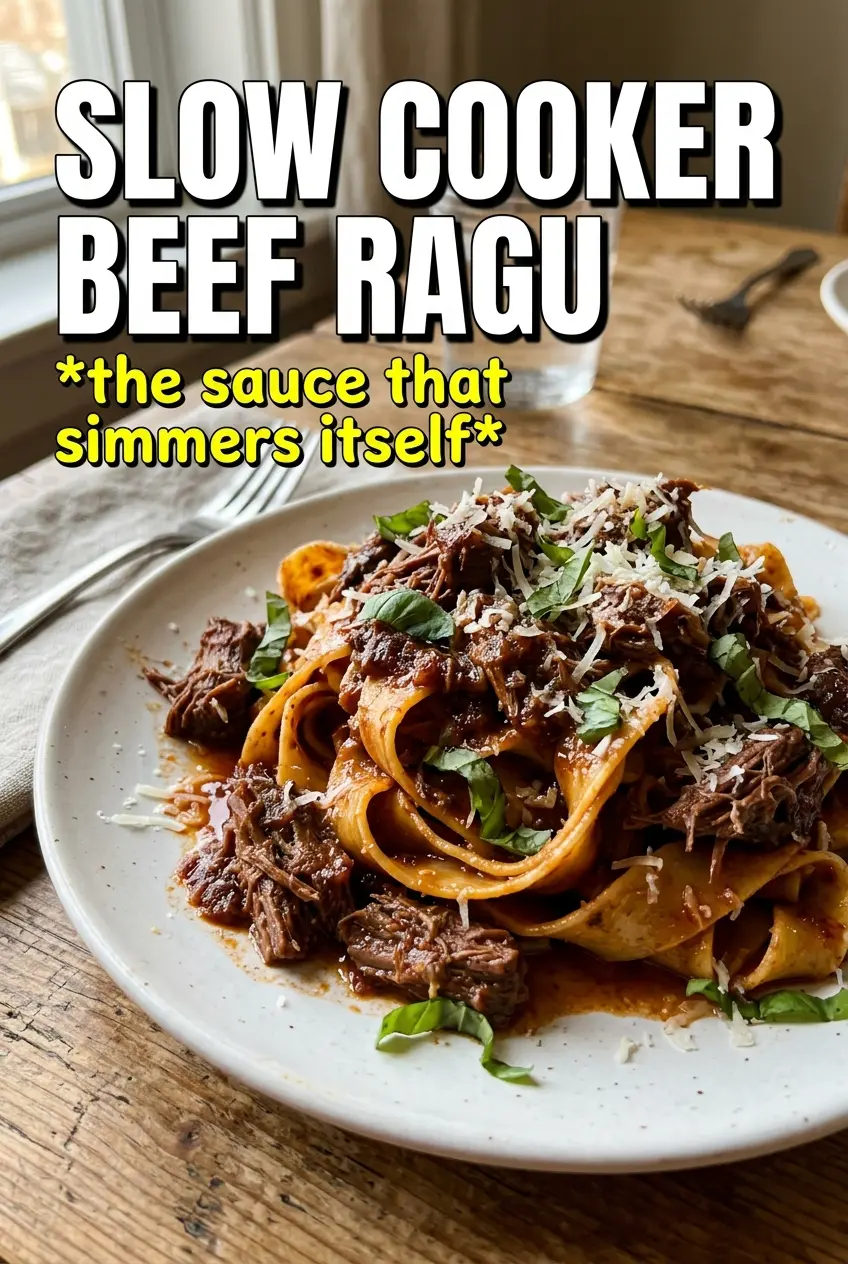
Slow Cooker Beef Ragu
Ingredients
Equipment
Method
- Season the beef chuck roast generously with salt and pepper, then place it in the slow cooker.
- Add bay leaves to the slow cooker with the beef.
- In a bowl, whisk together crushed San Marzano tomatoes, red wine, tomato paste, garlic, onion, celery, carrots, dried basil, dried oregano, dried thyme, and sugar.
- Pour the tomato-and-wine sauce over the beef and ensure the bay leaves are submerged.
- Cook on low for 8–10 hours until the beef is completely fall-apart tender (stir once if the sauce looks dry on top).
- Remove the beef, shred into large pieces with two forks, then discard the bay leaves.
- Return the shredded beef to the sauce and stir to combine.
- Serve the ragu over pappardelle or rigatoni, then garnish with fresh basil and freshly grated Parmesan.