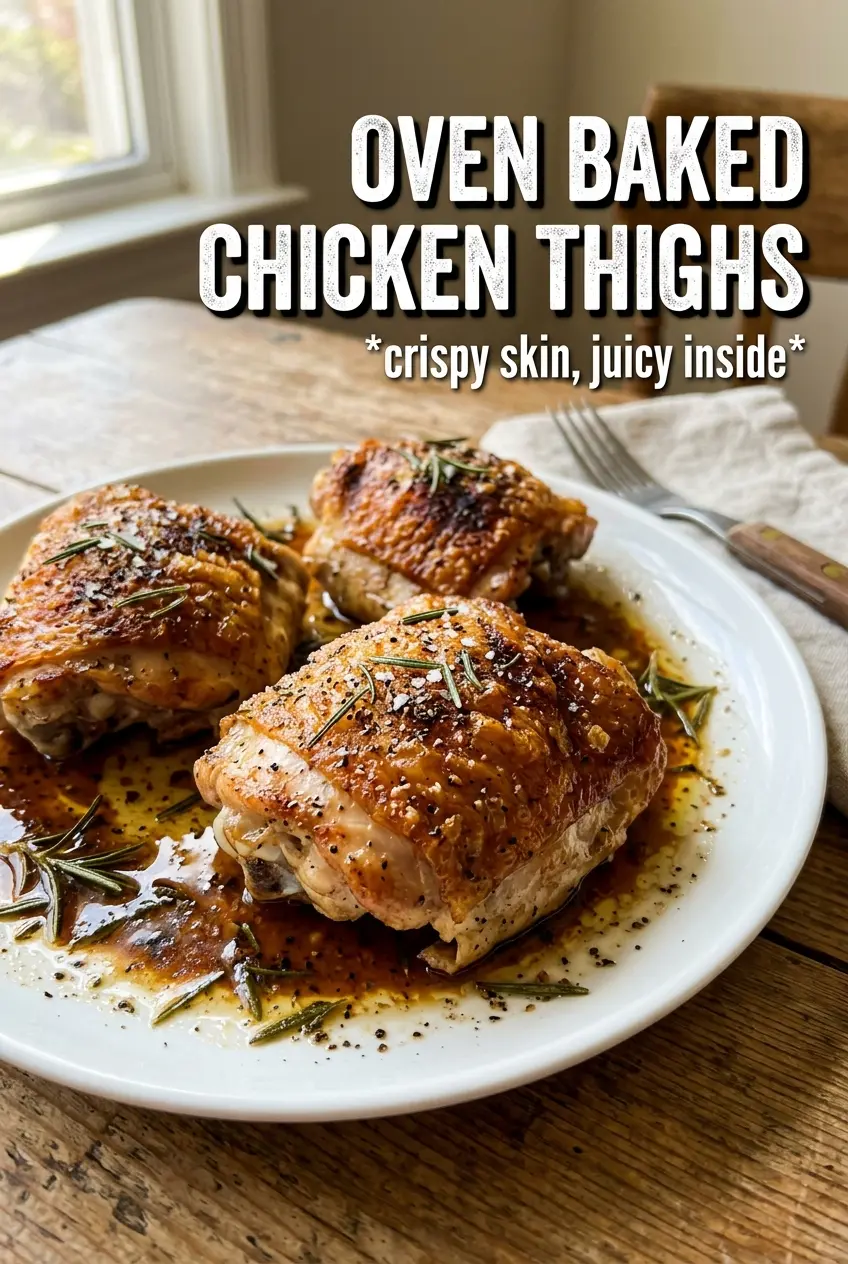
Oven baked chicken thighs earn their place in the weeknight rotation because they give you the best part of roast chicken without the fuss: crackly skin, juicy meat, and a pan that comes out smelling like you worked harder than you did. The skin turns deeply golden in a hot oven, while the meat underneath stays tender and forgiving even if you miss the timing by a minute or two.
The trick is drying the thighs thoroughly before they ever see oil or seasoning. Moisture is the enemy of crisp skin, and bone-in, skin-on thighs have enough fat to reward a little patience. A wire rack helps the hot air circulate, so the bottom doesn’t steam, and a simple spice rub adds flavor without masking the chicken itself.
Below, you’ll find the little details that matter here: how to get the skin crisp instead of rubbery, which seasoning swap works if you’re out of smoked paprika, and how to reheat leftovers without losing that good texture.
The skin came out shatteringly crisp and the thighs were still juicy at 165°F. I followed the wire rack step and there wasn’t a soggy bottom in the bunch.
Save these oven baked chicken thighs for a crispy-skin chicken dinner that stays juicy in the center.
The Skin Stays Crisp When the Chicken Isn’t Crowded
The biggest mistake with baked chicken thighs is putting them in a pan where they sit too close together or touching liquid as they roast. That traps steam, and steam softens skin. A wire rack on a rimmed sheet pan fixes that by lifting the thighs above the drippings so the hot air can move all the way around them.
425°F is hot enough to render the skin and build color without drying out the meat before the center is done. If your thighs are extra large, lean on the thermometer instead of the clock. You want 165°F in the thickest part, but chicken thighs can handle a little more time and still stay juicy because of the fat and connective tissue.
What Each Seasoning Is Actually Doing Here

- Bone-in, skin-on chicken thighs — This cut stays moist through a hot oven and gives you the best skin-to-meat ratio. Boneless thighs work in a pinch, but they cook faster and won’t give you the same crisp, rich result.
- Olive oil — A thin coating helps the seasoning cling and encourages browning. You don’t need much; too much oil can soften the skin instead of crisping it.
- Garlic powder and onion powder — These season the surface evenly without burning the way fresh garlic can at this temperature. Granulated versions work too, but use a little less since they’re a touch stronger and less dusty.
- Smoked paprika and Italian seasoning — Paprika adds color and a subtle roasted note, while Italian seasoning brings enough herb flavor to keep the chicken from tasting flat. If you don’t have smoked paprika, regular paprika still works; you’ll just lose a little depth.
- Salt — Salt does the quiet work here by pulling flavor into the meat and helping the skin dry out in the oven. Table salt is fine, but if you’re using kosher salt, keep the measurement as written only if your brand is similar in grain size.
Dry, Season, Rack, Roast, Rest
Getting the Surface Dry Enough
Pat the thighs until the skin feels almost tacky, not wet. Any moisture left on the skin has to evaporate before browning can begin, and that steals time from crisping. If the chicken came out of packaging with a lot of liquid, go over it twice with paper towels. This step is the difference between lacquered skin and pale, soft skin.
Building the Seasoning Coat
Brush the thighs with olive oil, then rub the spice mixture all over, getting some under the skin where you can lift it gently. That little bit under the skin seasons the meat itself instead of only the outside. Don’t pile the rub on so heavily that it looks caked; you want an even, thin layer that can toast instead of burn.
Roasting Until the Skin Tightens and Browns
Set the thighs skin-side up on the rack and let the oven do the work. Around the 30-minute mark, the skin should look taut and darkening at the edges, with rendered fat pooling below. If the skin is browning too fast before the meat is cooked through, move the pan down one rack in the oven. Pull the chicken when it hits 165°F in the thickest part, or a little beyond if you want even more tenderness.
Letting the Juices Settle
Give the thighs five minutes before serving. That pause keeps the juices in the meat instead of spilling out the second you cut in. Finish with parsley and lemon wedges for a fresh hit that cuts through the richness. The lemon isn’t decoration; it sharpens the whole dish.
How to Adjust These Thighs for a Different Pantry or Dinner Plan
No smoked paprika
Use regular paprika or even a small pinch of chili powder if that’s what you’ve got. You’ll lose some smoky depth, but the thighs will still brown well and the garlic-onion base keeps the seasoning balanced.
Dairy-free and gluten-free as written
This recipe already skips dairy and gluten, so there isn’t anything to adjust for either one. Just check your spice blends if you use a store-bought Italian seasoning, since a few blends include anti-caking agents or stray additives.
Making it for a bigger crowd
Double the chicken and use two sheet pans instead of crowding one. Rotate the pans halfway through roasting so both batches brown evenly, and give yourself enough space between thighs for the skin to crisp instead of steam.
Using boneless thighs instead
Boneless thighs cook faster, usually in the 20-25 minute range, so start checking early. They won’t give you the same dramatic crispy skin, but they do stay tender and pick up the seasoning well if you want a quicker dinner.
Storage and Reheating
- Refrigerator: Store in an airtight container for up to 4 days. The skin softens in the fridge, but the meat stays juicy.
- Freezer: Freeze cooked thighs for up to 2 months. Wrap them tightly and thaw overnight in the refrigerator before reheating.
- Reheating: Reheat on a wire rack in a 375°F oven until hot, about 10-15 minutes. Skip the microwave if you care about the skin, because it turns rubbery fast.
Questions I Get Asked About This Recipe
Oven Baked Chicken Thighs
Ingredients
Equipment
Method
- Preheat oven to 425F, then pat chicken thighs completely dry with paper towels. This is key for crispy skin.
- Brush both sides of the chicken with olive oil. Make sure the surface looks lightly coated.
- Mix garlic powder, onion powder, smoked paprika, Italian seasoning, salt, and black pepper, then rub all over the chicken including under the skin. Press gently so the coating sticks.
- Place chicken skin-side up on a wire rack set inside a rimmed baking sheet. Keep the thighs spaced so hot air can circulate.
- Bake for 35-40 minutes at 425F until the skin is deeply golden and crispy and the internal temperature reaches 165F. If needed, continue baking in 3-5 minute increments to fully crisp.
- Rest chicken for 5 minutes before serving with fresh parsley and lemon wedges. Let the juices settle so the interior stays juicy.