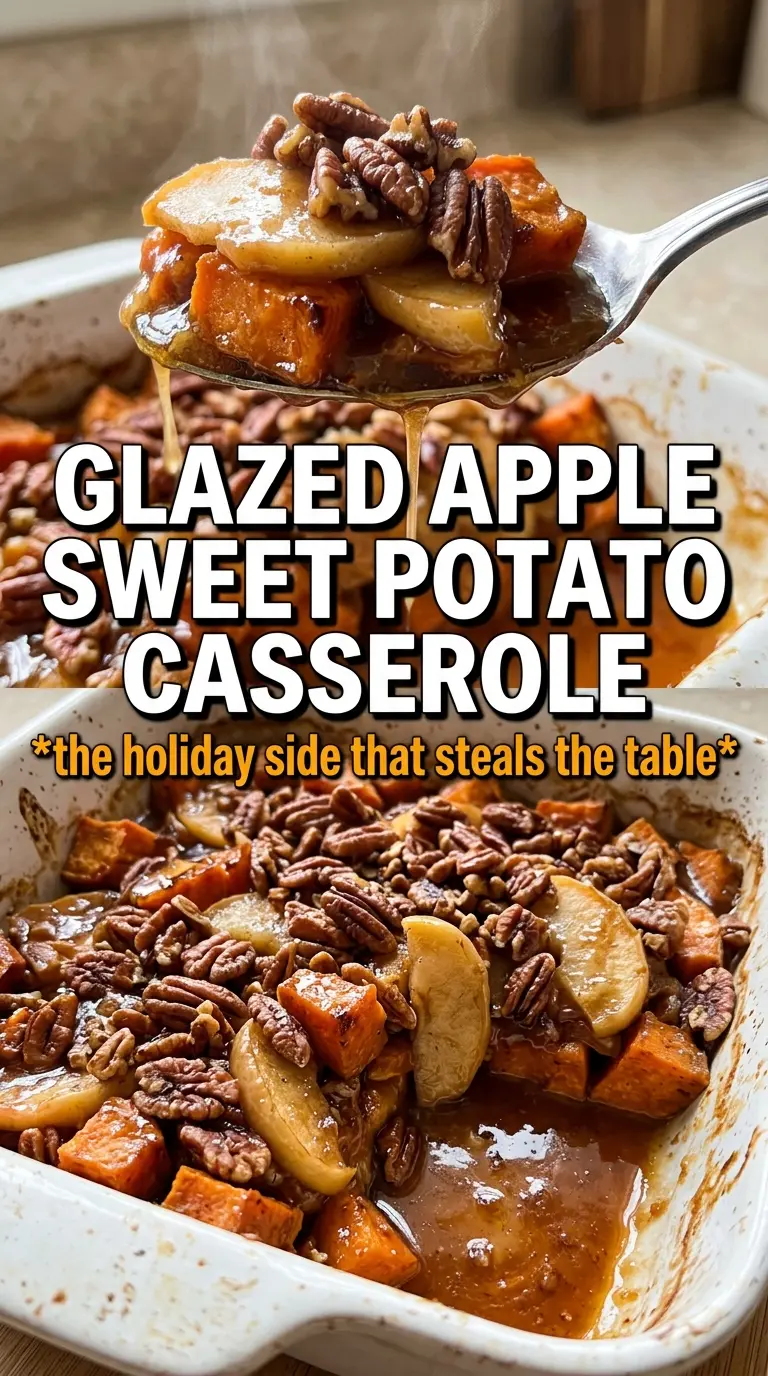
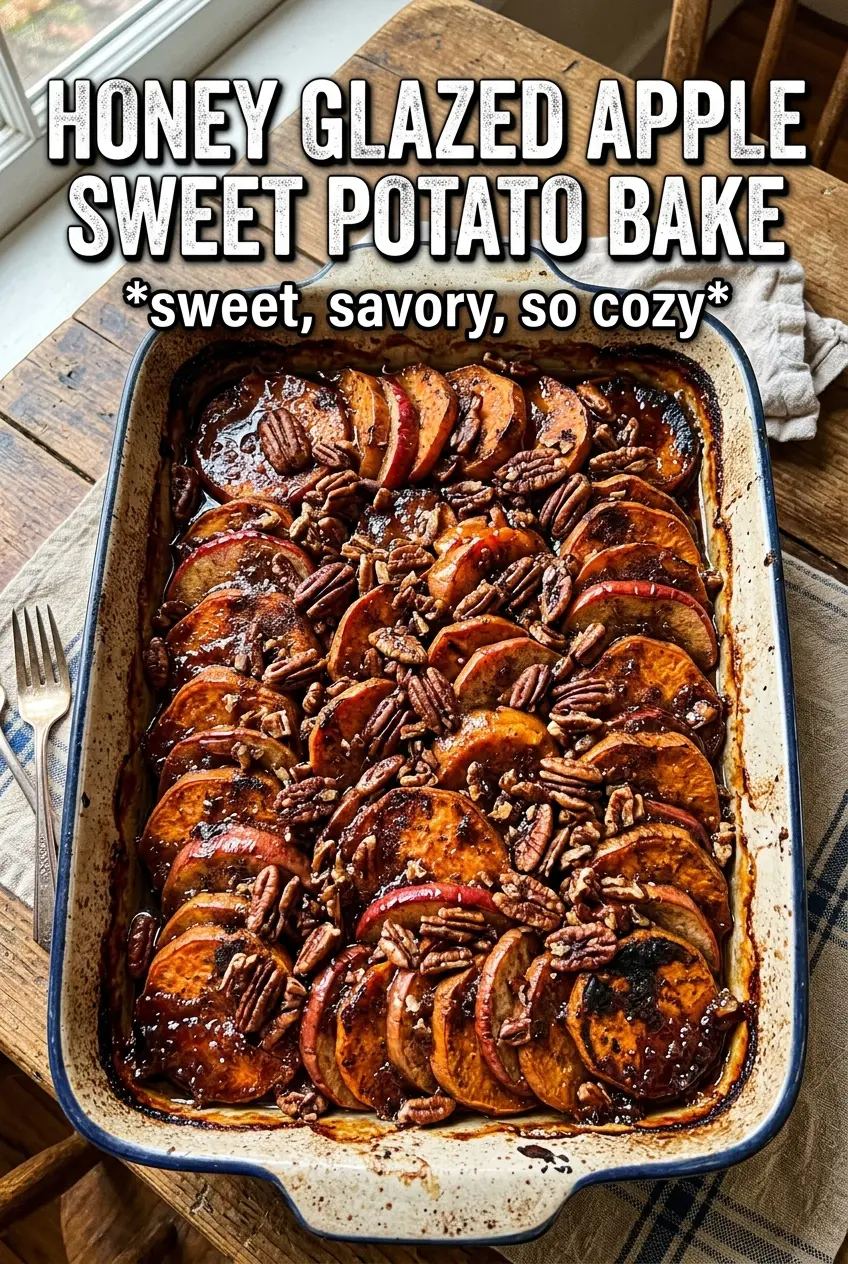
Honey-glazed apple and sweet potato casserole lands in that sweet spot between cozy side dish and low-effort showpiece. The sweet potatoes turn tender without collapsing, the apples soften just enough to hold their shape, and the glaze bakes down into a glossy layer that clings to every slice. A handful of pecans on top gives the whole dish a little crunch at the end, which is exactly what keeps each bite from feeling soft all the way through.
The part that makes this version work is the balance. Sweet potatoes bring body, apples bring brightness, and the honey-butter glaze keeps the dish from tasting heavy or flat. I like using apples that stay intact in the oven, because mealy apples turn this into mush fast. The foil-covered bake does the first job gently, then the uncovered finish is where the edges caramelize and the top gets that burnished look everyone reaches for first.
Below, I’ve included the part that matters most: how to layer the casserole so it bakes evenly, which apples hold up best, and how to adapt it if you want to keep the same flavor but change the texture a little.
The glaze thickened beautifully in the oven and the sweet potatoes were tender without turning watery. I used Honeycrisp apples and they held their shape all the way through, which made every serving look neat and taste balanced.
Save this honey glazed apple and sweet potato casserole for the nights when you want a glossy baked side with tender layers and a pecan crunch.
The Layering Trick That Keeps the Apples From Disappearing
The biggest mistake with baked apple-and-sweet-potato dishes is stacking everything into a thick jumble and hoping the oven sorts it out. It won’t. The bottom softens slowly while the top dries out, and the apples can turn to sauce before the sweet potatoes are tender. Alternating overlapping rows gives the hot glaze a path down through the dish, so both fruits cook at the same pace.
Covering the dish for the first part of the bake matters just as much. That trapped steam softens the sweet potatoes without scorching the honey on top. The uncovered finish is where the caramelization happens, so if the top looks pale after the foil comes off, give it the full final 15 minutes before judging it.
What the Honey, Butter, and Spices Are Actually Doing Here
- Sweet potatoes — These are the backbone of the dish, so slice them evenly at 1/4 inch thick. Thin slices turn soft too fast, and thick ones stay firm in the center. A mandoline helps, but a sharp knife works fine if you keep the cuts consistent.
- Apples — Choose apples that hold their shape, like Honeycrisp, Braeburn, or Granny Smith. Soft apples melt into the glaze and make the casserole loose. If you want more tartness, use a sharper apple; if you want a sweeter finish, use a firmer sweet-tart variety.
- Honey and brown sugar — Honey gives the glaze its shine and that rounded floral sweetness, while brown sugar adds deeper caramel notes. You need both here. Honey alone can taste thin after baking, and brown sugar alone won’t coat the slices the same way.
- Butter — Melted butter helps the glaze cling and gives the finished dish a richer mouthfeel. Don’t use margarine here; it doesn’t bake into the same glossy finish and the flavor falls flat.
- Pecans — Add them near the end so they toast instead of burn. They bring the crunch that keeps this casserole from eating like soft fruit all the way through. Walnuts work in a pinch, but they taste sharper and less buttery.
- Fresh thyme — This is optional, but a tiny bit on top makes the sweetness taste cleaner. It’s not there to make the dish savory; it just gives the final bite a little lift.
Building the Glaze and Baking It Until It Turns Glossy
Whisking the Glaze Smooth
Stir the honey, melted butter, brown sugar, cinnamon, nutmeg, ginger, and salt until the mixture looks glossy and fully combined. If the brown sugar stays grainy, it’s fine — it will dissolve in the oven — but you don’t want a dry paste sitting on the fruit. The salt matters here because it keeps the glaze from tasting like straight syrup.
Layering the Fruit for Even Baking
Lay the sweet potato and apple slices in alternating rows and overlap them a little, like roof shingles. That small overlap helps the glaze coat the edges and keeps the layers from sliding apart after baking. If the dish is packed too tightly, the center steams unevenly and the top never browns the way it should.
The Foil Bake That Softens Everything First
Cover the dish tightly with foil and bake until the sweet potatoes start turning tender. Tight foil is important because loose foil leaks steam, and then the casserole dries out before the fruit finishes cooking. When you lift the foil, the glaze should look thinner and bubbling at the edges, not dry or sticky in spots.
The Final Uncovered Finish
Scatter the pecans over the top and return the dish to the oven until the apples are tender and the surface is caramelized. This is the part that gives you glossy edges and toasted nuts. If the top is browning too fast before the center is soft, lay the foil back loosely over the dish for the last few minutes.
How to Adapt This Casserole Without Losing the Balance
Make It Dairy-Free
Swap the butter for refined coconut oil or a plant-based butter that bakes well. You’ll still get a glossy glaze, but the flavor will be a little lighter and less rich. Choose a neutral option if you don’t want coconut to creep into the finished dish.
Make It More Tart
Use Granny Smith apples and reduce the brown sugar by 1 tablespoon. The casserole will taste brighter and less dessert-like, which works well next to roast pork or ham. The texture stays the same; the finish just leans sharper.
Add a Deeper Crunch
Stir 2 to 3 tablespoons of rolled oats into the pecans before scattering them over the top. The oats toast into a craggy topping that feels a little closer to a crumble, but they don’t make the dish heavy. Keep the topping to the final bake so it stays crisp instead of going soft.
Make Ahead for a Busy Holiday Table
Assemble the casserole up to a day in advance, cover it tightly, and refrigerate it before baking. Let it sit on the counter while the oven heats so the dish isn’t ice-cold going in. If it goes straight from the fridge to the oven, the center takes longer and the top can overbake before the layers soften.
Storage and Reheating
- Refrigerator: Store leftovers covered for up to 4 days. The apples soften more as it sits, but the flavor stays good.
- Freezer: It freezes fairly well in portions, though the apples will soften after thawing. Wrap tightly and freeze for up to 2 months for best texture.
- Reheating: Warm in a 325F oven, covered, until heated through. Microwaving works for a small serving, but it makes the apples softer and can turn the glaze loose.
Answers to the Questions Worth Asking
Honey Glazed Apple and Sweet Potato Casserole
Ingredients
Equipment
Method
- Preheat the oven to 375F, then grease a 9x13 baking dish so the slices release easily.
- Layer the sweet potato slices and apple slices in alternating overlapping rows in the dish for even baking.
- Whisk honey, melted butter, brown sugar, cinnamon, nutmeg, ginger, and salt together until the glaze looks smooth and pourable.
- Pour the glaze evenly over the layered sweet potatoes and apples so every layer gets coated.
- Cover tightly with foil and bake for 30 minutes to soften the fruit and sweet potatoes.
- Uncover and scatter the pecans over the top, then bake 15 more minutes until tender and caramelized.
- Garnish with fresh thyme if desired right before serving for a fresh herbal note.


