Sticky, lacquered chicken thighs with a deep mahogany glaze are the kind of dinner that disappears fast, especially when the skin comes out bronzed and the sauce clings in a glossy layer instead of sliding off the pan. The balance here is what keeps it in repeat rotation: savory soy sauce, brown sugar for caramelized edges, and a little vinegar to keep the glaze from tasting flat or cloying.
The marinade does more than add flavor. The sugar helps the skin color quickly, while the oil carries the garlic and ginger across the chicken and keeps the glaze from tightening into a hard candy shell. A short marinate is enough to season the meat, but longer resting gives the thighs a deeper color and a more rounded taste.
Below, I’ll walk through the part that matters most: how to get that sticky finish without scorching the sugars, plus the small timing details that keep the chicken juicy and the glaze glossy.
The glaze turned out sticky and glossy without burning, and the chicken was still juicy after the broil. My husband kept going back for “just one more piece.”
Save these glazed soy sauce brown sugar chicken thighs for the night you want sticky, caramelized chicken with barely any cleanup.
The Glaze Stays Sticky When You Don’t Rush the Sugar
The mistake people make with sweet soy chicken is treating the marinade like a sauce that can be blasted over high heat from the start. Brown sugar burns fast, especially once it’s concentrated on the skin, so the first part of the bake is about setting the chicken and letting the glaze tighten gradually. That’s why the chicken goes into a hot oven skin-side up and gets basted later, not continuously from minute one.
Bone-in, skin-on thighs are the right cut here because they stay juicy while the skin gives you something the glaze can cling to. If you use boneless thighs, the timing drops and the texture shifts softer, but you lose some of the dramatic lacquered finish. The broil at the end is a finishing move, not a main cooking method; use it only after the chicken is already cooked through and the glaze needs that last bit of shine.
What Each Ingredient Is Actually Doing in This Dish

- Chicken thighs — Bone-in, skin-on thighs give you juicier meat and a better surface for the glaze to cling to. That skin renders slowly in the oven and turns crisp at the edges, which is what keeps this from eating like plain baked chicken in sauce.
- Soy sauce — This is the salty backbone and the source of that dark, savory color. Use a standard all-purpose soy sauce here; low-sodium works if that’s what you keep, but the glaze will taste lighter and you may want a touch more salt elsewhere.
- Brown sugar — This is what makes the sauce lacquer up instead of just seasoning the chicken. Packed brown sugar gives you that sticky finish, but if you reduce it much more than a spoonful or two, the glaze won’t caramelize the same way.
- Apple cider vinegar — A small amount keeps the glaze from becoming one-note sweet. You need that sharp edge to make the soy taste deeper and to keep the finished chicken from feeling heavy.
- Ginger and garlic — Fresh is best here because both are pressed right into the marinade and bloom in the hot oven. Powdered versions work in a pinch, but the flavor gets flatter and less aromatic.
- Olive oil — The oil helps the glaze spread evenly over the chicken and keeps the garlic and sugar from sticking in one thick, uneven layer. It also gives the skin a little insulation so the sugars don’t scorch before the thighs are done.
Basting at the Right Moment Is What Builds the Shine
Mixing the Marinade
Whisk the soy sauce, brown sugar, olive oil, garlic, vinegar, ginger, and red pepper flakes until the sugar looks mostly dissolved. A few grains are fine, but large clumps will sink to the bottom and turn patchy in the oven. The marinade should taste bold, a little salty, and slightly sharper than you expect, because it mellows once it bakes.
Giving the Chicken Time to Absorb It
Toss the thighs in the marinade and let them sit at least 30 minutes. Longer is better for deeper flavor, up to 24 hours, but don’t go so far that the skin starts to get soft and wet without any drying time before baking. If you can, pull the chicken from the marinade and let the excess drip off before it goes into the dish so the glaze can concentrate instead of pooling.
Baking Until the Skin Starts to Tighten
Arrange the thighs skin-side up in the baking dish and bake at 425°F. You’re looking for the skin to darken around the edges and the juices to start bubbling into the pan, not for full caramelization yet. If the oven runs cool, the glaze will look pale and loose; that’s the cue to give it a few more minutes before basting.
Finishing the Glaze
Brush on the reserved marinade halfway through cooking, then return the chicken to the oven until the glaze looks thick and glossy and the chicken reaches 165°F in the thickest part. If you want extra color, broil for 2 to 3 minutes, but watch it closely because the line between deeply caramelized and burnt is thin with brown sugar. Let the chicken rest briefly before garnishing so the juices settle and the glaze stays on the meat.
Three Ways to Make This Chicken Fit Your Table
Boneless Thighs for Faster Weeknights
Boneless, skinless thighs will cook faster and still take on the glaze well, but you lose the crisp skin and some of the dramatic caramelized edges. Start checking them early, usually around 18 to 22 minutes total, so they stay juicy instead of tightening up.
Gluten-Free Without Losing the Deep Soy Flavor
Use a certified gluten-free tamari in place of regular soy sauce. The glaze behaves the same in the oven, and the flavor stays savory and dark, though tamari usually tastes a little rounder and less sharp than standard soy sauce.
Lower-Sugar Version for a Less Sticky Finish
You can cut the brown sugar back by about a tablespoon if you want a lighter glaze, but expect less shine and less caramelization on the skin. The chicken will still be savory and well-seasoned, just not as lacquered or sticky.
Garlicky, Sweeter, or Spicier Edits
Add an extra clove of garlic for a sharper, more savory profile, or increase the red pepper flakes if you want heat under the sweetness. Small changes go a long way here because the glaze reduces and concentrates as it bakes.
Storage and Reheating
- Refrigerator: Store leftovers in an airtight container for up to 4 days. The skin softens, but the glaze stays flavorful.
- Freezer: Freeze the cooked chicken for up to 2 months. Wrap it well and freeze with a little extra sauce if you have it, since the glaze helps protect the meat from drying out.
- Reheating: Reheat in a 350°F oven, covered loosely with foil at first, until warmed through. The common mistake is microwaving it hard, which makes the skin rubbery and can make the glaze separate.
Questions I Get Asked About This Recipe
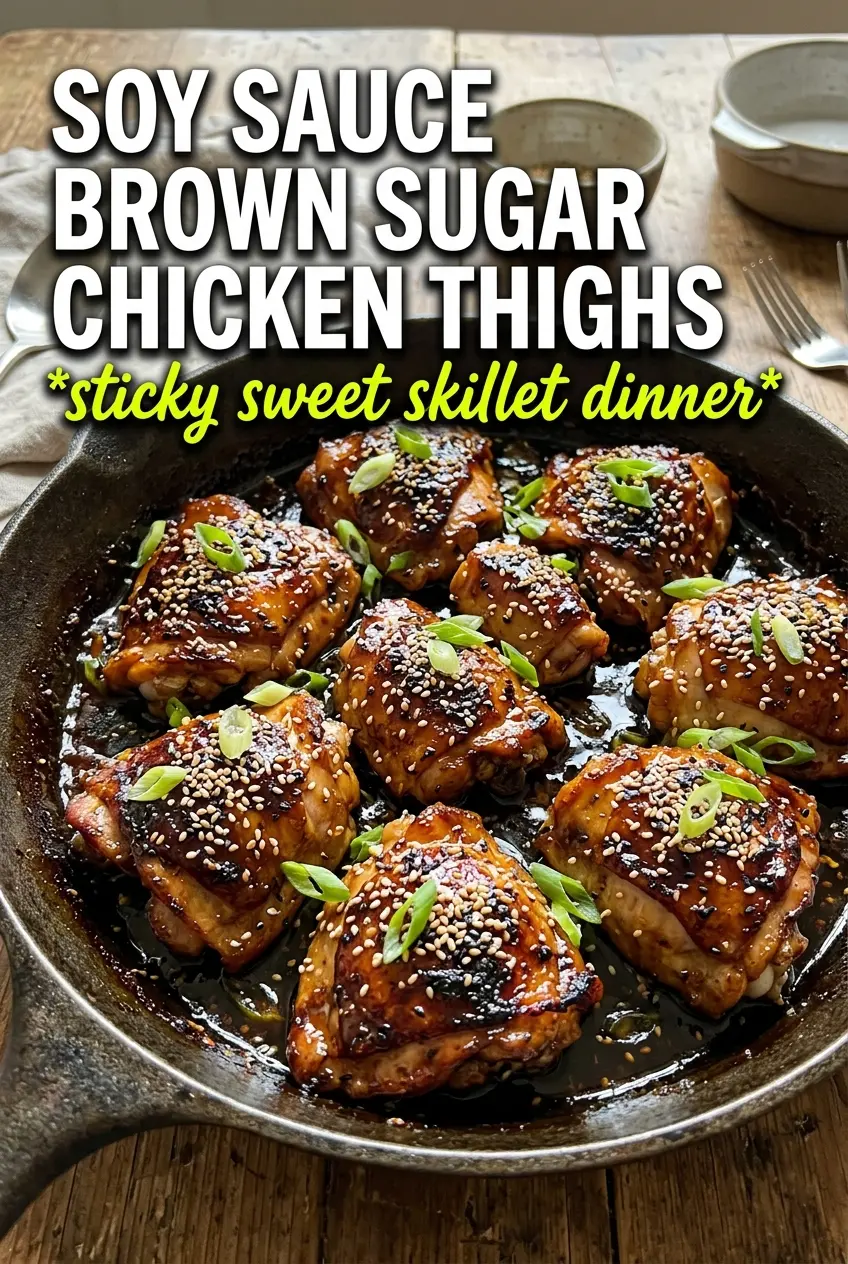
Glazed Soy Sauce Brown Sugar Chicken Thighs
Ingredients
Equipment
Method
- Whisk soy sauce, brown sugar, olive oil, garlic, apple cider vinegar, ginger, and red pepper flakes until the sugar dissolves and the mixture looks glossy.
- Marinate the chicken at least 30 minutes or up to 24 hours so the thighs absorb flavor before baking.
- Preheat oven to 425°F and place chicken skin-side up in a baking dish, reserving the marinade separately.
- Bake 20 minutes, then baste with the reserved marinade and bake 10 to 15 more minutes until the glaze is caramelized and the chicken is cooked through.
- Broil 2 to 3 minutes for extra caramelization if desired, watching closely so the lacquered surface doesn’t burn.
- Garnish with sesame seeds and sliced green onions right before serving so they stay bright and crisp.


