Deeply caramelized onions are what turn French onion soup from simple to unforgettable. The broth gets rich and savory, the onions melt into the spoon, and the broiled cheese cap cracks with that first bite before giving way to the toasted bread underneath. It’s the kind of bowl that feels classic for a reason.
The part that matters most is patience with the onions. They need low, steady heat and enough time to turn from sharp and pale to jammy and brown, because that sweetness is the backbone of the whole soup. The wine deglazes the pot and pulls up every browned bit, and the broth only needs a short simmer once the onions are ready.
Below, I’ll walk through the one step that trips people up most often, which ingredients are worth paying attention to, and how to keep the cheese topping broiled and bubbly without turning the whole thing greasy.
The onions took their time, but the payoff was worth it. The broth was deep and the cheese topping stayed golden instead of greasy.
Save this French onion soup for the kind of night when you want caramelized onions, brothy depth, and a bubbling Gruyere crust.
The Part Most People Rush Is the Only Part Worth Waiting For
If the onions stay pale, the soup tastes flat no matter how good the broth is. The long, slow cook is where the sweetness develops, and that sweetness is what balances the wine, the beef broth, and the salty cheese on top. Stirring every 10 to 15 minutes keeps the onions from scorching, but you don’t want constant movement; they need time in contact with the bottom of the pot to brown.
Use a heavy pot if you have one. Thin pans develop hot spots, and hot spots give you dark bits before the onions have softened enough. If the pan starts looking dry before the onions are deeply golden, lower the heat and let the butter do its work.
What the Onions, Wine, and Cheese Are Actually Doing Here

- Yellow onions — These are the base of the soup, and their natural sugar is what turns the broth rich and sweet as they cook down. White onions won’t give quite the same depth, and red onions change the flavor in a way that reads less classic.
- Dry white wine or sherry — This lifts the browned bits from the pot and adds acidity that keeps the soup from tasting heavy. Use a wine you’d actually sip; cooking wine brings a sharp, dull edge that shows up fast in a simple soup like this.
- Beef broth — This is where the soup gets its savory backbone. Homemade broth is great if you have it, but a good store-bought broth works fine as long as it tastes clean and beefy before you season the pot.
- Gruyere and parmesan — Gruyere gives you the classic nutty melt, while parmesan sharpens the top and helps it brown. If you swap in another cheese, pick one that melts smoothly; crumbly cheeses won’t give you that stretchy, broiled lid.
- Baguette or French bread — Toast it first so it holds its shape under the cheese and doesn’t dissolve into the soup. Soft bread goes soggy fast and leaves you with a lid that sinks before the cheese finishes bubbling.
How to Keep the Cheese Topping Melted, Not Greasy
Caramelizing the Onions Without Burning Them
Start the onions in butter and olive oil over medium heat with a little salt. The salt pulls out moisture early, which helps the onions soften before they color. After that, the heat needs to stay steady and moderate; if the onions start catching too fast, lower the burner. You’re looking for a deep amber color and a jammy texture, not crispy edges or black spots.
De-glazing the Pot the Right Way
When the onions are deeply browned, add the wine and scrape the bottom of the pot immediately. Those stuck bits are concentrated flavor, and they should dissolve into the liquid as the wine simmers. Let it cook for about 3 minutes so the sharp alcohol note fades; if you rush this, the soup tastes boozy instead of rounded.
Finishing the Broth and Broiling the Tops
Add the broth, thyme, bay leaf, and Worcestershire, then simmer long enough for the flavors to come together without reducing the soup into something too salty. Once the herbs come out, ladle the soup into oven-safe crocks, top with toasted bread, and cover the bread with a generous layer of cheese. Broil close enough to brown the cheese quickly, but watch it the whole time; once the top turns golden and bubbly, it goes from perfect to scorched in under a minute.
How to Adapt This for a Different Table or a Different Night
Make It Vegetarian
Swap the beef broth for a deeply flavored vegetable broth and add an extra splash of Worcestershire only if yours is vegetarian. The soup will still taste rich if you keep the onions fully caramelized, but it’ll lose a little of that classic meaty backbone.
Use Sherry for a Deeper Finish
Sherry adds a slightly nutty, rounder note than white wine. If you like a soup that tastes a little more layered and less bright, it’s the better swap, and it still deglazes the pot beautifully.
Gluten-Free Serving
Use a sturdy gluten-free baguette or toast thick slices of gluten-free bread until they’re firm. The bread only needs to float and support the cheese, so the key is structure, not exact shape.
Storage and Reheating
- Refrigerator: Store the soup without the bread and cheese for up to 4 days. The flavor often gets even better overnight.
- Freezer: The onion broth freezes well for up to 3 months. Freeze it before adding the bread and cheese, since the topping won’t hold up once thawed.
- Reheating: Reheat the soup gently on the stove until hot, then add fresh toast and cheese right before broiling. Don’t boil it hard, or the broth can taste dull and the onions can lose their soft texture.
Answers to the Questions Worth Asking
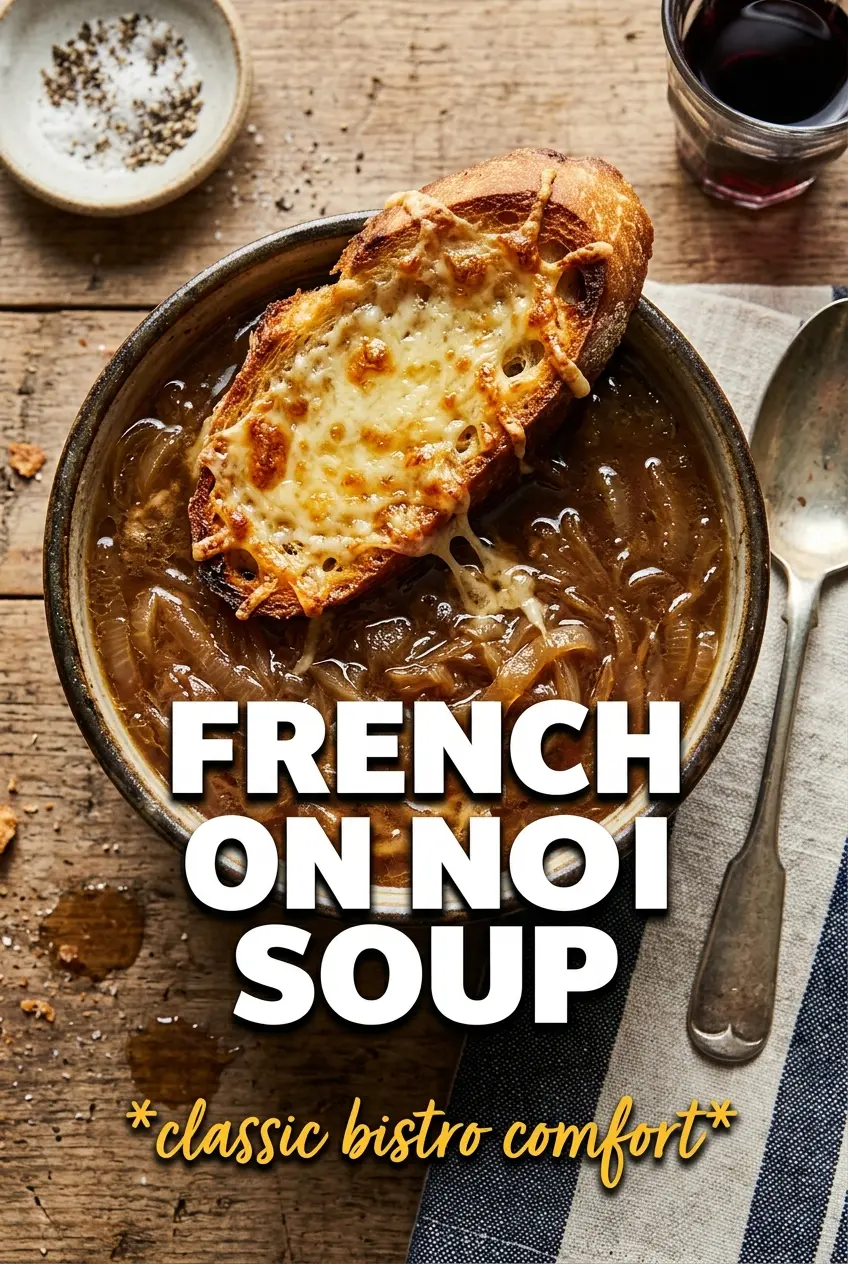
French Onion Soup
Ingredients
Equipment
Method
- Melt the butter with the olive oil in a large heavy pot over medium heat, then add the sliced onions and 1/2 teaspoon salt. Stir well so the onions are evenly coated and start softening right away.
- Cook the onions for 60-70 minutes, stirring every 10-15 minutes, until deeply golden, jammy, and caramelized. Scrape the bottom as you stir to prevent burning while keeping browned bits.
- Deglaze with the wine, then cook for 3 minutes while scraping up all browned bits from the pot. Let the wine bubble so the raw alcohol cooks off.
- Add the beef broth, thyme, bay leaf, and Worcestershire sauce, then simmer for 20 minutes. Skim if needed, and keep the liquid at a steady, gentle simmer.
- Remove the thyme and bay leaf, then season the soup with salt and pepper to taste. Taste for balance since caramelized onions concentrate sweetness.
- Ladle the soup into oven-safe crocks and float the toasted baguette slices on top. Center the bread so it soaks slightly and supports the cheese.
- Pile the Gruyère and parmesan over the bread, then broil for 3-4 minutes until melted and bubbly. Watch closely until the top turns golden-brown and bubbling at the edges.


