French custard apple pie bakes into something that feels part tart, part cream pie, and part classic apple dessert. The apples keep their shape, the custard sets into a silky layer around them, and the top takes on a light golden finish with just enough cinnamon to make each slice smell as good as it looks. What comes out of the oven is neat enough for a dinner table but soft and luxurious enough to earn a second slice.
The trick here is balance. Thin apple slices cook through at the same pace as the custard, so you get a slice that holds together instead of collapsing into applesauce. The flour in the custard helps it set cleanly, and the cream keeps it tender rather than eggy or firm. A little brandy adds depth if you have it, but the pie still works beautifully without it.
Below, I’ve included the one step that keeps the custard from turning watery and the small timing detail that makes slicing much cleaner. If you’ve ever had an apple custard pie slide apart on the plate, this version fixes that.
The custard set up perfectly and the apple slices stayed in place when I cut it. I used a little Calvados, and the flavor was warm and elegant without being too strong.
Save this French custard apple pie for the dessert that cuts cleanly and still tastes like a bakery-style treat.
The Part That Keeps the Custard from Turning Soupy
The biggest mistake with custard pies is underbaking them because the center still looks soft. Custard finishes setting as it cools, so pulling the pie when the center has only a slight jiggle is the difference between a clean slice and a runny one. If you wait until it looks fully firm in the oven, it usually ends up overbaked and grainy once it cools.
The other thing that matters here is the apple cut. Thin, even slices cook quickly enough to match the custard, and overlapping them in circles gives the filling structure. If the slices are too thick, the custard can set before the apples soften, and the pie eats awkwardly.
- Thin apple slices — These soften at the right pace and let the custard move around them. Use a sharp knife or mandoline so the slices stay even.
- Flour in the custard — This gives the filling a little backbone. Without it, the pie can bake up looser and less sliceable.
- Heavy cream — Cream keeps the custard rich and smooth. Half-and-half works in a pinch, but the filling will be a little less lush.
- Calvados or apple brandy — Optional, but it adds a round apple note that makes the pie taste more finished. Leave it out if you want a cleaner vanilla-cinnamon profile.
What Each Ingredient Is Actually Doing in the Pie

- Refrigerated pie crust — This keeps the pie weeknight-friendly and bakes up with a crisp base if you chill it before filling. Homemade crust is great too, but the store-bought version works well here because the custard is the star.
- Apples — Use a firm baking apple that keeps its shape. Tart-sweet apples give the best balance, since the custard brings plenty of richness.
- Eggs — They set the custard. Three large eggs is the sweet spot for a filling that slices without feeling dense.
- Heavy cream — This is what makes the filling taste silky instead of flat. It’s worth using the real thing here.
- Granulated sugar — Sweetens the custard and helps the top brown lightly.
- Vanilla, cinnamon, and nutmeg — These build the warm flavor under the apples. Nutmeg should stay in the background; too much can take over fast.
- Apple brandy or Calvados — Adds depth and a subtle orchard note. If you skip it, the pie still tastes complete, just a little less layered.
- Cinnamon sugar topping — This gives the surface a gentle sparkle and a little texture after baking.
- Powdered sugar — Use it right before serving so it stays pretty on top of the cooled pie.
Building the Apple Layers So the Pie Slices Cleanly
Preparing the Crust
Fit the crust into the pie dish and crimp the edges before you do anything else. A chilled crust handles the custard better and holds its shape instead of shrinking hard against the filling. If the dough feels soft, slide the pan into the fridge for a few minutes before you add the apples.
Arranging the Apples
Layer the slices in overlapping circles, starting at the outside edge and working inward. The goal is even coverage and a little height in the center, not a loose pile. If the apples are scattered too randomly, the custard pools unevenly and the slices don’t hold together as well.
Mixing the Custard
Whisk the eggs, cream, sugar, flour, vanilla, cinnamon, nutmeg, and brandy until smooth and no streaks of flour remain. The mixture should look pale and fully combined, not foamy. If you leave flour lumps behind, they bake into little pockets instead of helping the custard set evenly.
Baking Until Just Set
Pour the custard over the apples, then sprinkle the cinnamon sugar over the top and bake until the center is set with only a small wobble. The top should be golden, and the edges should look firm before you pull it from the oven. If the middle sloshes like liquid, it needs more time; if it puffs hard and cracks, it has gone too far.
Cooling Before Slicing
Let the pie cool for at least 30 minutes before dusting with powdered sugar and cutting. That cooling time is not optional if you want neat slices, because the custard tightens as it rests. Cutting too soon is the fastest way to end up with a loose filling on the plate instead of a tidy wedge.
How to Adapt This for Different Tables and Different Pantries
Make it dairy-free
Use full-fat canned coconut cream in place of the heavy cream. The custard will be a little more coconut-forward and slightly less classic in taste, but it still sets well and keeps that creamy texture.
Skip the brandy
Leave out the Calvados and add an extra splash of vanilla if you want the pie alcohol-free. You lose a little depth, but the cinnamon, nutmeg, and baked apples still carry the dessert.
Use a homemade crust
A homemade pie crust gives you a flakier, more buttery base. Keep it cold and blind-baking isn’t necessary here, but if your dough is very soft, chill the lined pan before filling so the crust doesn’t slump.
Store and reheat leftovers the right way
- Refrigerator: Cover and chill for up to 4 days. The custard firms up more in the fridge, so slices hold even better the next day.
- Freezer: Freezing isn’t ideal. Custard pies tend to weep after thawing, and the apples can turn soft, so this one is best enjoyed fresh or refrigerated.
- Reheating: Warm individual slices gently in a 300F oven for 10 to 12 minutes. Microwaving makes the custard rubbery and softens the crust, which is the fastest way to lose the texture you worked for.
Questions I Get Asked About This Recipe
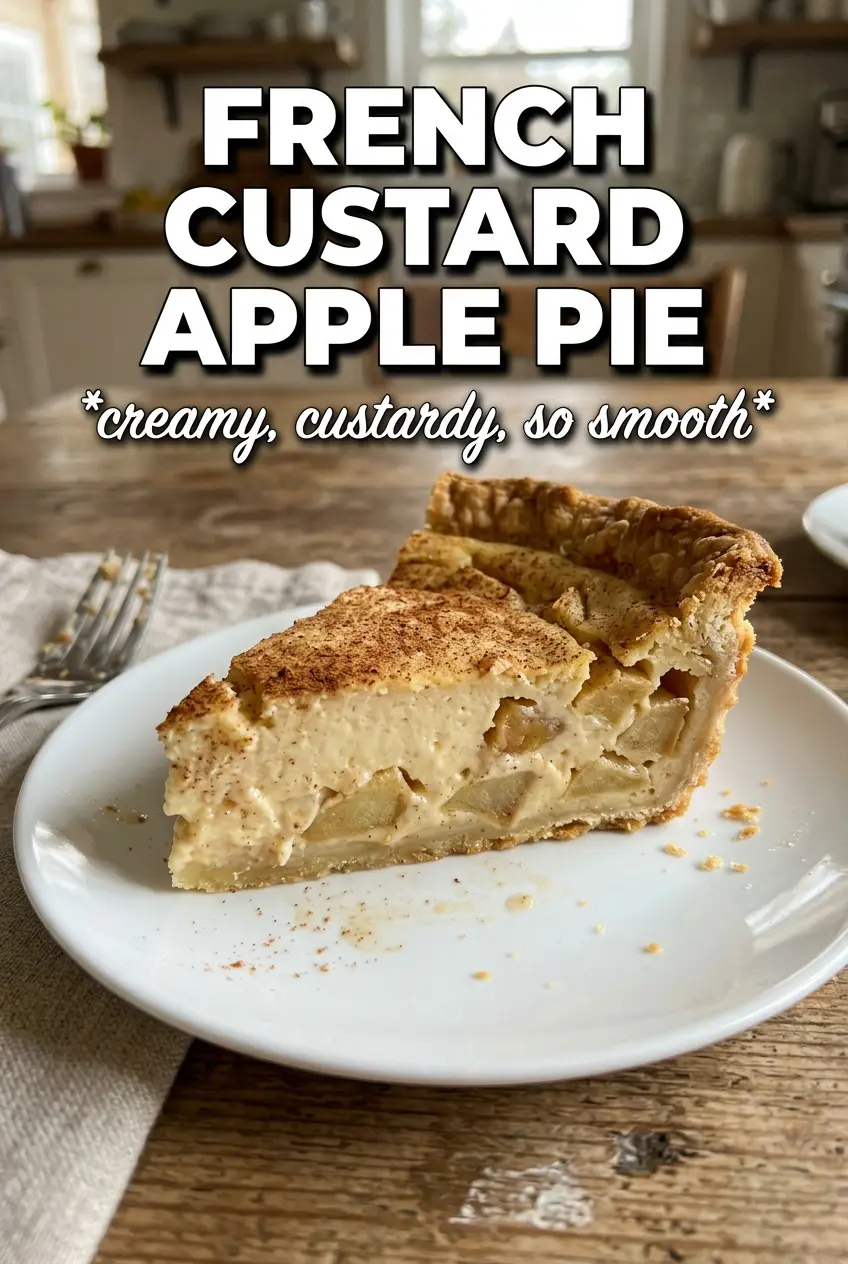
French Custard Apple Pie
Ingredients
Equipment
Method
- Preheat your oven to 375F. Fit the pie crust into a 9-inch pie dish and crimp the edges.
- Arrange the sliced apples overlapping in the crust in concentric circles. Press them gently so the apples sit evenly across the bottom.
- Whisk the eggs, heavy cream, granulated sugar, all-purpose flour, vanilla extract, cinnamon, nutmeg, and apple brandy or calvados until smooth. Stop when there are no visible flour streaks.
- Pour the custard mixture over the apples so it fills around and between the slices. Pour slowly to help the custard settle into the gaps.
- Sprinkle with the cinnamon sugar topping. Make sure the top is evenly coated.
- Bake for 50-55 minutes at 375F until the custard is set and the top is golden. The center should no longer look loose when you gently nudge the pie.
- Cool the pie for 30 minutes. Dust with powdered sugar before serving so the topping clings without dissolving.


