Thick, smoky Cowboy Stew is the kind of one-pot dinner that lands on the table with a little swagger. You get tender potatoes, savory beef, slices of smoked sausage, and beans that soak up a broth built on tomatoes, ranch seasoning, chili powder, and smoked paprika. It eats like a full meal because it is one, and the balance of meat, starch, and vegetables keeps every spoonful substantial.
What makes this version work is the layering. The beef and sausage get browned first so the pot starts with a deep, meaty base instead of a flat boiled flavor. The spices are cooked briefly in the fat before the liquids go in, which wakes them up and keeps the stew from tasting one-note. The potatoes simmer right in the broth until tender, and the corn goes in near the end so it stays sweet instead of soft and dull.
Below, I’ve included the small details that keep the broth rich, the potatoes intact, and the stew from turning muddy. If you want a hearty weeknight dinner that tastes even better the next day, this one earns its place.
The broth got deep and smoky without tasting heavy, and the potatoes held their shape all the way through. I added the jalapeños at the table and my husband went back for a second bowl before I even sat down.
Like this hearty Cowboy Stew? Save it for the nights when you want smoky broth, tender potatoes, and a true one-pot dinner.
The Broth Has to Start Flavorful, Not Just End Up Flavorful
Cowboy stew can turn bland fast if you treat it like everything just simmers together and sorts itself out. The key is browning the beef and sausage before any liquid goes in, then blooming the chili powder and smoked paprika in the hot fat for a full minute. That short step pushes the spices into the broth instead of leaving them dusty on the surface.
Potatoes are the other place people lose the texture. If they go in too early and boil hard for too long, they shed starch and make the stew thick in a chalky way. A steady simmer keeps them tender at the center while the edges hold together, which is what gives the bowl that hearty, spoon-coating feel without turning it into mash.
What Each Ingredient Is Doing in This Cowboy Stew

- Ground beef — This gives the stew its main savory base. An 80/20 mix brings the best flavor, but lean beef still works if you’re careful not to overcook it before the broth goes in.
- Smoked sausage — This is where the smoky backbone comes from, and there isn’t a perfect substitute if you want that exact flavor. Kielbasa or andouille both work; andouille adds more heat, while kielbasa keeps it milder.
- Baby potatoes — Halving them is important because they cook through at the same pace as the rest of the stew. Russets break down too much here, so stick with waxy potatoes if you want clean, tender pieces.
- Rotel and diced tomatoes — Rotel brings acidity and a little heat, while diced tomatoes add body. Using both keeps the broth bright without making it taste like plain tomato soup.
- Ranch seasoning — This gives the stew its familiar cowboy-style seasoning without needing a long spice list. A homemade ranch mix can work in a pinch, but the packet is reliable and balanced here.
- Beef broth — A full-bodied broth matters because this recipe leans on it for almost all of its liquid flavor. If yours is low-sodium, that’s ideal, since the sausage and seasoning already bring plenty of salt.
How to Build the Pot So the Potatoes Stay Tender and the Broth Stays Rich
Brown the meat first
Start with the ground beef and let it actually brown instead of just turning gray. You want the edges to pick up color in the pot, because that caramelized fond becomes part of the stew’s base. Drain excess fat if the pot looks greasy, then brown the sausage just long enough to get some color on the slices without drying them out.
Wake up the spices in the fat
When the onion softens and the garlic smells fragrant, add the chili powder and smoked paprika directly to the pot. Stir them through the hot fat for about a minute. If they catch or darken too fast, the heat is too high; pull the pot off the burner for a few seconds and keep stirring so the spices bloom instead of burn.
Simmer until the potatoes are just tender
Once the broth, tomatoes, ranch seasoning, potatoes, and beans go in, bring everything to a boil, then lower it to a steady simmer. You’re looking for small bubbles around the edges, not a hard rolling boil. Hard boiling can break the potatoes and make the beans split, while a gentler simmer keeps the stew thick and chunky.
Add the corn and sausage at the end
The sausage and corn only need a few minutes in the pot at the end. That keeps the corn sweet and the sausage juicy instead of giving them a long, tired simmer. Taste before serving and add salt and pepper only after the stew has reduced a bit, because the broth concentration changes as it cooks.
Three Ways to Work This Stew Into Different Kitchens
Make It Dairy-Free Without Losing the Finish
The stew itself is dairy-free as written, so the only thing to watch is the topping. Skip the cheddar or use a dairy-free shredded cheese that melts well enough to soften into the hot bowl. The jalapeños and green onions still give you plenty of contrast on top.
Use Ground Turkey for a Lighter Bowl
Ground turkey works, but it needs the sausage to carry more of the flavor since turkey alone is milder. Keep the smoked sausage in the recipe, and don’t skip browning the turkey until it has some color. That extra browning helps replace the richer flavor you lose from the beef.
Make It Gluten-Free with One Label Check
This recipe can be gluten-free if you use a certified gluten-free ranch seasoning packet and check the sausage and broth labels. Those two items are the most likely places gluten sneaks in. Everything else in the pot is naturally gluten-free.
Stretch It for a Bigger Crowd
You can add another can of beans, an extra cup of broth, and a handful more potatoes if you need to feed a larger group. Let it simmer a little longer to bring everything back together after scaling up, and taste again at the end because the seasoning can seem quieter in a bigger pot.
Storage and Reheating
- Refrigerator: Store for up to 4 days. The broth thickens as it chills, and the potatoes soften a little more overnight.
- Freezer: It freezes well for up to 3 months, though the potatoes will be a bit softer after thawing. Cool it completely, portion it into airtight containers, and leave room for expansion.
- Reheating: Warm it gently on the stove over medium-low heat with a splash of broth or water. Don’t blast it on high heat, or the potatoes can break apart before the center is hot.
Answers to the Questions Worth Asking
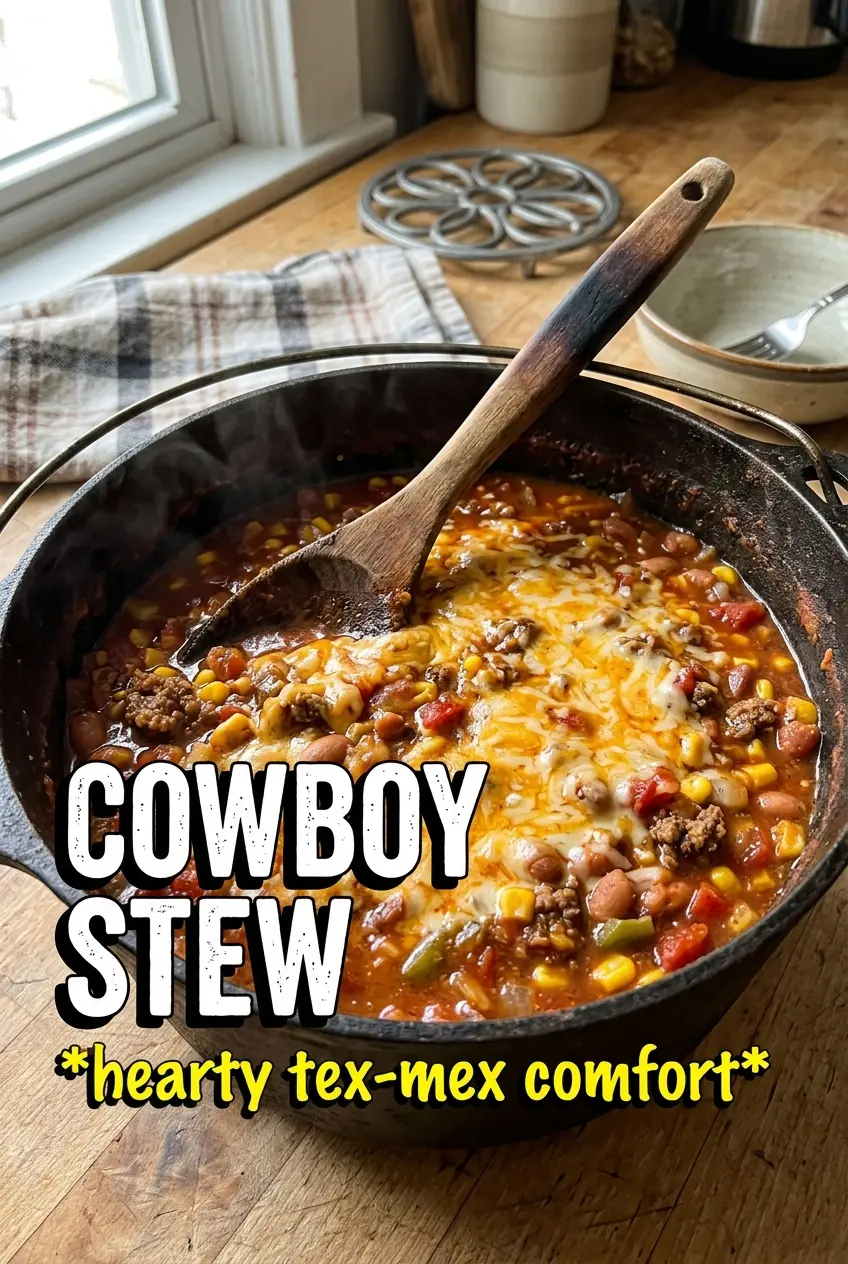
Cowboy Stew
Ingredients
Equipment
Method
- Brown the ground beef in a large pot over medium-high heat until no longer pink, then drain the fat. Brown the sausage slices briefly until lightly browned, then remove them from the pot.
- Lower the heat to medium and sauté the onion for 3 minutes until softened. Add the garlic and cook for 1 minute, stirring so it doesn’t brown.
- Add the chili powder and smoked paprika and cook for 1 minute, stirring to bloom the spices. Stir in the Rotel tomatoes, diced tomatoes, beef broth, ranch seasoning, potatoes, and drained pinto beans.
- Bring everything to a boil, then reduce to a simmer. Simmer for 15-18 minutes until the potatoes are tender.
- Add the drained corn and the browned sausage, then simmer for 5 more minutes. Season with salt and pepper to taste, then turn off the heat.
- Serve hot with shredded cheddar, jalapeños, and green onions on top.


