Chicken thighs take on marinade better than almost any cut of chicken, and this version gives you the payoff people are actually hoping for: a deep golden crust, bright lemon, and enough garlic and herbs to season the meat all the way through. It works on the grill or in a skillet, and the thighs stay juicy even if they pick up a little extra color. That makes this the kind of marinade you can lean on when you want dinner to taste planned, not patched together.
The balance matters here. Olive oil carries the herbs and helps the surface brown, while lemon juice and Dijon bring acidity and body without turning the chicken soft or mushy. Honey is just enough to help the edges caramelize, and smoked paprika gives the marinade a little warmth and color so the finished chicken looks as good as it tastes. The longer soak gives the garlic, oregano, and thyme time to settle in, but you don’t need an overnight marinade to get real flavor.
Below, I’ll show you the one mistake that makes marinades taste flat, how to keep the chicken from steaming instead of searing, and a few easy swaps if you want to change the flavor without losing the balance that makes this work.
The lemon and garlic came through beautifully, and the chicken got those caramelized edges without drying out. I marinated it for about 4 hours and the flavor was all the way through.
Save this lemon herb chicken thigh marinade for juicy grilled chicken with crispy golden edges and a bright garlic finish.
The Part That Stops Chicken Thigh Marinades From Tasting Flat
The problem with a lot of chicken marinades is that they lean on one note: acid, salt, or a pile of dried herbs. That gives you surface flavor, but not the kind that tastes balanced once the chicken hits high heat. This marinade works because it has three jobs happening at once: the oil carries the seasoning, the lemon brightens the meat, and the Dijon plus honey give the coating enough body to cling instead of sliding off in the bowl.
The other mistake is overdoing the marinating time with an acid-heavy mix. Chicken thighs are forgiving, but if they sit too long in a sharp marinade, the texture can start to get a little tight around the edges. Two to 24 hours is the useful window here. Anything less than two hours won’t penetrate enough, and anything much past a day starts to lose the clean, juicy bite that makes thighs so good.
- Olive oil keeps the marinade from tasting harsh and helps the chicken brown instead of drying out.
- Lemon juice and zest give you two kinds of citrus flavor: the juice for brightness, the zest for the aromatic top note that survives cooking.
- Dijon mustard helps emulsify the marinade so the herbs and garlic stay suspended and coat the chicken evenly.
- Honey is subtle, but it matters. It encourages caramelization on the grill or in the skillet without making the chicken taste sweet.
What Each Ingredient Is Actually Doing in This Chicken Thigh Marinade

- Boneless skinless chicken thighs are the right cut here because they stay juicy under direct heat and pick up flavor quickly. If you swap in breasts, cut the cook time down and watch them closely so they don’t dry out.
- Garlic matters in fresh minced form, not powder, because it gives the marinade its sharp, savory backbone. Mince it fine so it disperses instead of burning in big bits on the pan.
- Oregano, thyme, and smoked paprika build the herby, golden crust. Dried herbs work better than fresh in the marinade itself because they hold up during cooking; save the fresh herbs for serving.
- Red pepper flakes are optional but useful if you want a little lift at the end. Keep them light if you’re cooking for kids or serving with a sauce.
- Fresh herbs for serving don’t just make the plate prettier. They add a clean finish after the heat has done its work, which keeps the marinade from tasting heavy.
Getting the Marinade Coating and the Sear Right
Whisk It Into a Loose Emulsion
Start by whisking the oil, lemon juice, zest, garlic, Dijon, honey, and seasonings until the mixture looks glossy and slightly thickened. It won’t turn into a mayonnaise-style emulsion, and that’s fine. You’re looking for a marinade that clings to the chicken instead of separating into oil on top and vinegar-like liquid on the bottom. If it still looks split after whisking, keep going for another 20 to 30 seconds.
Coat the Chicken Fully
Add the thighs and turn them until every surface is covered. A zip-top bag works well because it lets the marinade move around the meat without needing a huge bowl, but a shallow dish is fine if you flip the chicken once or twice while it rests. The biggest mistake here is crowding the chicken in a puddle of marinade and assuming the liquid will do all the work. The chicken needs contact with the seasoning, not just a bath.
Cook Hot Enough to Caramelize
Grill or pan-sear over medium-high heat so the outside browns before the inside overcooks. You want clear grill marks or a deep golden crust, not pale chicken that slowly steams in its own moisture. If the pan starts smoking heavily, lower the heat a little; if the chicken sticks, it’s usually not ready to flip yet. Pull it when the internal temperature reaches 165F and the surface looks lacquered and browned at the edges.
Let the Juices Settle
Rest the chicken for 5 minutes before serving. That short pause keeps the juices where they belong instead of running onto the cutting board. If you slice too soon, even perfectly cooked thighs can look dry. After resting, spoon any juices from the plate over the top and finish with fresh herbs.
Three Smart Ways to Change the Flavor Without Breaking the Marinade
Dairy-Free, Gluten-Free, and Already Friendly to Both
This recipe already skips dairy and gluten, so there’s nothing to modify for those needs. That’s one reason it works so well as a weeknight marinade: the flavor comes from acid, herbs, mustard, and garlic, not from anything that needs special handling.
Swap the Herb Direction
Use rosemary in place of thyme if you want a more woodsy, roast chicken feel, or add a little ground coriander for a softer citrus note. Keep the total herb amount about the same so the marinade doesn’t turn muddy or bitter.
Make It Spicier
Increase the red pepper flakes or add a pinch of cayenne if you want more heat without changing the structure of the marinade. Keep the honey in place, though — a little sweetness keeps the spice from tasting sharp after grilling.
Use It on a Bigger Batch
This scales cleanly for meal prep or a crowd. Double everything and keep the chicken in a shallow layer so the marinade can reach all the surfaces. If the chicken is piled too deeply, the top pieces soak while the bottom ones barely get coated.
Storage and Reheating
- Refrigerator: Store cooked chicken thighs in an airtight container for up to 4 days. The exterior softens a little, but the meat stays juicy.
- Freezer: Freeze cooked thighs for up to 2 months. Wrap them well or use a freezer bag with the air pressed out so the herbs and garlic don’t pick up freezer flavor.
- Reheating: Reheat gently in a covered skillet over low heat with a splash of water or broth, or warm them in a 300F oven until heated through. High heat dries out thighs fast, especially once they’ve already been cooked and cooled.
Questions I Get Asked About This Chicken Thigh Marinade
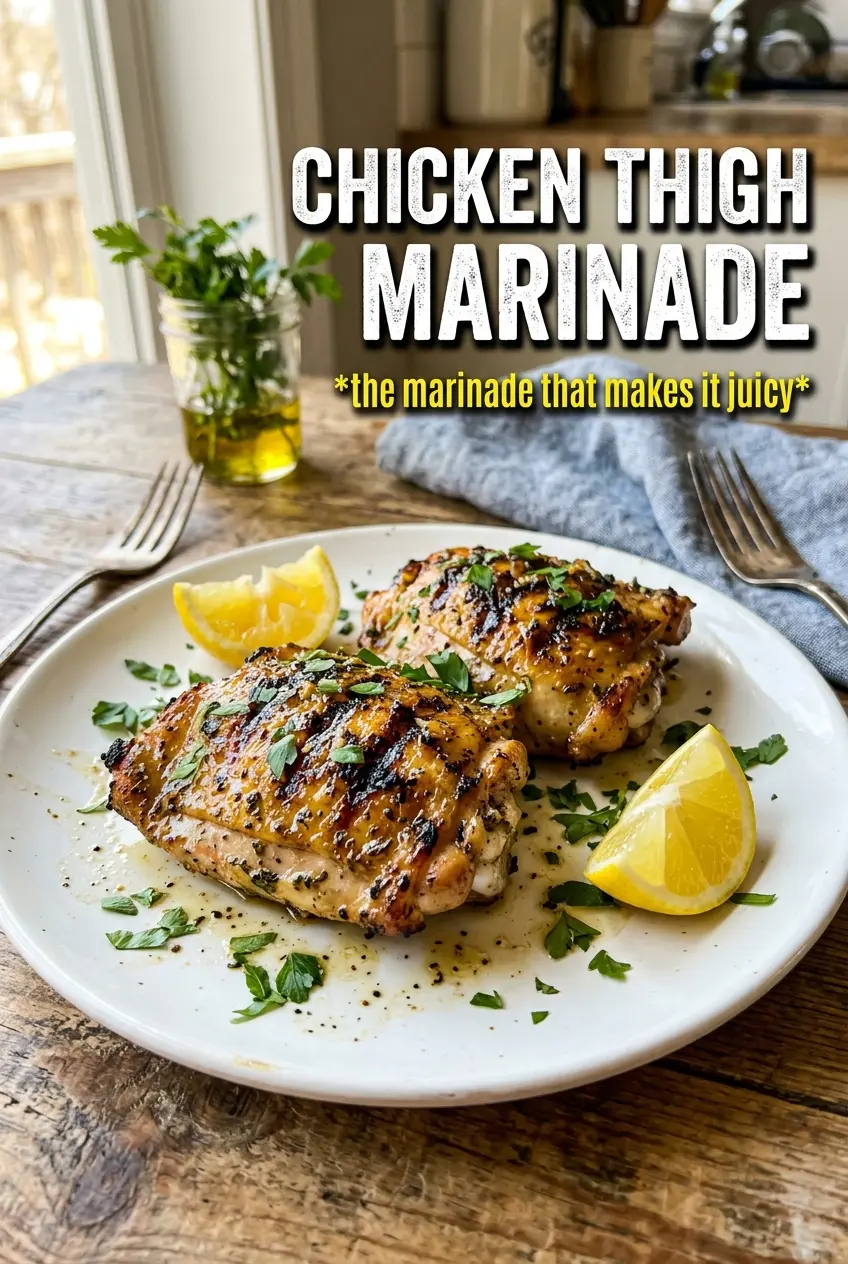
Chicken Thigh Marinade
Ingredients
Method
- Whisk olive oil, lemon juice, lemon zest, minced garlic, Dijon mustard, honey, dried oregano, dried thyme, smoked paprika, salt, black pepper, and red pepper flakes until emulsified.
- Add boneless skinless chicken thighs to the marinade and toss to coat completely.
- Refrigerate the chicken thighs at least 2 hours, up to 24 hours, so the flavor penetrates before cooking.
- Grill over medium-high heat for 5–6 minutes per side until caramelized char marks appear.
- If pan-searing instead, heat a hot oiled skillet and cook for 5–6 minutes per side until caramelized char marks appear.
- Cook until the internal temperature reaches 165F in the thickest part of the thighs.
- Rest the chicken thighs for 5 minutes before serving, then garnish with fresh herbs for serving.