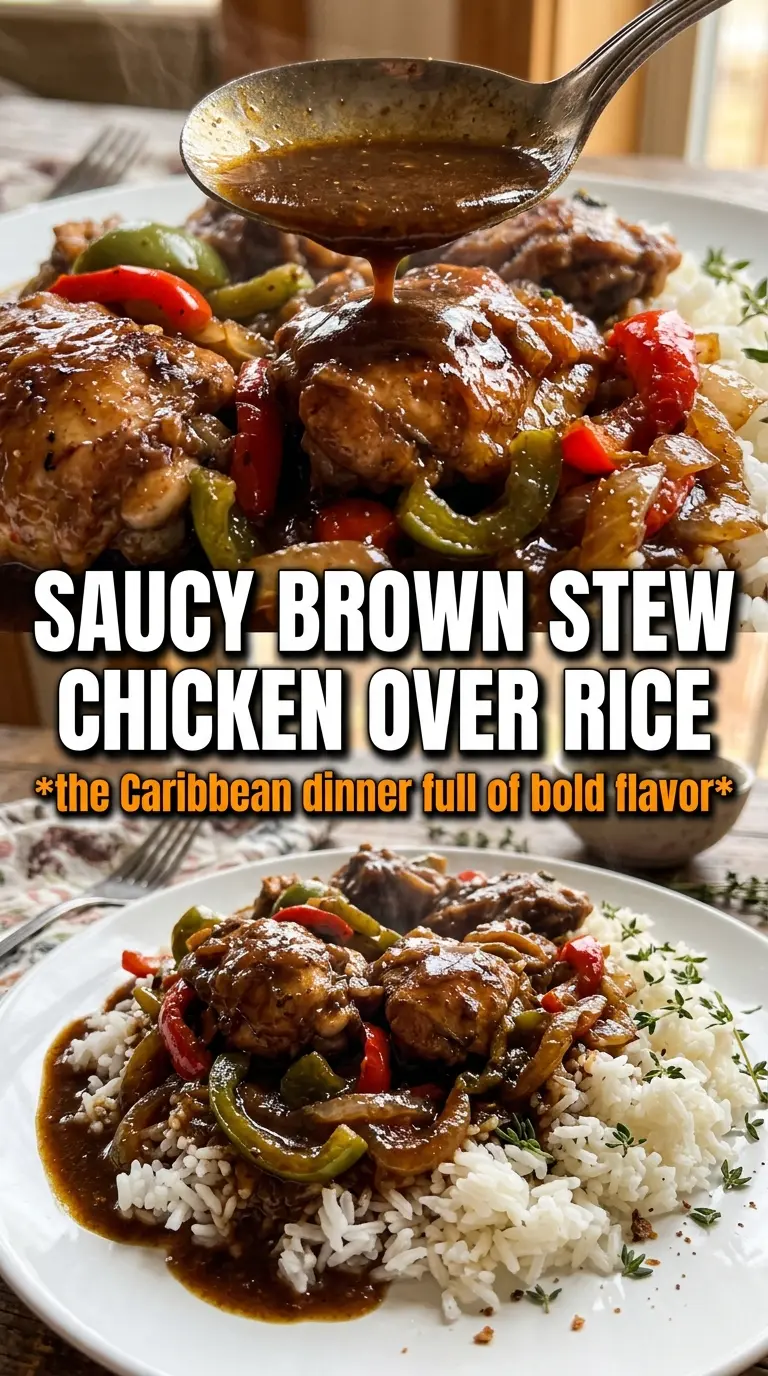
Brown stew chicken is the kind of dinner that fills the kitchen with a deep, savory smell before the pot even finishes simmering. The chicken turns tender enough to pull apart with a spoon, and the gravy darkens into that glossy mahogany color that clings to rice instead of running all over the plate. The best part is that the flavor doesn’t come from a long ingredient list. It comes from building each layer with care.
What makes this version work is the order. The chicken gets marinated first, so the seasoning has time to get under the skin and into the meat. Then the sugar is caramelized in the pot before the chicken goes in, which gives the stew its signature color and a subtle bitterness that keeps the sauce from tasting flat. Browning sauce helps deepen the color, but it’s the browned bits from the chicken and the slow simmer that give the gravy its real body.
Below, I’ve included the timing details that matter most, plus a few swaps and storage notes if you want to make this ahead or adjust the heat.
The gravy came out thick and glossy, and the chicken was fall-apart tender after the simmer. I used the Scotch bonnet for just a little heat, and it gave the sauce the perfect kick without taking over.
Save this Jamaican brown stew chicken for the nights when you want deep mahogany gravy, tender chicken thighs, and rice that soaks up every bit of the sauce.
The Caramelized Sugar Is What Gives This Stew Its Depth
The part that trips people up most is the browning stage. If the sugar stays pale, the stew tastes thin and the gravy never gets that rich, dark look you expect from brown stew chicken. If it goes too far, it turns bitter and the whole pot tastes scorched. You want the sugar to melt into a deep amber caramel, then move fast when the chicken goes in so it coats the pieces before it hardens.
The other place people lose flavor is skipping a strong sear. The marinated chicken should hit the caramel oil and pick up color on the outside before the liquid goes in. That step builds the base of the gravy. Once the broth is added, the pot should bubble steadily, then settle into a gentle simmer that softens the chicken without drying it out.
What Each Ingredient Is Actually Doing In This Jamaican Stew
- Chicken thighs and drumsticks — Bone-in pieces hold up to the long simmer and stay juicy while the gravy develops. Boneless chicken cooks faster, but it won’t give you the same depth or texture.
- Browning sauce — This deepens the color and gives the stew that signature dark finish without relying on too much sugar. A little goes a long way; add it to the marinade, not the pot, so the flavor gets into the meat early.
- Sugar — This is the starting point for the color in the pot. Use plain granulated sugar and watch it closely; the difference between amber and burnt happens fast.
- Scotch bonnet or habanero — This adds heat and a fruity edge. If you want the flavor without much spice, use the pepper whole or add just half and remove it before serving.
- Thyme, green onions, onion, garlic, and peppers — These build the stew’s backbone. Fresh thyme is worth using if you have it, because dried thyme can taste dusty in a dish this bold.
- Chicken broth — This is what turns the browned bits into gravy. Use a low-sodium broth if possible so the seasoning on the chicken doesn’t push the sauce too salty as it reduces.
How To Build The Gravy Without Losing The Color
Marinating For Real Flavor
Coat the chicken with the browning sauce, all-purpose seasoning, garlic powder, onion powder, thyme, salt, and pepper, then let it sit for at least two hours. Overnight is better if you have the time, because the seasoning gets a chance to settle into the meat instead of just sitting on the surface. If the chicken looks heavily wet after marinating, that’s fine; the extra paste helps the pieces brown with more flavor in the pot.
Making The Caramel Base
Heat the oil first, then add the sugar and watch for it to melt into a deep golden caramel. Don’t walk away here. Once it starts to color, it can go from perfect to burned in less than a minute, and burnt sugar will make the whole stew bitter. The second the caramel reaches a rich amber, move on and add the chicken.
Searing The Chicken And Building The Pot
Add the marinated chicken to the caramel oil and brown it on all sides until the outside looks deeply colored. It won’t be cooked through yet, and that’s exactly right. Remove it, then soften the onion, peppers, garlic, green onions, and Scotch bonnet in the same pot for a few minutes until they lose their raw edge and pick up the color from the drippings.
Simmering Until The Gravy Thickens
Return the chicken to the pot, pour in the broth, and bring it up to a boil before lowering the heat. Once it’s covered and simmering gently, the sauce should reduce into something thicker and darker, and the chicken should start to pull away from the bone. If the gravy is still thin at the end, uncover the pot for the last few minutes so the liquid can reduce without overcooking the meat.
Make It Milder Without Losing The Jamaican Character
Leave out the Scotch bonnet or use it whole and remove it before serving. You’ll still get the deep savory gravy, the thyme, and the sweet caramelized base without the sharp heat. This is the easiest adjustment if you’re cooking for kids or anyone who wants flavor first and spice second.
A Gluten-Free Version That Still Tastes Full-Bodied
The recipe is already close to gluten-free, but your all-purpose seasoning needs a quick label check because some blends include wheat or malt. Use a certified gluten-free seasoning and keep the rest of the method the same. The flavor and texture stay the same because the gravy comes from browning, broth, and reduced aromatics, not flour.
Vegetable Swaps For A Different Finish
Green and red bell peppers are the classic choice, but you can swap in yellow pepper or add a handful of carrot slices for a sweeter gravy. Keep the onion in the mix, since it dissolves into the sauce and helps balance the caramel. The result will be a little sweeter and lighter, but still true to the stew.
Storage and Reheating
- Refrigerator: Store in an airtight container for up to 4 days. The gravy thickens as it chills, which actually helps the flavor.
- Freezer: It freezes well for up to 3 months. Cool it completely first and freeze with plenty of sauce so the chicken doesn’t dry out on thawing.
- Reheating: Warm it gently on the stove over low heat with a splash of broth if needed. High heat can tighten the chicken and make the sauce separate, especially if the gravy has already reduced a lot in the fridge.
Questions I Get Asked About This Recipe

Brown Stew Chicken
Ingredients
Equipment
Method
- Combine all marinade ingredients and coat the chicken thoroughly. Marinate for at least 2 hours or overnight in the refrigerator for best flavor penetration, then let it sit at fridge-cold temperature until ready to cook.
- Heat vegetable oil in a large skillet or Dutch oven over medium heat. Add the sugar and caramelize until golden brown, watching for a deep amber color with no burning.
- Add the marinated chicken pieces to the caramel oil and cook until deeply golden on all sides. Use frequent turning to ensure even browning, then remove the chicken to a plate.
- Sauté onion, bell peppers, garlic, green onions, and scotch bonnet 4 minutes. Stir until softened and fragrant, scraping up any browned bits from the bottom.
- Return the chicken to the pot and add chicken broth, then bring the mixture to a boil. Once boiling, reduce the heat to maintain a gentle simmer.
- Cover and simmer 35-40 minutes until the chicken is fall-apart tender and the gravy is thick. Look for reduced, glossy sauce that lightly coats the spoon.
- Serve with rice and garnish with fresh thyme. Plate the chicken with mahogany gravy and fresh thyme over top for a bright finishing cue.


