Beef Carbonnade Stew turns meltingly tender after a long, gentle braise, with sweet onions, dark beer, and beef broth building a sauce that tastes deeper than the short ingredient list suggests. The beef doesn’t just get cooked through here — it softens into spoon-tender pieces that hold their shape, while the onions melt into the broth and give the stew its signature mahogany color and round, savory sweetness.
The trick is patience at two points: first when browning the beef, and again when cooking the onions until they give up their raw bite and turn soft and golden. That slow onion base keeps the stew from tasting sharp or thin. The beer matters too. A dark Belgian ale gives the braise maltiness without making it heavy, and the vinegar and Dijon keep the whole pot from leaning too sweet.
Below you’ll find the little details that make this stew worth making on repeat, from the right way to build the pot to the bread I serve alongside it when I want to catch every last bit of sauce.
The onions cooked down into the broth beautifully, and the sauce thickened enough to coat the beef without needing extra flour at the end. I served it with crusty bread and there wasn’t a spoonful left.
Save this Belgian beef carbonnade for the nights when you want deep beer-braised flavor and a sauce made for crusty bread.
The Reason the Beer Braise Stays Rich Instead of Bitter
The balance in carbonnade comes from treating beer like an ingredient, not just a liquid. Dark Belgian ale or stout brings malt and depth, but if you rush the onions or skip the vinegar, the pot can tip toward flat bitterness. The onions need time to soften and sweeten before the beer goes in, and the vinegar keeps the finished sauce lively enough to cut through the richness of the beef.
Another thing that matters here is the flour. It gets whisked in with the garlic and onions before the liquid is added, which helps the stew thicken gradually as it braises. If you add flour too late, it can go chalky or clump. This method gives you a sauce that clings to the meat and bread without turning pasty.
What Each Ingredient Is Actually Doing in the Pot
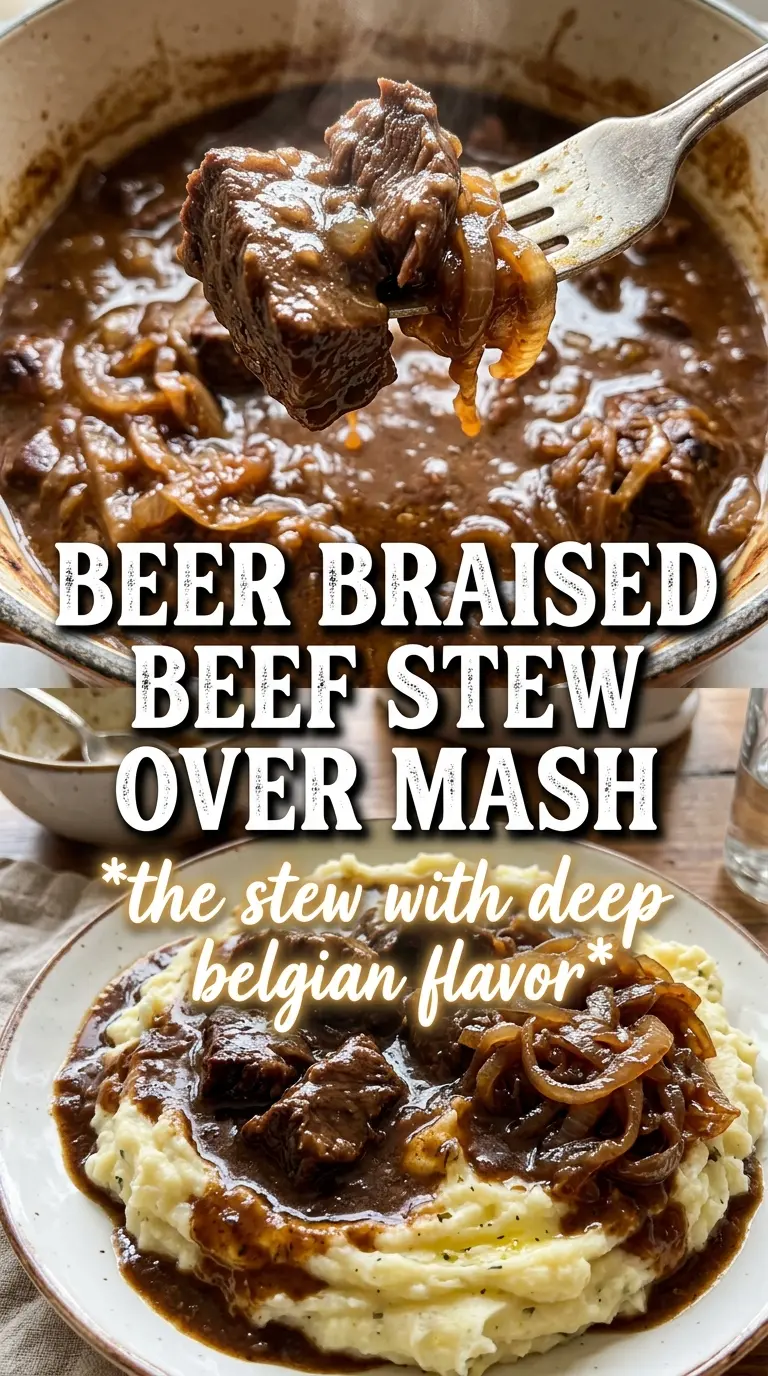
- Beef chuck — This is the cut that earns the long braise. The connective tissue breaks down over time and turns the meat tender without shredding it into mush. Stew meat can work in a pinch, but chuck gives you the best texture and beefiest flavor.
- Dark Belgian ale or stout — This is where the stew gets its malty backbone. Pick a beer you’d actually drink; harsh, overly bitter beer can make the sauce muddy. If you need an alcohol-free swap, use extra beef broth plus 1 to 2 teaspoons of balsamic vinegar for depth, though it won’t taste quite the same.
- Onions — Three large onions may look like a lot, but they collapse into the sauce and provide most of the stew’s sweetness. Slice them thin so they break down evenly. If they’re cut too thick, you’ll end up with onion chunks instead of that silky, jammy base.
- Dijon mustard and red wine vinegar — These keep the braise from tasting heavy. Dijon adds a quiet sharpness, while the vinegar brightens the whole pot at the end of the simmer. Yellow mustard won’t give the same rounded bite.
- Tomato paste — Just enough to deepen color and give the broth some body. Cook it briefly with the onions so it loses the raw edge before the liquid goes in.
Building the Stew in Layers So the Sauce Comes Together
Browning the Beef Properly
Season the beef well and sear it in a hot Dutch oven until the outside is deeply browned on all sides. Don’t crowd the pot, or the meat will steam and you’ll miss the fond that gives the stew its backbone. Work in batches if you need to. That dark crust is what makes the broth taste braised instead of boiled.
Cooking the Onions Until They Collapse
Once the beef is out, lower the heat and cook the onions slowly until they turn soft, golden, and sweet. This takes patience, but it’s where the dish really develops its character. If the onions are still pale or sharp when the beer goes in, the finished sauce will taste thin and unfinished.
Deglazing and Braising
Add the garlic, then the flour, and cook briefly before pouring in the beer. Scrape the bottom of the pot as the liquid goes in; those browned bits dissolve into the sauce and carry the flavor. Add the broth, tomato paste, vinegar, brown sugar, Dijon, herbs, and beef, then bring it just to a boil before reducing the heat to a gentle simmer. A hard boil will tighten the beef instead of softening it.
Finishing When the Beef Is Fork-Tender
Cover the pot and braise until the beef gives easily when pressed with a fork, usually around 2 hours. Pull out the bay leaves and thyme before serving. If the sauce seems a little loose at first, let it sit uncovered for a few minutes; it thickens as the steam escapes and the onions finish melting into the broth.
Three Ways to Adapt This Belgian Stew Without Losing the Point
For a gluten-free version
Swap the all-purpose flour for a gluten-free flour blend or thicken the stew by reducing it uncovered for the last 15 to 20 minutes. The texture will still be rich, but the sauce may stay a touch lighter. Just check that your beer is gluten-free as well, since not all of them are.
For a deeper, more bitter finish
Use a stout instead of Belgian ale and keep the brown sugar at the lower end of the range if you add extra sweetness at the table. The result will be darker and more robust, with a slightly roasted edge. That works well if you like serving the stew with mashed potatoes instead of bread.
For a brighter, less heavy sauce
Add an extra teaspoon of red wine vinegar at the end and keep the simmer gentle so the beef stays tender. This doesn’t make the stew sour; it just lifts the onion sweetness and keeps the beer from tasting flat. It’s the version I reach for when I want something rich but not sleepy.
Storage and Reheating
- Refrigerator: Keep for up to 4 days. The flavor deepens overnight, and the sauce may thicken as it chills.
- Freezer: Freezes well for up to 3 months. Cool it fully first and leave a little room in the container so the sauce can expand.
- Reheating: Warm it gently on the stovetop over low heat with a splash of broth if needed. Don’t boil it hard or the beef can tighten up and the sauce can split at the edges.
Answers to the Questions Worth Asking
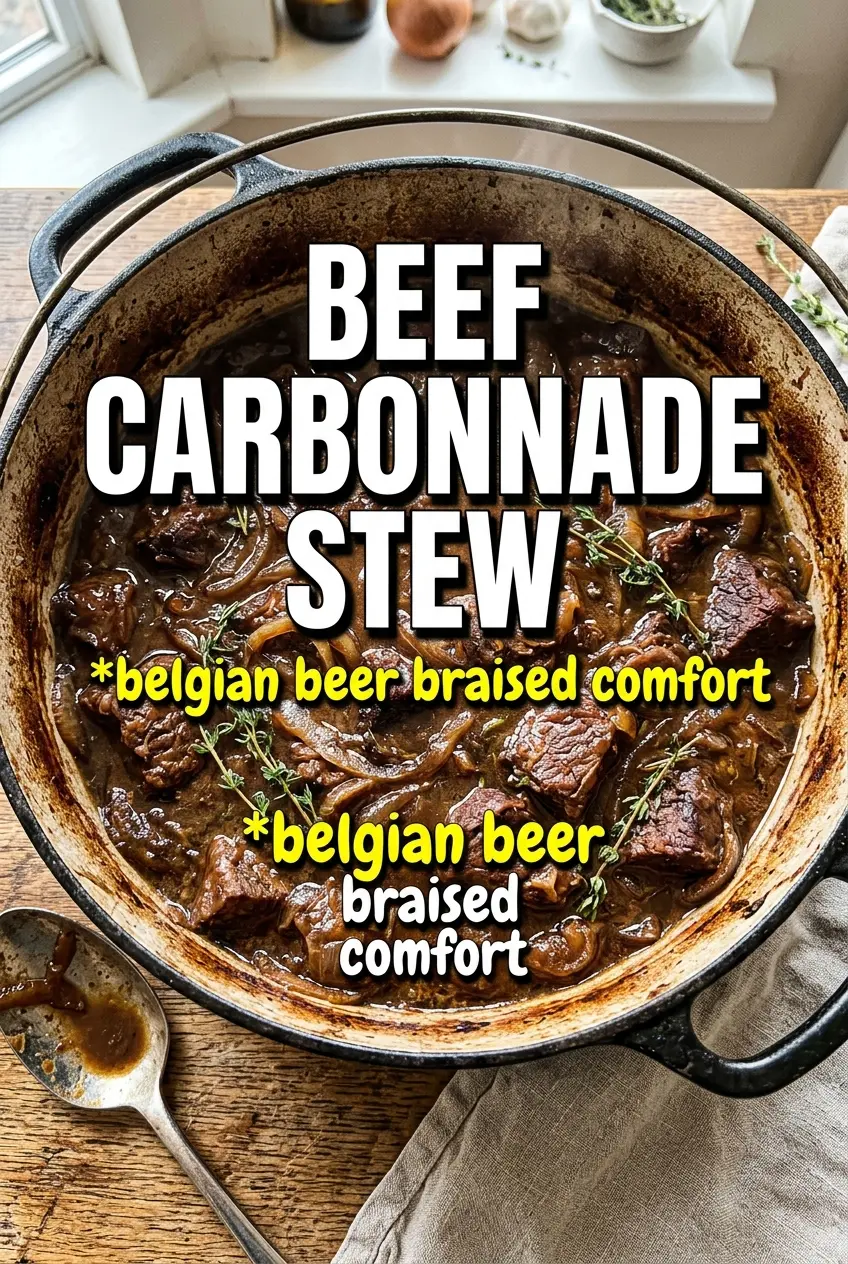
Beef Carbonnade Stew
Ingredients
Equipment
Method
- Season the beef with salt and pepper, then sear in the vegetable oil in a Dutch oven over high heat until deeply browned, about 6-8 minutes. Transfer the browned beef to a plate.
- Cook the onions in the Dutch oven over medium heat for 20-25 minutes until very soft and golden. Stir occasionally so they caramelize evenly.
- Add the minced garlic and cook for 1 minute, then whisk in the all-purpose flour and cook for 1 minute. The mixture should look slightly toasted.
- Pour in the dark Belgian ale or stout beer and deglaze by scraping up all browned bits from the bottom of the pot. Simmer until the liquid looks cohesive, about 2 minutes.
- Add the beef broth, tomato paste, red wine vinegar, brown sugar, Dijon mustard, fresh thyme, bay leaves, and the beef to the Dutch oven. Stir to combine.
- Bring to a boil, then reduce heat, cover, and braise for 2 hours until the beef is very tender. Check occasionally to ensure a gentle simmer.
- Remove the bay leaves and thyme, then taste and adjust seasoning with salt and pepper. Serve hot with crusty bread.


