Sticky, deeply browned chicken thighs are what happen when honey and soy sauce meet a hot oven and enough time to lacquer the skin instead of just glazing it. The chicken turns tender under that glossy coating, while the pan sauce tightens up around the edges and picks up a little caramelized bitterness that keeps the dish from tasting one-note. It’s the kind of dinner that looks like you put in more effort than you did.
The trick here is balance. Honey gives you shine and sweetness, but it needs soy sauce, garlic, ginger, and a splash of rice vinegar to keep the glaze bold and savory. Bone-in, skin-on thighs matter too, because they stay juicy in the oven and give you enough fat to help the skin crisp before the sauce turns sticky. A short marinade gets the flavor into the meat without making the skin soggy, and the last broil is what turns the top into that lacquered finish everyone goes after.
Below, I’ll show you how to keep the glaze from burning, which substitutions still hold up, and what to do if you want to prep this ahead for an easier night.
The glaze got sticky and caramelized without drying out the chicken, and the pan sauce was perfect spooned over rice. I marinated it for about 4 hours and the flavor went all the way through.
Save these honey soy chicken thighs for the nights when you want a sticky baked glaze with almost no cleanup.
The Secret to Sticky Chicken Without Burning the Honey
Honey is the ingredient that gives you that shiny, clingy finish, but it’s also the thing that can burn if you blast it too early or too long. That’s why the chicken starts in a hot oven, skin-side up, with enough time for the thighs to render and brown before the final broil. The glaze should look deep amber and bubbling around the edges, not dark brown all over. If the top starts to blacken before the chicken is done, the oven is too close to the broiler or the pan is sitting too high.
The other part people miss is the marinade consistency. This isn’t a thick sauce you’re painting on at the start. It’s thin enough to run into the pan, which lets the thighs roast in some of that flavor while the skin still has a chance to crisp. The sauce will concentrate as it cooks, then turn sticky once you baste and finish it under high heat.
- Chicken thighs — Bone-in, skin-on thighs are the right cut here. They stay juicy through the bake and give you enough fat for a crisped, lacquered finish. Boneless thighs work in a pinch, but they cook faster and won’t give you the same skin texture.
- Honey — This is what caramelizes into the sticky coating. There isn’t a clean substitute for it if you want that glossy finish, though maple syrup will work if you want a darker, less floral sweetness.
- Soy sauce — Use regular soy sauce for a balanced salt level. Low-sodium soy works too, especially if your brand runs salty, but don’t swap in a thick teriyaki sauce or the glaze can turn cloying.
- Rice vinegar — A small amount keeps the sauce from tasting flat. Apple cider vinegar can stand in, but use a little less because its bite is sharper.
- Sesame oil — This is a finishing note, not the cooking oil. A little goes a long way, and skipping it leaves the sauce less rounded and less nutty.
How to Bake the Thighs So the Glaze Turns Lacquered, Not Dry
Building the Marinade
Whisk the honey, soy sauce, olive oil, garlic, rice vinegar, sesame oil, ginger, and red pepper flakes until the honey is fully loosened. If the honey sits in streaks at the bottom, it won’t coat the chicken evenly and you’ll get pockets of too-sweet sauce in the pan. The garlic and ginger should look suspended, not clumped. Marinate the chicken for 30 minutes if you’re short on time, or up to 24 hours if you want deeper seasoning.
Setting Up for Even Browning
Heat the oven to 425°F and arrange the thighs skin-side up in a baking dish. Pour the marinade over the top, but don’t bury the skin completely; some exposed skin is what browns and crisps instead of steaming. If the pieces are crowded together, they’ll braise more than roast, and the glaze won’t tighten properly. Leave a little space around each thigh so the hot air can do its work.
The Bake and Baste
Bake for about 25 minutes, then spoon the pan juices over the chicken. That baste matters because it moves the concentrated sauce back over the skin after the first round of rendering. Return the dish to the oven for 10 more minutes, watching for the sauce to bubble thickly around the edges and the chicken to register done at the bone. If the pan looks dry too early, the oven may be running hot; add a spoonful of water to the corner of the dish rather than more honey.
The Last Minute Finish
Broil for 2 to 3 minutes to get that sticky, glossy top. Stay close and watch it, because this is the point where honey goes from caramelized to burnt in a matter of seconds. You want deep golden spots and a slightly blistered surface. Let the chicken rest for a few minutes before serving so the juices settle and the glaze clings instead of sliding off.
How to Adapt These Honey Soy Chicken Thighs for Different Nights
Gluten-Free Version
Use tamari or a certified gluten-free soy sauce in place of standard soy sauce. The flavor stays close, but tamari is a touch rounder and less sharp. Keep the rest of the recipe the same.
Lower-Sugar Option
Cut the honey back to 1/4 cup and add a tablespoon of water to keep the marinade loose enough to coat. You’ll lose some of the deep lacquered shine, but the chicken still browns well and the sauce tastes less sweet.
Boneless Thighs or Chicken Breasts
Boneless thighs work if that’s what you have, but start checking them earlier because they cook faster and can get overly soft in the glaze. Chicken breasts need a shorter bake and a little extra attention, since they dry out more quickly and don’t benefit from the same long, sticky finish.
Storage and Reheating
- Refrigerator: Store leftovers in an airtight container for up to 4 days. The skin softens, but the flavor deepens overnight.
- Freezer: Freeze cooked thighs and sauce for up to 2 months. Wrap them well and thaw in the fridge before reheating so the glaze doesn’t separate.
- Reheating: Warm in a 350°F oven, covered loosely with foil for the first part, then uncovered at the end to bring back some of the sticky edges. The biggest mistake is microwaving too long, which makes the skin rubbery and the sauce thin.
Questions I Get Asked About This Recipe
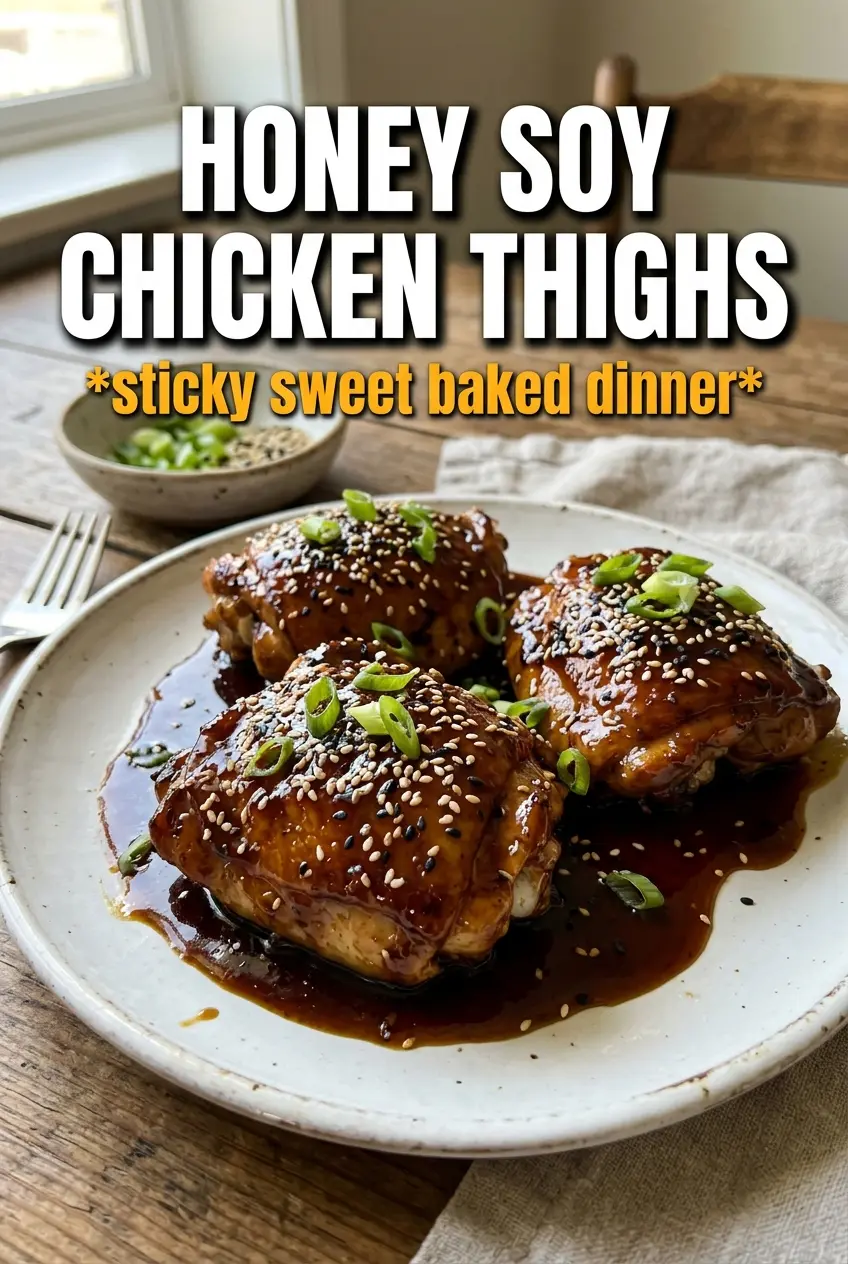
Baked Chicken Thighs in Honey Soy Sauce
Ingredients
Equipment
Method
- Whisk honey, soy sauce, olive oil, garlic, rice vinegar, sesame oil, ginger, and red pepper flakes until smooth and combined.
- Marinate the chicken for 30 minutes, or up to 24 hours, in the refrigerator so the thighs soak up the flavor.
- Preheat oven to 425F and arrange chicken skin-side up in a baking dish, then pour marinade over the chicken.
- Bake for 25 minutes, then baste with the pan sauce and bake 10 more minutes until deeply caramelized and glossy.
- Broil for 2 to 3 minutes to add extra stickiness and deepen the lacquered glaze.
- Garnish with sesame seeds and sliced green onions before serving.


