Sticky, savory-sweet baked honey mustard chicken thighs land on the table with bronzed skin, caramelized edges, and a glaze that clings instead of sliding off the pan. Chicken thighs are the right cut here because they stay juicy while the sauce turns glossy and concentrated in the oven, so every bite gets that sharp Dijon bite mellowed by honey.
The trick is using both smooth Dijon and whole grain mustard. Dijon gives the glaze its backbone, while the whole grain mustard adds little pops of texture and a deeper, seedier mustard flavor that keeps the sauce from tasting one-note. A little lemon juice sharpens everything, and garlic plus thyme keep the sweetness in check.
Below, I’m walking through the part that matters most: how to coat the chicken so the glaze caramelizes without burning, plus a few swaps if you need to work with what’s already in your kitchen.
The glaze thickened up beautifully in the oven and the chicken skin got crisp at the edges without drying out. I served it with rice, and my husband kept spooning the sauce over everything on his plate.
Save these caramelized baked honey mustard chicken thighs for the nights when you want crisp edges, a glossy glaze, and dinner on the table with almost no fuss.
The Glaze Needs Heat, Not Just Time
This recipe works because the honey mustard mixture is thick enough to coat, but not so sugary that it burns before the chicken cooks through. Chicken thighs are forgiving, yet the glaze still needs direct oven heat to reduce and cling. If the sauce looks pale at the end, it usually means the oven ran cool or the chicken was crowded too tightly in the dish, which traps steam and slows caramelization.
The other thing worth paying attention to is the skin side. Thighs with skin-on turn out best when the skin has a chance to render against hot air and hot pan edges. If you drown the chicken in glaze and pile pieces on top of one another, the coating turns slippery instead of lacquered. Give each thigh a little space, and you’ll get those sticky browned spots that taste like the best part of the whole pan.
What the Mustards Are Doing Here
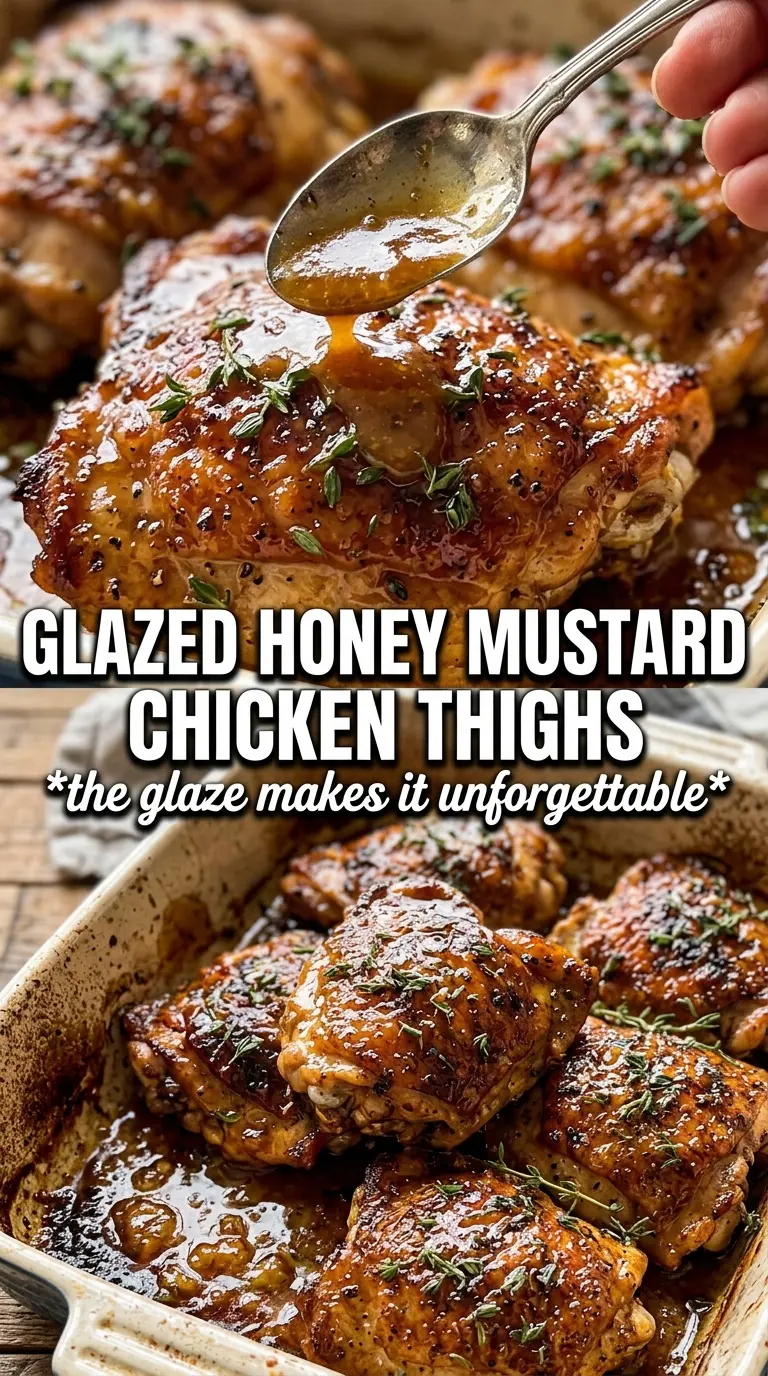
- Dijon mustard — This is the backbone of the glaze. It brings sharpness and emulsifies with the oil and honey so the coating stays smooth instead of separating in the oven. Cheap Dijon is fine here; the flavor gets mellowed as it bakes.
- Whole grain mustard — These mustard seeds add texture and a deeper, more rustic mustard flavor. You can skip it in a pinch and use more Dijon, but the finished glaze will be smoother and a little less interesting.
- Honey — Honey helps the glaze caramelize and gives the chicken those bronzed edges. It’s not just for sweetness; it’s what helps the coating turn sticky and glossy. If your honey is very thick, warm it for a few seconds so it mixes evenly.
- Chicken thighs — Bone-in, skin-on thighs are the right choice because they stay juicy through a hot oven and handle broiling better than chicken breasts. Boneless thighs will work, but cut the bake time down and watch closely during the broil.
- Lemon juice and thyme — The lemon keeps the glaze from tasting heavy, and the thyme adds a clean herbal note that plays well with mustard. If you don’t have fresh thyme, a small pinch of dried thyme works, but use less because dried herbs read stronger after baking.
Getting the Chicken to Brown Before the Glaze Slips Off
Whisk the glaze until it looks smooth and glossy
Mix the Dijon, honey, whole grain mustard, olive oil, garlic, lemon juice, thyme, salt, and pepper until the sauce looks even and a little shiny. You want the honey fully broken up, with no streaks of oil sitting on top. If the mixture looks loose, that’s normal; it thickens as it bakes and clings better than a heavy paste would.
Coat the thighs with a generous layer
Arrange the chicken in a baking dish with a little breathing room between pieces, then spoon or brush the glaze over the top and under any loose edges of skin you can lift. The chicken shouldn’t be buried in sauce; it should be lacquered. If the pieces are crowded, they steam instead of browning, and the glaze turns dull.
Bake until the glaze turns deeply amber
Slide the dish into a hot 425F oven and bake until the chicken reaches 165F in the thickest part and the glaze has turned dark golden with sticky browned edges, about 30 to 35 minutes. The surface should look set, not wet. If your thighs are extra large, give them a few more minutes rather than pulling early and ending up with pale skin and undercooked meat.
Broil just long enough to finish the edges
A short broil at the end gives you those blistered, caramelized spots that make this dish stand out, but it only works if you stay close by. Two to three minutes is enough. Walk away from the broiler and the honey can go from bronzed to bitter fast.
Three Useful Ways to Shift the Recipe Without Losing the Balance
Make it dairy-free without changing the texture
This recipe is naturally dairy-free as written, which is part of why it’s such an easy weeknight main. Keep the olive oil in the glaze, since it helps the mustard and honey emulsify and gives the coating a silky finish.
Use boneless thighs for a faster dinner
Boneless, skinless thighs cook faster and still stay tender, but you lose the crisp, caramelized skin and some of the roasted flavor. Start checking them earlier, usually around the 22 to 28 minute mark, and rely on temperature instead of the clock.
Swap in chicken breasts only if you watch them closely
Chicken breasts can work, but they dry out faster and don’t give you the same built-in richness. Use even-sized pieces, reduce the bake time, and pull them as soon as they reach 165F so the glaze doesn’t overreduce while the meat catches up.
Storage and Reheating
- Refrigerator: Store leftovers in an airtight container for up to 4 days. The glaze thickens and the skin softens a bit, but the flavor holds up well.
- Freezer: This freezes well for up to 2 months, though the skin won’t stay crisp. Freeze the thighs with a little of the pan juices, then thaw overnight in the fridge before reheating.
- Reheating: Rewarm in a 350F oven, covered loosely with foil for the first part of heating, then uncover for a few minutes to bring back some caramelization. The biggest mistake is microwaving until the glaze boils, which turns the chicken rubbery and the sauce sticky in the wrong way.
Questions I Get Asked About This Recipe
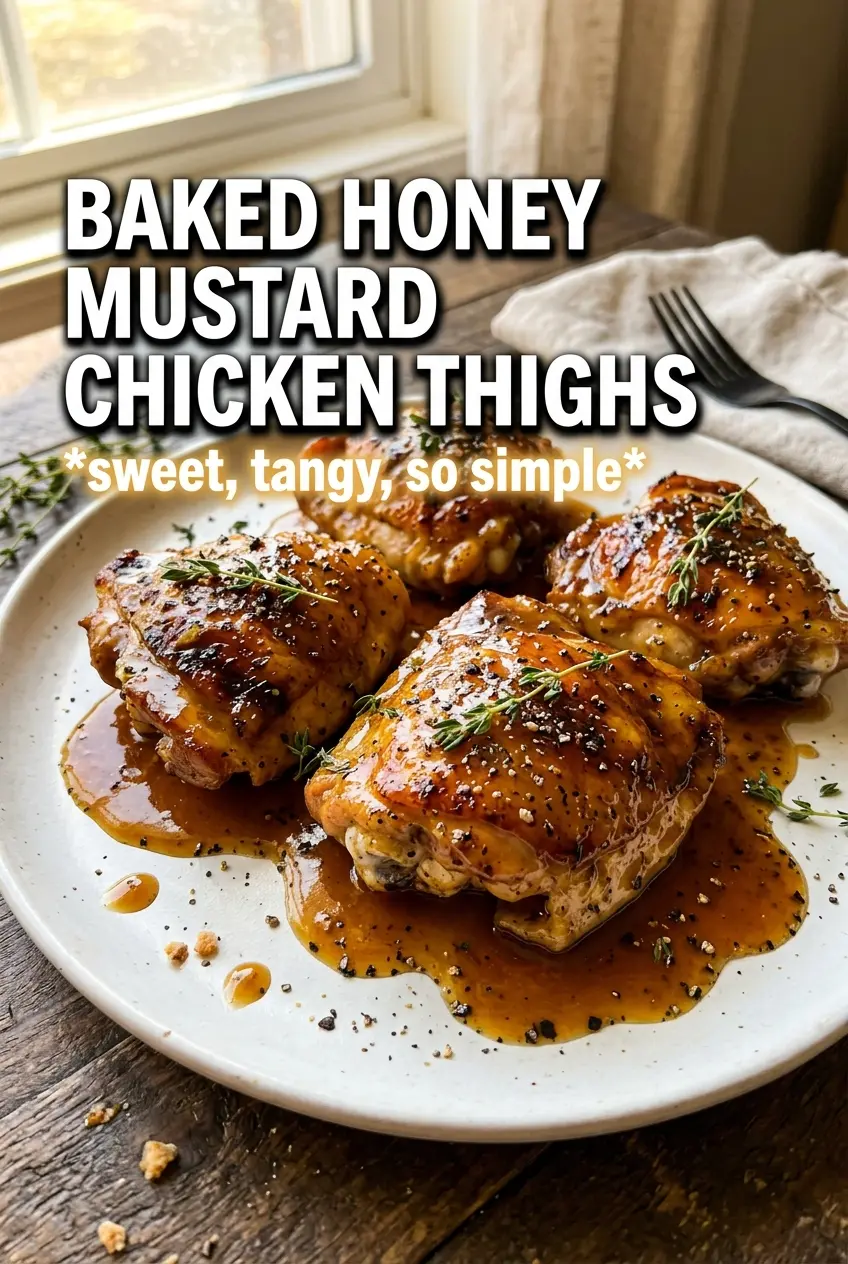
Baked Honey Mustard Chicken Thighs
Ingredients
Equipment
Method
- Preheat oven to 425F, then arrange the chicken thighs in a baking dish in a single layer.
- Whisk Dijon mustard, honey, whole grain mustard, olive oil, garlic, lemon juice, thyme, salt, and black pepper until smooth.
- Coat the chicken thighs generously with the honey mustard mixture, ensuring the skin is well covered.
- Bake 30-35 minutes at 425F until the glaze is deeply caramelized and the internal temperature reaches 165F.
- Broil 2-3 minutes until the honey mustard glaze darkens further for extra caramelization.
- Garnish with fresh thyme leaves and let the thighs rest in the dish for 2-3 minutes before serving.


