Golden, juicy baked boneless skinless chicken thighs are the kind of dinner that earns a permanent spot in the rotation because they’re fast, forgiving, and full of flavor without any fuss. The high-heat bake gives you browned edges and a lightly crisp seasoning crust while the inside stays tender and moist, which is exactly what boneless thighs do best when they’re cooked the right way.
The trick is simple: dry chicken, enough oil to carry the seasoning, and a hot oven that does the browning for you. Boneless thighs don’t need a long roast, and they don’t need a complicated marinade either. They just need space on the pan so the heat can move around them instead of steaming them into pale, soft pieces.
Below, I’m walking through the small details that matter most, including how to keep the thighs juicy at 425°F and what to change if you want to shift the seasoning in a different direction.
The seasoning baked into this chicken turned into a little crust, and the thighs stayed juicy even after 25 minutes. I served them with rice and lemon, and the pan was empty.
Save these baked boneless skinless chicken thighs for the nights when you want juicy chicken with caramelized edges and almost no cleanup.
The Reason These Thighs Brown Instead of Steam
Boneless skinless thighs can go wrong in one very specific way: they release moisture, the pan gets crowded, and the meat turns soft before it has a chance to color. That’s why this recipe uses high heat and a single layer on a foil-lined baking sheet. The oven has enough intensity to evaporate surface moisture quickly, which helps the seasoning toast instead of wash off.
Patting the chicken dry matters more than people think. If the surface starts wet, the oil and spices slide around and you lose that first layer of browning. The other piece that makes a difference is spacing. Even a little overlap traps steam between the thighs, and steam is the enemy of those caramelized edges everyone wants here.
What the Seasoning Is Doing Here
- Olive oil — It helps the seasoning cling and encourages browning across the surface. You can use a neutral oil if that’s what you have, but olive oil gives the chicken a better finish and a little more richness.
- Garlic powder, onion powder, smoked paprika, and Italian seasoning — This blend gives the thighs a savory crust without needing a marinade. Garlic and onion powder season evenly, while smoked paprika adds color and a faint woodsy note. If you swap in regular paprika, you’ll lose some depth but keep the color.
- Boneless skinless chicken thighs — Thighs stay juicier than breasts in a hot oven because they have more fat and a little more forgiveness. If you use chicken breasts, reduce the bake time and watch closely, because they dry out faster and won’t stay as succulent at the same temperature.
- Lemon wedges and parsley — These aren’t garnish for show. Lemon wakes up the seasoning right at the end, and parsley gives the finished chicken a fresh edge that keeps the dish from tasting flat.
The 20 Minutes That Matter Most
Coating the Chicken Evenly
Toss the thighs with the oil and seasonings until every piece looks lightly lacquered. The chicken should look fully covered, not dusty, and there shouldn’t be dry patches of spice sitting in the bowl. If the seasoning clumps, the chicken was probably too wet or the oil wasn’t mixed through well enough. Spread the thighs out before they go on the pan so each one gets direct heat.
Baking at High Heat
Set the oven to 425°F and let it fully preheat before the chicken goes in. That hotter blast is what builds the browned edges in 20 to 25 minutes, depending on the size of your thighs. Pull the pan when the thickest part hits 165°F and the edges look caramelized; if they’re still pale, they need a few more minutes. Don’t keep baking just because the center feels soft at first, since thighs firm up a bit as they rest.
Resting Before Serving
Give the chicken 3 to 5 minutes off the heat before cutting or serving. That short rest lets the juices settle back into the meat instead of running onto the cutting board. If you slice immediately, the thighs still taste good, but they won’t be as juicy. Finish with lemon juice right before serving so the citrus stays bright instead of cooking off in the oven.
How to Change the Seasoning Without Losing the Juicy Texture
Make It Gluten-Free and Naturally Dairy-Free
This recipe already fits both of those needs as written, which is part of why it’s such a reliable weeknight dinner. Just check that your Italian seasoning blend doesn’t include any added fillers or anti-caking ingredients you want to avoid. The texture stays the same, so you don’t sacrifice anything by keeping it simple.
Use a Lemon-Garlic Direction
Swap the smoked paprika and Italian seasoning for extra garlic powder, lemon zest, and a pinch of dried oregano. The result is brighter and less smoky, with a cleaner finish that works well over rice or roasted potatoes. Add the lemon zest after the chicken comes out of the oven so the oils stay fragrant.
Turn It Into a Spicier Chicken Dinner
Add 1/4 to 1/2 teaspoon cayenne or red pepper flakes to the seasoning mix. That gives the chicken more heat without changing the cooking method, and the spice holds up well in the oven. If you go heavy on heat, keep the lemon wedges on the plate because the acid helps balance the finish.
Storage and Reheating
- Refrigerator: Store in an airtight container for up to 4 days. The seasoning softens a little, but the chicken stays tender.
- Freezer: Freeze for up to 2 months. Wrap tightly and thaw overnight in the refrigerator before reheating for the best texture.
- Reheating: Warm gently in a 325°F oven, covered loosely with foil, until heated through. High heat dries boneless thighs out fast, so skip the microwave if you want to keep the texture close to the original.
Answers to the Questions Worth Asking
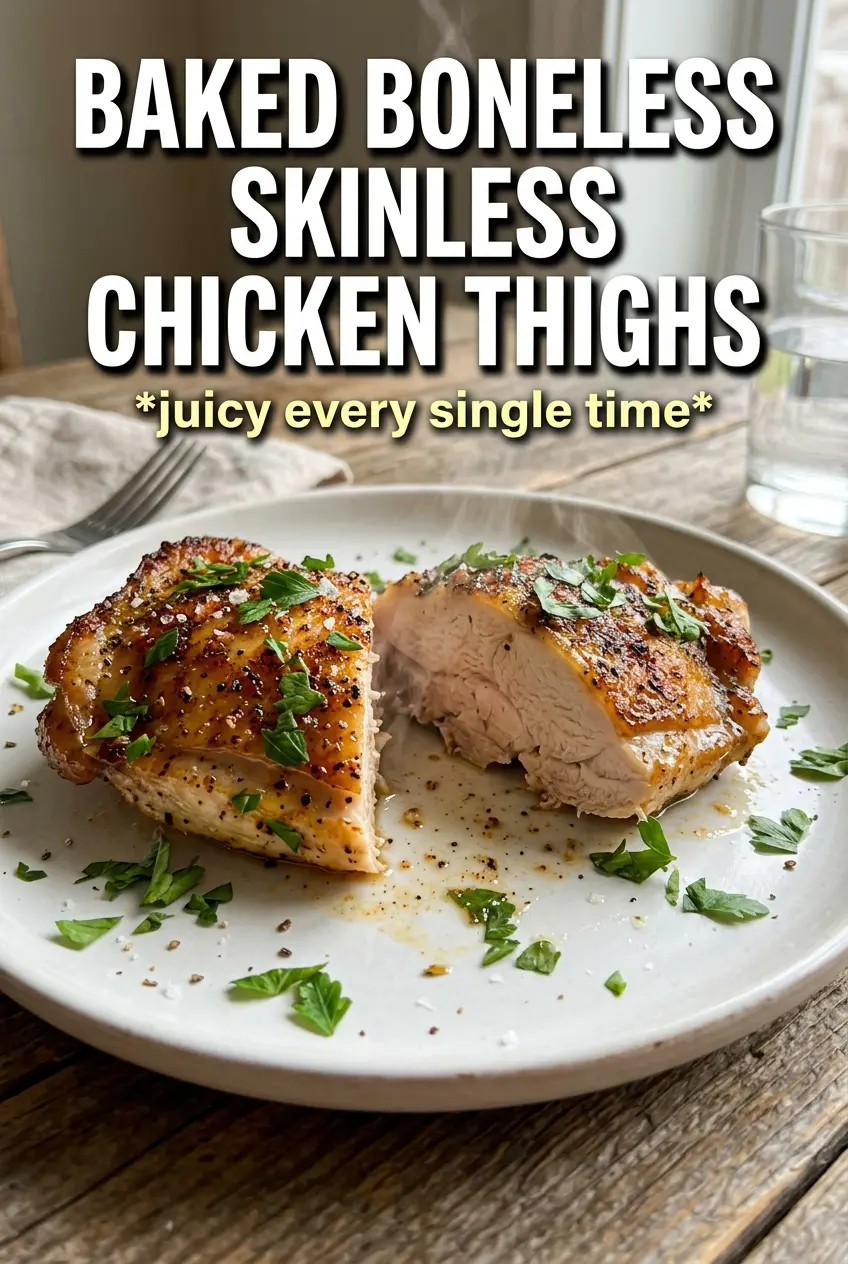
Baked Boneless Skinless Chicken Thighs
Ingredients
Equipment
Method
- Preheat oven to 425F, then pat the boneless skinless chicken thighs dry so seasoning clings well.
- Toss the chicken with olive oil, garlic powder, onion powder, smoked paprika, Italian seasoning, salt, and black pepper until evenly coated.
- Arrange the thighs on a foil-lined sheet pan in a single layer and avoid crowding.
- Bake for 20-25 minutes at 425F until the edges caramelize and the internal temperature reaches 165F.
- Rest the chicken for 3-5 minutes so juices settle, then serve with lemon wedges and parsley for serving.