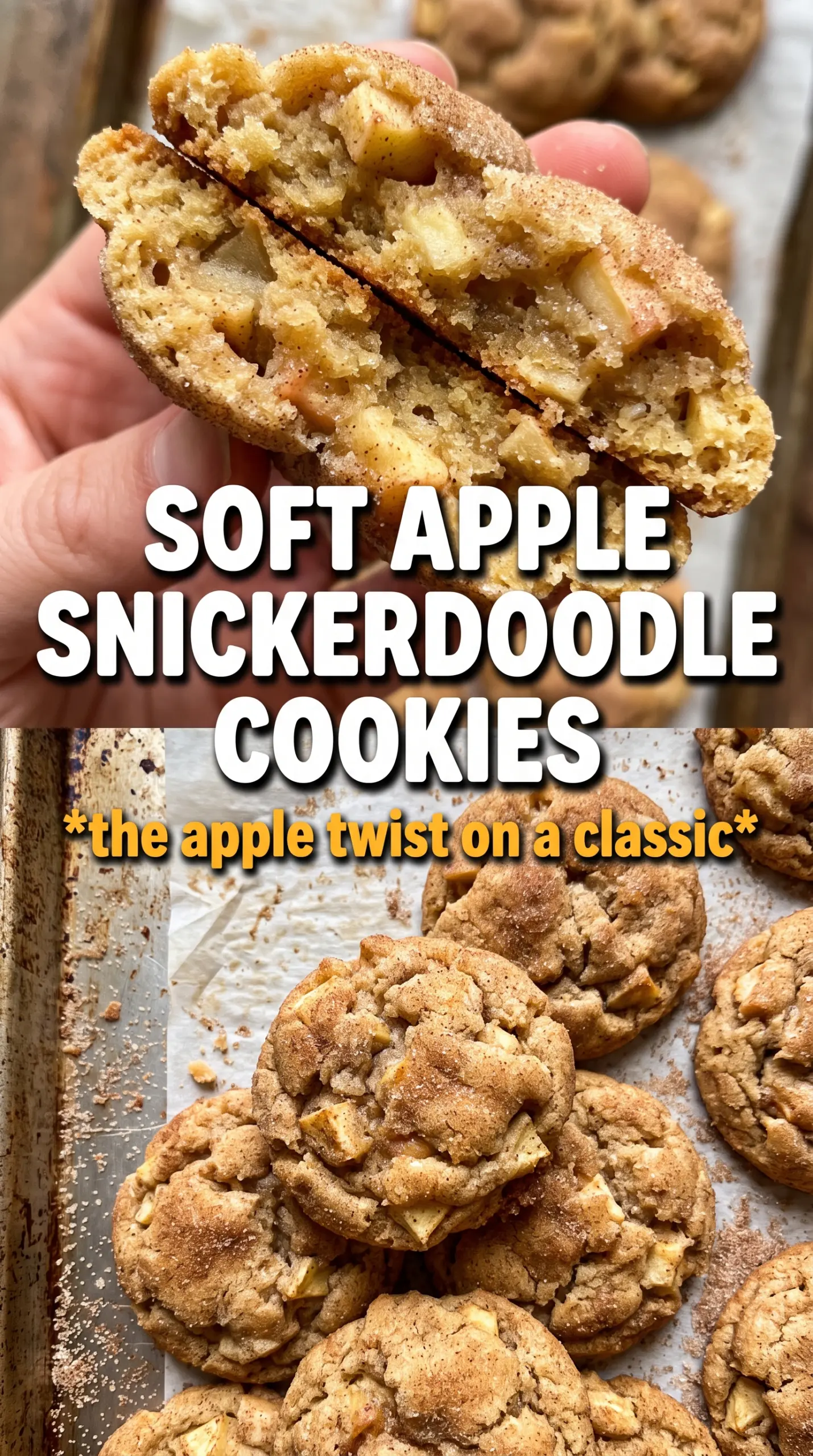
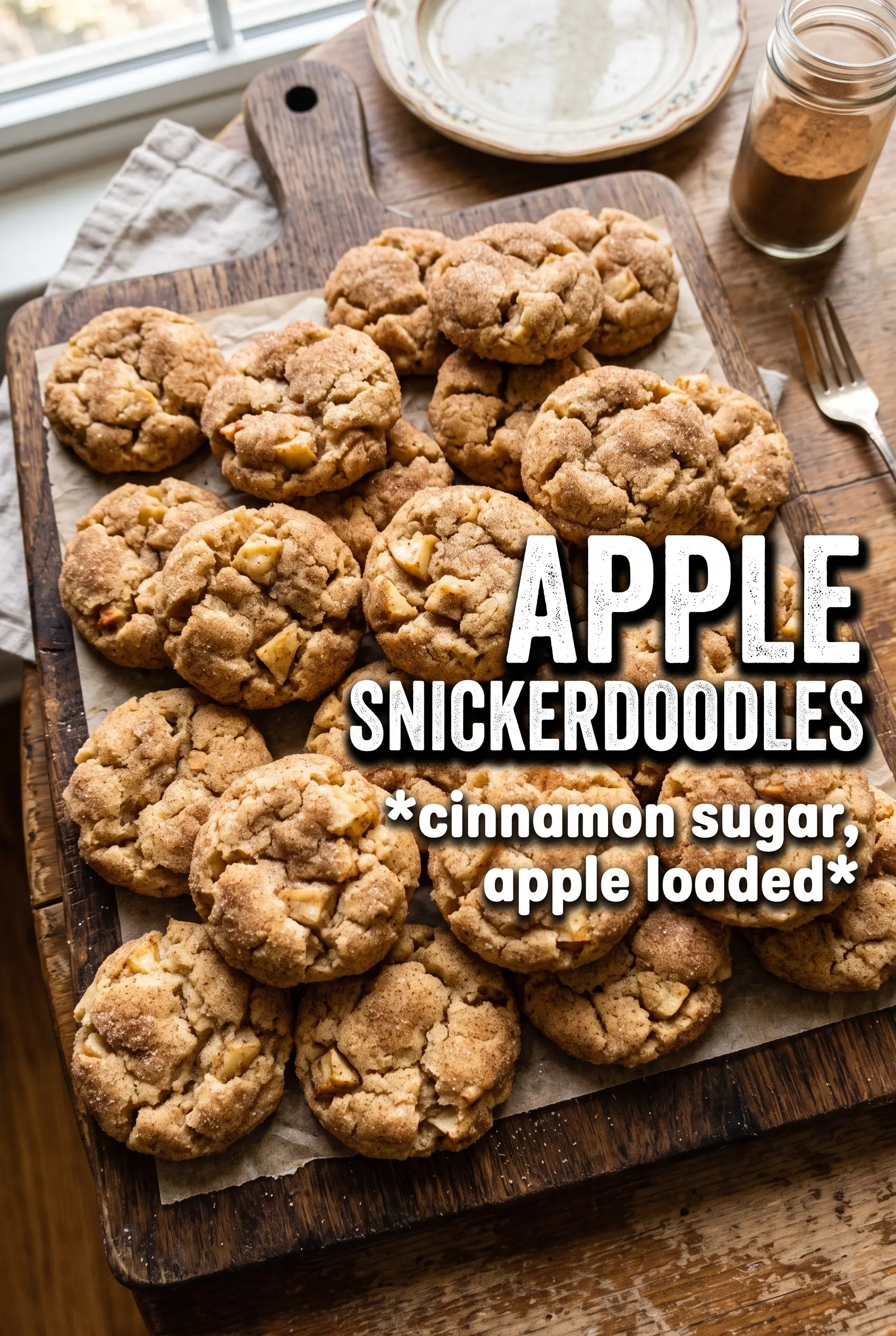
Apple snickerdoodles bake up with soft centers, crinkly cinnamon-sugar tops, and just enough dried apple tucked through the dough to keep every bite interesting. They taste familiar at first, then the apple comes through in little chewy pockets that make the whole cookie feel a touch more special than the standard version.
What makes this batch work is the balance. Cream of tartar gives the cookies that classic snickerdoodle tang and keeps the texture tender, while the dried apples add flavor without watering down the dough. I like to chop the apple pieces finely so they distribute evenly and don’t create big seams that can make the cookies bake unevenly.
You’ll find the rolling mix, the best way to keep the centers soft, and a few practical swaps below. The details matter here, especially if you want that classic crinkled top instead of a cookie that spreads flat and loses its chewy middle.
The cookies stayed soft for days and the chopped dried apples made the centers chewy instead of cakey. The cinnamon sugar cracked beautifully on top, and they smelled incredible coming out of the oven.
Save these apple snickerdoodles for the days when you want classic cinnamon-sugar cookies with a soft, apple-studded center.
The Trick to Keeping Snickerdoodles Soft When You Add Apple
The biggest mistake with add-ins like dried fruit is treating them like a mix-in that won’t affect the dough. Even dried apples hold enough chew and texture to change how the cookie bakes, so the dough needs to stay soft but not loose. If it’s overmixed or overloaded with fruit, the cookies can spread unevenly and lose that classic snickerdoodle lift.
The flour, cream of tartar, and baking soda are doing the structural work here. Cream of tartar gives the cookie its signature tang, but it also helps set the texture so the centers stay tender instead of turning flat and crisp. The chopped dried apples should be small enough that they disappear into the dough visually, but still give you little bursts of apple in the finished cookie.
- Cream of tartar — This is what keeps the flavor unmistakably snickerdoodle. There isn’t a true one-for-one substitute if you want the same tang and texture, so don’t skip it unless you’re ready for a different cookie entirely.
- Dried apple pieces — Use dried, not fresh. Fresh apple adds too much moisture and can make the centers gummy. Chop the dried pieces finely so they fold into the dough instead of tearing it apart.
- Butter — Softened butter creams with the sugar and traps air, which gives you that light, tender bite. If the butter is too warm, the cookies spread more than they should, so it should yield to pressure without looking greasy.
- Apple pie spice in the coating — This is subtle, but it lifts the cinnamon sugar and makes the apple flavor read more clearly. If you don’t have it, use a tiny pinch more cinnamon and a pinch of nutmeg.
What Each Ingredient Is Actually Doing in This Recipe
- Primary ingredient (the star) — Quality matters most. Choose the best you can find.
- Cooking medium (oil, butter, or broth) — This carries flavors and prevents dryness.
- Seasonings (salt, pepper, spices, herbs) — Layer flavors so nothing overpowers. Build depth gradually.
- Aromatics (garlic, onion, herbs) — Cook with fat to bloom flavors. Become the foundation.
- Supporting ingredients — Complement the main ingredient without overpowering it.
- Sauce or liquid (if applicable) — Brings flavors together. Balance richness with acid.
- Acid (lemon, vinegar, wine, or other) — Brightens and prevents flat-tasting results.
- Final finish (garnish, glaze, or sauce) — Prevents one-dimensional taste and adds visual appeal.
Getting the Crinkle Top Before the Cookies Set
Whipping the Butter and Sugar Properly
Beat the butter and sugar until the mixture looks pale and fluffy, not just blended. That step builds the structure that helps the cookies puff and crinkle instead of baking up dense. If you stop too soon, the dough will be heavier and the cookies won’t have that soft, tender middle.
Folding in the Dry Ingredients Without Toughening the Dough
Once the flour mixture goes in, stir only until the streaks disappear. Overmixing at this stage makes the cookies tighter and can develop too much gluten, which is the fastest way to lose the tender snickerdoodle texture. Fold in the chopped apples at the very end so they stay evenly distributed.
Baking Until the Edges Set but the Centers Still Look Soft
Pull the cookies when the edges are just set and the centers still look slightly underdone. They finish on the hot pan, and that carryover heat is what keeps them soft instead of dry. If you wait until the centers look fully baked in the oven, they’ll be firm by the time they cool.
Letting the Crinkles Form on the Pan
Leave the cookies on the baking sheet for a few minutes before moving them. As they cool, the tops settle and crack into those classic snickerdoodle ridges. If you transfer them too soon, they can slump or tear while still fragile.
Make Them Sweeter and More Apple-Candy Like
Use slightly more of the chopped dried apple and keep the cinnamon-sugar coating generous. The cookies will taste a little more dessert-like and a little less classic, with a stronger apple note in the center.
Gluten-Free Version
Use a 1:1 gluten-free baking flour that contains xanthan gum. The texture will still be soft, but the cookies may spread a touch more, so chill the dough for 20 minutes if it looks loose after mixing.
Dairy-Free Snickerdoodles
Swap in a plant-based butter that’s meant for baking. You’ll keep the same coating and structure, but the cookies may brown a little faster, so watch the bottoms closely near the end of baking.
Storage and Reheating
- Refrigerator: Store in an airtight container for up to 5 days. They stay soft, though the cinnamon-sugar coating softens a bit after day two.
- Freezer: Freeze baked cookies for up to 2 months or freeze dough balls after rolling in sugar. Baked cookies thaw well at room temperature; frozen dough can go straight to the oven with 1 to 2 extra minutes.
- Reheating: Warm cookies for 5 to 8 seconds in the microwave or a few minutes in a low oven. Don’t overheat them or the centers will dry out and lose that soft middle.
Answers to the Questions Worth Asking
Apple Snickerdoodles
Ingredients
Equipment
Method
- Preheat the oven to 375F and line baking sheets with parchment for easy release.
- Whisk together the flour, cream of tartar, baking soda, cinnamon, nutmeg, and salt until evenly combined.
- Beat the softened butter and granulated sugar until very light and fluffy.
- Add the eggs and vanilla extract, then beat just until the mixture looks smooth and cohesive.
- Stir in the flour mixture until just combined, then fold in the finely chopped dried apple pieces.
- Mix the rolling sugar, cinnamon, and apple pie spice in a shallow bowl.
- Scoop dough into 1-1/2 tablespoon balls, then roll each one in the cinnamon-sugar mixture until coated.
- Place the coated balls on the prepared baking sheets, spacing them apart.
- Bake at 375F for 10-12 minutes until the edges are set and the centers are still slightly soft.
- Cool the cookies on the pan for 3 minutes so the centers finish setting.
- Let them rest until they visibly crinkle as they cool.


