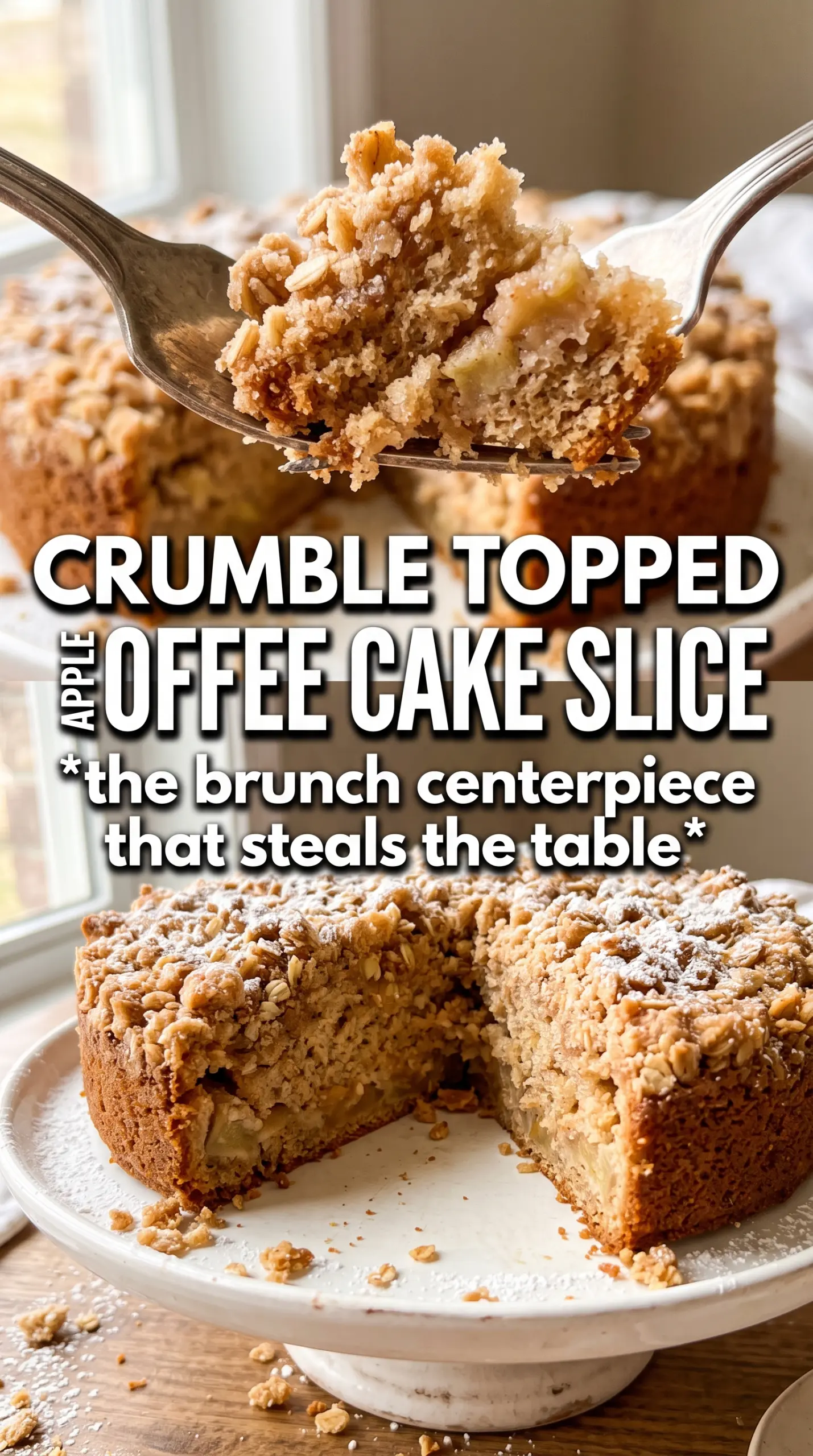
Apple crisp coffee cake bakes up with the best kind of contrast: a tender, sour cream-rich crumb under a thick oat crumble that turns golden and crisp at the edges. Every slice gives you soft spiced cake, little pockets of apple, and that buttery topping that tastes like the top of a good crisp baked right into breakfast.
The part that makes this version work is the balance. The sour cream keeps the cake moist without turning it heavy, and the diced apples are folded in at the end so they stay tucked into the batter instead of sinking. The topping starts cold, with butter cut into the dry mix until it forms clumps, which is what gives you those crunchy, bakery-style pieces instead of a sandy layer.
If you’ve ever had coffee cake that baked up dense in the middle or lost its crumble into the batter, the method below fixes both problems. I’ve included the timing cues that matter and a few smart swaps if you need them.
The crumble stayed crisp on top and the cake underneath was still moist the next morning. I loved that the apples didn’t make it soggy, and the cinnamon flavor came through in every bite.
Like this apple crisp coffee cake? Save it for the mornings when you want a buttery crumble topping and tender cinnamon apples in one pan.
The Mistake That Turns the Crumble Soft Instead of Crisp
The topping is the first place this recipe can go sideways. If the butter melts before the pan hits the oven, you lose those distinct little clumps that bake into a crisp crown and end up with a paste-like layer instead. Cold butter, cut into the dry mix until the pieces are pea-sized and shaggy, is what keeps the topping textured.
The batter matters too, especially once the apples go in. Too much stirring after the flour is added makes the cake tight, and overmixing after the apples are folded in can break them down and water out the crumb. The goal is a thick batter that spreads easily, not one that looks perfectly smooth.
- Cold butter for the topping — It needs to stay cold right up to baking so the crumble sets into crisp little clusters. If your kitchen is warm, refrigerate the finished topping while you mix the cake.
- Sour cream — This gives the cake a plush, moist crumb and a little tang that keeps the sweetness from feeling flat. Plain full-fat Greek yogurt works in a pinch, but the texture is a touch tighter.
- Diced apples — Small dice distribute evenly and bake through without leaving wet pockets. Use a firm baking apple if you can; soft apples turn mushy before the cake is done.
- Rolled oats — They give the topping its crisp, nubby texture. Quick oats will work, but the crumble will be finer and less rustic.
What Each Ingredient Is Actually Doing in This Recipe
- Primary ingredient (the star) — Quality matters most. Choose the best you can find.
- Cooking medium (oil, butter, or broth) — This carries flavors and prevents dryness.
- Seasonings (salt, pepper, spices, herbs) — Layer flavors so nothing overpowers. Build depth gradually.
- Aromatics (garlic, onion, herbs) — Cook with fat to bloom flavors. Become the foundation.
- Supporting ingredients — Complement the main ingredient without overpowering it.
- Sauce or liquid (if applicable) — Brings flavors together. Balance richness with acid.
- Acid (lemon, vinegar, wine, or other) — Brightens and prevents flat-tasting results.
- Final finish (garnish, glaze, or sauce) — Prevents one-dimensional taste and adds visual appeal.
Building the Batter and Crumble in the Right Order
Start with the topping while the butter is cold
Mix the oats, flour, brown sugar, cinnamon, and salt first, then cut in the cold butter until the mixture looks clumpy and uneven, with some dry bits still showing. That rough texture is what bakes into a real crumble. Once it holds together in small pieces when pinched, slide it into the refrigerator so the butter stays firm while you finish the cake.
Make the cake base light before the flour goes in
Beat the softened butter and sugar until it looks pale and fluffy, not just blended. That step traps air and helps the cake rise around the apples and topping. Add the eggs one at a time, then the vanilla and sour cream, and stop as soon as the mixture looks smooth. If the batter looks slightly curdled, it will come together once the flour is added.
Fold gently so the apples stay suspended
Stir in the dry ingredients just until the flour disappears, then fold in the diced apples with a few broad strokes. The batter will be thick, and that’s what you want. Spread it into the prepared pan, then scatter the chilled crumble generously over the top so there are no bare patches. Bake until the top is deep golden and a toothpick inserted into the cake part comes out clean, not wet with raw batter.
Make it with pears instead of apples
Firm pears work well here if you want a softer, more floral bite. Use the same amount, but dice them a little larger since they break down faster than apples. The topping and cake stay the same, though the finished texture will be slightly juicier.
Dairy-free version that still bakes up tender
Use a plant-based butter and a thick dairy-free yogurt in place of the sour cream. The crumb won’t be quite as rich, but it will still be moist and sliceable. Stick with a yogurt that’s plain and unsweetened so the sugar balance stays right.
Gluten-free with a similar crumb
Swap in a good 1:1 gluten-free flour blend for the all-purpose flour in both the cake and the topping. The cake will be a little more delicate, so let it cool fully before slicing. Rolled oats are naturally gluten-free, but use certified oats if cross-contamination matters.
Storage and Reheating
- Refrigerator: Store covered for up to 4 days. The topping softens a little, but the flavor stays good.
- Freezer: This cake freezes well in slices. Wrap tightly and freeze for up to 2 months, then thaw in the fridge overnight.
- Reheating: Warm slices in a 300F oven for 10 to 12 minutes so the crumble perks back up. The microwave will make the topping soft, which is the most common mistake with coffee cake leftovers.
Questions I Get Asked About This Recipe
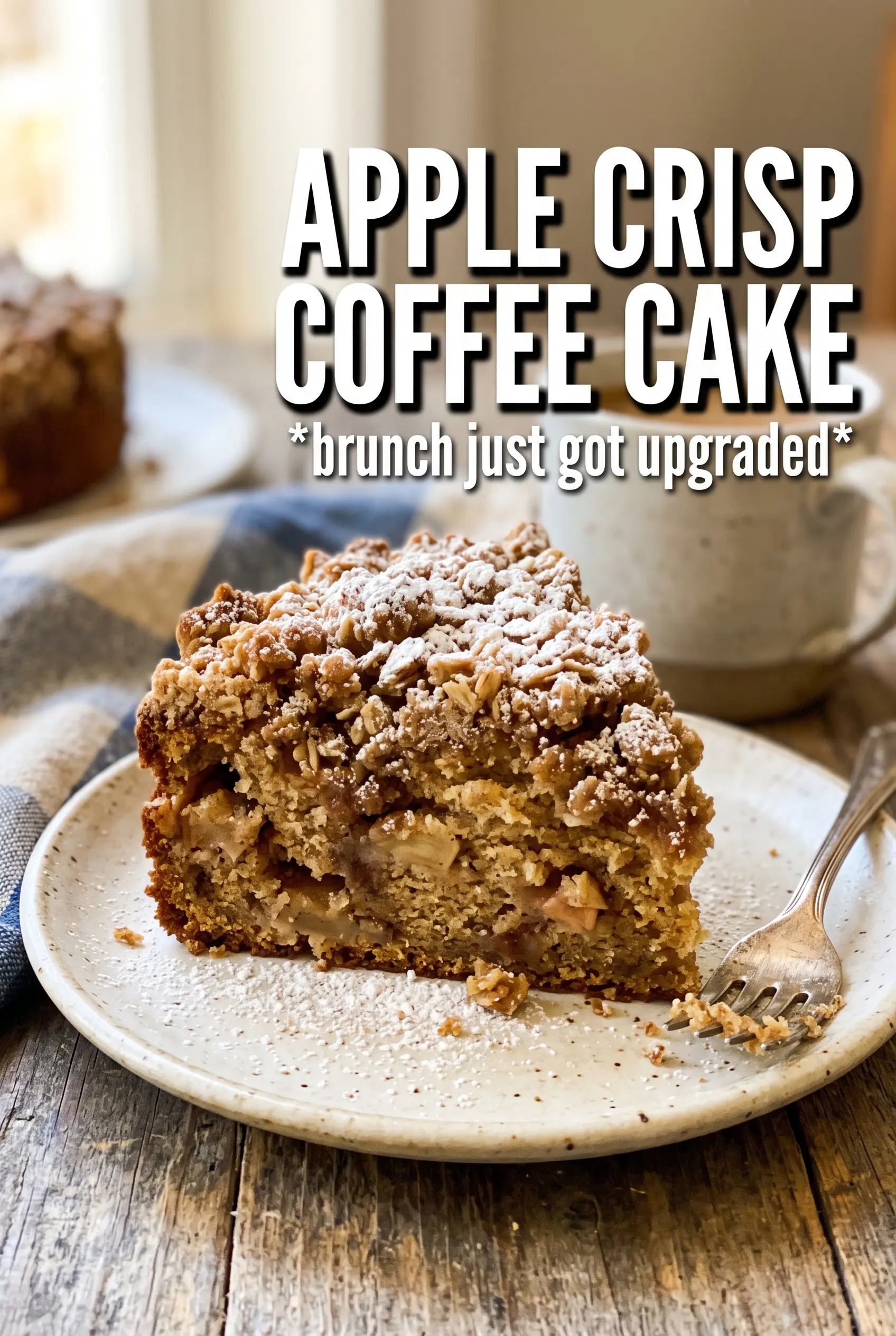
Apple Crisp Coffee Cake
Ingredients
Equipment
Method
- Preheat oven to 350F and grease a 9x13 baking dish so the cake releases cleanly after baking.
- Combine rolled oats, all-purpose flour, brown sugar, cinnamon, and salt in a bowl until evenly mixed.
- Cut in cold unsalted butter until the mixture forms clumpy crumbs with no large dry pockets.
- Refrigerate the crumble while you prepare the cake batter, keeping it cold for a golden, crisp top.
- Whisk all-purpose flour, baking powder, baking soda, cinnamon, and salt in a bowl until uniform in color.
- Beat softened unsalted butter and granulated sugar until fluffy, about 2 minutes, then add eggs and vanilla and mix until smooth.
- Mix in sour cream until the batter looks thick and cohesive.
- Fold in the flour mixture just until no streaks remain, then fold in diced apples.
- Spread the batter evenly in the greased 9x13 pan and scatter the oat crumble generously over the top.
- Bake 50-55 minutes at 350F until a toothpick in the center comes out clean and the crumble is golden with crisp edges.
- Let cool briefly, then dust with powdered sugar if desired before slicing for serving.


