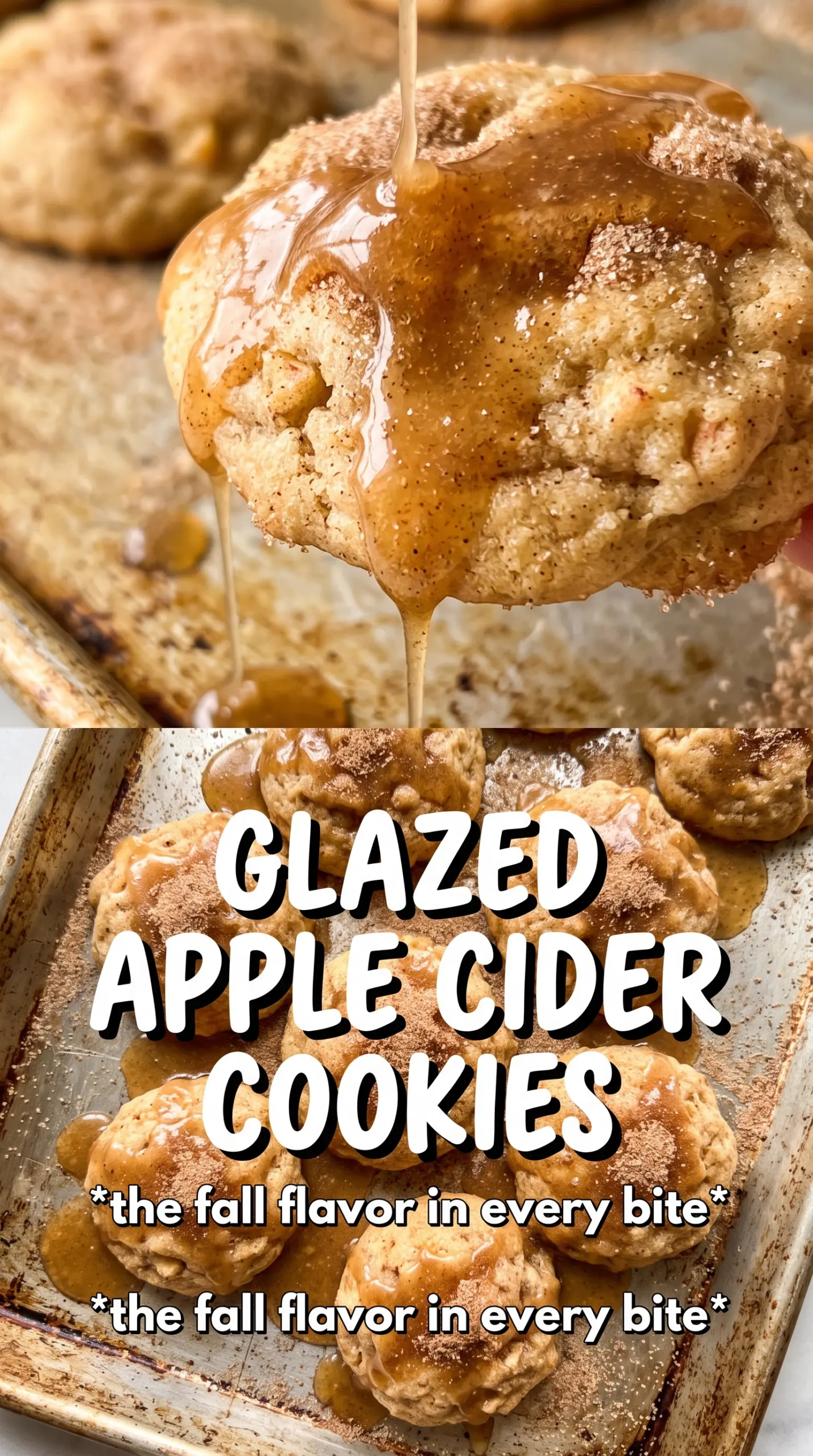
Soft, crinkly apple cider cookies land in that sweet spot between a sugar cookie and a spice cookie, with buttery edges, a tender center, and a warm cinnamon finish that makes them hard to leave alone. The reduced cider gives them a real apple note instead of the flat, one-dimensional sweetness that so many cider cookies miss.
The trick is concentrating the cider before it ever goes into the dough. That step pulls out the flavor and keeps the dough from turning loose or cakey. Brown sugar helps keep the middle soft, while the cinnamon sugar coating adds a little sparkle and a faint crunch the second the cookies come out of the oven.
Below, I’ll walk through the one step that matters most, the ingredient choices that actually change the texture, and a few swaps that still keep the cookies sturdy and soft. If you’ve ever had spice cookies bake up dry or bland, this version fixes both problems.
The cookies stayed soft for days and the cinnamon sugar stayed crisp on the outside. Reducing the cider first made a bigger difference than I expected — the apple flavor came through in every bite.
Love the soft centers and cinnamon sugar crackle on these Apple Cider Cookies? Save them to Pinterest for the days when you want a spiced cookie with real apple flavor.
The Mistake That Makes Apple Cider Cookies Taste Flat
Most cider cookie recipes lean on cider straight from the bottle, and that’s where the flavor gets lost. Unreduced cider adds too much water and too little impact, which leaves you with a cookie that tastes like cinnamon sugar and not much else. Reducing the cider first concentrates the apple flavor and keeps the dough from spreading too thin.
The other place these cookies go sideways is butter temperature. You want softened butter that creams with the sugars into a light, fluffy base, not melted butter that turns the dough greasy. That aeration helps the cookies bake up with a soft middle and those lightly crinkled tops instead of a dense, heavy cookie.
- Reduced apple cider — This is the ingredient that carries the apple flavor. Reduce it until syrupy and cool it completely before mixing it into the dough. Warm cider can melt the butter and throw off the texture.
- Brown sugar — It keeps the centers soft and adds a molasses depth that plays well with the spices. If you only have light brown sugar, use it; dark brown sugar will make the cookies a little deeper and richer.
- Spices — Cinnamon, ginger, nutmeg, and allspice give the cookies a warm edge without turning them into gingerbread. Fresh spices matter here. Old spices will taste dusty instead of fragrant.
- Cinnamon sugar coating — This isn’t just for looks. It gives the outside a slight crunch and keeps the cookies from tasting plain on the first bite.
What Each Ingredient Is Actually Doing in This Recipe
- Primary ingredient (the star) — Quality matters most. Choose the best you can find.
- Cooking medium (oil, butter, or broth) — This carries flavors and prevents dryness.
- Seasonings (salt, pepper, spices, herbs) — Layer flavors so nothing overpowers. Build depth gradually.
- Aromatics (garlic, onion, herbs) — Cook with fat to bloom flavors. Become the foundation.
- Supporting ingredients — Complement the main ingredient without overpowering it.
- Sauce or liquid (if applicable) — Brings flavors together. Balance richness with acid.
- Acid (lemon, vinegar, wine, or other) — Brightens and prevents flat-tasting results.
- Final finish (garnish, glaze, or sauce) — Prevents one-dimensional taste and adds visual appeal.
Building the Dough So the Cider Stays in Control
Reducing the Cider
Pour the apple cider into a small saucepan and simmer it over medium heat until it shrinks to about half its volume and looks slightly syrupy. It should coat the back of a spoon, not sit there like watery juice. Let it cool completely before you add it to the dough, or you’ll soften the butter too early and lose the structure that gives these cookies their tender crumb.
Creaming the Butter and Sugars
Beat the softened butter with the brown sugar and granulated sugar until it looks pale and a little fluffy. This takes a few minutes, and it matters because that trapped air gives the cookies lift. If the mixture looks greasy instead of fluffy, the butter was too warm, and the cookies may spread more than you want.
Mixing Just Until Combined
Add the egg, vanilla, and cooled reduced cider, then stir in the dry ingredients until the flour streaks disappear. Stop there. Overmixing tightens the dough and can make the cookies tougher, especially once the flour has fully hydrated. Scoop the dough while it still looks slightly soft, roll each portion in the cinnamon sugar, and bake until the edges are set and the centers still look a touch underdone in the middle.
Make Them More Spiced
Add an extra 1/4 teaspoon of cinnamon and a pinch more ginger if you want a sharper spice finish. That pushes the cookies closer to a classic fall spice cookie, but the apple flavor still comes through because the cider has been reduced first.
Gluten-Free Version
Use a 1:1 gluten-free flour blend that includes xanthan gum. The texture will be a little more delicate and the cookies may spread less, but they’ll still bake up soft and spiced instead of crumbly if you don’t overbake them.
Dairy-Free Swap
Replace the butter with a plant-based baking stick, not soft tub margarine. You need a product that behaves like butter when creamed, or the dough will spread too much and lose that soft, thick center.
Storage and Reheating
- Refrigerator: Store in an airtight container for up to 5 days. The cinnamon sugar coating softens a little, but the cookies stay tender.
- Freezer: These freeze well. Freeze the baked cookies in a single layer, then move them to a freezer bag for up to 2 months, or freeze scooped dough balls and bake from frozen with 1 to 2 extra minutes.
- Reheating: Warm cookies in a 300°F oven for 3 to 5 minutes. The common mistake is using the microwave, which makes the centers rubbery and wipes out the crisp sugar coating.
Answers to the Questions Worth Asking

Apple Cider Cookies
Ingredients
Equipment
Method
- Simmer apple cider in a small saucepan over medium heat until syrupy, about 8–12 minutes, then cool completely.
- When the cider is cool, set it aside so it’s ready to mix into the dough.
- Preheat the oven to 350°F and line baking sheets with parchment.
- Whisk together all-purpose flour, baking soda, cinnamon, ginger, nutmeg, allspice, and salt until evenly combined.
- Beat the softened butter with both sugars until light and fluffy, about 2–3 minutes.
- Beat in the egg, then mix in the vanilla extract and the cooled reduced apple cider.
- Add the flour mixture and stir until just combined, with no dry streaks remaining.
- Scoop dough into 1 1/2 tablespoon balls and roll each ball in cinnamon sugar to coat all sides.
- Place the cookies on prepared baking sheets, spacing them about 2 inches apart.
- Bake at 350°F for 10–12 minutes, until the edges are set and the tops look slightly cracked.
- Cool on the pan for 5 minutes before transferring the cookies to a rack to cool further.


