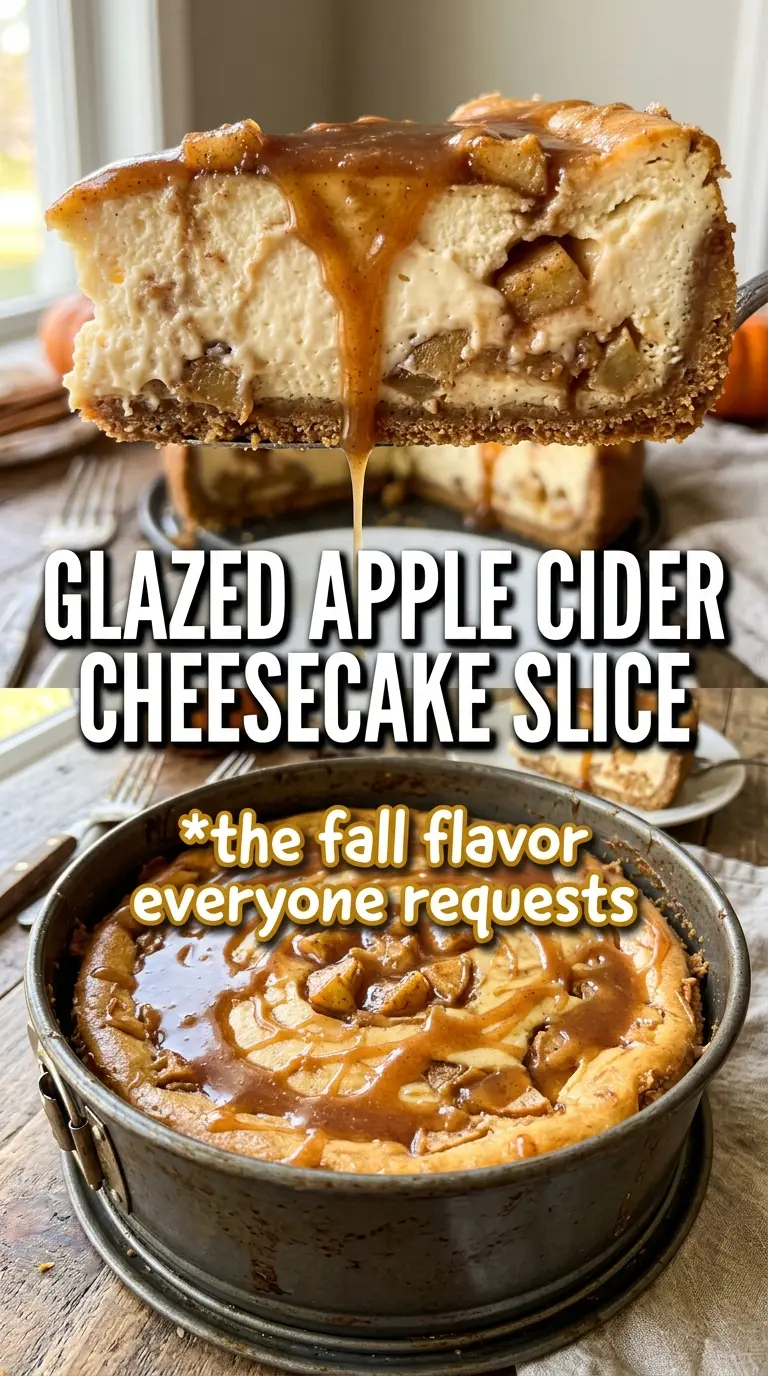
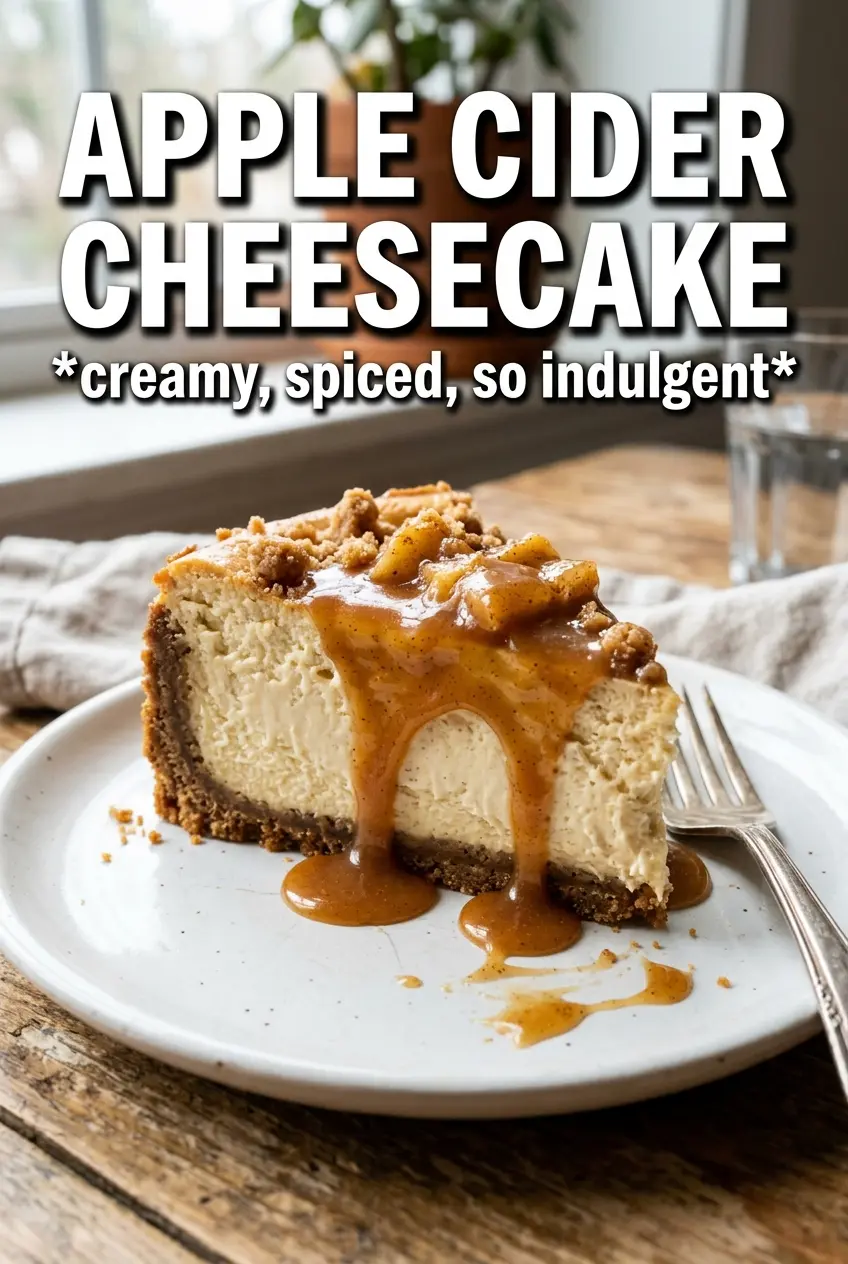
Apple cider cheesecake lands right in that sweet spot between cozy and polished: a crisp graham cracker crust, a dense and silky filling, and a spiced cider topping that tastes like a reduced-down version of the best part of a fall drink. The apple flavor isn’t loud here; it’s layered in, which keeps the cheesecake from turning watery or one-note. Each bite stays creamy, tangy, and balanced instead of leaning too far into spice cake territory.
The key is reducing the cider before it goes into the batter. That extra step concentrates the flavor without adding too much liquid, which matters in a cheesecake where too much moisture can soften the texture or keep the center from setting cleanly. A water bath also helps the filling bake gently, so you get a smooth top and that slight wobble in the center that tells you it’s done.
Below, I’ve included the exact cues I use to know when the filling is ready, plus a few smart swaps if you need to work around ingredients on hand. The topping also gets its own note, because that syrupy finish is what makes each slice feel special.
The cider reduction made the filling taste like apple without watering it down, and the topping set up into this glossy syrup that soaked into the crust just enough.
Apple cider cheesecake with that silky filling and spiced drizzle belongs on your dessert table the next time you want a make-ahead cheesecake with real apple flavor.
The Step That Keeps Apple Flavor in the Cheesecake Instead of the Pan
Cheesecake filling can handle a lot of richness, but it can’t handle unnecessary water. That’s why the cider gets reduced before it goes into the batter. Unreduced cider tastes thinner and can make the filling looser than you want, especially once the eggs and sour cream are in the mix. Reduced cider gives you concentrated apple flavor without throwing off the texture.
The other common failure point is overbeating after the eggs go in. Once eggs are added, the batter only needs enough mixing to become smooth. Too much air creates puffing, then cracks, and too much stirring can warm the batter enough to make the bake less even. A gentle water bath helps the cheesecake set evenly from the edges inward, which is what gives you that clean, creamy slice.
What Each Ingredient Is Actually Doing in This Cheesecake
- Graham cracker crumbs — These give the crust its classic, sturdy base and enough sweetness to balance the tangy filling. A fine crumb packs best; if yours are a little coarse, press the crust down firmly so it holds together when sliced.
- Apple cider — This is the ingredient that makes the recipe taste like apple instead of just cinnamon and sugar. Reduce it before measuring for the filling, and don’t skip cooling it completely or it can soften the batter and warm the cream cheese.
- Cream cheese — Full-fat blocks are worth using here because they bake into a dense, smooth cheesecake. Tub-style cream cheese is softer and can make the filling less stable.
- Sour cream — This keeps the filling lush and adds just enough tang to keep the sweetness in check. Plain Greek yogurt can work in a pinch, but the texture will be a little less silky.
- Brown sugar — It brings a deeper caramel note that fits the cider better than plain white sugar. Light brown sugar works fine; dark brown sugar will give the filling a more molasses-heavy finish.
- Cinnamon and nutmeg — These don’t overpower the apple. They round it out. Freshly grated nutmeg is lovely if you have it, but pre-ground is completely fine.
Building the Batter and Baking It Gently
Pressing the Crust Tight Enough
Mix the crust until every crumb looks evenly coated, then press it firmly into the springform pan and slightly up the sides. A flat-bottomed cup helps compact it without leaving loose patches. If the crust is too airy, it’ll crumble when you cut the first slice, and nobody wants that after a long chill.
Making the Filling Smooth Before the Eggs Go In
Beat the cream cheese and brown sugar until the mixture looks completely smooth and no little lumps remain. That stage matters more than most people think, because lumps don’t disappear later. Once the eggs go in, mix on low just until incorporated. The batter should look thick and glossy, not fluffy.
Watching for the Center Wobble
Pour the filling over the crust and bake until the edges are set but the center still jiggles like Jell-O when you nudge the pan. That slight wobble means the cheesecake has enough structure to finish setting as it cools. If the center looks completely firm in the oven, it’s already overbaked and the texture will land dry instead of creamy.
Cooling and Chilling Without Rushing It
Let the cheesecake cool completely before it goes into the refrigerator. If it’s wrapped or chilled while still warm, condensation can form on the surface and make the top look wet. Give it the full chill time so the slices cut cleanly and the cider topping can sit on top instead of sliding off.
How to Adapt This Cheesecake for Different Kitchens and Different Crowds
Gluten-Free Crust Swap
Use certified gluten-free graham-style crumbs or a gluten-free cookie crumb in the same amount. The texture stays close to the original, though some gluten-free crumbs need an extra tablespoon of melted butter to hold together.
Dairy-Free Version
Use dairy-free cream cheese and a thick dairy-free sour cream alternative. The cheesecake will still set, but the flavor leans a little less tangy and the filling can be softer, so chill it overnight before slicing.
Extra-Spiced Filling
Add an extra 1/4 teaspoon cinnamon or a pinch of cloves if you want the cider note to lean warmer and more aromatic. Don’t go heavy on cloves, though, because they can take over fast and hide the apple flavor.
Storage and Reheating
- Refrigerator: Store covered for up to 5 days. The crust softens a little as it sits, but the flavor deepens.
- Freezer: Cheesecake freezes well. Chill it fully, slice it first if you want grab-and-go portions, then wrap tightly and freeze for up to 2 months.
- Reheating: This dessert is best served cold or cool, not reheated. If you freeze slices, thaw them in the refrigerator overnight so the texture stays creamy instead of turning watery.
Questions I Get Asked About This Recipe
Apple Cider Cheesecake
Ingredients
Equipment
Method
- Preheat oven to 325F. Combine graham cracker crumbs, sugar, cinnamon, and melted unsalted butter, then press firmly into a 9-inch springform pan.
- Reduce 1/2 cup apple cider in a small saucepan over medium heat until syrupy, then cool to room temperature. Beat cream cheese and brown sugar until completely smooth.
- Mix the cooled reduced cider into the cream cheese mixture. Add eggs one at a time, mixing just until each is incorporated.
- Add sour cream, cinnamon, nutmeg, and vanilla extract, then mix until smooth. Pour the cheesecake batter over the crust.
- Bake in a water bath at 325F for 55-60 minutes, until the center is just set with a slight wobble. Transfer to a rack and cool completely to room temperature before chilling.
- Refrigerate for 6 hours or overnight. Chill until fully firm for clean slices.
- Simmer the remaining cider with brown sugar and cinnamon until syrupy. Drizzle the spiced apple cider syrup over slices when serving, letting it settle slightly on top.


