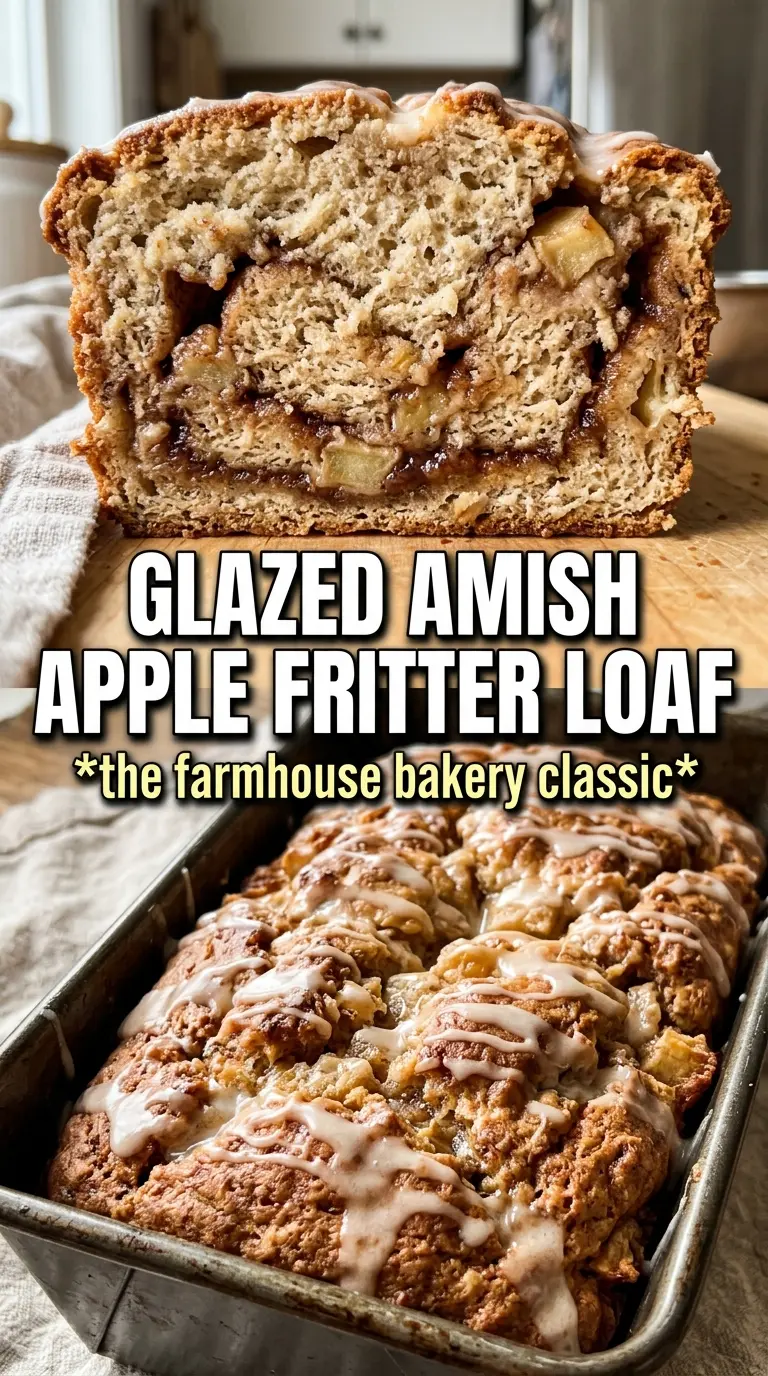
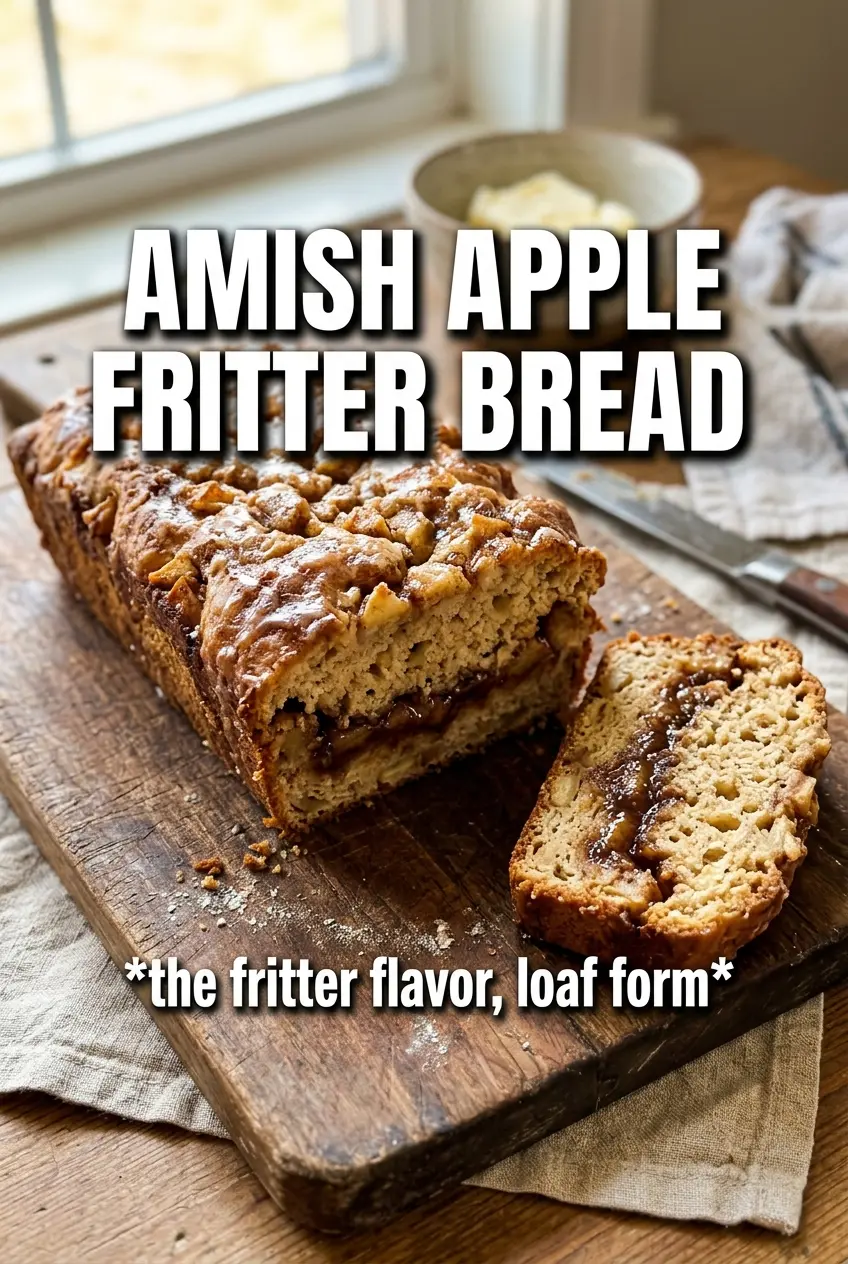
Amish apple fritter bread bakes up with a tender, buttery crumb, pockets of cinnamon-spiced apples, and a sugary swirl that turns almost jammy in the oven. The glaze melts into the warm top and finishes it with that bakery-style sheen that makes people slice into it before it has cooled all the way. It eats like a cross between coffee cake and an old-fashioned fritter, but in a loaf pan, which makes it a lot easier to pull off at home.
The trick is keeping the apples in two places: some tossed with cinnamon sugar so they soften and perfume the loaf, and some layered on top so you get those caramelized pieces right under the glaze. The batter stays simple and sturdy, which matters because the fruit and sugar add moisture as it bakes. If you rush the mixing or overbake it, the loaf can turn dense or dry, but when it’s handled gently and taken out at just the right moment, the crumb stays soft and the center slices cleanly.
Below, I’ll walk through the part that keeps the swirl from sinking, the apple choice that gives the best texture, and a few variations if you want to tweak the spice or make it dairy-free.
The cinnamon sugar stayed in little ribbons instead of disappearing, and the apples on top turned soft and almost caramelized. I got clean slices after it cooled for about 20 minutes, which never happens when I make quick breads.
Save this Amish Apple Fritter Bread for the days when you want a soft cinnamon-apple loaf with that bakery-style glaze on top.
The Part That Keeps the Apple Swirl From Disappearing
Most quick breads with fruit fail in the same way: the apples sink, the middle turns gummy, or the cinnamon sugar melts into the batter instead of leaving those distinct streaks people are hoping for. This loaf avoids that by separating the apples from the dry swirl and building the layers carefully. Half of the cinnamon sugar gets tossed with the diced apples first, which helps season the fruit without dumping all that sugar into one wet pocket.
The other half stays loose and gets sprinkled between the batter layers. That small detail matters because it gives you a visible ribbon through the loaf instead of a muddy filling. The batter itself is thick enough to hold the apples up, but not so stiff that it bakes dry. If your loaf tends to collapse in the center, it usually means the pan was overfilled, the apples were cut too large, or the bread went into the oven before the batter was fully mixed.
What the Apples, Butter, and Leaveners Are Doing Here
- Apples — Peel them and dice them small. That size gives you soft, evenly distributed pieces instead of big chunks that can make the loaf fall apart when you slice it. A firm baking apple works best because it holds some texture after 60 minutes in the oven.
- Brown sugar — This is what gives the swirl its deeper, almost caramel note. Light brown sugar is fine, but dark brown sugar will push the loaf a little richer and more molasses-heavy.
- Butter — Softened butter and sugar need to be beaten until the mixture looks pale and fluffy. That step traps air, which keeps the bread from eating heavy. Melted butter won’t give you the same lift.
- Whole milk — The fat in whole milk helps the crumb stay tender. Lower-fat milk will work in a pinch, but the loaf won’t be quite as plush.
- Baking powder and baking soda — This recipe uses both because the apples, sugar, and butter create a fairly dense batter. The combination gives the loaf enough rise without making it taste overly cakey.
Building the Loaf So the Layers Bake Evenly
Mixing the Batter Base
Beat the butter and granulated sugar until the mixture turns lighter in color and looks fluffy around the edges of the bowl. That’s the point where enough air has been worked in, and it helps the loaf rise without feeling heavy. Add the eggs one at a time if you can, then the vanilla, and stop mixing as soon as everything looks smooth. Once the flour goes in, overmixing is the quickest way to get a tough loaf.
Layering the Apples and Cinnamon Sugar
Spread half the batter into the prepared pan and smooth it into the corners. Add half the apples, then sprinkle on the remaining cinnamon-brown sugar mixture before topping with the rest of the batter and the last apples. Don’t stir it together in the pan; that’s how you lose the layers and end up with a muddy middle. A few little peaks of batter showing through are fine because they’ll bake up around the apples.
Knowing When It’s Done
Bake until a toothpick inserted in the center comes out clean or with a few moist crumbs, not wet batter. The top should be deeply golden and set, and the loaf may have a crack down the middle, which is normal for this kind of bread. If the top browns too quickly before the center is done, lay a loose sheet of foil over it for the last 15 minutes. Glaze it while the loaf is still warm so the powdered sugar mixture melts slightly into the surface instead of sitting on top like icing.
Ways to Tweak the Loaf Without Losing the Good Part
Make It Dairy-Free
Swap the butter for a good plant-based stick butter and use an unsweetened non-dairy milk that pours like dairy milk. The loaf will still rise and brown well, though the crumb may be a touch less rich than the original.
Use a Slightly More Tart Apple
Granny Smith or another firm tart apple gives the loaf a brighter bite and keeps the sweetness from taking over. The apples stay a little more distinct after baking, which works well if you like a sharper contrast against the cinnamon sugar.
Reduce the Sweetness
Skip half the glaze or thin it with a little extra milk so it drizzles lightly instead of coating the whole top. You’ll lose some of the bakery-style finish, but the bread itself will taste more like a breakfast loaf and less like dessert.
Storage and Reheating
- Refrigerator: Store covered for up to 4 days. The crumb stays moist, though the glaze will soften as it sits.
- Freezer: Freeze slices tightly wrapped for up to 2 months. Thaw at room temperature so the loaf doesn’t dry out in the microwave.
- Reheating: Warm slices in a toaster oven or microwave for a few seconds at a time. Too much heat makes the apples collapse and the bread turn rubbery, so stop as soon as the center feels just warm.
Questions I Get Asked About This Recipe
Amish Apple Fritter Bread
Ingredients
Equipment
Method
- Preheat oven to 350F and grease a 9x5 loaf pan with a light coating for easy release.
- Mix brown sugar and cinnamon together, then toss half with the diced apples; set the remaining cinnamon-brown sugar and the apples aside.
- Beat softened butter and granulated sugar until light and fluffy, then beat in the eggs and vanilla until smooth.
- Whisk flour, baking powder, baking soda, and salt together.
- Alternate adding the dry mixture and the whole milk to the butter mixture, mixing just until the batter comes together.
- Pour half the batter into the prepared loaf pan and spread it evenly.
- Layer half the apple mixture over the batter, then sprinkle the remaining cinnamon-brown sugar over the apples.
- Pour the remaining batter on top and finish with the remaining apples arranged in an even layer.
- Bake at 350F for 55-60 minutes, until a toothpick inserted in the center comes out clean.
- Drizzle the powdered sugar glaze over the loaf while still warm, letting it soak slightly into the tender crumb.


