Golden rice, tender chicken, and a blanket of melted queso make this Mexican chicken and rice the kind of skillet dinner that gets scraped clean fast. The rice cooks right in the same pan with salsa and broth, so it picks up flavor from the chicken and spices instead of tasting like a plain side dish that was added at the end. When the queso goes in, it turns the whole skillet creamy without drowning the rice, and the corn and bell pepper keep every bite from feeling heavy.
The part that matters most is the order. Browning the chicken first leaves those browned bits in the pan, and that’s where a lot of the flavor comes from. Toasting the rice for a couple of minutes before adding liquid gives it a better texture and helps the grains stay separate instead of turning soft and sticky. The queso goes in after the rice has cooked so it melts into the skillet instead of disappearing into the liquid and thinning everything out.
Below you’ll find the timing that keeps the rice from going mushy, a few smart swaps that still keep the dish balanced, and answers to the most common questions about keeping the queso smooth.
The rice came out fluffy, not gummy, and the queso stayed creamy all the way through. I liked that the chicken browned first because the whole skillet had more flavor than most one-pan dinners I’ve tried.
Save this Mexican Chicken and Rice with Queso for a one-skillet dinner with fluffy rice, browned chicken, and creamy queso in every bite.
The Trick to Keeping the Rice Separate Instead of Turning Soft and Heavy
Rice dishes like this can go wrong for one simple reason: too much liquid, or too much stirring after the rice starts cooking. Long-grain white rice is the right choice here because it holds its shape better than short-grain rice, and the quick toast in oil helps coat the grains so they simmer up fluffy instead of clumping together.
The other thing that matters is heat control. Once the skillet comes to a boil, it needs to drop to low and stay there under a tight lid. If the heat stays high, the broth evaporates too fast before the rice can cook through, and you end up with hard centers and scorched spots underneath.
What Each Ingredient Is Actually Doing in This Skillet
- Long-grain white rice — This is the backbone of the dish. It stays fluffy and distinct, which matters once the queso goes in. Jasmine rice can work if that’s what you have, but it will be a little softer and more fragrant.
- White queso dip — This is what gives the skillet its creamy finish. A jarred or deli-style queso dip melts more smoothly than shredded cheese alone, which can turn grainy if the heat is too high. If you use homemade queso, keep it loose enough to pour.
- Salsa — Salsa adds seasoning, acidity, and a little body all at once. Use a salsa you already like eating, because the flavor carries through the whole pan. Chunky salsa is fine, but very watery salsa can make the rice looser.
- Chicken broth — Broth seasons the rice from the inside out. Low-sodium broth gives you more control, especially since salsa and queso both bring salt. Water will cook the rice, but it won’t give the same depth.
- Corn and red bell pepper — These add sweetness and color at the end, which keeps the skillet from tasting flat. Add them after the rice is mostly cooked so they stay bright and the pepper keeps a little bite.
- Boneless skinless chicken breasts — Cubing the chicken gives you faster browning and lets every piece soak up the sauce. Chicken thighs work too, and they stay juicier, but they’ll take a little longer to cook through.
How to Build the Skillet Without Breaking the Queso
Brown the Chicken First
Heat the oil in a wide skillet until it shimmers, then add the seasoned chicken in a single layer. Let it sit long enough to pick up color before turning it. If you crowd the pan, the chicken steams instead of browns, and you lose the savory base that makes the whole dish taste cooked with intention.
Toast the Rice in the Fat
After the onion and garlic soften, stir in the rice and let it toast for about 2 minutes. The grains should smell nutty and look a little glossy around the edges. That quick step helps the rice stay separate and keeps the finished dish from turning pasty once the queso goes in.
Simmer Covered, Then Finish Open
Once the broth, salsa, cumin, and chili powder are in, bring the skillet to a boil, then turn the heat down low and cover it. Don’t stir during this part unless the bottom is sticking badly. When the rice has absorbed most of the liquid, stir in the queso, corn, and bell pepper and cook uncovered just long enough for the queso to melt into a creamy coating.
Stop Before the Rice Looks Parched
The rice should be tender with a little moisture still left in the pan when you add the queso. If you wait until it looks dry, the cheese has no sauce to melt into and the dish turns dense. A little steam is what you want at the end; it tells you the rice will finish tender without losing its shape.
How to Adapt This for a Different Pantry or a Different Diet
Make It Dairy-Free
Use a dairy-free queso-style sauce that melts smoothly, or replace the queso with a creamy cashew sauce if that fits your diet. The result will still be rich, but the flavor will be a little less savory than classic white queso, so a pinch more salt at the end often helps.
Use Chicken Thighs Instead of Breasts
Boneless thighs give you a juicier, richer result and they’re a little more forgiving if the skillet runs hot. Cut them into the same size pieces as the breasts and brown them the same way, but give them an extra minute or two if needed before adding the onion.
Turn It Vegetarian
Skip the chicken and use black beans or pinto beans instead. You’ll lose the browned chicken flavor, so cook the onions a little longer and use a smoky salsa to give the skillet more depth. The texture stays hearty, and the queso still ties everything together.
Add Heat Without Changing the Structure
Stir in diced jalapeño with the onion, or use a hotter salsa if you want more kick. Add the heat early rather than dumping in a lot of hot sauce at the end, because it blends into the rice better and doesn’t thin out the queso.
Storage and Reheating
- Refrigerator: Store leftovers in an airtight container for up to 4 days. The rice will firm up a bit as it sits, but it still reheats well.
- Freezer: It freezes, though the queso may separate slightly after thawing. Freeze in portioned containers for up to 2 months for the best texture.
- Reheating: Reheat gently on the stove or in the microwave with a splash of broth or water. The biggest mistake is blasting it on high heat, which can dry out the rice and make the queso look oily.
Answers to the Questions Worth Asking
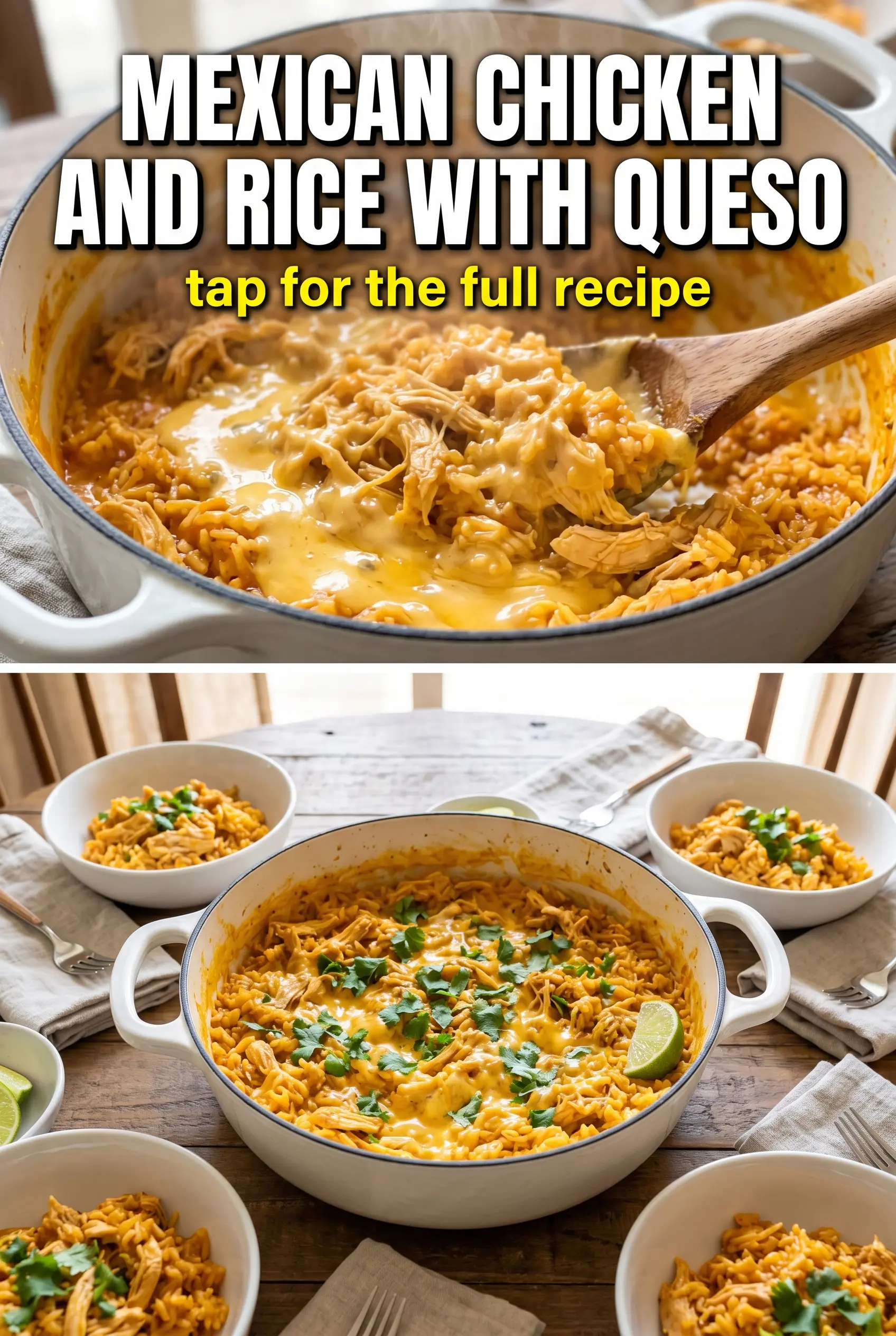
Mexican Chicken and Rice with Queso
Ingredients
Equipment
Method
- Heat olive oil in a large skillet over medium-high heat until shimmering. Season the cubed chicken with salt and pepper, then brown on all sides for about 5 minutes.
- Add the diced onion and minced garlic, cooking for 2 minutes until fragrant. Stir to coat the chicken and oil with the aromatics.
- Stir in the long-grain white rice and toast for 2 minutes. Keep stirring so the rice looks lightly golden at the edges.
- Pour in the chicken broth, salsa, cumin, and chili powder. Increase to a boil, then reduce heat to low and cover.
- Simmer covered on low for 15 minutes. Do not lift the lid during this time so the rice cooks evenly.
- Stir in the white queso dip, corn, and diced red bell pepper. Cook uncovered for 3-5 minutes until the queso is melted and the rice is tender.
- Garnish with fresh cilantro and serve hot. For best texture, let the skillet stand off-heat for 2 minutes before eating.