Silky pasta, charred corn, and crispy bacon make this elote pasta carbonara land somewhere between comfort food and cookout food, and that’s exactly why it works. The sauce clings to every strand instead of pooling at the bottom of the bowl, and the tajín gives the whole dish a bright little jolt that keeps the richness in check. It eats like a full dinner, but it still has the punchy, messy-good energy of elote.
The key is treating it like carbonara, not cream pasta. The heat from the spaghetti does the work of thickening the yolks and cheese, so the sauce turns glossy instead of scrambled. The corn needs enough time in the skillet to pick up real color, and the bacon fat is part of the flavor base, so don’t drain the pan before the corn goes in.
Below, I’ll walk through the one part people usually rush, plus a few swaps that keep the dish balanced if you need to adjust the cheese, the heat, or the bacon.
The sauce turned silky as soon as I added the hot pasta water, and the charred corn tasted like real elote instead of just corn mixed into noodles. My husband went back for seconds before I even sat down.
Save this elote pasta carbonara for the nights when you want creamy spaghetti with charred corn, bacon, and a sharp tajín finish.
The Trick to Keeping the Sauce Creamy Instead of Scrambled
Carbonara-style sauce only works when the eggs hit the pasta off the heat. If the skillet is still ripping hot, the yolks tighten too fast and you get little bits of cooked egg instead of a smooth coating. That’s the main thing to respect here, because the cheese and egg mixture for this dish is even more sensitive than a classic carbonara thanks to the added starch from the corn and the saltiness of the bacon.
Use the pasta water as your control knob. A splash loosens the mixture at first, then the starch helps it emulsify into something creamy and glossy. Add it gradually and toss constantly. If the pasta looks dry after the first toss, it usually needs another small splash, not more cheese.
- Off-heat finishing — The pan should be hot enough to warm the sauce, not cook the eggs. Pull it off the burner before the yolks go in.
- Reserved pasta water — This is what turns the yolk-and-cheese mixture into sauce instead of clumping it. Salted water is best because it seasons from the inside out.
- Fresh corn — Fresh kernels char in the skillet and keep their bite. Frozen corn works in a pinch, but it won’t caramelize as deeply unless you dry it well first.
- Cotija and Parmesan — Cotija brings the elote-style tang, while Parmesan helps the sauce melt into a smooth finish. If you swap both for one cheese, the flavor gets flatter and the sauce loses some structure.
What Each Ingredient Is Doing in the Bowl
- Spaghetti — Long noodles hold onto the sauce better than short pasta here. Bucatini also works if you want something a little richer in the bite.
- Bacon — This gives you the salty, smoky base and the rendered fat that carries the corn. Pancetta works if you want a cleaner pork flavor, but bacon gives the more familiar elote-meets-carbonara contrast.
- Corn — The char is the point. Cut it from fresh ears if you can, because the sweet crunch plays against the salty cheese and bacon in a way canned corn won’t.
- Egg yolks — Yolks create the silky body of the sauce. Whole eggs will work, but the result will be lighter and less plush.
- Cotija — This is the ingredient that pushes the dish toward elote. It’s salty, crumbly, and sharp, so even a small amount changes the whole bowl.
- Tajín — The lime-chile edge cuts through the richness and wakes everything up. Start with the amount listed, then add a little more at the end only if the dish still tastes flat.
- Lime juice — Add it at the end so the sauce doesn’t break. Fresh lime is better than bottled here because the finish needs brightness, not just acid.
The 20 Minutes That Matter Most
Render the Bacon First
Cook the chopped bacon in a large skillet until the pieces are deeply browned and crisp at the edges. You want the fat in the pan, because that’s where the corn is going to pick up its flavor. If the bacon is pale and soft, the corn will taste greasy instead of smoky. Lift the bacon out with a slotted spoon, but leave the fat behind.
Char the Corn in the Bacon Fat
Add the corn straight into the skillet and spread it out so it can actually touch the pan. Stir only every so often; if you keep it moving constantly, it steams instead of browning. You’re looking for little browned spots and a few kernels that look almost blistered. That char is what makes the dish taste like elote instead of plain pasta with mix-ins.
Build the Sauce Off the Heat
Toss the hot drained pasta with the corn in the skillet, then take the pan off the burner before the egg mixture goes in. Add the yolk-cheese mixture while tossing quickly so it coats the noodles instead of sitting in one spot. Add the reserved pasta water a little at a time until the sauce turns glossy and clings in a thin layer. If it looks tight or sticky, it needs a splash more water, not more heat.
Finish With Lime and Bacon
Stir the bacon back in, then taste before you add salt. Bacon, Cotija, and Parmesan already bring plenty of seasoning, so the last adjustments are usually lime juice and pepper, not much else. Serve it immediately while the sauce is still silky and the corn still has some bite. Once it sits, the cheese tightens up fast.
How to Adapt This for Different Eaters and Different Pantry Shelves
Make It Vegetarian
Skip the bacon and cook the corn in olive oil with a pinch of smoked paprika. You lose the porky depth, but you keep the char and the elote character, and the pasta still feels complete if you use a little extra Parmesan for body.
Gluten-Free Version
Use a sturdy gluten-free spaghetti that holds up to tossing. Cook it just to al dente and reserve extra pasta water if the brand tends to drink more liquid, because gluten-free noodles often need a little more help bringing the sauce together.
No Cotija on Hand
Use feta for the closest salty crumble, though it’s tangier and a little more assertive. If you go this route, back off the extra salt at the end, because feta plus bacon can push the dish too far in that direction.
Making It Ahead
Cook the bacon and corn ahead, then whisk the yolk mixture right before serving. The finished pasta is best fresh, because carbonara-style sauces thicken fast as they cool. If you need to rewarm it, use a splash of water over low heat and toss gently until it loosens again.
Storage and Reheating
- Refrigerator: Store leftovers for up to 3 days. The sauce will tighten and the pasta will absorb some of it.
- Freezer: I don’t recommend freezing this dish. The egg-based sauce and pasta both suffer in texture after thawing.
- Reheating: Warm gently in a skillet over low heat with a splash of water or milk, stirring until loosened. High heat will scramble the sauce and make the pasta gummy.
Answers to the Questions Worth Asking
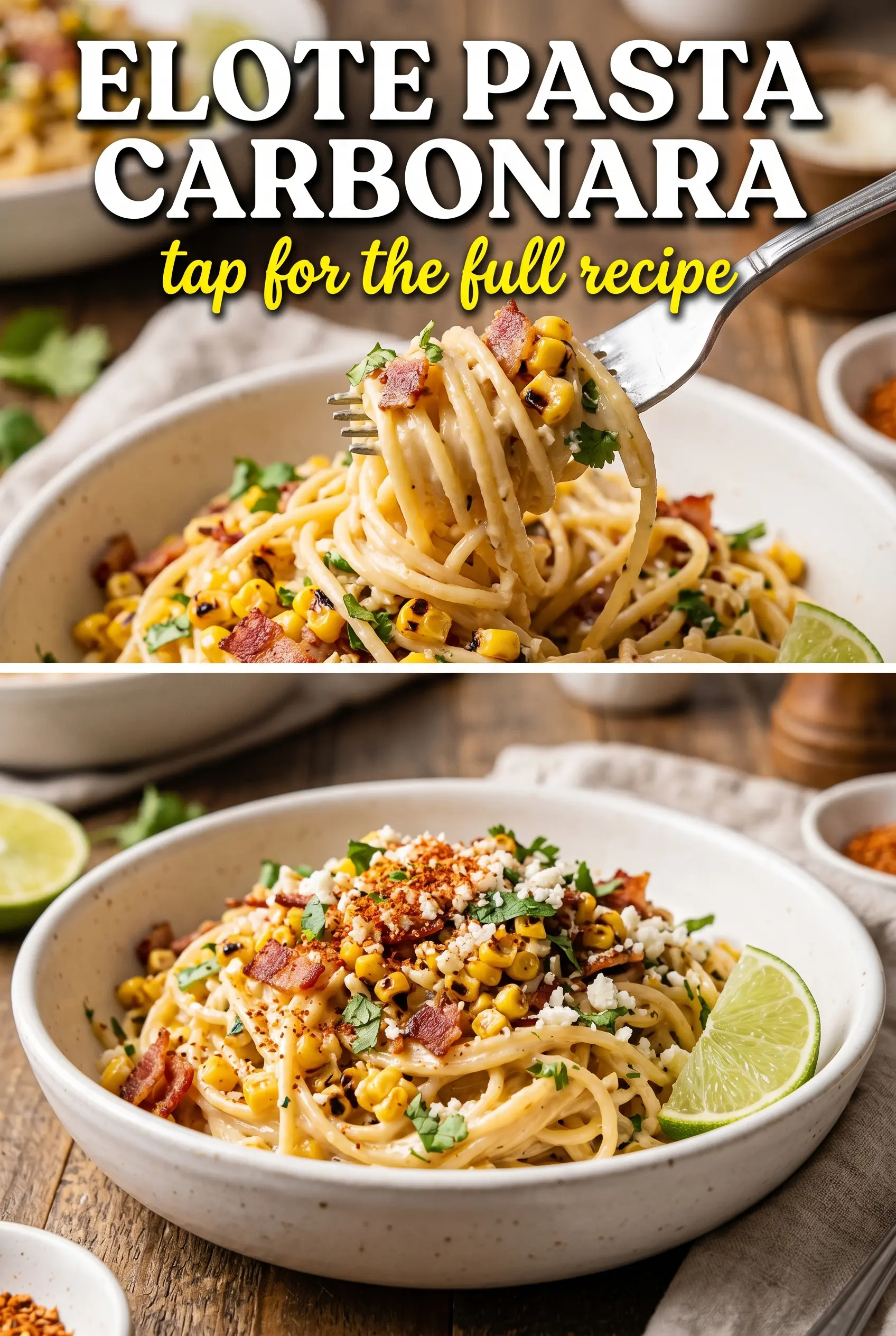
Elote Pasta Carbonara
Ingredients
Equipment
Method
- Bring a large pot of salted water to a boil and cook the spaghetti until al dente, about 8–10 minutes, stirring occasionally to prevent sticking.
- Reserve 1 cup pasta water, then drain the spaghetti and set it aside.
- In a bowl, whisk the egg yolks, Cotija, Parmesan, tajín, and chopped cilantro until smooth and thickened in appearance.
- Cook the chopped bacon in a large skillet over medium-high heat until crispy, about 6–8 minutes, then remove and set aside while leaving bacon fat in the pan.
- Add corn kernels to the bacon fat and cook over medium-high heat until charred, 3–4 minutes, stirring occasionally.
- Add the hot pasta to the corn mixture off heat and toss to coat so the pasta starts absorbing the corn flavor.
- Pour in the egg mixture while tossing quickly, adding reserved pasta water a little at a time until the sauce turns creamy and glossy, about 1–2 minutes.
- Toss in the crispy bacon and stir in lime juice, then season with salt and black pepper to taste.
- Serve immediately so the sauce stays silky and clings to the pasta.