Clear broth, tender vegetables, and a spoonful that tastes like the pot has been building flavor from the first minute on the stove. This vegetable soup stays bright and comforting at the same time, with potatoes that hold their shape, carrots and celery that soften without turning mushy, and peas and corn stirred in at the end so they taste sweet instead of tired. It’s the kind of soup that works as a main dish because it’s balanced enough to stand on its own, not just act as a starter.
The difference here is timing. The onions, carrots, and celery go in first to build the base, then the potatoes simmer long enough to turn creamy at the edges without falling apart. The green beans get their own window, because they need a little more time than the frozen vegetables but don’t need the full simmer. The peas and corn go in last for color and snap, which keeps the broth tasting fresh instead of flat.
Below, I’m walking through the small choices that keep this soup from tasting watery, plus the ingredient swaps that still give you a solid bowl even if your pantry isn’t exact.
The broth stayed clear and the vegetables kept their texture, especially the potatoes and green beans. I loved that the peas went in at the end — they stayed bright and sweet instead of turning dull and soft.
Save this vegetable soup for the nights when you want a clear, herb-scented broth packed with tender potatoes, peas, and corn.
The Reason This Soup Stays Clear Instead of Muddy
The main mistake with vegetable soup is crowding every vegetable into the pot at once. That sounds efficient, but it usually gives you soft potatoes, dull peas, and broth that tastes like boiled leftovers instead of a finished soup. This version keeps the vegetables in layers so each one has time to cook at the right pace.
The other thing that matters is the order of the aromatics. Onion, carrot, and celery need that first five-minute sauté in the olive oil because it pulls sweetness out of them before the broth goes in. If you skip that step, the soup can taste thin even if you use good broth, since the base never gets a chance to develop.
- Potatoes — They give the soup body and make the broth feel more satisfying. Waxy potatoes hold their shape best here; russets will soften faster and can make the broth cloudy if you stir too much.
- Vegetable broth — This carries the whole soup, so use one you’d actually drink on its own. If yours is on the bland side, a little extra salt at the end matters more than dumping in more herbs.
- Frozen peas and corn — Frozen works better than canned here because the vegetables keep their sweetness and texture. Add them at the very end so they stay bright and don’t turn mealy.
- Green beans — Fresh beans give the soup a clean snap that balances the softer potatoes. Trim them into short pieces so they fit on the spoon and cook evenly.
What Each Vegetable Is Doing in the Pot

- Olive oil — This is enough for sweating the vegetables and helping the onions turn sweet. Don’t add too much or the broth will feel slick instead of clean.
- Dried thyme and parsley — Thyme gives the soup its savory backbone, while parsley keeps it from tasting heavy. Dried herbs work fine here because they bloom in the broth; fresh thyme isn’t necessary.
- Diced tomatoes — They add gentle acidity and color without making the soup taste like tomato soup. Use the juice from the can too, because it helps season the broth from the inside out.
- Bay leaf — It’s small, but it gives the broth a rounder, more finished taste. Pull it out before serving or it can land in someone’s bowl and turn the whole thing into a scavenger hunt.
Building the Soup So Every Vegetable Keeps Its Best Texture
Start with the Onion, Carrot, and Celery
Heat the olive oil in a large pot and cook the onion, carrot, and celery for about five minutes, just until the onion softens and the edges of the carrots start to lose their raw look. You’re not trying to brown anything hard here; you’re giving the soup a sweeter, rounder base. If the pot looks dry, the vegetables need a little more oil, but don’t drown them. The goal is softening, not frying.
Let the Broth Do the Heavy Lifting
Once the garlic has cooked for a minute, add the broth, tomatoes, potatoes, thyme, parsley, and bay leaf. Bring the pot to a boil first, then lower the heat to a steady simmer so the potatoes cook through without breaking apart too fast. If the soup boils hard for too long, the potatoes can split and turn the broth starchy. A gentle simmer keeps the liquid clear and gives the vegetables time to soften evenly.
Stagger the Vegetables by Tenderness
Add the green beans after the potatoes have had a head start, then cook until the beans are tender but still a little crisp. The frozen corn and peas go in only for the last three minutes because they just need to heat through. If you add them early, they lose their sweetness and the peas can turn drab. This staggered timing is what gives the soup its fresh, layered taste instead of one soft, blended note.
Season at the End, Not the Beginning
Remove the bay leaf, then taste the broth and season with salt and pepper. This matters because the broth reduces a bit while it simmers, and vegetables release their own flavor as they cook. If you salt too early, you can overshoot once everything softens and the broth concentrates. Finish with fresh parsley for a clean, herbal note right at the end.
How to Adjust This Soup When Your Pantry Isn’t Exact
Make It Heartier with Beans or Pasta
White beans or small pasta both work if you want a more filling bowl. Add cooked beans near the end, or simmer pasta separately and stir it in right before serving so it doesn’t steal too much broth. Pasta will thicken the soup as it sits, while beans keep the broth a little cleaner.
Make It Gluten-Free Without Changing the Method
This soup is naturally gluten-free as written, as long as your vegetable broth is certified gluten-free. That’s the only place gluten tends to sneak in. The texture and cooking time stay the same.
Use Frozen Vegetables When That’s What You Have
Frozen green beans, corn, and peas work well here and don’t need to be thawed first. Add them in the same stages as the fresh versions. The only thing you lose is a little crispness in the beans, but the soup still tastes fresh and balanced.
Storage and Reheating
- Refrigerator: Store in an airtight container for up to 4 days. The broth may thicken a little as the potatoes sit in it.
- Freezer: Freezes well for up to 3 months, though the potatoes soften slightly after thawing. Cool completely before freezing and leave a little space at the top of the container.
- Reheating: Warm gently on the stove over medium-low heat until just hot. Don’t boil it hard or the vegetables will break down and the broth can turn cloudy.
Answers to the Questions Worth Asking
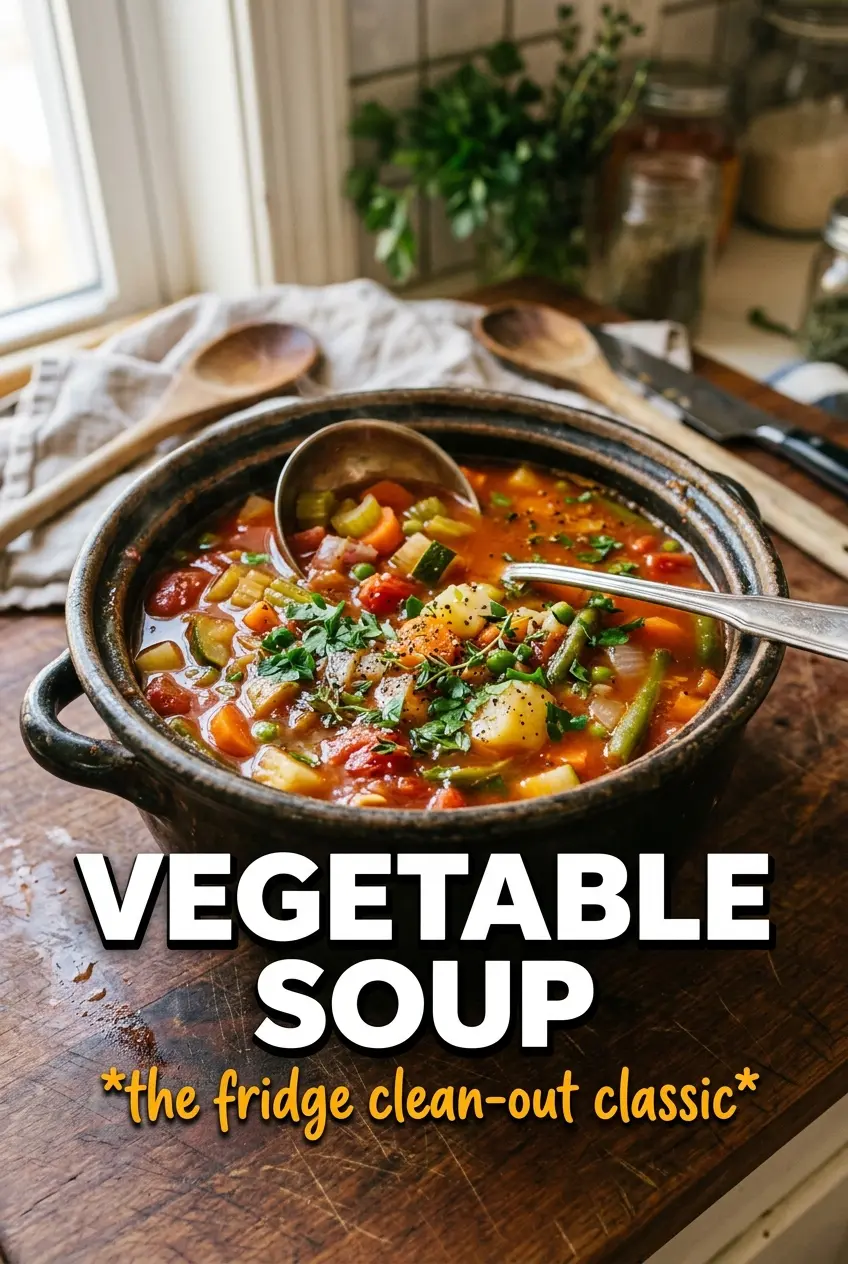
Vegetable Soup
Ingredients
Equipment
Method
- Heat 2 tablespoons olive oil in a large pot over medium-high heat and sauté onion, carrots, and celery for 5 minutes, stirring occasionally until the onion turns translucent and the vegetables look slightly softened.
- Add garlic and cook for 1 minute, then stir in vegetable broth, diced tomatoes, potatoes, dried thyme, dried parsley, and bay leaf.
- Bring the soup to a boil, then reduce heat to maintain a gentle simmer and cook for 15 minutes, until the potatoes start to look tender.
- Add green beans and simmer for 8 minutes, until the potatoes and green beans are tender when pierced with a fork.
- Stir in frozen corn and frozen peas, then cook for 3 more minutes until the peas are bright and hot throughout.
- Remove the bay leaf and season with salt and pepper to taste, then garnish with fresh parsley before serving.


