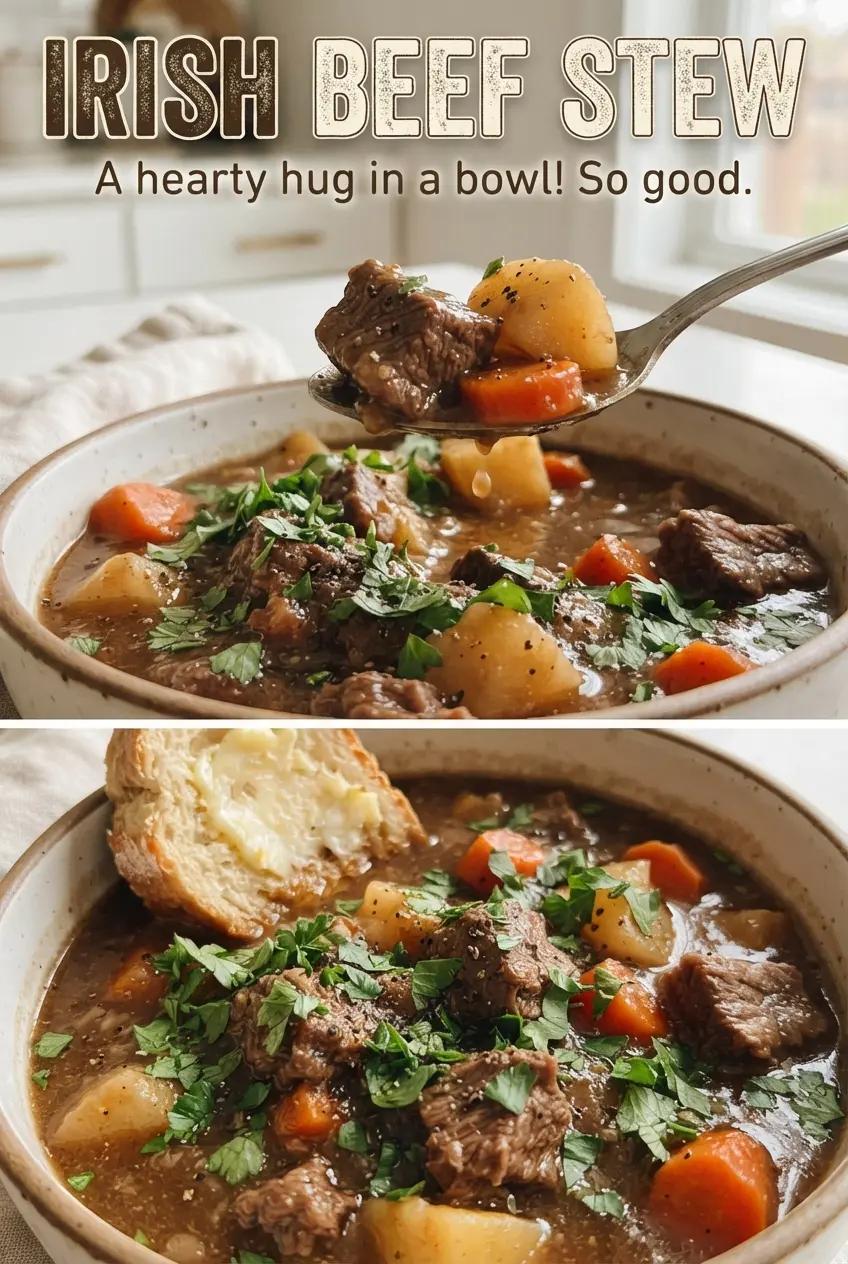
Irish beef stew earns its place at the table by turning a few humble ingredients into something deeply savory, spoon-thick, and comforting without feeling heavy. The beef gets tender enough to pull apart with a fork, the potatoes hold their shape, and the broth cooks down into a rich gravy that clings to every chunk of carrot and celery. It’s the kind of pot that tastes even better the next day, when the flavors have settled in and the stew has thickened a little more.
The key is building flavor in layers. Browning the beef first gives you the base, then the onion, garlic, and tomato paste cook in the same pot so nothing gets wasted. The stout adds a dark, malty depth, but it’s the scrape at the bottom of the pan that pulls the whole stew together. That little step matters more than it looks like it should.
Below you’ll find the timing that keeps the vegetables from going mushy, plus a few substitutions that still keep the stew tasting like itself. If you’ve ever ended up with bland broth or tough beef, this version gives you a cleaner path through both problems.
The beef turned tender in the exact time you said, and the gravy thickened up beautifully once the potatoes went in. I also loved how the stout didn’t taste bitter at all, just rich and dark.
Save this Irish beef stew for a night when you want tender beef, chunky vegetables, and a stout-rich gravy with almost no cleanup.
The Trick to Keeping the Beef Tender Instead of Stringy
The biggest mistake with stew is boiling it hard and hoping time will fix the texture. It won’t. Chuck needs a gentle simmer so the connective tissue can relax slowly; if the pot is bubbling aggressively, the outside of the meat tightens before the inside has a chance to soften. A low, steady simmer is what turns those cubes into spoon-tender pieces instead of dry little fists.
Flouring the beef before browning does two jobs here. It helps the meat develop a deeper crust in the pan, and it gives the stew a small amount of natural thickening as it cooks. If the flour looks patchy in the pot, that’s normal; it dissolves once the stout and broth go in.
- Beef chuck — This cut has the marbling and connective tissue that stew needs. Leaner beef turns dry before it turns tender.
- Irish stout — It brings a malty, slightly bitter depth that plays well with the beef. If you swap it, use another dark beer, not a light lager.
- Tomato paste — It doesn’t make the stew taste like tomato; it deepens the base and gives the gravy more body. Cook it for a minute so it loses that raw edge.
- Potatoes — Add them later so they stay intact. Waxy or all-purpose potatoes hold up better than very starchy ones, which can dissolve into the broth.
What Each Ingredient Is Doing in the Pot

- Beef broth — Use a broth with decent body since it makes up most of the cooking liquid. A weak broth gives you a thin stew, no matter how long it simmers.
- Onion, garlic, celery, and carrots — These build the savory base and add sweetness that balances the stout. Cut the carrots and celery in larger pieces so they don’t disappear by the end.
- Thyme, rosemary, and bay leaves — These herbs lean classic and woodsy, which works with the beer and beef. Dried herbs are fine here because they simmer long enough to open up.
- Fresh parsley — Add it at the end for a clean finish. If you cook it too long, it loses the fresh note that keeps the stew from tasting flat.
The Simmer That Makes the Whole Stew Work
Browning the Beef in Batches
Season the beef, toss it with the flour, then brown it in a single layer with enough space around each piece to actually sear. If the pan looks crowded, the meat steams and turns gray instead of developing that dark crust that gives the stew its base flavor. Work in batches and leave the browned bits in the pot; they’re part of the final sauce.
Softening the Onion and Toasting the Paste
Once the beef is out, cook the onion until it turns translucent and starts to pick up a little color at the edges. Add the garlic and tomato paste for one minute and stir constantly so the paste darkens slightly without sticking. If the garlic burns, the whole pot takes on a bitter edge, so keep the heat moderate and stay with it.
Deglazing Before the Long Simmer
Pour in the stout and scrape the bottom of the pan until the browned bits release into the liquid. That’s where the deepest flavor lives, and if you skip the scraping, you leave it behind. Add the broth, thyme, rosemary, bay leaves, and beef, then bring it to a gentle simmer, not a hard boil.
Adding the Vegetables at the Right Time
Let the beef go first for the full hour and a half so it has time to soften. Add the potatoes, carrots, and celery only when the meat is already moving toward tender, or they’ll turn mushy by the time the beef is done. The stew is ready when the vegetables are soft enough to cut with a spoon and the liquid coats the back of one.
Make It Gluten-Free Without Losing Body
Swap the all-purpose flour for a gluten-free flour blend that’s meant for 1:1 baking. It still helps the beef brown and gives the broth a little thickness, though the stew will be slightly lighter in body than the original.
No Alcohol Version
Replace the stout with extra beef broth plus 1 tablespoon Worcestershire sauce for depth. You lose the malty beer note, but you still get a dark, savory stew with enough richness to stand up to the beef.
Thicker, More Spoonable Gravy
Let the stew simmer uncovered for the last 15 to 20 minutes if you want a thicker finish. That reduction concentrates the flavor and tightens the broth, but don’t crank the heat or the bottom can scorch.
Storage and Reheating
- Refrigerator: Store covered for up to 4 days. The stew thickens as it chills, so it may look even better the next day.
- Freezer: It freezes well for up to 3 months. Cool it completely first and leave a little space at the top of the container for expansion.
- Reheating: Warm it gently on the stovetop over low heat, adding a splash of broth or water if needed. A hard boil can break down the potatoes and make the beef tough again.
Answers to the Questions Worth Asking
Irish Beef Stew
Ingredients
Equipment
Method
- Season the beef chuck cubes with salt and black pepper. Toss the meat with all-purpose flour until coated, with no visible dry flour.
- Heat vegetable oil in a Dutch oven over medium-high heat. Brown the beef in batches, cooking until deep golden on the outside and releasing easily from the pan.
- Add the chopped onion to the pot and cook for 5 minutes. Stir until softened and slightly translucent.
- Add the minced garlic and tomato paste, then cook for 1 minute. Keep stirring so the paste darkens slightly and becomes fragrant.
- Pour in the Irish stout and scrape the bottom of the pot to loosen browned bits. Simmer briefly until the liquid looks reduced and glossy.
- Add the beef broth, dried thyme, dried rosemary, and bay leaves, then return the browned beef to the pot. Bring to a simmer so you see steady bubbling around the edges.
- Cover and simmer for 1 1/2 hours. Maintain a gentle simmer with occasional bubbles breaking the surface.
- Add the potatoes, carrots, and celery, then stir to distribute evenly. Simmer 45-60 minutes until the vegetables are tender and the gravy looks thicker.
- Remove the bay leaves before serving. Taste and adjust seasoning if needed.
- Stir in the chopped fresh parsley to finish. The stew should look fresh and bright with green flecks throughout.


