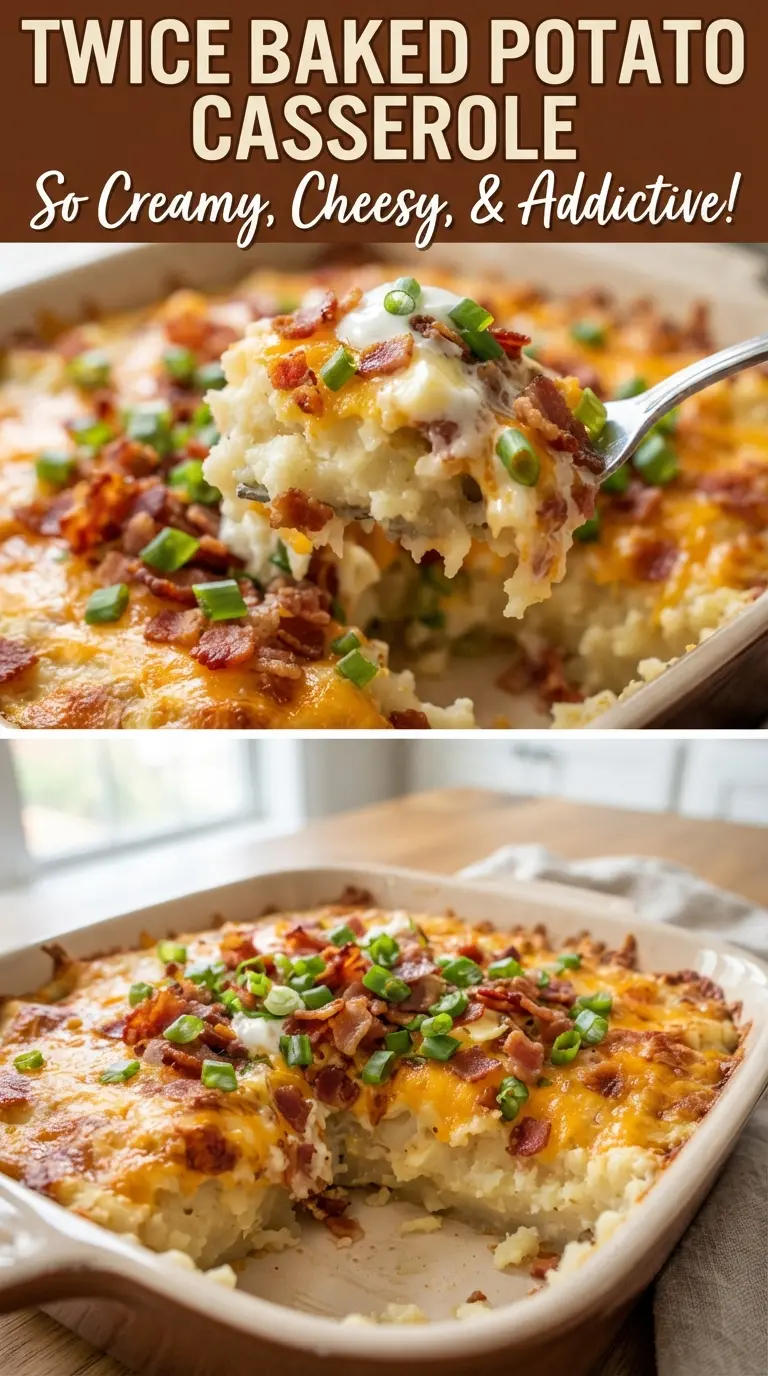
Twice baked potato casserole brings everything people love about loaded baked potatoes into one pan: fluffy potatoes, tangy sour cream, sharp cheddar, crisp bacon, and enough melted cheese on top to make the edges worth fighting over. It bakes up creamy in the middle with a golden, bubbling top that holds its shape when you scoop it, which is exactly why it keeps landing on repeat for potlucks and Sunday dinners.
The trick is in the balance. Russet potatoes dry out just enough in the oven to mash up light instead of gluey, and the butter, sour cream, and milk get folded in while the potatoes are still warm so they absorb cleanly. Half the bacon and green onions go inside the casserole, which seasons the whole dish from within instead of leaving all the good stuff on top.
Below, I’ve included the small details that keep the texture fluffy and the topping crisp, plus a few smart swaps if you need to stretch it, lighten it up, or make it ahead.
The potatoes stayed fluffy, not gummy, and the cheddar on top got that perfect browned edge. I made it for a family dinner and there wasn’t a spoonful left.
Save this twice baked potato casserole for a creamy, bacon-studded side with a bubbling cheddar crust.
The Reason These Potatoes Stay Fluffy Instead of Turning Dense
Twice baked potato casserole can go wrong when the potatoes are overworked. Once the flesh is scooped out, it needs to be mashed just until the butter and dairy disappear into the potatoes. If you beat it hard or use a food processor, the starch turns pasty and the casserole loses that light, fluffy texture people expect from a good baked potato.
Russet potatoes matter here because they bake up dry and mealy enough to absorb the dairy without collapsing. That dry texture is an asset. It gives you a base that can hold cheese, bacon, and sour cream without turning soupy after the second bake.
- Russet potatoes — These give you the driest, fluffiest interior. Waxy potatoes stay too tight and can turn heavy in a casserole.
- Sour cream — It adds tang and helps soften the mash without thinning it the way extra milk alone would.
- Butter and milk — Butter carries flavor, while milk loosens the mixture just enough to make it spoonable. Add the milk gradually so the casserole doesn’t end up loose.
What Each Ingredient Is Doing in the Casserole
- Russet potatoes — The baking potato texture is the whole reason this works. They fluff up after baking and mash into a soft base that still has body.
- Sharp cheddar — Sharp cheddar gives you enough bite to cut through the richness. A mild cheddar melts fine, but the casserole tastes flatter.
- Bacon — Bacon brings salt and crunch. Cook it until crisp so it doesn’t go soft in the casserole.
- Green onions — They brighten the rich filling and keep the dish from tasting one-note. Save some for the finish so the top stays fresh and sharp.
- Butter, sour cream, and milk — This trio creates the creamy base. Sour cream gives tang, butter gives body, and milk keeps it from turning stiff after baking.
Building the Filling and Baking It for a Crisp Top
Baking the Potatoes Until the Centers Collapse
Set the potatoes directly on the oven rack or on a sheet pan and bake them until a fork slides through the center with no resistance. If the potatoes still feel firm, the final casserole will have dry chunks that never mash smoothly. Let them cool just enough to handle, but not all the way, because warm potatoes absorb the butter and sour cream better than cold ones.
Mixing the Filling Without Turning It Gluey
Scoop the flesh into a large bowl and mash it with the butter first. Once the butter melts through, add the sour cream and milk, then stop as soon as the mixture looks creamy. Fold in one cup of cheddar, half the bacon, half the green onions, salt, and pepper. If you stir until the potatoes look perfectly smooth, you’ve gone too far; a little texture keeps the casserole light.
Finishing with a Golden Cheddar Lid
Spread the mixture into a buttered 9×13-inch dish and sprinkle the rest of the cheese and bacon over the top. Bake just until the casserole is hot in the center and the cheese is bubbling around the edges. The second bake is for melding and browning, not for drying the casserole out, so pull it as soon as the top looks molten and lightly bronzed.
How to Adapt This for a Different Table
Make It Vegetarian Without Losing the Loaded-Potato Feel
Leave out the bacon and add extra green onions plus a handful of toasted breadcrumbs on top if you want more contrast. You lose the smoky saltiness, but the casserole still tastes rich and complete because the cheddar and sour cream carry the dish.
How to Make It Gluten-Free
This recipe is naturally gluten-free as written, as long as your bacon and sour cream are certified gluten-free if that’s important for your kitchen. No flour is needed to thicken the filling, which keeps the potatoes creamy instead of stodgy.
Lighter, but Still Creamy
Swap half the sour cream for plain Greek yogurt and use a little less butter. The casserole will taste tangier and a touch less rich, but the texture stays creamy if you don’t overbake it.
Make-Ahead for a Crowd
Assemble the casserole up to a day ahead, cover it, and refrigerate it before the final bake. Let it sit on the counter while the oven heats so it doesn’t go in ice-cold, or the center will take longer to heat and the top may overbrown.
Storage and Reheating
- Refrigerator: Store leftovers in an airtight container for up to 4 days. The top softens a little, but the flavor stays great.
- Freezer: It freezes well if you bake it first, cool it completely, then wrap it tightly. Thaw overnight in the fridge before reheating for the best texture.
- Reheating: Warm covered in a 350F oven until hot in the center, then uncover for the last few minutes to revive the top. Microwaving works in a pinch, but it softens the cheese crust and makes the potatoes less fluffy.
Answers to the Questions Worth Asking

Twice Baked Potato Casserole
Ingredients
Equipment
Method
- Preheat oven to 400F. Bake the scrubbed russet potatoes for 50-60 minutes until fork-tender, then cool slightly so you can handle them.
- Scoop out the potato flesh and mash with softened butter, sour cream, and whole milk until smooth and creamy, with no large lumps visible.
- Stir in 1 cup shredded sharp cheddar, half the crumbled bacon, half the sliced green onions, salt, and black pepper until evenly combined.
- Spread the mixture into a buttered 9x13-inch baking dish, pressing into an even layer. Top with the remaining shredded cheddar and the remaining bacon.
- Reduce oven to 350F and bake for 20-25 minutes until hot and the cheese is visibly bubbly around the edges.
- Sprinkle with the remaining sliced green onions right before serving for a fresh green finish.


