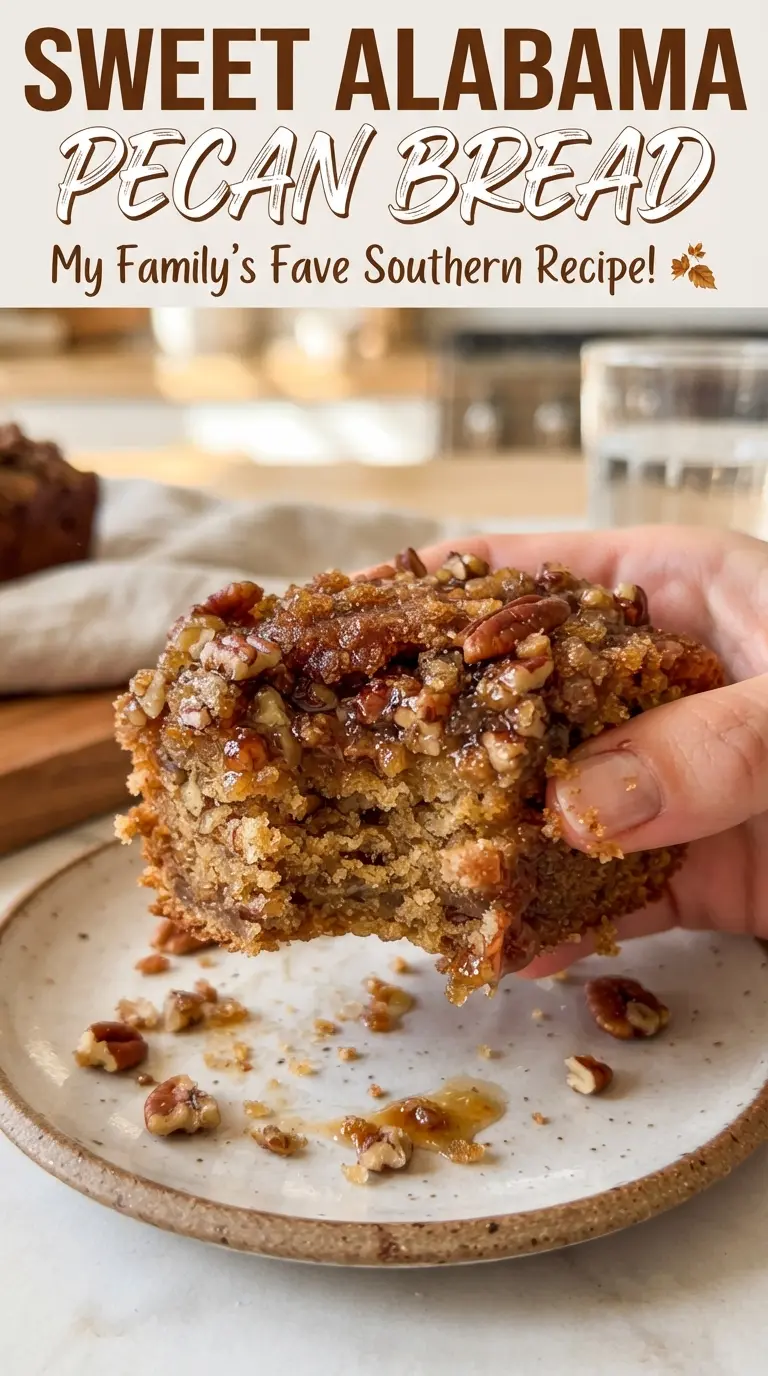
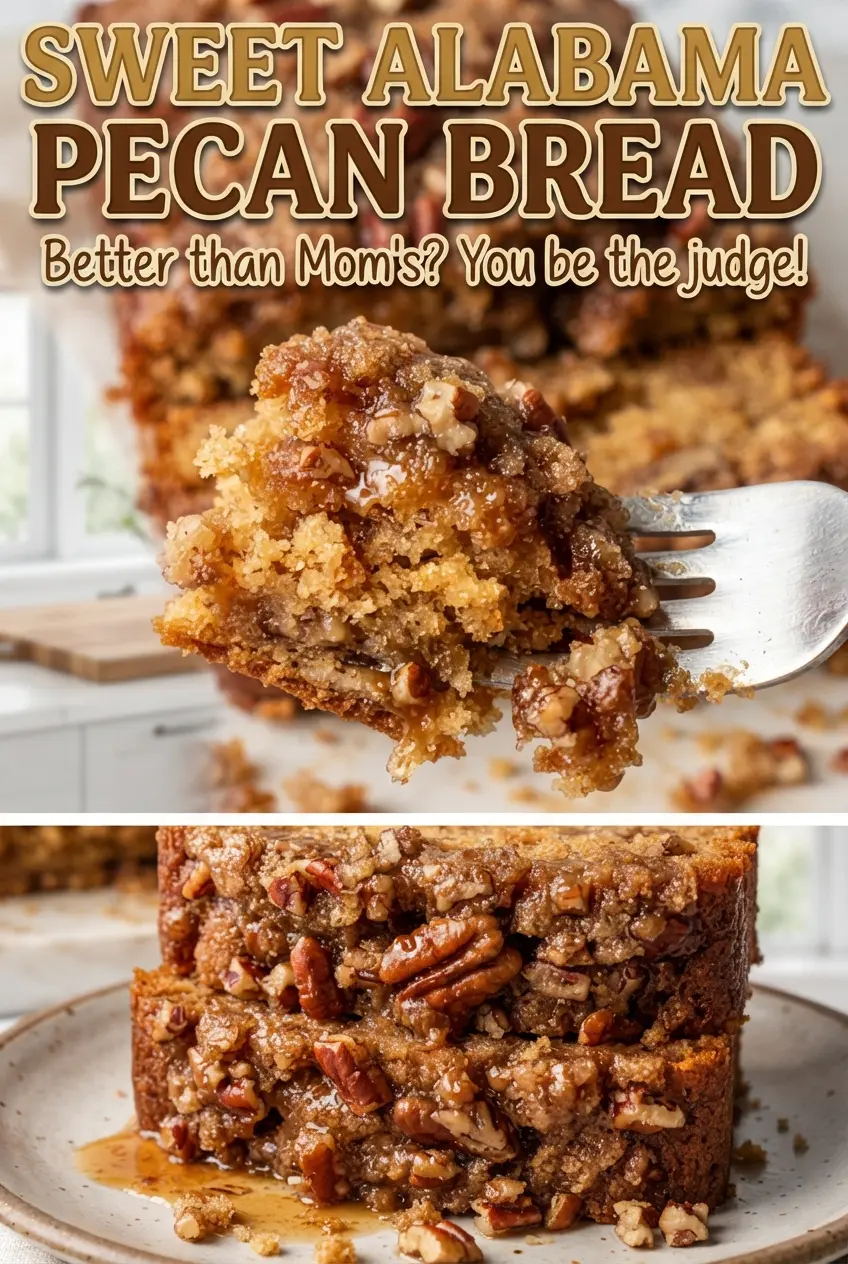
Sweet Alabama pecan bread bakes into a loaf that cuts like cake, but eats like something a little more special. The top turns crackly and bronzed with brown sugar and pecans, while the crumb stays soft, buttery, and damp in the best way. It’s the kind of bake that disappears fast when it lands on the table, whether you serve it warm with coffee or slice it up for an afternoon treat.
What makes this version work is the balance of rich batter and just enough lift. Brown sugar adds depth and keeps the loaf tender, while buttermilk gives the crumb a gentle tang and helps it stay moist without turning heavy. Toasting the pecans matters, too, because it wakes up their flavor and keeps them from tasting flat once they’re baked into the loaf.
Below, I’ve included the details that matter most: how to keep the loaf from sinking in the middle, why the pecans are split between the batter and the top, and what to change if you need a dairy-free or make-ahead version.
The loaf came out with that crackly brown sugar top and stayed moist all the way through. Toasting the pecans first made a huge difference — my kitchen smelled incredible and the flavor was deeper than any pecan bread I’ve tried.
Love that crackly brown sugar pecan top? Save this sweet Alabama pecan bread for the next time you want a soft, buttery loaf with toasted pecans in every bite.
The Trick Most Pecan Breads Miss: Keeping the Crumb Tender Without Losing Structure
The difference between a good pecan bread and one that slices neatly is how gently you handle the batter after the flour goes in. Once the dry ingredients meet the buttermilk, the gluten starts building fast, and overmixing turns a soft loaf into something tight and tough. Stop as soon as the flour disappears. A few streaks are fine when you’re about to fold in the pecans.
The other place people go wrong is pan prep. This loaf has a sticky brown sugar topping, so line the pan well and leave a little overhang if you can. That gives the bread a clean release after the loaf cools for a few minutes, which keeps the crust intact instead of tearing it off the pan.
What Each Ingredient Is Actually Doing in This Loaf
- Buttermilk — This is what gives the loaf its soft, slightly tangy crumb. Regular milk will work in a pinch if you add a teaspoon of lemon juice or vinegar, but the texture won’t be quite as plush.
- Brown sugar — You use it in the batter and again on top, and that’s what gives the loaf its caramel depth and the crackly finish. Light brown sugar is fine; dark brown sugar gives a deeper molasses note and a darker top.
- Butter — Softened butter traps air when you beat it with the sugar, which helps the loaf rise and stay tender. Don’t swap in melted butter here unless you want a denser, less cake-like crumb.
- Pecans — Toast them first. Untoasted pecans taste muted once baked, while toasted pecans stay crisp and bring the loaf to life. Chop them evenly so you get a little crunch in every slice.
- Cinnamon — It doesn’t make the loaf taste spiced in an obvious way; it just rounds out the brown sugar and pecan flavor. Too much would muddy the balance, so half a teaspoon is enough.
Building the Batter So the Loaf Rises Evenly
Start with the butter and sugar
Beat the softened butter and brown sugar until the mixture looks pale and fluffy, not just combined. That air you’re working in is part of the lift, especially since this loaf doesn’t rely on a big amount of leavener. If the butter is too cold, the mixture stays gritty and won’t aerate properly; if it’s melted, the loaf bakes up heavier.
Add the eggs one at a time
Beat in each egg before adding the next so the batter stays smooth and emulsified. If the mixture looks slightly curdled after the first egg, don’t panic — it usually comes together once the dry ingredients and buttermilk go in. Scrape the bowl well so the bottom doesn’t hide unmixed butter pockets.
Alternate the dry ingredients and buttermilk
Add the flour mixture in portions, alternating with the buttermilk, and end with the dry ingredients. That keeps the batter from tightening up all at once and helps the loaf bake into a soft, even crumb. Mix only until the flour disappears; a few small lumps are better than a tough loaf.
Top and bake until the center is set
Fold in one cup of the pecans, spread the batter into the prepared pan, and scatter the remaining pecans with the brown sugar over the top. Bake until the loaf is deep golden and a toothpick comes out clean or with just a few moist crumbs, usually 55 to 60 minutes. If the top browns too quickly, lay a loose piece of foil over it for the last 10 to 15 minutes.
How to Adapt This Loaf for Different Pans and Diet Needs
Make it dairy-free
Use a plant-based butter that bakes well and replace the buttermilk with unsweetened dairy-free milk mixed with 1 teaspoon lemon juice or vinegar. The loaf will still rise and stay tender, though the flavor will be a little less rich than the original.
Use walnuts instead of pecans
Walnuts bring a slightly earthier bite and won’t taste as naturally sweet as pecans, but they still work well here. Toast them the same way, and keep the same amount so the loaf doesn’t lose structure.
Bake it as mini loaves or muffins
This batter works in smaller pans, but the bake time drops fast. Mini loaves usually need about 25 to 35 minutes, and muffins land closer to 18 to 22 minutes. Start checking early so the tops stay soft instead of drying out.
Storage and Reheating
- Refrigerator: Store tightly wrapped for up to 4 days. The crumb stays moist, but the top softens a little after the first day.
- Freezer: This loaf freezes well. Wrap slices or the whole cooled loaf in plastic, then foil, and freeze for up to 2 months.
- Reheating: Warm slices in a low oven or toaster oven until just heated through. Microwaving works, but too long makes the crumb rubbery and the pecan topping soft.
Answers to the Questions Worth Asking
Sweet Alabama Pecan Bread
Ingredients
Equipment
Method
- Preheat oven to 350F, then grease and line a 9x5-inch loaf pan.
- Whisk together flour, baking powder, baking soda, salt, and cinnamon until evenly combined, using a uniform color and no visible streaks.
- Beat butter and brown sugar until fluffy, then beat in the eggs one at a time and add the vanilla extract.
- Add the dry ingredients alternately with buttermilk, mixing just until combined so the batter looks thick and smooth without overmixing.
- Fold in 1 cup pecans, then pour the batter into the prepared pan.
- Top the loaf with the remaining pecans and sprinkle brown sugar over the surface for a crackly top.
- Bake at 350F for 55-60 minutes, until a toothpick comes out clean and the top is golden brown.
- Cool for 15 minutes in the pan, then slice while warm for clean cuts and a moist crumb.


