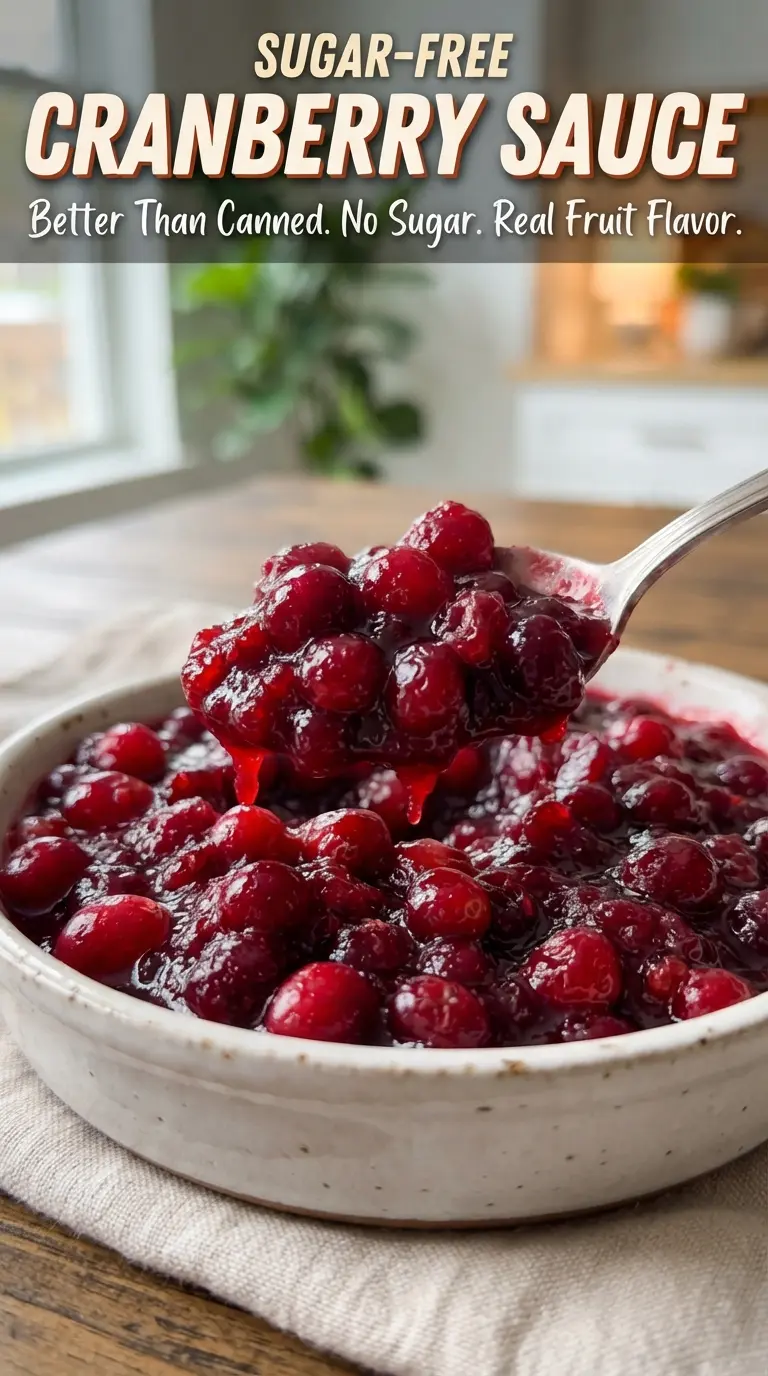
Glossy cranberry sauce with a bright, tart bite earns its place on the table fast, and this sugar free version keeps all of that sharp berry flavor without leaning on refined sugar. The sauce sets up with a soft spoonable texture, not the stiff, jelly-like finish you get from canned versions, and the orange zest at the end gives it a lift that keeps every bite from tasting flat.
The key here is dissolving the sweetener in the water before the cranberries go in. That gives you an even base and keeps the berries from tasting gritty or unevenly sweetened. I also like adding the zest after cooking so it stays fresh and fragrant instead of disappearing into the simmer.
Below, you’ll find the small timing details that matter, plus a few ways to adjust the sweetness and texture depending on how tart your cranberries are.
The berries burst exactly when they should, and the orange zest at the end made it taste bright instead of just sweet. I chilled it overnight and it thickened up perfectly for the turkey dinner.
Like this sugar free cranberry sauce? Save it to Pinterest for the holiday table, bright citrus finish and all.
The Reason This Cranberry Sauce Sets Up Without Sugar
Cranberries bring their own pectin, which means you don’t need much help for the sauce to thicken as long as you simmer long enough for the berries to burst and the liquid to reduce slightly. The mistake most people make is pulling it off the heat too early because it still looks loose in the pan. It tightens as it cools, and that final chill is what gives you the soft, spreadable texture.
The sweetener choice matters here. Monk fruit blends and allulose both dissolve cleanly, but they behave a little differently once the sauce cools. Allulose tends to give a softer, slightly silkier finish, while monk fruit blends can taste a touch brighter or more direct, depending on the brand. Either works, but whichever you use needs to dissolve fully at the start so the sauce doesn’t taste sandy.
What Each Ingredient Is Actually Doing In This Sauce
- Fresh cranberries — These are the whole structure of the sauce. Frozen cranberries also work without thawing, but fresh berries hold their shape a little better and give you that clean pop as they burst.
- Monk fruit or allulose sweetener — This replaces the sugar that normally balances cranberries and helps the sauce thicken. Allulose is the closest match if you want a rounder finish; monk fruit blends can vary, so taste at the end and add a little more if the sauce still reads too tart.
- Orange zest — Add it at the end so the oils stay bright. If you put it in from the start, the citrus fades during simmering and you lose the fresh top note that makes the sauce taste complete.
- Cinnamon — This gives the sauce warmth without making it taste like pie filling. A small amount is enough; too much covers the cranberry flavor instead of supporting it.
- Salt — Just a pinch sharpens the fruit and keeps the sweetness from tasting one-note. Skip it and the sauce can fall a little flat.
Getting the Berries to Burst and the Sauce to Thicken
Start With a Fully Dissolved Base
Bring the water and sweetener to a boil first and stir until the granules disappear. That step matters more than it looks, because any undissolved sweetener can leave a grainy finish in the final sauce. Once the base is clear, add the cranberries, cinnamon, and salt all at once so the berries start heating evenly.
Simmer Until the Pops Slow Down
Keep the pan at a steady simmer for 10 to 12 minutes. You’ll hear the berries start to pop, then the bubbling quiets as more of them split open and release their juices. If the heat is too high, the bottom can scorch before the liquid has a chance to reduce, so stay with a moderate simmer and stir now and then.
Finish With Zest and Chill
Take the pan off the heat before you stir in the orange zest. The sauce should look a little looser than the finished version, with visible berry pieces suspended in a glossy syrup. Let it cool, then chill it uncovered or loosely covered until it firms up; if you refrigerate it while it’s still piping hot, condensation can water down the top layer.
How to Adjust This Sauce for Different Tables and Diets
Use allulose for the softest finish
Allulose gives this cranberry sauce a finish that’s closest to traditional sugar-based sauce. It stays smooth after chilling and doesn’t leave the same cooling aftertaste some blends can have, which makes it a strong choice if you want the flavor to stay centered on the fruit.
Make it brighter with extra citrus
If your cranberries are especially tart, add a little extra orange zest at the end instead of more sweetener first. That keeps the sauce lively and aromatic. You can also add a teaspoon of orange juice, but don’t overdo it or the sauce will thin out and need more chilling time.
Swap in frozen cranberries without thawing
Frozen cranberries work just fine and don’t need any special treatment. Add them straight to the simmering liquid and give the sauce an extra minute or two if needed. The texture is essentially the same, though the pan may take a little longer to come back to a simmer after they go in.
Keep it fully fruit-forward for a lower-carb table
This sauce already fits a low-sugar, lower-carb menu well when you use a suitable sugar-free sweetener. For the cleanest result, avoid adding extra juice or dried fruit, which can raise the carb count and make the sauce less focused and more jammy.
Storage and Reheating
- Refrigerator: Store in a sealed container for up to 7 days. It thickens as it chills, so don’t judge the texture while it’s still warm.
- Freezer: It freezes well for up to 2 months. Thaw it in the refrigerator overnight and stir well before serving, since a little liquid separation can happen.
- Reheating: Cranberry sauce is usually best served cold or at room temperature, but if you want it warm, heat it gently over low heat or in short microwave bursts. High heat can make it break down into a thinner sauce than you intended.
Answers to the Questions Worth Asking
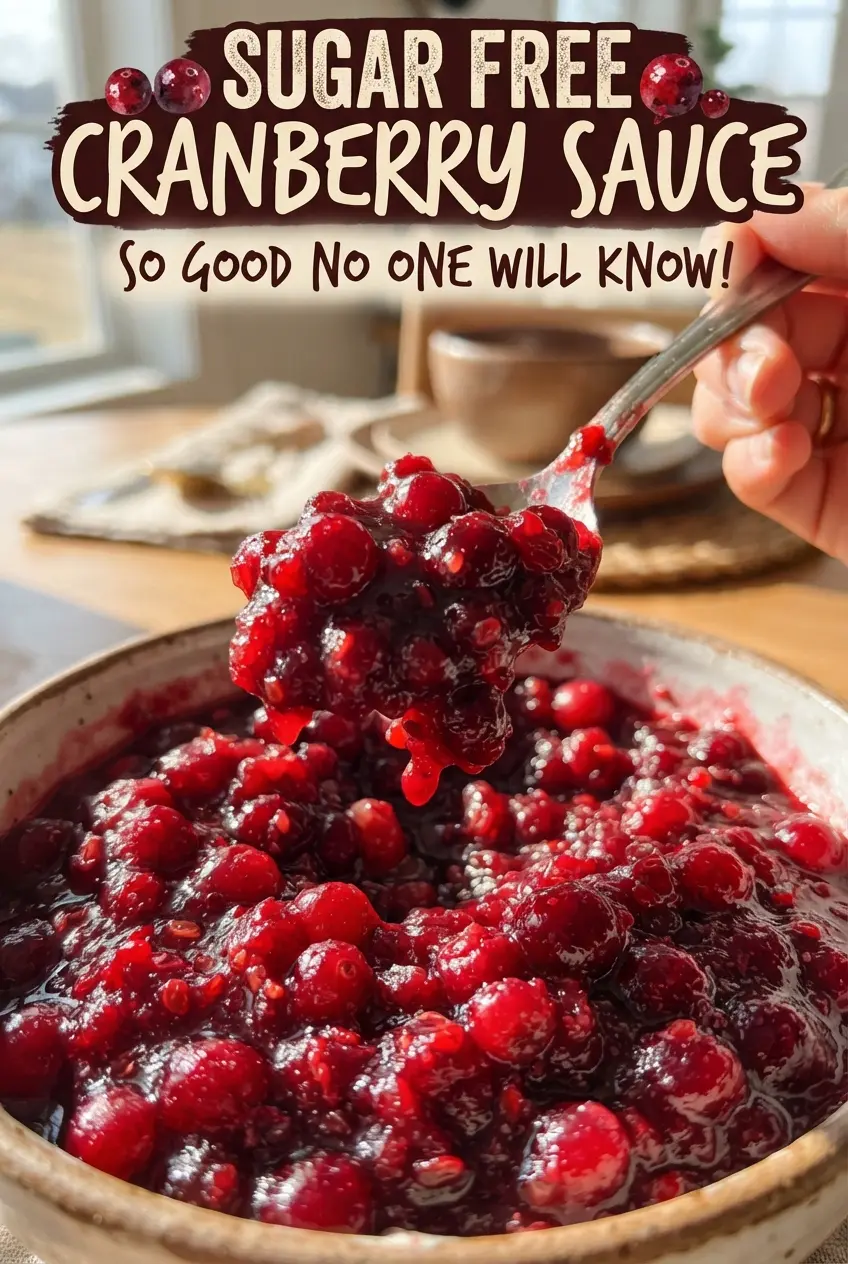
Sugar Free Cranberry Sauce
Ingredients
Equipment
Method
- In a saucepan, bring the water and granular monk fruit or allulose sweetener to a boil over medium-high heat, stirring until fully dissolved.
- Stop stirring and let the mixture return to a steady boil so it looks clear and syrupy.
- Add the fresh cranberries, ground cinnamon, and salt, then stir to coat the berries.
- Simmer for 10-12 minutes at a gentle boil, stirring occasionally, until the berries burst and the sauce visibly thickens.
- Remove the pan from heat and stir in the orange zest, then taste and adjust with a little more sweetener if needed.
- Cool to room temperature, then chill before serving so it sets into a glossy sauce.


