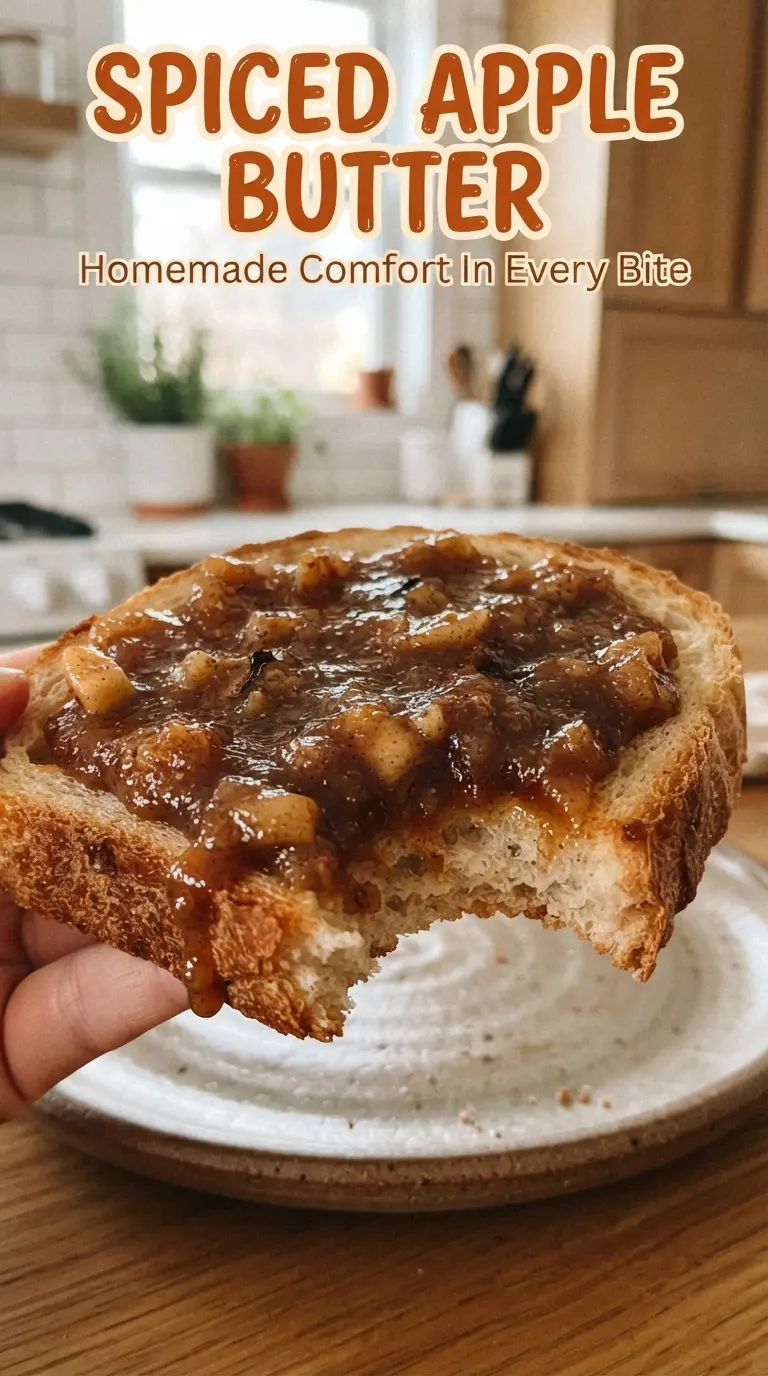
Spiced apple butter turns a pile of apples into something deep, glossy, and spreadable, with the kind of slow-cooked sweetness that clings to toast instead of sliding off it. The texture is silky and dense, almost like fruit caramelized down into a jar, and the cinnamon-clove background makes it taste warmer than plain applesauce without crossing into dessert territory. It earns a permanent spot in the fridge because it works on biscuits, toast, pancakes, and even alongside sharp cheese.
What makes this version work is the two-stage cook. The apples soften first with the sugars and spices, then the puree cooks uncovered until the water evaporates and the color darkens into that mahogany finish. That second reduction is where the flavor concentrates, so don’t rush it. The cider vinegar keeps the sweetness from flattening out, and the vanilla goes in at the end so it stays round and fragrant instead of cooking off.
Below, I’ve included the one part that matters most for getting the right thickness, plus a few ways to adapt the recipe depending on how sweet or spiced you like your apple butter.
I cooked it down on the stovetop and the kitchen smelled amazing all afternoon. It thickened up exactly like apple butter should, and the vanilla at the end made the flavor taste finished, not flat.
Save this spiced apple butter for the weekends when you want a smooth, deeply concentrated spread that cooks down into jars beautifully.
The Long Simmer That Turns Apples From Watery to Spreadable
The biggest mistake with apple butter is stopping at applesauce thickness. At that point, you’ve only cooked the fruit until soft; you haven’t driven off enough water for the mixture to become glossy and concentrated. The uncovered finish matters because evaporation is what gives you that dense, spoon-coating texture and the darker, more caramelized flavor people expect from apple butter.
If the mixture still looks loose after blending, that’s normal. It thickens noticeably as the steam escapes, and it will tighten a little more as it cools. The real cue is the way it mounds on a spoon and leaves a trail when you drag a spatula through the pot. If it’s still sloshing around like sauce, it needs more time.
- Apples — A mix of varieties gives you better flavor and texture than one kind alone. Tart apples add brightness, while sweeter apples bring body. Soft baking apples work, but mixing in firmer apples keeps the flavor from turning one-note.
- Brown sugar — This adds molasses depth that plain white sugar can’t fully replace. If you use all white sugar, the finished butter tastes flatter and lighter in color. You can cut the sugar a little if your apples are very sweet, but don’t remove it completely or the texture and flavor will both suffer.
- Apple cider vinegar — It doesn’t make the butter taste sour. It keeps the sweetness in check and sharpens the apple flavor so the finished spread tastes complete instead of cloying.
- Vanilla — Add it at the end. If it goes in early, much of the aroma cooks off during the long reduction, and you lose the round finish that makes the butter taste polished.
What Each Ingredient Is Actually Doing in This Recipe
- Primary ingredient (the star) — Quality matters most. Choose the best you can find.
- Cooking medium (oil, butter, or broth) — This carries flavors and prevents dryness.
- Seasonings (salt, pepper, spices, herbs) — Layer flavors so nothing overpowers. Build depth gradually.
- Aromatics (garlic, onion, herbs) — Cook with fat to bloom flavors. Become the foundation.
- Supporting ingredients — Complement the main ingredient without overpowering it.
- Sauce or liquid (if applicable) — Brings flavors together. Balance richness with acid.
- Acid (lemon, vinegar, wine, or other) — Brightens and prevents flat-tasting results.
- Final finish (garnish, glaze, or sauce) — Prevents one-dimensional taste and adds visual appeal.
How to Get That Deep Brown Finish Without Burning the Bottom
The early cook is about softening the apples until they collapse completely. On the stovetop, that means a gentle simmer with frequent stirring so the sugars don’t catch on the bottom of the pot. In a slow cooker, the long low heat does the same job with less babysitting, but you still need that final uncovered reduction on the stove or in a wide pot if you want the color to deepen properly.
Softening the Apples Fully
Cook the apples with the sugars, spices, and vinegar until they break down easily when pressed. They should look jammy and wet, not dry or browned at this stage. If you rush ahead before they’re completely soft, the puree will stay a little grainy and the final butter won’t smooth out cleanly.
Blending Until It’s Truly Smooth
An immersion blender gives you the easiest control, especially if the mixture is hot and thick. Blend until no chunks remain and the texture looks velvety, not foamy. If using a food processor, work in batches and leave enough room for steam to escape; filling it too full can make a mess and doesn’t blend as evenly.
Reducing to the Right Thickness
Return the puree to low heat and stir often, scraping the bottom and corners of the pot. As it cooks down, the color will darken and the bubbles will look slower and thicker. The mistake here is turning up the heat to hurry it along; that scorches the sugars before the moisture has time to leave, which gives you a bitter edge instead of a deep apple flavor.
What to Change When You Want a Different Kind of Apple Butter
Use it as a lower-sugar spread
Cut both sugars back by about one-third if your apples are already sweet, but keep enough for the butter to reduce into a smooth, glossy spread. The finished flavor will be a little brighter and less caramel-like, which works well if you plan to use it with savory foods or sharp cheese.
Make it naturally vegan and gluten-free
This recipe already fits both, as long as you serve it with gluten-free bread or biscuits if needed. The ingredient list is simple enough that the texture and flavor carry the whole recipe, so there’s nothing lost by keeping it as written.
Change the spice blend
You can lean harder into cinnamon or swap part of the cloves for extra ginger if you want a sharper finish. Keep the total spice amount in the same range so the apple flavor still comes through; too much clove can take over fast and make the butter taste medicinal.
Storage and Reheating
- Refrigerator: Store in sterilized jars for up to 3 weeks. The butter may thicken further after chilling.
- Freezer: It freezes well in freezer-safe containers, leaving a little headspace for expansion. Thaw overnight in the refrigerator.
- Reheating: Warm only what you need and stir well after chilling. Don’t boil it hard, or the texture can tighten and the flavor can flatten.
Answers to the Questions Worth Asking
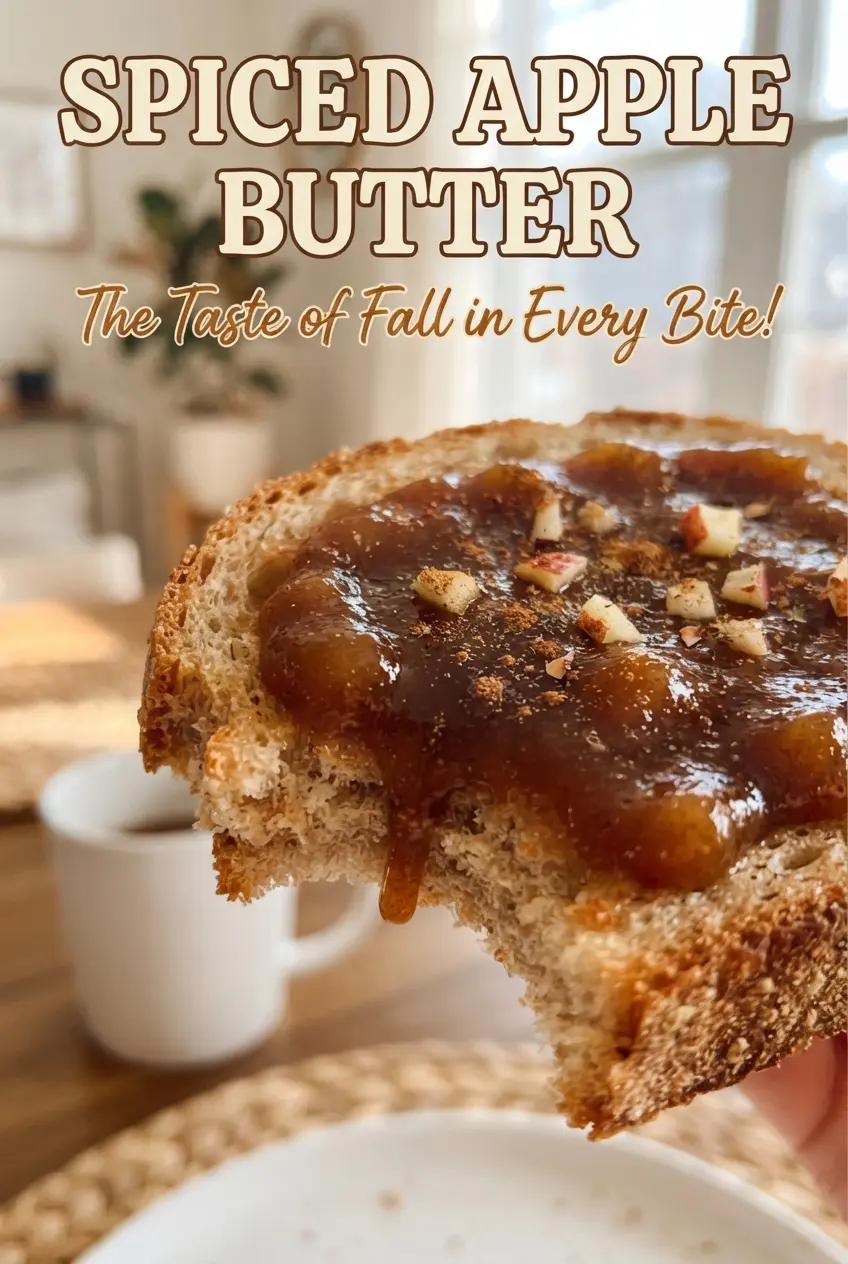
Spiced Apple Butter
Ingredients
Equipment
Method
- Place chopped apples in a large slow cooker or heavy pot, then stir in granulated sugar, brown sugar, cinnamon, allspice, cloves, nutmeg, ginger, and apple cider vinegar.
- For slow cooker, cook on Low at about 190°F/88°C for 8-10 hours until very soft, stirring occasionally.
- For stovetop, simmer over medium-low heat at about 200-212°F/93-100°C for 45-60 minutes, stirring frequently until very soft.
- Blend until completely smooth using an immersion blender or food processor.
- Return to heat and continue cooking uncovered over low heat at about 200°F/93°C for 30-60 more minutes, stirring frequently, until thickened and deep brown.
- Stir in vanilla extract, then taste and adjust spices as needed for your preference.
- Ladle into sterilized jars and refrigerate up to 3 weeks, or water-bath can for 10 minutes for shelf stability.


