Bacon and cabbage turn into something bigger than the sum of their parts here: tender ribbons of cabbage with browned edges, sweet onion, salty bacon, and just enough vinegar to keep each bite from feeling heavy. The skillet does most of the work. Once the cabbage hits the hot bacon drippings, it softens, picks up color, and starts to taste almost nutty around the edges.
The trick is giving the cabbage time to cook down without crowding the pan or rushing the heat. A little sugar helps the onions and cabbage brown instead of just steam, and the butter rounds out the whole dish so the final splash of apple cider vinegar lands cleanly instead of harshly. That last bit matters more than it sounds like it would. It wakes everything up and makes the bacon taste even better.
Below, you’ll find the little details that keep fried cabbage from turning watery, plus a few smart swaps if you want to make it meatless or stretch it into a bigger meal.
The cabbage stayed tender but never mushy, and the vinegar at the end made the bacon flavor pop. I had to keep people out of the skillet before dinner was even on the table.
Save this Southern Fried Cabbage for a skillet side with crispy bacon, caramelized edges, and a tangy finish.
The Reason This Cabbage Gets Golden Instead of Watery
Cabbage releases a lot of moisture as it cooks, which is why fried cabbage often ends up soft but pale. The fix is starting with bacon fat and onion in a hot skillet, then giving the cabbage room to contact the pan long enough to brown before the moisture fully escapes. Stirring every minute or two works better than constant movement, because the cabbage needs a chance to sit and caramelize at the bottom and edges.
The sugar here isn’t for sweetness in the dessert sense. It helps the onions and cabbage take on color faster and balances the vinegar at the end. If your cabbage looks dry before it’s tender, a small splash of water is better than turning up the heat; high heat can scorch the bacon drippings before the cabbage softens.
What the Bacon, Vinegar, and Sugar Are Doing in the Pan
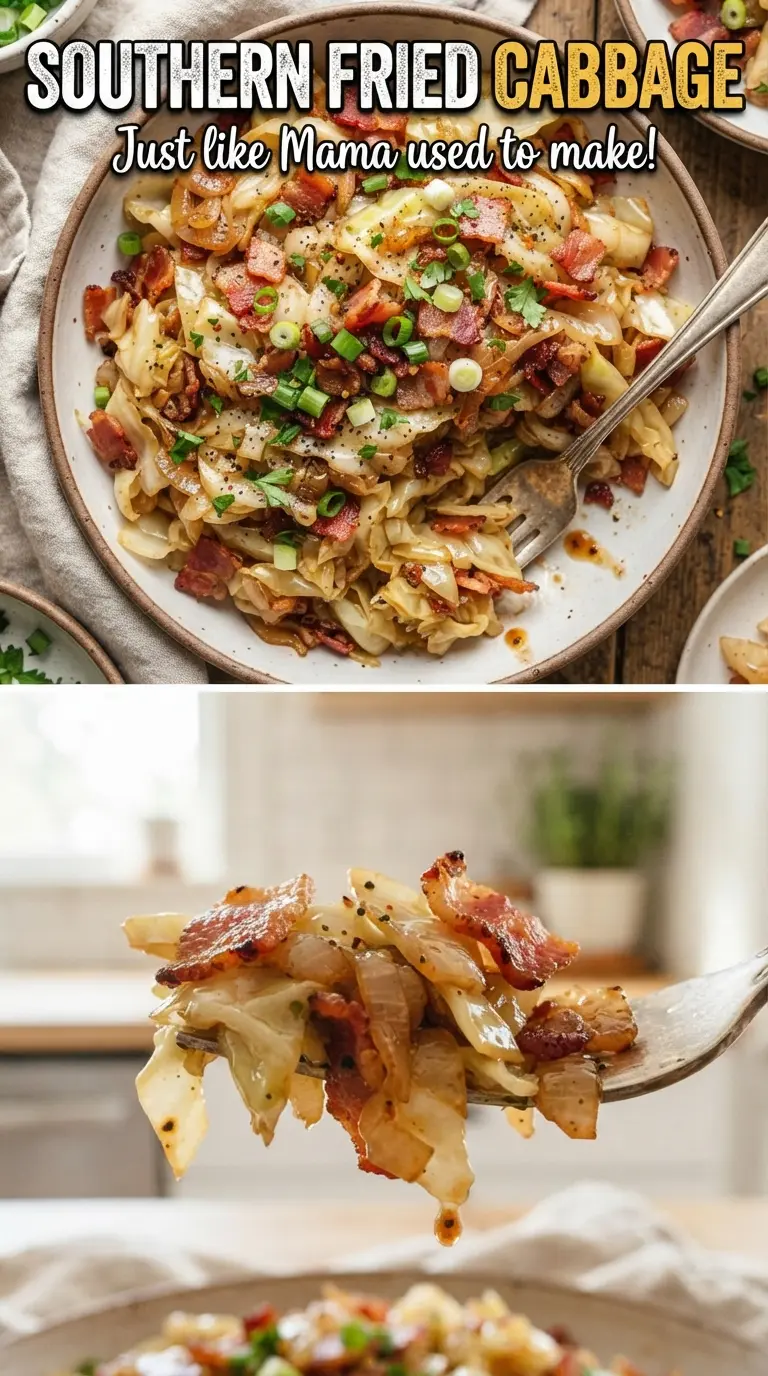
- Bacon — This is the backbone of the dish. The drippings season the skillet, and the crisp pieces go back in at the end so they stay meaty instead of soggy. Thick-cut bacon works, but standard sliced bacon cooks faster and gives you a little more rendered fat for browning the cabbage.
- Green cabbage — Use a firm, heavy head with tight leaves. Pre-shredded cabbage works in a pinch, but chopped fresh cabbage holds a better texture and browns more evenly because the cuts are less shredded and wet.
- Yellow onion — Onion adds sweetness that rounds out the bacon and vinegar. Slice it thin so it softens at the same pace as the cabbage; chunky onion pieces stay sharp while the cabbage turns tender.
- Apple cider vinegar — Add it at the very end. If it goes in early, it steam-softens the cabbage and the flavor gets dull. The final splash brightens the whole skillet and cuts through the fat.
- Butter — Butter gives the cabbage a richer finish and helps the seasonings cling. You can skip it if you want a leaner pan, but the texture won’t feel as silky.
Cooking the Cabbage So It Softens Without Collapsing
Rendering the Bacon First
Cook the bacon over medium heat until it’s crisp and the fat has rendered into the pan. If the heat is too high, the bacon will brown before it gives off enough fat, and you’ll miss the base that makes the cabbage taste fried instead of steamed. Remove the bacon once it’s crisp and leave the drippings behind.
Softening the Onion and Garlic
Add the onion to the hot drippings and cook it until it turns translucent and sweet, about 5 minutes. Stir in the garlic only for the last 30 seconds, just until it smells fragrant. Garlic burns fast in bacon fat, and once it does, the whole pan tastes bitter.
Letting the Cabbage Brown
Add the cabbage, butter, salt, black pepper, red pepper flakes, and sugar, then cook it 12 to 15 minutes, stirring occasionally. You want the cabbage to shrink, turn tender, and pick up browned edges without turning limp and gray. If the skillet is packed too full, the cabbage steams instead of frying, so use a large pan and keep the heat at a steady medium.
Finishing With Vinegar and Bacon
Stir in the apple cider vinegar and the reserved bacon once the cabbage is tender and caramelized. The vinegar should hit the hot pan at the very end so it brightens the dish without cooking off. Taste after that final stir; the bacon already brings salt, so you may not need anything else.
How to Change This Southern Fried Cabbage Without Losing the Best Part
Make It Dairy-Free Without Changing the Texture Too Much
Skip the butter and use a little extra bacon fat or a neutral oil. The dish will still brown well, though the finish will taste a touch leaner and less round. If you’re keeping it dairy-free for a meal restriction, this is the cleanest swap because the bacon drippings already carry most of the flavor.
Turn It Into a Vegetarian Skillet Side
Use olive oil or butter in place of the bacon drippings, then add smoked paprika and a pinch of extra salt to replace some of that savory depth. You won’t get the same smoky bite, but you’ll still get tender, browned cabbage with a sweet-tangy finish. For more substance, stir in sautéed mushrooms at the same time as the onion.
Make It Heartier for Dinner
Add sliced smoked sausage or diced ham after the onion softens, then continue with the cabbage. That extra protein turns the dish from a side into a full skillet meal, and the cabbage still gets enough direct contact with the pan to brown properly. Just don’t add too much meat or the cabbage won’t have space to caramelize.
Storage and Reheating
- Refrigerator: Store in an airtight container for up to 4 days. The cabbage softens a little more as it sits, but the flavor holds up well.
- Freezer: It freezes, but the texture turns softer after thawing. If you do freeze it, cool it completely first and pack it in a flat, airtight container.
- Reheating: Rewarm in a skillet over medium-low heat so the cabbage can shed any excess moisture. The common mistake is microwaving it too long, which makes the bacon rubbery and the cabbage limp.
Questions I Get Asked About This Recipe
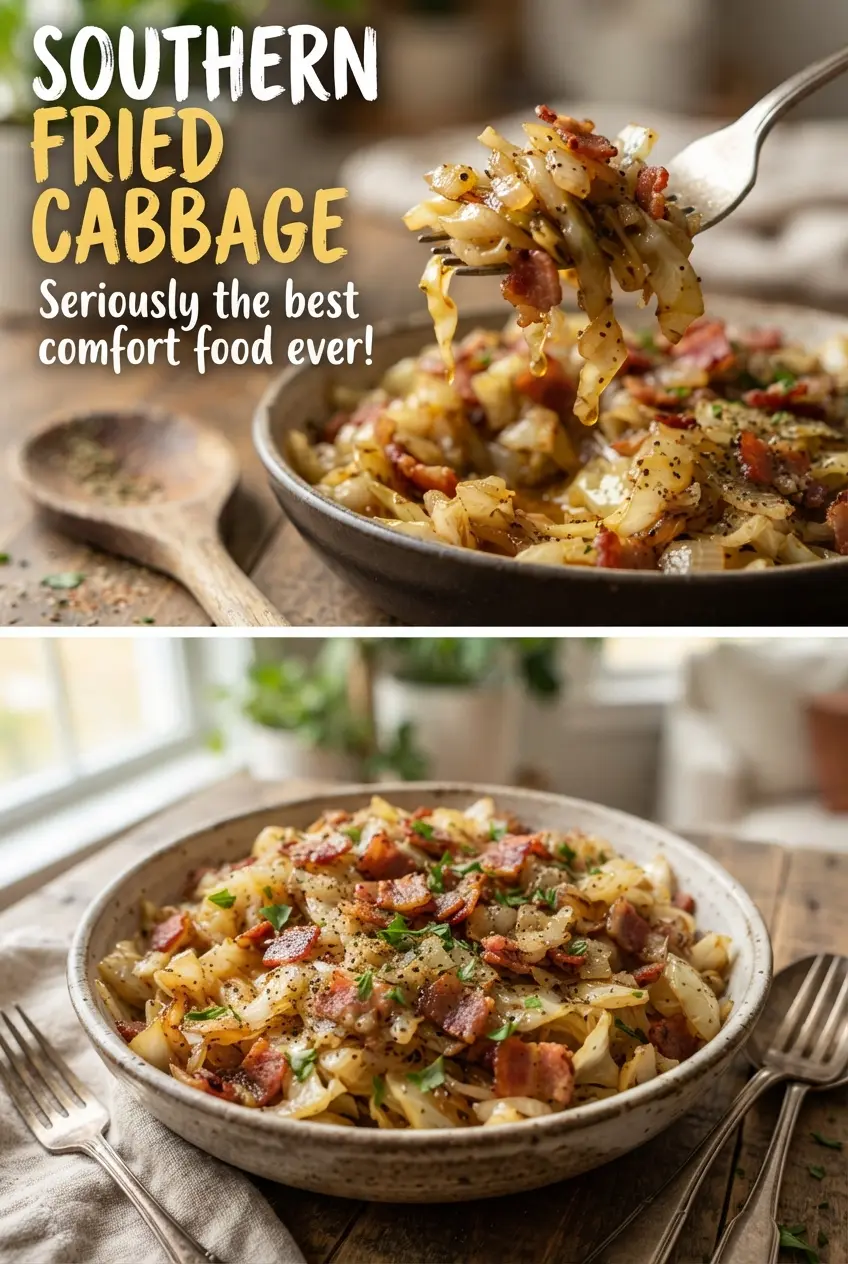
Southern Fried Cabbage
Ingredients
Equipment
Method
- Cook the bacon in a large cast iron skillet over medium heat for 8 minutes, until crisp, then remove and set aside while leaving the drippings in the skillet.
- Leave the bacon drippings in the skillet to season the cabbage as it cooks, keeping the heat at medium.
- Add the sliced onion to the skillet and cook for 5 minutes, stirring occasionally, until softened.
- Stir in the minced garlic and cook for 30 seconds, just until fragrant.
- Add the chopped cabbage, butter, salt, black pepper, red pepper flakes, and sugar to the skillet and stir to coat.
- Cook for 12 to 15 minutes, stirring occasionally, until the cabbage is tender and caramelized at the edges.
- Stir in the apple cider vinegar and cook for 30 to 60 seconds to brighten the flavor.
- Add the crispy bacon back to the skillet and serve warm.


