Slow cooker beef stew earns its place in the rotation because the broth turns rich, the beef goes spoon-tender, and the potatoes hold their shape without turning chalky. You get that deep, slow-cooked flavor without standing over the stove all afternoon, which is the whole point of a stew like this.
The trick is starting with a quick flour toss and a proper browning on the beef. That step gives the broth body and builds the savory base in the same pan you use for the onion, garlic, and tomato paste. Scraping up the browned bits with broth pulls every bit of flavor into the slow cooker instead of leaving it stuck to the pan.
Below, I’ll walk through the one step people skip most often, the ingredient choices that matter, and the timing that keeps the peas bright instead of dull and mushy.
The gravy got nice and thick from the flour on the beef, and the potatoes stayed intact instead of dissolving. I used the low setting and the meat was fall-apart tender by dinner time.
Save this slow cooker beef stew for a rich, fork-tender dinner with glossy gravy and hearty vegetables.
The Part That Keeps the Beef Tender Instead of Tough
Slow cooker beef stew goes wrong when the beef goes in raw and unbrowned, then spends hours braising in a thin broth that never quite develops body. Browning the flour-dusted beef first does two things at once: it deepens the flavor and gives the stew enough starch to thicken naturally as it cooks. The flour shouldn’t form a pasty coating; it should look like a light dusting that clings to the meat.
The other place this recipe earns its keep is the order of operations. Tomato paste cooks briefly in the pan before the broth goes in, which takes away the raw edge and adds a little sweetness and depth. Scraping the pan after the broth hits is not optional here. Those browned bits are the backbone of the gravy.
What Each Ingredient Is Actually Doing in This Stew
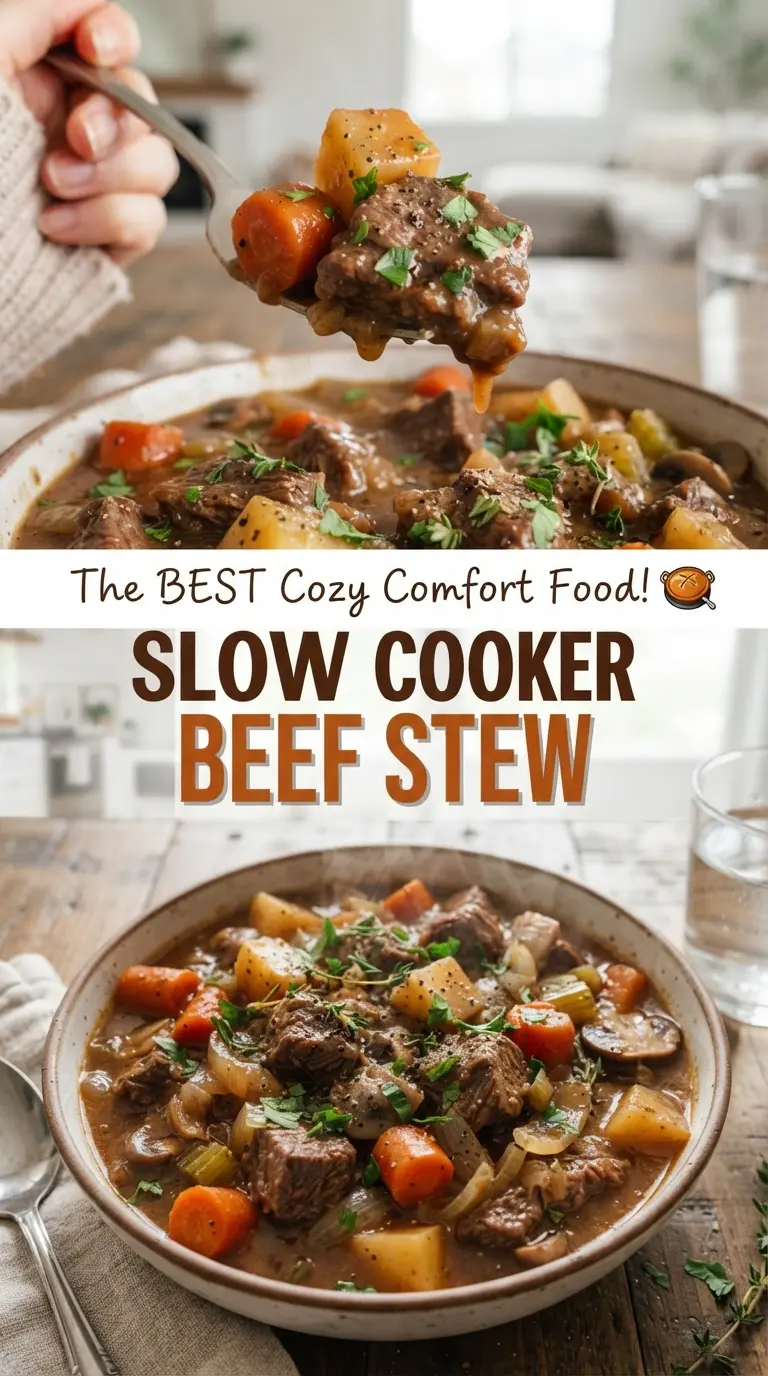
- Beef chuck roast — This is the right cut because it has enough connective tissue to turn silky over a long cook. Lean stew meat can end up dry and stringy by comparison.
- All-purpose flour — A light coating gives the stew body and helps the beef brown. If you need gluten-free, use a cup-for-cup gluten-free flour blend and brown the meat the same way.
- Tomato paste — This adds a concentrated savory base that makes the broth taste cooked, not flat. Let it sit in the hot pan for a minute so it darkens slightly before the liquid goes in.
- Yukon gold potatoes — They hold their shape better than russets and turn creamy instead of mealy. Cut them into even chunks so they finish at the same time as the carrots.
- Worcestershire sauce — It quietly boosts the beefiness without making the stew taste like sauce. There isn’t a perfect substitute, but a small splash of soy sauce plus a touch of vinegar gets close.
- Frozen peas — Add them at the end so they stay sweet and bright. If they go in at the start, they lose their color and taste tired.
Building the Base So the Slow Cooker Has Something to Work With
Coating and Browning the Beef
Toss the beef with the flour, salt, and pepper until it’s lightly coated, then brown it in batches in hot oil. You’re looking for a deep brown crust on the outside, not a gray surface that just steams in the pan. If the pan looks crowded, stop and do another batch; overcrowding traps moisture and robs you of that flavor-building sear.
Pulling Flavor Out of the Pan
Use the same pan for the onion, garlic, and tomato paste. The onion should soften and start to pick up color, and the tomato paste should darken slightly and smell sweeter after a minute. When you pour in the first cup of broth, scrape the bottom until the pan looks clean; that step dissolves the browned bits into the liquid instead of leaving them behind.
Letting the Slow Cooker Finish the Job
Once the broth, Worcestershire, potatoes, carrots, celery, thyme, and bay leaves are in, cover and cook until the beef yields easily when pressed with a spoon. LOW gives the best texture here because the meat breaks down more evenly over time. HIGH works if you’re rushed, but the gravy can be a little less developed and the vegetables soften faster.
Saving the Peas for the End
Stir in the peas during the last 10 minutes, just long enough for them to heat through. That keeps them green and a little poppy instead of faded and mushy. Pull the bay leaves before serving and finish with parsley for a clean, fresh note over the rich stew.
How to Adapt This for a Lighter Pot or a Fuller One
Gluten-Free Version
Swap the all-purpose flour for a gluten-free flour blend and brown the beef the same way. The stew will still thicken, though the gravy may be a touch lighter in body than the original.
No Worcestershire Sauce
Use 1 tablespoon soy sauce with 1 teaspoon apple cider vinegar. You won’t get the exact same complexity, but you’ll still get the salty, tangy depth that makes the broth taste finished.
Extra Vegetables
Add mushrooms or parsnips with the potatoes and carrots if you want a deeper, earthier stew. Just keep the pieces cut large enough to survive the long cook without disappearing into the broth.
Storage and Reheating
- Refrigerator: Store in an airtight container for up to 4 days. The broth thickens as it chills, which is normal.
- Freezer: It freezes well for up to 3 months. Cool it completely first, then freeze in portions so the potatoes don’t get bruised from repeated thawing.
- Reheating: Warm gently on the stovetop over low heat or in the microwave in short bursts, stirring between rounds. High heat can make the beef tighten up and can turn the potatoes grainy.
Answers to the Questions Worth Asking
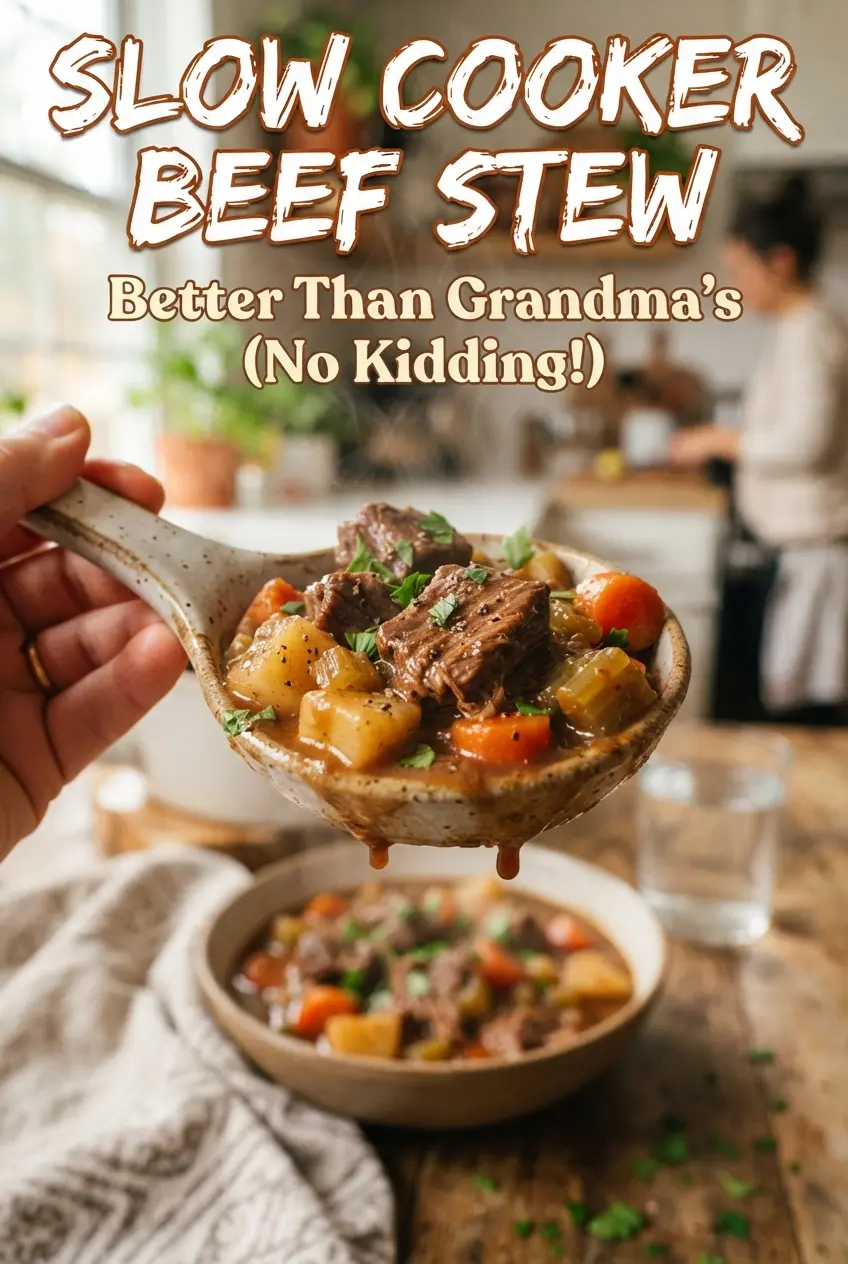
Slow Cooker Beef Stew
Ingredients
Equipment
Method
- Toss the beef with flour, salt, and pepper until evenly coated. Brown the beef in batches in hot olive oil for 4-5 minutes per batch, then transfer to the slow cooker.
- Keep the pan hot between batches and avoid overcrowding so the beef browns rather than steams. Transfer all browned beef into the slow cooker.
- Cook the diced onion in the same pan for 4 minutes, stirring occasionally, until softened. Add the minced garlic and tomato paste and cook for 1 minute.
- Pour in 1 cup of beef broth and scrape up the browned bits from the pan. Pour the broth mixture into the slow cooker.
- Add the remaining beef broth, Worcestershire sauce, potatoes, carrots, celery, dried thyme, and bay leaves to the slow cooker. Cover and cook on LOW for 8 hours or HIGH for 4-5 hours until the beef is fork-tender.
- Stir in the frozen peas and cook for the last 10 minutes. Remove the bay leaves and top with chopped fresh parsley before serving.


