Deep, spoon-coating beef stew gets even better when the broth picks up sweetness from butternut squash and a little earthiness from kale. The slow cooker gives the beef time to turn tender without drying out, and the vegetables hold their shape instead of collapsing into the pot. You get a bowl that tastes long-simmered and looks as good as it smells, with a glossy gravy that clings to every chunk of beef and carrot.
The trick here is timing. The beef and carrots need the full slow-cooker ride, but the squash goes in later so it stays intact and doesn’t turn grainy at the edges. Browning the beef first matters too; those crusty bits add the kind of depth a dump-and-go stew never gets. A little tomato paste, Worcestershire, and wine build a richer base than broth alone can manage.
Below, I’m walking through the details that make this stew dependable: when to add the squash, how to keep the broth from tasting flat, and what swaps still give you a solid, comforting dinner without a lot of extra work.
The beef turned fork-tender and the squash held its shape, which never happens for me in the slow cooker. The gravy was thick enough to coat the spoon, and the kale at the end gave it a fresh finish.
Save this slow cooker beef stew with butternut squash for a rich, hands-off dinner with tender beef, sweet squash, and a glossy gravy.
The Reason the Squash Goes in Later Instead of the Beginning
Butternut squash is sturdy, but it still doesn’t like eight full hours of heat. If it goes in at the start, the cubes soften too much and start breaking apart before the beef is even ready. Adding it partway through keeps the edges intact and gives you those clean, tender chunks that make the stew look and eat like it was cooked on purpose.
The beef benefits from the opposite treatment. Chuck needs time for collagen to melt, and the slow cooker is great at that, but it still needs a head start from browning. That first sear is what gives the gravy its depth. Without it, the stew tastes flat, even if the seasoning is correct.
What Each Ingredient Is Doing in the Pot
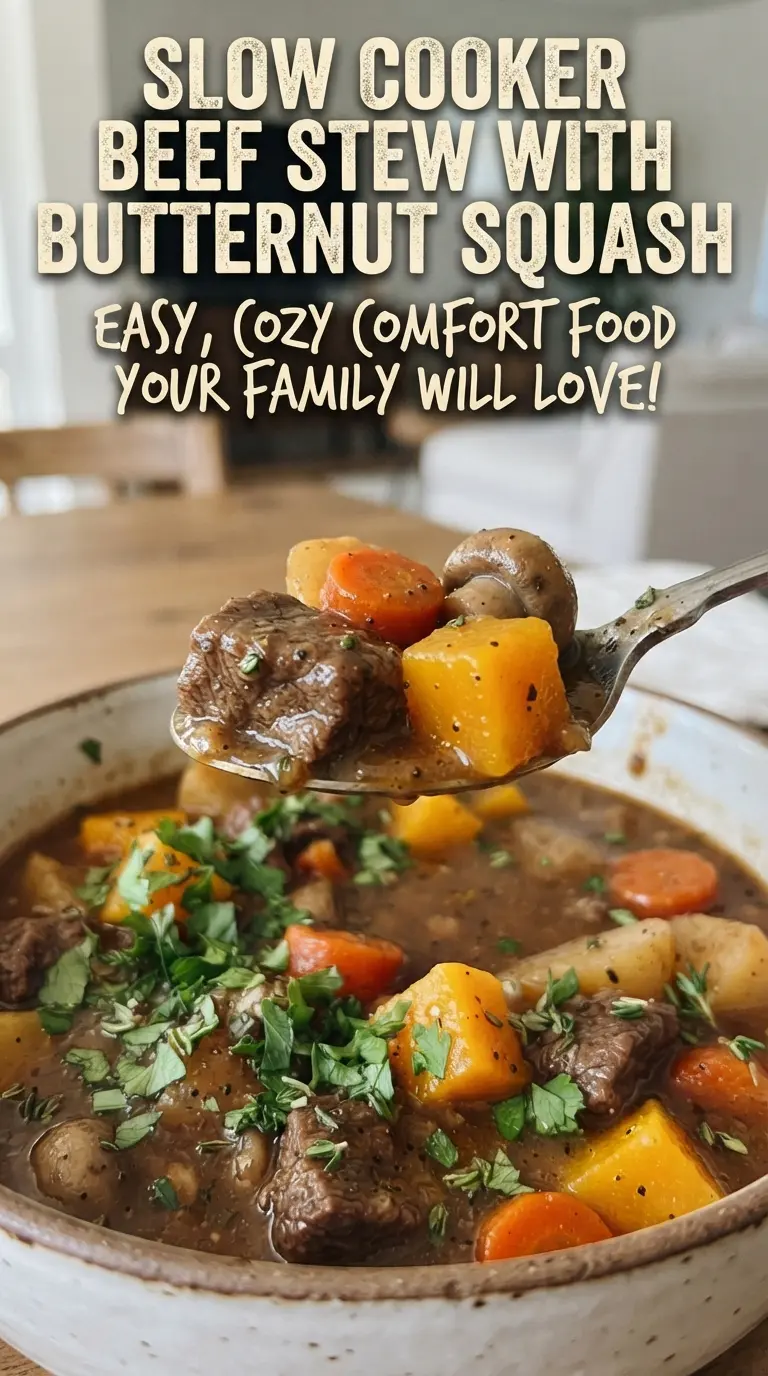
- Beef chuck — This is the cut that turns soft and shreddable after a long cook. Leaner beef gets dry and stringy; chuck gives you that rich, stewy texture.
- Flour — The flour on the beef helps with browning and gives the broth a little body as it cooks. You don’t need a lot, but skipping it leaves the finished stew thinner.
- Tomato paste — It adds depth and a dark, savory backbone. Cook it for a minute or two with the onions so it loses that raw tomato edge.
- Dry red wine — This adds a little acidity and helps lift the browned bits from the pan. If you don’t want wine, use extra broth, but the stew will be a touch less complex.
- Butternut squash — Add it later so it keeps its shape. Smaller cubes will cook faster, but they also break down faster, so keep the pieces fairly large.
- Kale — It goes in at the end for color and a bit of bite. If you add it too early, it turns dull and muddy.
Building the Stew in Stages So Nothing Turns Mushy
Coating and Browning the Beef
Toss the beef with flour, salt, and pepper until every piece looks lightly dusted, then brown it in hot oil in batches. The pan should sound active when the meat goes in; if it steams, the pot is crowded and you won’t get a good crust. That browning is where the flavor starts, and those browned bits left behind in the skillet are worth scraping up later.
Cooking the Aromatics and Tomato Paste
Cook the onion until it softens and the garlic just stops smelling sharp, then stir in the tomato paste and give it a short minute or two in the heat. You’re looking for a darker, brick-red color and a little sticking on the bottom of the pan. That brief cooking takes the edge off the paste and keeps the stew from tasting raw or one-note.
Deglazing and Filling the Slow Cooker
Pour in the wine and scrape the pan until the browned bits dissolve into the liquid. That step matters because those bits carry most of the flavor from the sear. Add the broth, Worcestershire, thyme, sage, carrots, and the browned beef to the slow cooker, then let it work low and slow until the beef starts to give when you press it with a spoon.
Adding the Squash and Kale at the End
Stir in the squash after the beef has had its first stretch of cooking, then let it finish until the cubes are tender at the edges but still hold their shape. Add the kale during the last 15 minutes so it wilts without losing its color. If the stew looks thin at the end, leave the lid cracked for a short time or let it sit on warm for a few minutes; it will thicken as it rests.
How to Adapt This Stew for Different Kitchens and Different Weeks
Skip the Wine Without Losing Body
Use extra beef broth in place of the wine if you don’t cook with alcohol. The stew will still be savory and rich, though it loses a little of the bright edge that wine brings to the sauce.
Make It Gluten-Free
Swap the all-purpose flour for a gluten-free flour blend that behaves well in sauces, or skip the coating and thicken the stew lightly at the end if needed. The browning still matters, so sear the beef in batches even without the flour.
Use Sweet Potato Instead of Squash
Sweet potato works if that’s what you have, but it softens a little faster and gives the stew a sweeter finish. Cut it into larger chunks and add it at the same stage as the squash so it doesn’t disappear into the broth.
Storage and Reheating
- Refrigerator: Keeps for 4 days in a covered container. The stew thickens as it chills, so it may look denser the next day.
- Freezer: Freezes well for up to 3 months. Cool it fully first, then freeze in portions for the easiest thawing and reheating.
- Reheating: Warm it gently on the stove over low heat or in the microwave at medium power. Hard boiling can break down the squash and make the beef tough again.
Answers to the Questions Worth Asking
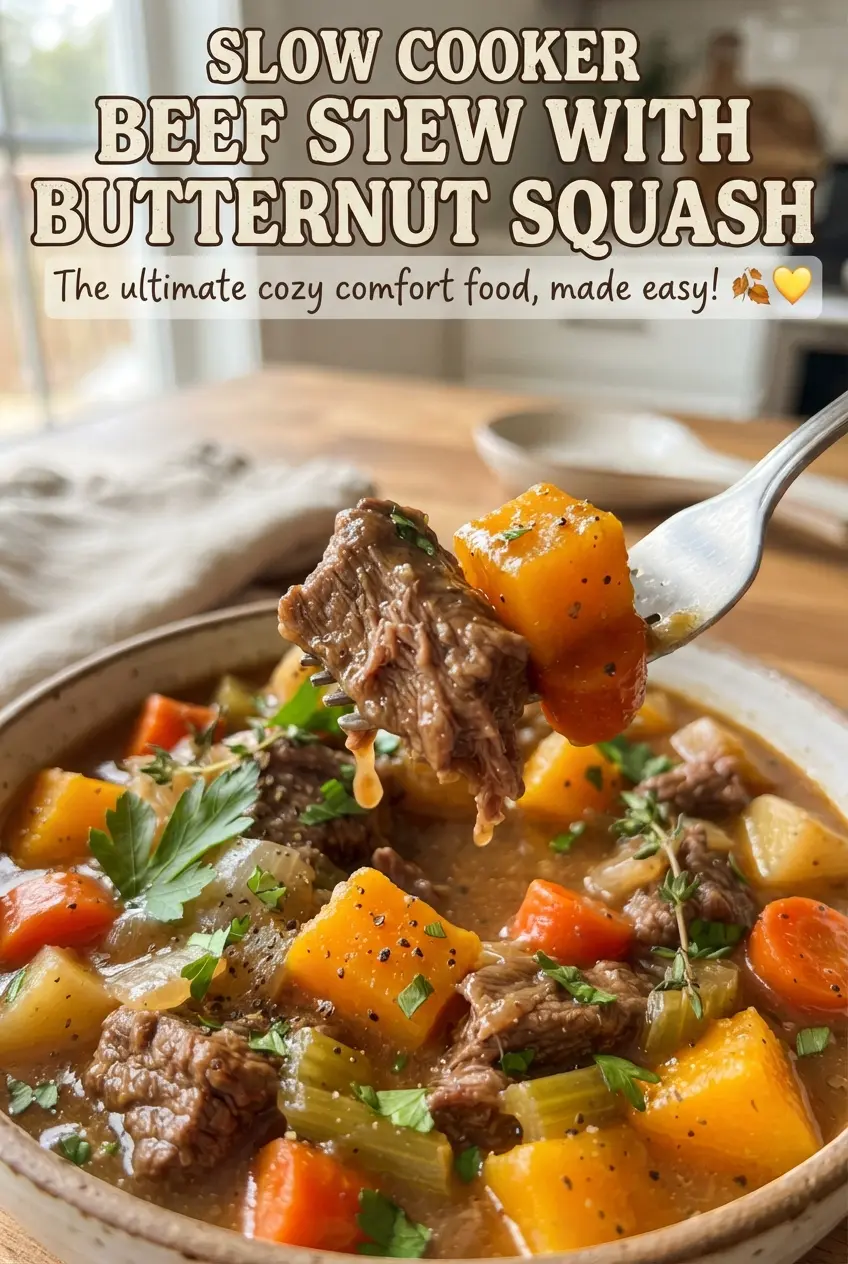
Slow Cooker Beef Stew with Butternut Squash
Ingredients
Equipment
Method
- Toss the beef with flour, salt, and pepper until evenly coated, then brown in hot oil in a cast iron skillet over medium-high heat and transfer to the slow cooker.
- Cook just until the beef has browned on the outside, looking for a deep color that helps the stew develop a glossy gravy.
- In the same skillet, cook the onion, garlic, and tomato paste for 3 minutes until softened and fragrant.
- Deglaze with the red wine (or extra broth), scraping up browned bits, then add everything to the slow cooker.
- Add beef broth, Worcestershire sauce, dried thyme, dried sage, and carrots to the slow cooker.
- Cover and cook on LOW for 5 hours, until the carrots start to soften and the beef becomes tender.
- Add the butternut squash cubes, then cover and cook on LOW for 2-3 hours more, until the beef and squash are fork-tender.
- Stir in the chopped kale and cook for the last 15 minutes on LOW until bright green and just wilted.
- Taste and season, then serve hot with the squash and beef in a thick, gravy-like sauce.


