Charred chicken, softened peppers, and sweet onion all roast together on one pan, which is exactly why sheet pan chicken fajitas earn a permanent spot in the weeknight rotation. The chicken stays juicy, the vegetables pick up browned edges, and the whole pan tastes like it took more effort than it did.
The trick is giving everything enough room to roast instead of steam. A hot oven and a single layer on the pan do most of the work, while the lime, cumin, chili powder, and garlic build that classic fajita flavor right on the chicken and vegetables before they even hit the heat.
Below, I’ll show you how to keep the peppers from going limp, how to season the pan so the chicken tastes bold all the way through, and what to change if you need to stretch this for more people or make it dairy-free.
The chicken stayed juicy and the peppers got those browned edges without turning mushy. I loved that everything finished at the same time, and the lime on top made the whole pan taste bright instead of heavy.
Sheet pan chicken fajitas with charred peppers, juicy chicken, and one-pan cleanup for the win.
The Difference Between Roasting and Steaming the Pan
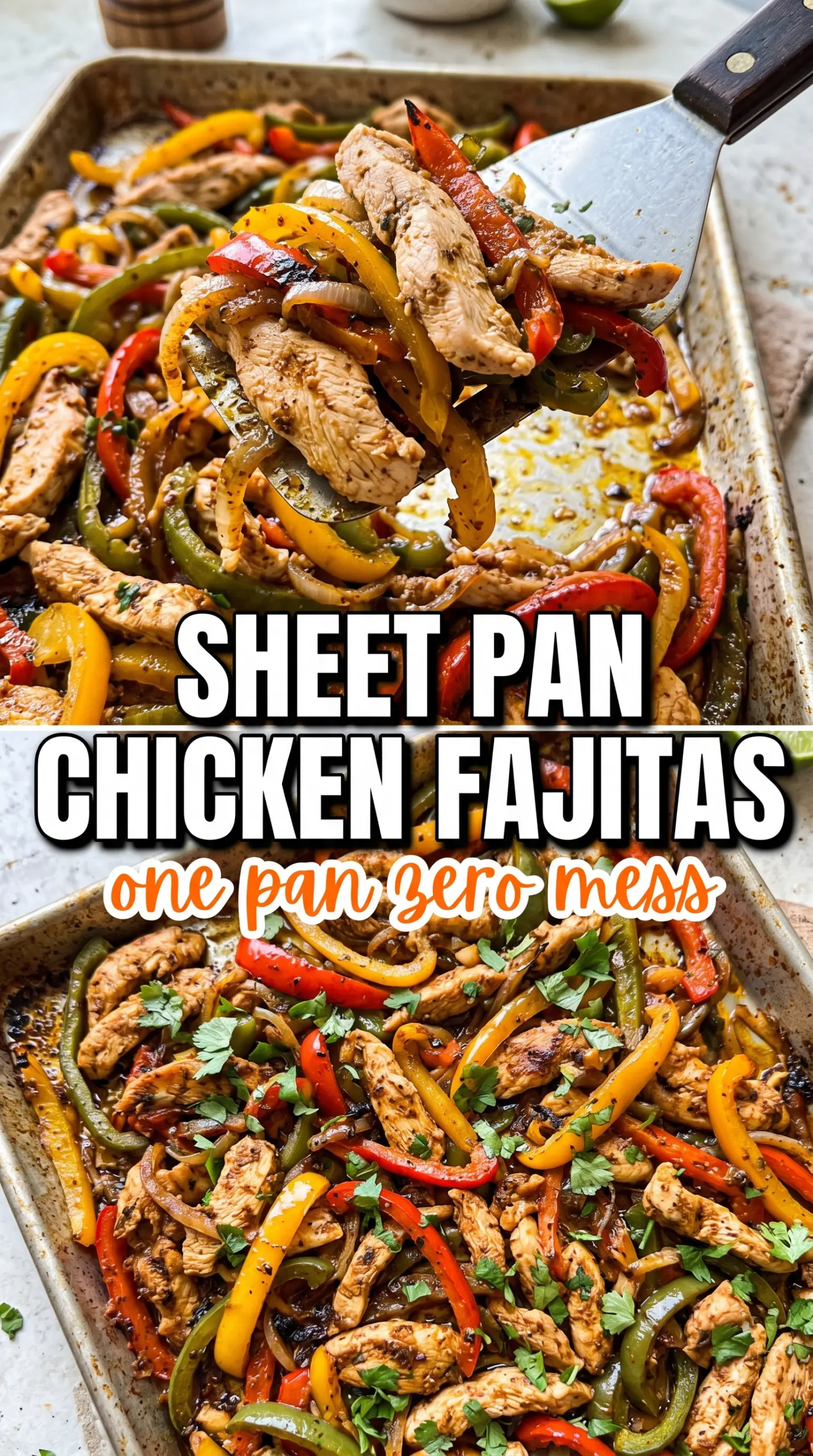
The biggest mistake with sheet pan fajitas is crowding the pan. When the chicken and vegetables are piled up, they release moisture, and that moisture hangs around long enough to soften everything before it can brown. You want the pieces in a single layer with space between them so the oven heat can hit the surface directly.
A hot oven matters here too. At 425°F, the edges of the peppers blister and the chicken cooks through fast enough that it doesn’t dry out. If your pan is small, use two pans instead of forcing everything onto one. That one change is the difference between fajitas that taste roasted and fajitas that taste boiled.
What the Marinade Is Actually Doing Here
- Chicken breasts — Thin strips cook quickly and pick up more seasoning on the surface. If you swap in chicken thighs, you’ll get a richer, juicier result and a little more forgiveness if the pan stays in the oven a minute too long.
- Bell peppers and onion — These are there for sweetness and texture, not just color. Slice them evenly so they finish in the same window as the chicken; thick chunks stay crunchy while thin slivers can collapse.
- Olive oil — It helps the spices cling and encourages browning. You don’t need a fancy bottle here, but you do need enough oil to coat everything lightly; dry spice mix alone won’t roast as evenly.
- Lime juice — This brightens the seasoning and keeps the fajitas from tasting flat. Add it before roasting for a subtle backbone, then serve with extra lime at the table for a fresher finish.
- Cumin, chili powder, paprika, and oregano — This blend gives you that classic fajita profile without needing a bottled seasoning mix. Fresh chili powder matters more than you might think; if yours has been sitting in the cabinet for years, the pan will taste dull.
How to Roast Fajitas So the Edges Stay Charred
Coating Everything Evenly
Combine the chicken, vegetables, oil, garlic, lime juice, and spices in a large bowl and toss until every piece looks lightly coated. The mixture should look glossy, not wet or soupy. If you see a puddle at the bottom of the bowl, the pan will steam instead of roast, so stop and add a little more spice or spread it out immediately.
Spacing the Pan
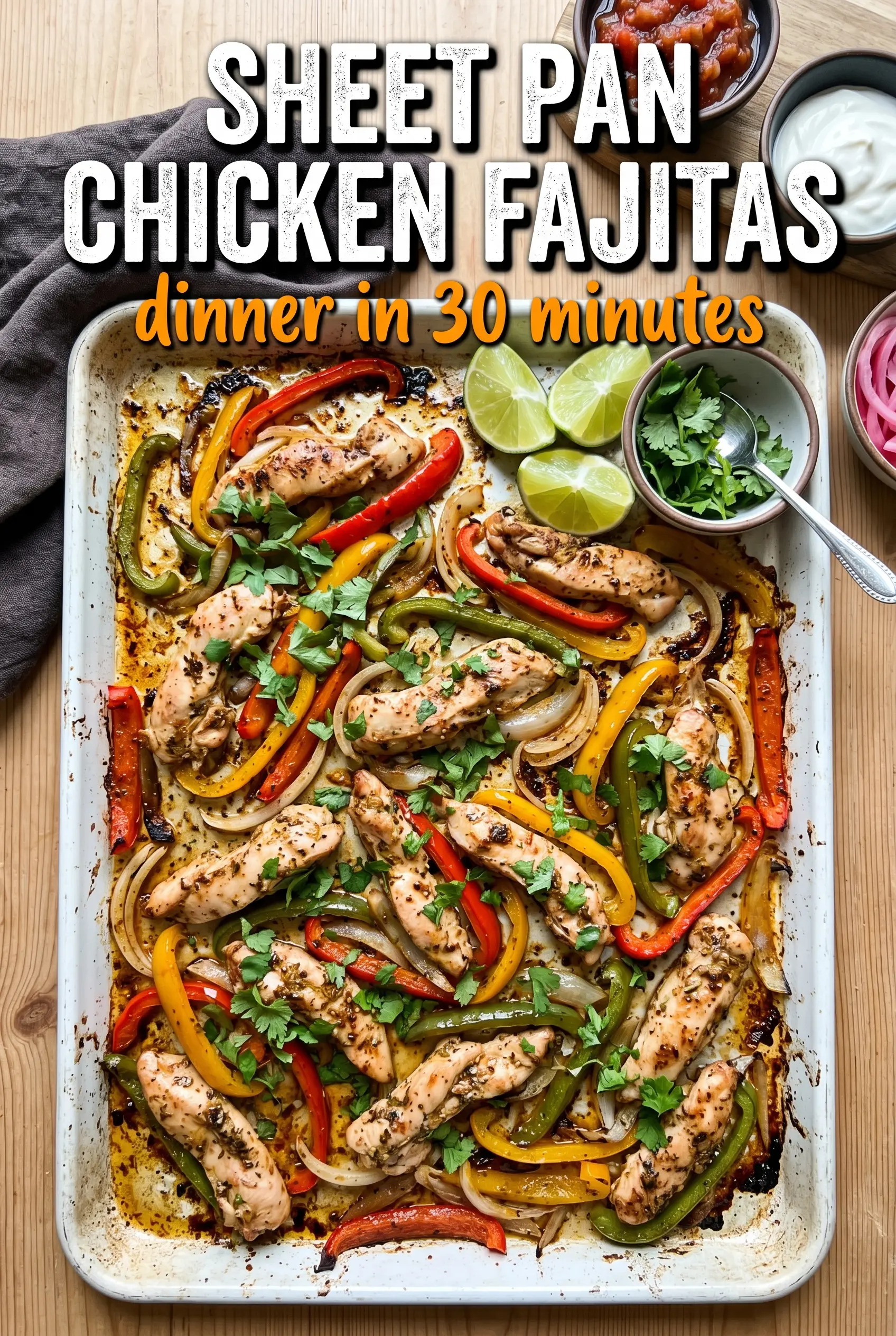
Spread the mixture on a large sheet pan in a single layer. The chicken strips should not overlap much, and the vegetables should have enough room to sit flat against the pan. Overlapping pieces trap steam between them, which is the fastest way to lose those browned edges everyone wants in fajitas.
Roasting Until Just Done
Roast at 425°F for 18 to 22 minutes, stirring once halfway through if the pan is browning unevenly. The chicken is done when it reaches 165°F and the vegetables are tender with little charred spots at the tips. If the pan looks pale at the end, give it another 2 to 3 minutes under the broiler, but stay close because the peppers can go from browned to scorched fast.
Warming and Filling the Tortillas
Warm the tortillas while the pan rests for a minute or two so they stay soft and flexible. Fill them with the chicken and vegetables right away, then finish with sour cream, salsa, cilantro, and a squeeze of lime. If the tortillas are cold or stiff, they crack and steal the spotlight from the filling, which is the last thing you want.
How to Adapt These Fajitas for Different Kitchens
Dairy-Free Fajitas
Skip the sour cream and finish with extra salsa, avocado, or a spoonful of plain dairy-free yogurt. The fajitas still taste balanced because the lime and roasted vegetables bring plenty of brightness on their own.
Corn Tortilla Version
Use corn tortillas if you want a naturally gluten-free meal and a more traditional, slightly sturdier bite. Warm them well so they stay pliable; cold corn tortillas split the second you fold them.
Chicken Thigh Swap
Boneless skinless thighs work beautifully if you want juicier meat and a little more browning. They may need an extra minute or two in the oven, but they stay tender even if the pan runs a touch hot.
Making It for a Crowd
Double the filling and divide it between two sheet pans so the vegetables can still roast properly. If you pile everything onto one oversized pan, the moisture climbs and the peppers soften before they brown.
Storage and Reheating
- Refrigerator: Store the chicken and vegetables in an airtight container for up to 4 days. The peppers soften a bit, but the flavor holds up well.
- Freezer: The filling freezes, though the peppers lose some texture after thawing. Freeze in a flat layer for up to 2 months for best results.
- Reheating: Warm in a skillet over medium heat or in a 350°F oven until hot. The common mistake is microwaving too long, which makes the chicken rubbery and the vegetables watery.
Questions I Get Asked About This Recipe
Sheet Pan Chicken Fajitas
Ingredients
Equipment
Method
- Preheat oven to 425°F. Set up a large sheet pan for a single-layer roast.
- Toss sliced chicken, bell peppers, and onion with olive oil, minced garlic, lime juice, cumin, chili powder, paprika, oregano, salt, and pepper. Mix until the chicken and vegetables look evenly coated.
- Spread the mixture in a single layer on the sheet pan. Make sure pieces are spaced so they can roast and brown.
- Roast for 18-22 minutes until chicken is cooked through and vegetables are tender with slightly charred edges. Look for browned, charred spots on peppers and lightly caramelized onion edges.
- Warm tortillas and set them out for filling. Keep them warm so they fold easily.
- Fill tortillas with the chicken and vegetable mixture. Use a spoon to include chicken, peppers, and onion in each fajita.
- Top with sour cream, salsa, cilantro, and lime. Serve immediately for the best texture.