Scottish beef stew earns its place by turning a few humble ingredients into something deep, dark, and spoon-coating. The beef goes tender without falling apart, the barley gives the broth a nutty body, and the turnip and carrots hold their shape just enough to keep every bite interesting. It tastes like a long simmer in the best possible way.
What makes this version work is the order. Browning the beef in batches builds the base flavor, and the flour on the meat helps thicken the stew without turning it pasty. The ale goes in before the broth so it can lift the browned bits off the pan, and the barley joins later so it stays intact instead of turning soft and dusty.
Below, you’ll find the small decisions that matter here: when to salt, when to wait, and how to keep the broth rich instead of muddy. If you’ve ever had a beef stew that tasted flat or thin, this one fixes that.
The barley stayed pleasantly chewy and the stew thickened beautifully without getting gluey. I made it on a Sunday and it tasted even better the next night.
Save this Scottish beef stew for a hearty, barley-filled dinner with rich broth and tender chuck.
The Stew That Gets Its Body From Barley, Not Just Flour
The biggest mistake with beef stew is trying to thicken everything at the end after the meat is already tender. That usually gives you a broth that tastes beefy but still feels thin, or worse, a sauce that turns gummy because too much flour was added too late. Here, the flour clings to the beef before browning, which helps the stew develop a light, steady body as it simmers.
The other thing that matters is the long, gentle simmer after the ale goes in. That first splash loosens the browned bits from the pan, and those bits are where a lot of the deep flavor lives. If the pot boils hard, the beef tightens up and the barley can burst before the meat is tender, so keep the heat low enough that the surface barely moves.
What the Ale, Barley, and Swede Are Doing Here
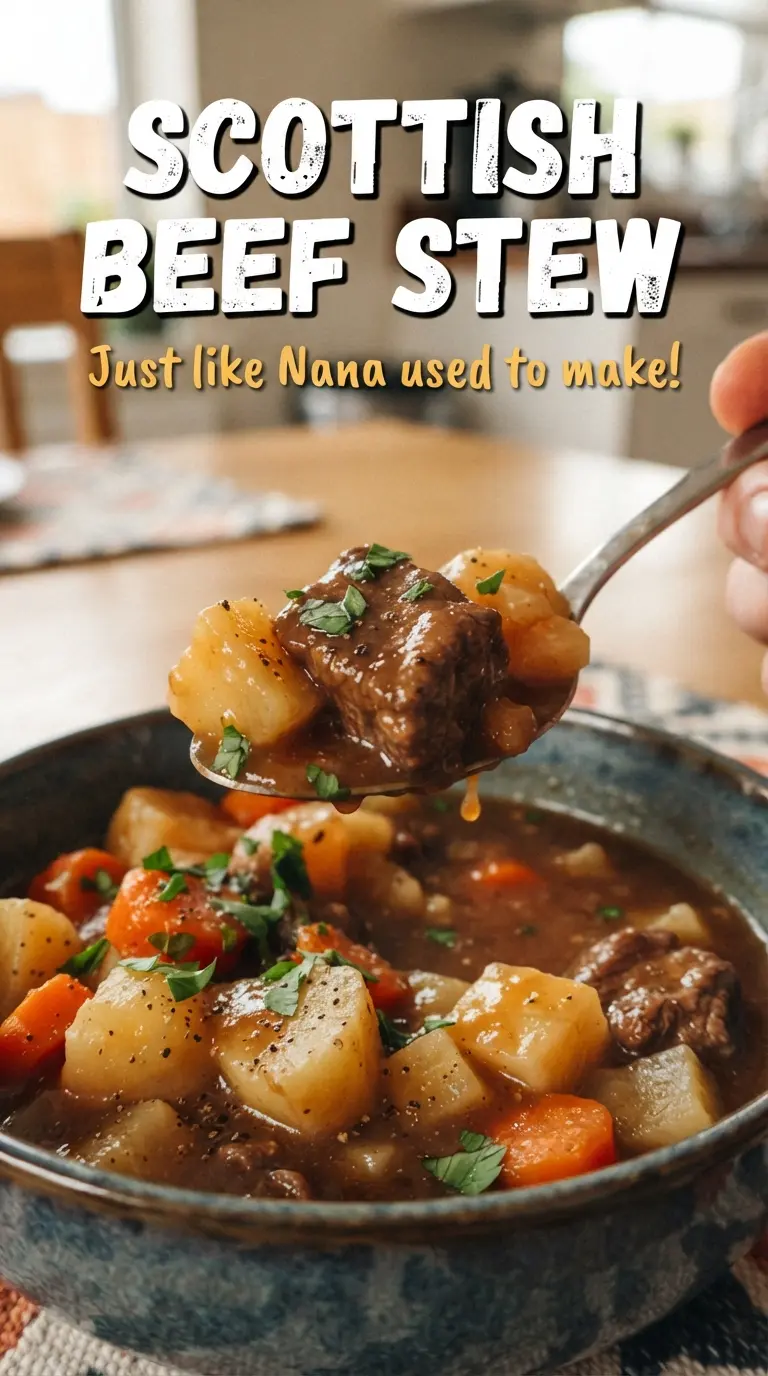
- Beef chuck — This is the right cut because it has enough connective tissue to turn silky after a long simmer. Lean stew meat can work, but it won’t give you the same richness. Cut the beef into larger chunks so it holds together through the full cook.
- Scottish ale or beef broth — The ale adds malty depth that plain broth can’t fake. If you skip it, use extra beef broth and add a small splash of cider vinegar at the end to wake the pot up. Use a beer you’d actually drink; anything too bitter can make the stew harsh.
- Pearl barley — This is what gives the stew its classic Scottish character and a naturally thick, almost velvety body. Add it late so it stays pleasantly chewy instead of dissolving. Hulled barley can be used, but it needs a longer cook and gives a firmer texture.
- Turnip or swede — This brings a faint peppery sweetness that potatoes wouldn’t give you. Swede is a little sweeter and denser, while turnip is sharper. Cube it evenly so it cooks at the same pace as the carrots.
- Leeks and onions — Together they build a sweeter, rounder base than onions alone. The leeks need a good wash because grit hides between the layers, and that grit will ruin the stew fast.
How to Build the Pot so the Beef Turns Tender, Not Stringy
Seasoning and Browning the Beef
Season the beef first, then toss it with the flour so every surface looks lightly dusted, not caked. Brown it in batches in the butter and oil until you get a deep crust on several sides; crowded meat will steam and stay gray. Those brown bits on the bottom matter, so don’t rush this stage or wipe the pan clean.
Softening the Aromatics
Cook the onions and leeks in the same pot until they turn soft and a little sweet, about 6 minutes. If the heat is too high, the leeks can scorch before the onions soften, and the stew picks up a bitter edge. You want them wilted and glossy, not browned hard.
Deglazing and the Long Simmer
Pour in the ale and scrape the pan well so the fond dissolves into the liquid. Add the broth, Worcestershire, thyme, and beef, then cover and simmer at the gentlest bubble you can keep steady. Hard boiling tightens the meat and makes the broth cloudy, while a slow simmer gives you tender beef and a cleaner, deeper gravy.
Adding the Barley and Vegetables
Once the beef is on its way to tender, stir in the barley, turnip, and carrots. This timing keeps the barley intact and gives the vegetables enough time to soften without turning to mush. When the beef yields easily to a fork and the barley is tender but still has a little chew, the stew is done.
Three Ways to Adjust the Stew Without Losing Its Character
Make it gluten-free
Skip the all-purpose flour and brown the beef plain, then thicken the stew at the end with a small cornstarch slurry if needed. You’ll lose a little of the built-in body, but the flavor stays rich and the broth stays clean. Use a gluten-free broth and make sure the ale is replaced with more broth if necessary.
Make it dairy-free
Use extra oil instead of the butter for browning. The stew still gets plenty of richness from the beef, barley, and long simmer, so you won’t miss the butter much here. The flavor will be slightly leaner at the start, but the finished pot stays hearty.
Add potatoes for a thicker, more filling version
Replace half the turnip with waxy potatoes if that’s what you’ve got on hand. They’ll soften into the broth and make the stew feel a little more rustic and starchy, though you’ll lose some of the peppery bite that swede gives. Cut them into similar-size chunks so they don’t collapse before the barley is ready.
Storage and Reheating
- Refrigerator: Keeps well for 4 days. The barley will continue to absorb liquid, so the stew thickens as it sits.
- Freezer: Freezes well for up to 3 months. Cool it completely first, and leave a little space in the container because the broth will expand.
- Reheating: Warm it slowly on the stove over low heat with a splash of broth if it has tightened up. Don’t boil it hard again or the beef can dry out and the barley can split.
Answers to the Questions Worth Asking
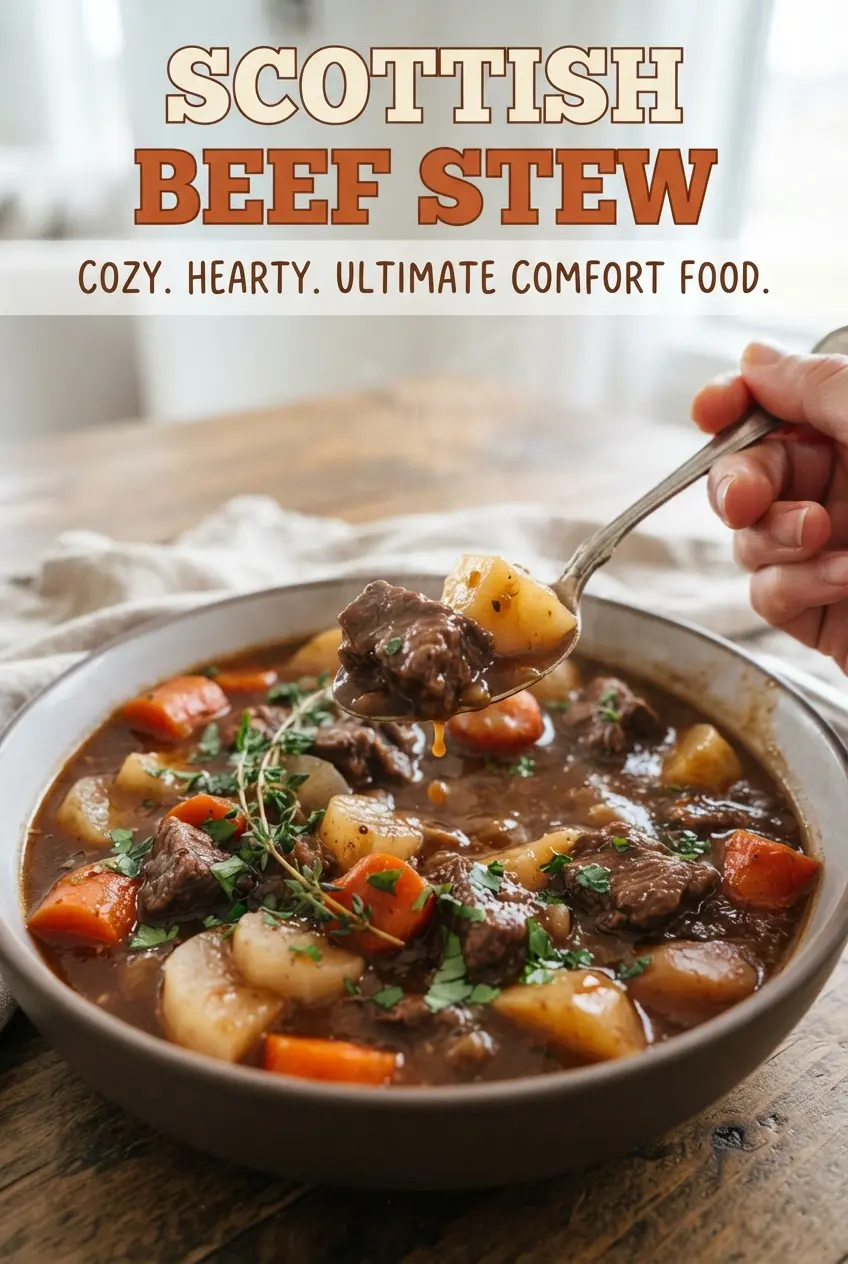
Scottish Beef Stew
Ingredients
Equipment
Method
- Season the beef chuck cubes with salt and black pepper. Toss with the all-purpose flour until lightly coated.
- Heat the butter and vegetable oil in a Dutch oven over medium-high heat. Brown the beef in batches, so each piece gets color, then transfer to a plate.
- Add the onions and leeks to the Dutch oven and cook for 6 minutes until soft. Stir as needed to keep them from browning too much.
- Pour in the Scottish ale (or extra beef broth) and scrape the bottom of the pot to lift the browned bits. Cook for 2 minutes to reduce slightly.
- Add the beef broth, Worcestershire sauce, dried thyme, and the browned beef to the pot. Bring the mixture to a simmer.
- Cover and simmer for 1 1/2 hours, stirring occasionally to prevent sticking. The beef should be mostly tender at the halfway mark.
- Stir in the rinsed pearl barley, cubed turnip or swede, and sliced carrots. Return to a simmer.
- Cover and simmer for 45-60 minutes until the barley and beef are tender. You should see the gravy thicken as the barley releases starch.
- Taste and season to taste with additional salt and black pepper if needed. Top with chopped fresh parsley right before serving for a fresh green cue.


