Roasted butternut squash and Brussels sprouts earn their place on the table because they give you two kinds of sweetness at once: caramelized edges from the oven and a bright finish from maple balsamic. The squash turns creamy inside and browned outside, while the Brussels sprouts go crisp at the cut sides and stay sturdy enough to hold up to the glaze. Add pecans for crunch and dried cranberries for a little chew, and the whole pan lands somewhere between side dish and salad in the best way.
The key is giving the vegetables enough space and enough heat. A crowded pan traps steam, which leaves the sprouts soft and the squash pale. Roasting at 425°F lets the cut sides brown before the centers turn mushy, and tossing halfway keeps everything cooking evenly. The maple balsamic goes on after roasting, not before, so it coats the vegetables without burning in the oven.
Below, I’m breaking down the small details that matter most: how to keep the Brussels sprouts from steaming, when to add the cranberries so they stay plump, and the one substitution that still gives you a proper finish if you’re out of pecans.
The squash got those caramelized edges and the Brussels stayed crisp-tender instead of soggy. I tossed the cranberries and pecans in at the end like you said, and the texture was perfect.
Save these roasted butternut squash and Brussels sprouts with pecans and cranberries for a caramelized side with a maple balsamic finish.
The Reason These Vegetables Brown Instead of Steam
The difference between a tray of limp vegetables and a tray with crisp edges comes down to moisture control. Butternut squash and Brussels sprouts both carry enough water that they can steam themselves if the pan is packed, especially when the oven is too low. At 425°F, the surface moisture cooks off fast enough for the natural sugars to brown before the vegetables collapse.
Cut size matters more than people think. The squash should be in roughly even cubes so the outside caramelizes at the same time the inside turns tender. The Brussels sprouts need to be halved through the stem so they hold together on the pan; if the leaves separate, they’ll scorch before the centers soften. Tossing them halfway through isn’t just for even color — it exposes new surfaces to the hot pan.
What Each Ingredient Is Actually Doing in This Dish
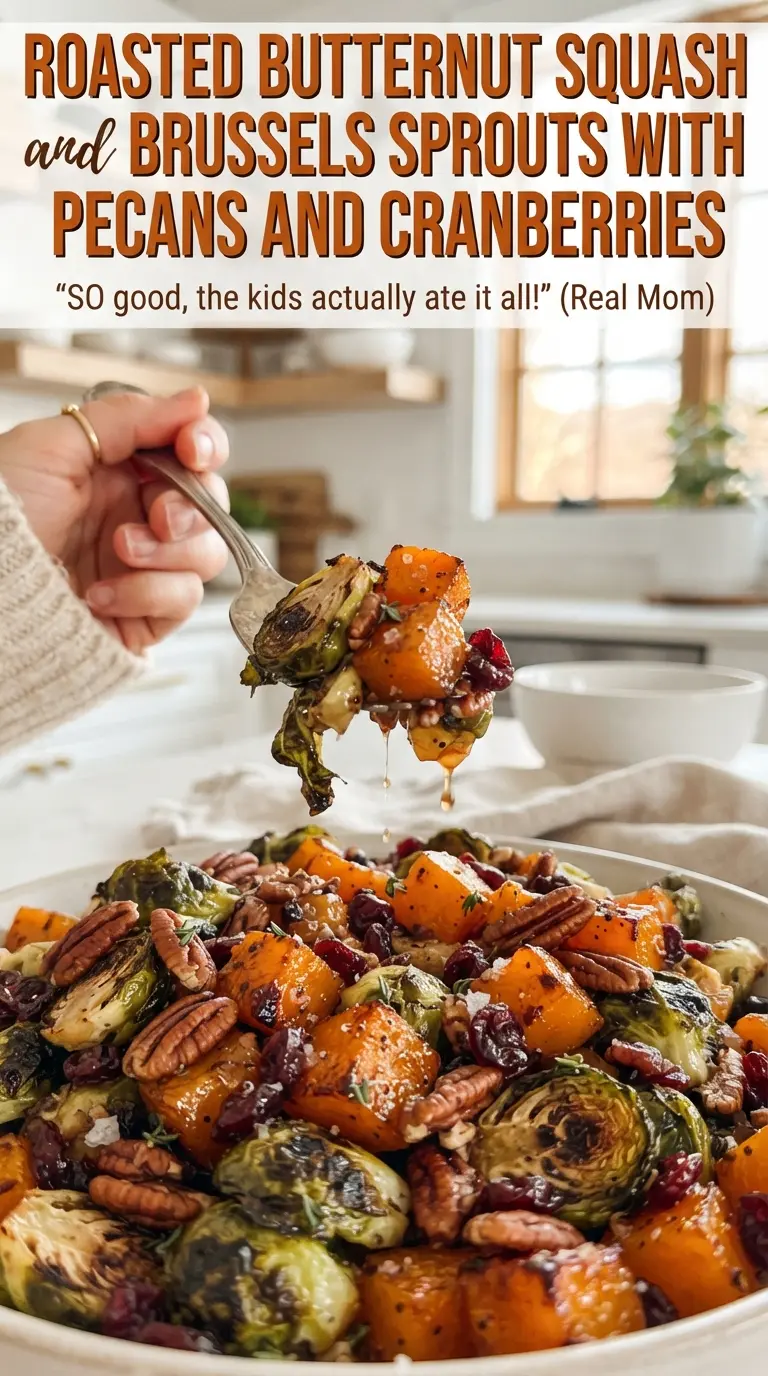
- Butternut squash — This brings the soft, sweet base of the dish. Fresh squash roasts up with better texture than pre-cut cubes, which can dry out at the edges or turn watery if they’ve been sitting in a package too long.
- Brussels sprouts — These give you the savory, slightly bitter balance that keeps the dish from tasting candy-sweet. Trim the stems and remove any loose outer leaves; those little leaves turn into the best crispy bits on the sheet pan.
- Maple syrup and balsamic vinegar — This is the finish that ties everything together. Maple gives round sweetness and balsamic adds sharpness, and the combination works because it’s added after roasting, when it can cling to the vegetables instead of burning.
- Pecans — Toasted pecans add fat and crunch, which the dish needs. Walnuts can step in here if that’s what you have, but pecans stay a little sweeter and pair better with the maple glaze.
- Dried cranberries — These bring little bursts of tartness and chew. Add them after roasting so they stay plump; if they go into the oven too early, they can toughen and lose that bright pop.
Building the Roast, Glaze, and Finish in the Right Order
Coating the Vegetables Evenly
Start with a large sheet pan and give the squash and Brussels sprouts enough room to sit in a single layer. Tossing them with olive oil, salt, and pepper before they hit the oven helps the surfaces brown instead of drying out. If the pan looks crowded, split the vegetables between two pans; that one move matters more than extra stirring later.
Roasting Until the Edges Caramelize
Roast at 425°F for 25 to 30 minutes, tossing halfway through so the cut sides get back against the hot pan. You’re looking for tender squash with browned corners and Brussels sprouts that are deep golden on the cut faces. If the vegetables look soft but pale, they need more time; if they’re browning too quickly, the pan is too close to the top heating element.
Adding the Maple Balsamic at the End
Whisk the maple syrup and balsamic vinegar while the vegetables finish roasting. Once the pan comes out, toss the vegetables with the glaze, cranberries, and pecans while everything is still hot enough to absorb the flavor. Adding the glaze earlier would make the sugars darken too fast and can leave the pecans bitter.
Make it Dairy-Free and Naturally Vegetarian
This recipe is already dairy-free and vegetarian, which makes it an easy side for mixed menus. The flavor still lands because the richness comes from olive oil and toasted nuts, not butter or cheese. If you want more contrast, finish with a pinch of flaky salt after tossing everything together.
Swap the Pecans for Another Nut
Walnuts or almonds work if pecans aren’t available. Walnuts bring a deeper, slightly bitter note, while sliced almonds add a lighter crunch. Toast them first if they aren’t already toasted; raw nuts won’t give you the same clean, nutty finish.
How to Make It More Savory
If you want this as a heartier side for roasted meat, cut the maple syrup back slightly and add an extra splash of balsamic. The result is less sweet and a little sharper, which helps the vegetables read more like a savory roast than a glazed salad.
Storage and Reheating
- Refrigerator: Store leftovers in an airtight container for up to 4 days. The sprouts soften a little, but the flavor stays good.
- Freezer: It freezes, but the texture changes enough that I don’t recommend it for the best result. The squash gets softer after thawing and the pecans lose their crunch.
- Reheating: Reheat on a sheet pan in a 400°F oven until warmed through. The microwave will make the vegetables soggy and flatten the nuts, so use the oven if you want any semblance of that roasted texture back.
Answers to the Questions Worth Asking
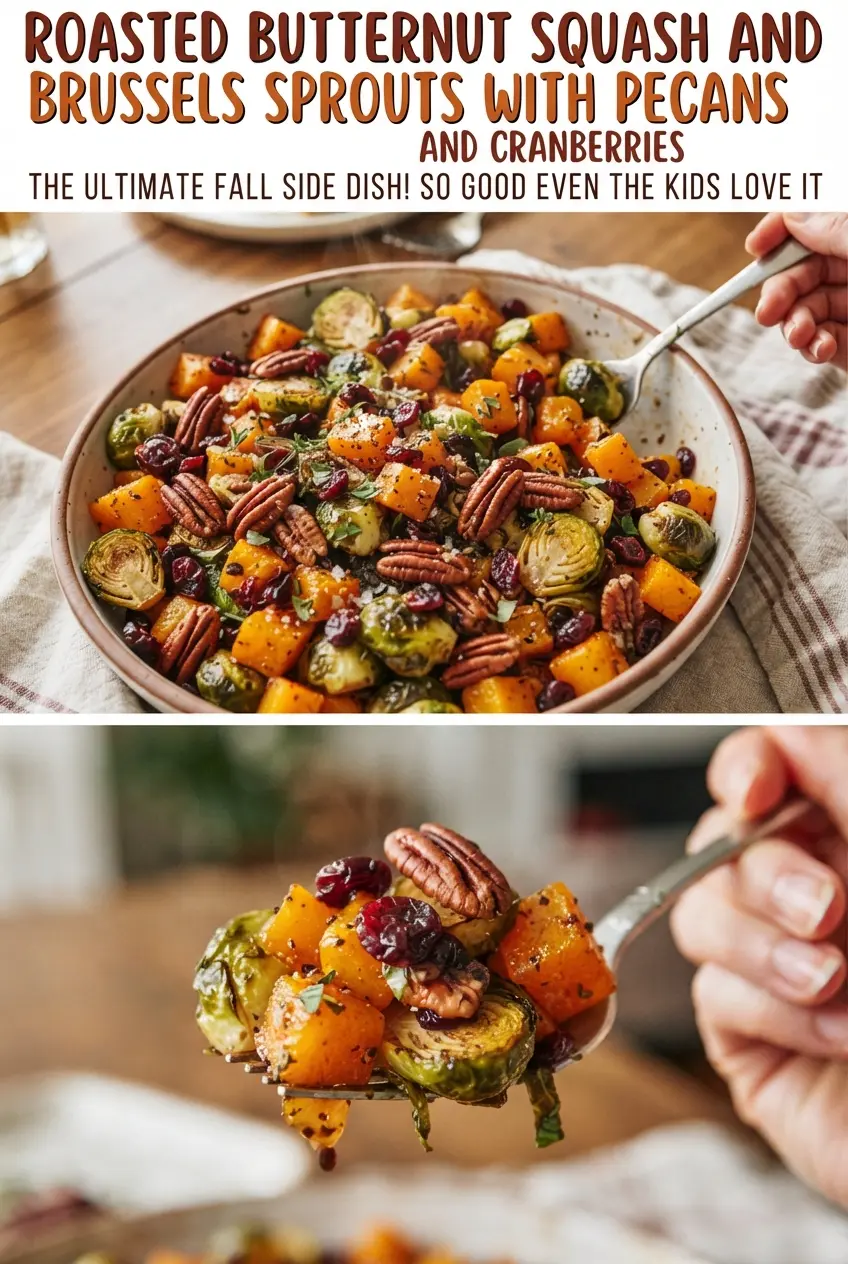
Roasted Butternut Squash and Brussels Sprouts with Pecans and Cranberries
Ingredients
Equipment
Method
- Preheat oven to 425F. Make sure the sheet pan can heat up as the oven comes to temperature.
- Toss butternut squash and Brussels sprouts with olive oil, salt, and black pepper on a large sheet pan. Spread into a single layer so the edges caramelize.
- Roast 25-30 minutes, tossing halfway, until tender and caramelized. Look for browned, caramelized spots on both the squash cubes and halved sprouts.
- Whisk maple syrup and balsamic vinegar together. Stir until fully combined and glossy.
- Toss the roasted vegetables with the maple balsamic, dried cranberries, and toasted pecans. Serve warm so the glaze coats everything evenly.


