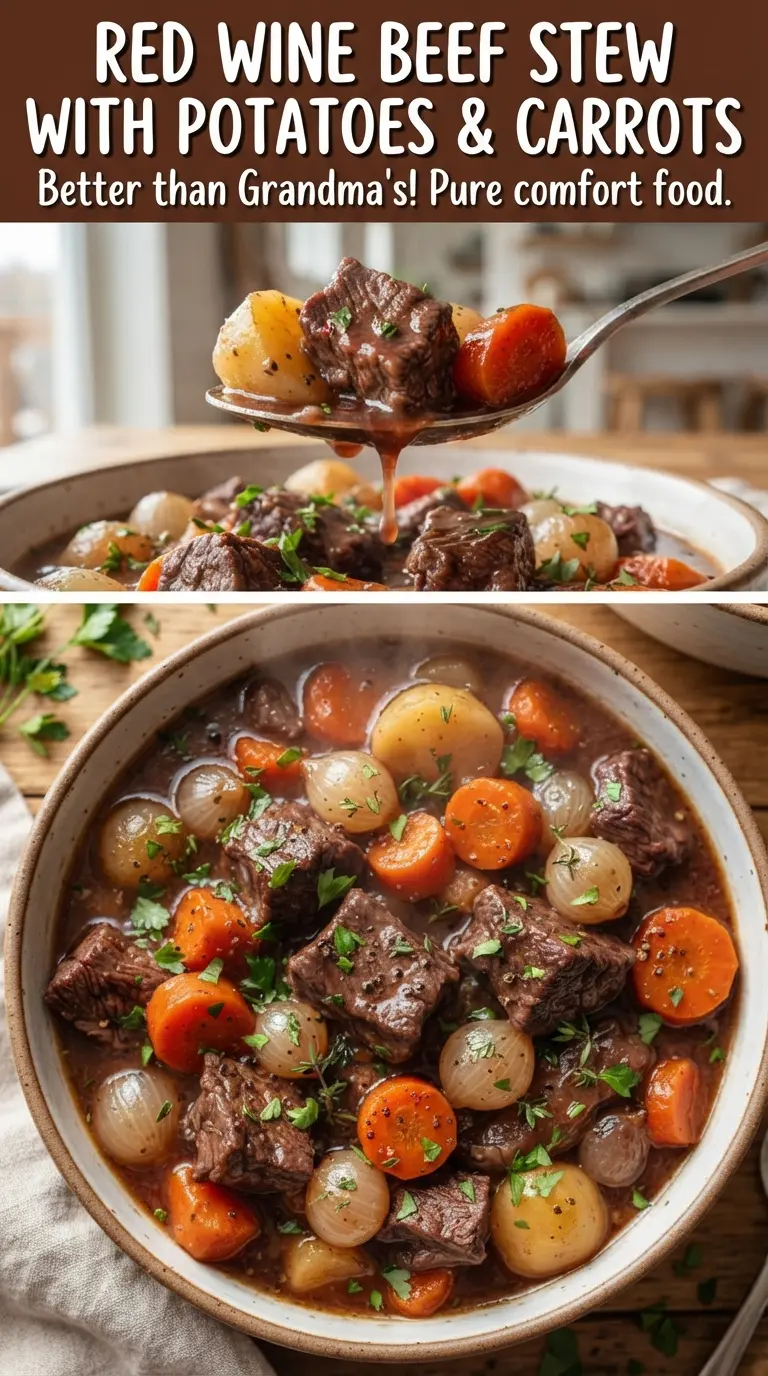
Deep burgundy sauce, tender beef that pulls apart with a spoon, and potatoes that soak up every bit of the braising liquid make this red wine beef stew the kind of dinner people remember. It lands somewhere between rustic and elegant: sturdy enough for a cold night, but polished enough to serve when you want something that feels special without extra work at the end.
The real key is building the base in layers. Browning the beef in batches gives you the dark fond that turns the broth rich, while the tomato paste and red wine add depth before the long braise mellows everything out. Yukon gold potatoes hold their shape without turning chalky, and the carrots soften just enough to sweeten the pot without disappearing.
Below, I’m walking through the part that matters most: how to keep the wine from tasting sharp, when to add the vegetables so they stay intact, and what to change if you want to make this ahead for an even better next-day stew.
The sauce turned glossy and rich, and the beef was fall-apart tender after the full braise. Adding the potatoes and carrots later kept them from turning mushy, which made the whole bowl taste homemade in the best way.
Save this red wine beef stew for the kind of dinner where you want silky broth, tender beef, and potatoes that hold their shape.
The Reason the Wine Needs Time Before the Broth Goes In
If the wine goes in and tastes harsh at the end, the stew usually needed a longer reduction before the liquid braise began. Wine brings acidity and tannin, and those need a few minutes over heat to mellow out and concentrate before the broth joins the pot. That quick simmer also loosens the browned bits stuck to the bottom, which is where a lot of the stew’s flavor lives.
The other detail that matters is the flour on the beef. It doesn’t just help thicken the stew later; it also gives the meat a light crust when it hits the oil, which means better browning and a deeper pan base. If the beef steams instead of sears, work in smaller batches and give each piece enough space to darken before turning it.
What Each Ingredient Is Doing in the Pot
- Beef chuck — This cut has enough connective tissue to turn silky after a long braise. Leaner stew meat will taste dry before the potatoes are done, so chuck is worth buying here.
- Dry red wine — Use something you’d actually drink. It doesn’t need to be expensive, but it should be dry and full-bodied; sweet wine makes the broth taste flat.
- Tomato paste — It deepens the color and adds concentrated savoriness. Let it cook for a full minute with the onions and garlic so it loses that raw edge.
- Yukon gold potatoes — They stay creamy without falling apart. Russets can work in a pinch, but they break down more and thicken the stew in a softer, less defined way.
- Carrots — These bring sweetness and balance to the wine and balsamic. Cut them on the thicker side so they don’t go mushy during the last hour of braising.
- Balsamic vinegar — A small amount sharpens the finished broth and rounds out the wine. Don’t skip it; the stew tastes flatter without that final lift.
Building the Braise So the Beef Stays Tender
Browning in Batches
Preheat the oven first, then brown the floured beef in hot olive oil in small batches. You want a dark crust on the outside and no gray, crowded pieces in the pot. If the pan gets wet and the beef starts to steam, remove a batch and let the heat recover before adding more. That crust is what gives the stew its depth.
Softening the Onion Base
Cook the onion until it turns translucent and picks up a little color at the edges, then add the garlic and tomato paste for just a minute. The paste should darken slightly and smell sweeter, not raw or sharp. If it sticks, lower the heat; burned tomato paste makes the whole pot bitter.
Reducing the Wine Before the Oven
Pour in the red wine and scrape the bottom until the browned bits release. Simmer it for about 5 minutes, or until the liquid looks a little more syrupy and less aggressive on the nose. This is where the stew starts to taste integrated instead of separate. If you rush this part, the wine can stay thin and sharp all the way through braising.
Finishing the Braise With the Vegetables
Add the broth, balsamic, thyme, bay leaves, and beef, then cover and braise until the meat is almost tender before adding the potatoes and carrots. That delay matters. If the vegetables go in from the start, the potatoes break down and the carrots lose their shape long before the beef is ready. After the final hour, the meat should yield easily, the potatoes should be creamy at the center, and the broth should coat a spoon.
How to Make This Stew Fit Your Kitchen
For a gluten-free version
Swap the all-purpose flour for a gluten-free flour blend or skip the dusting and thicken the stew at the end by simmering uncovered for a few extra minutes. You’ll lose a little of the beef’s crust, but the stew will still braise beautifully.
If you want a richer, deeper sauce
Use a wine with more body, like cabernet sauvignon or merlot, and let the wine reduce fully before adding broth. That gives the finished stew a darker, more concentrated flavor and a little extra gloss.
For a vegetable-forward pot
Add an extra carrot or a handful of mushrooms with the potatoes if you want more body without changing the structure of the dish. Mushrooms add savory depth, but cook them first so they don’t water down the braise.
Storage and Reheating
- Refrigerator: Store for up to 4 days. The flavor gets deeper overnight, and the broth thickens as it chills.
- Freezer: Freezes well for up to 3 months. Cool it completely first, then portion it into airtight containers; the potatoes may soften a little after thawing, but the stew still reheats well.
- Reheating: Warm gently on the stove over low heat with a splash of broth or water if needed. A hard boil will tighten the beef and can break down the potatoes faster than you want.
Answers to the Questions Worth Asking
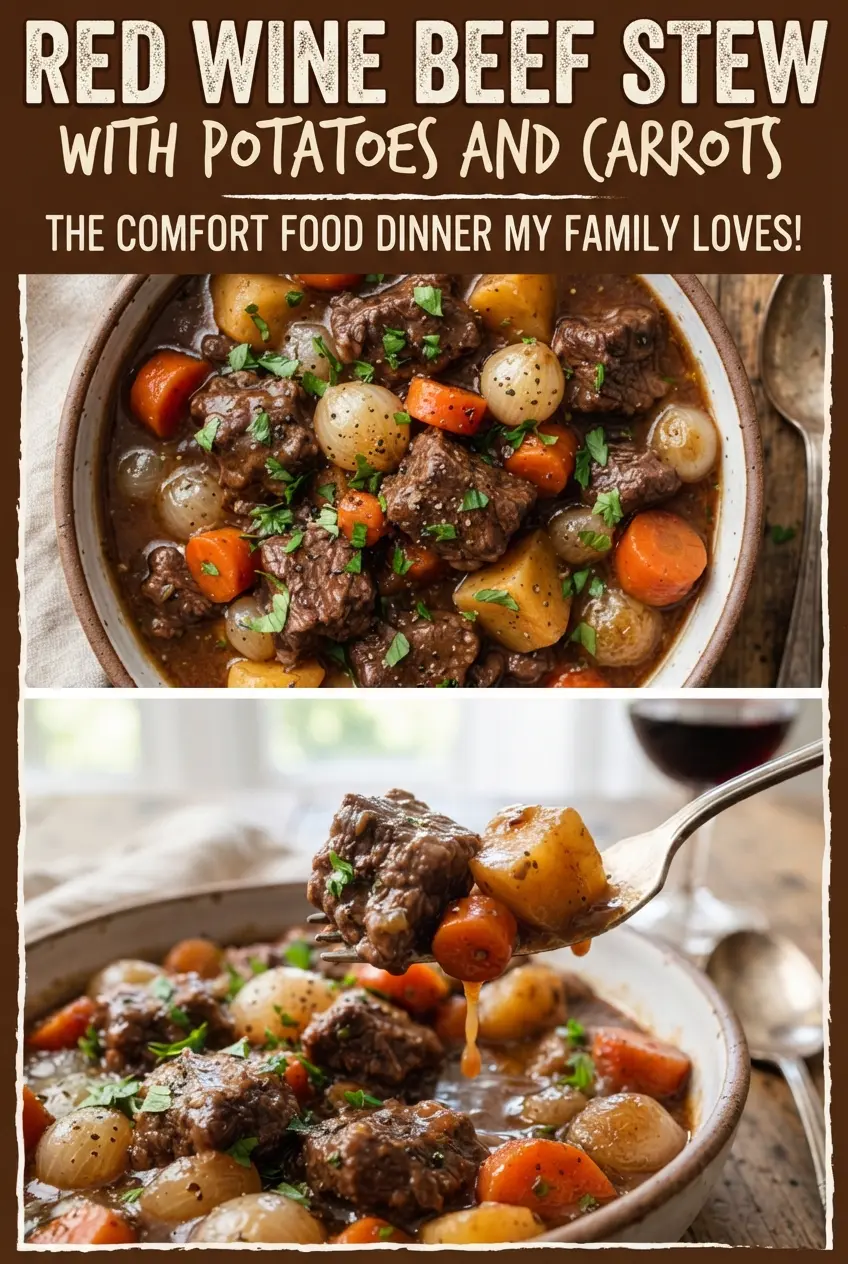
Red Wine Beef Stew with Potatoes and Carrots
Ingredients
Equipment
Method
- Preheat the oven to 325F. Season the beef with salt and black pepper, toss with flour, and brown in batches in a Dutch oven until well-browned, with a dark crust forming on the meat.
- Cook the onion for 5 minutes in the Dutch oven. Stir until softened and slightly translucent, then add the garlic and tomato paste and cook 1 minute, until fragrant.
- Pour in the red wine and simmer for 5 minutes, scraping the bottom. Keep it at a steady simmer until the wine reduces by a third and the fond loosens into the sauce.
- Add the beef broth, balsamic vinegar, thyme, bay leaves, and browned beef to the Dutch oven. Cover and braise in the oven for 2 hours at 325F, until the beef is very tender.
- Add the potatoes and carrots to the Dutch oven. Braise covered for 1 hour more at 325F, until the potatoes and carrots are tender when pierced.
- Remove and discard the thyme sprigs and bay leaves. Stir in the chopped parsley and serve, with a glossy burgundy sauce coating the beef and vegetables.


