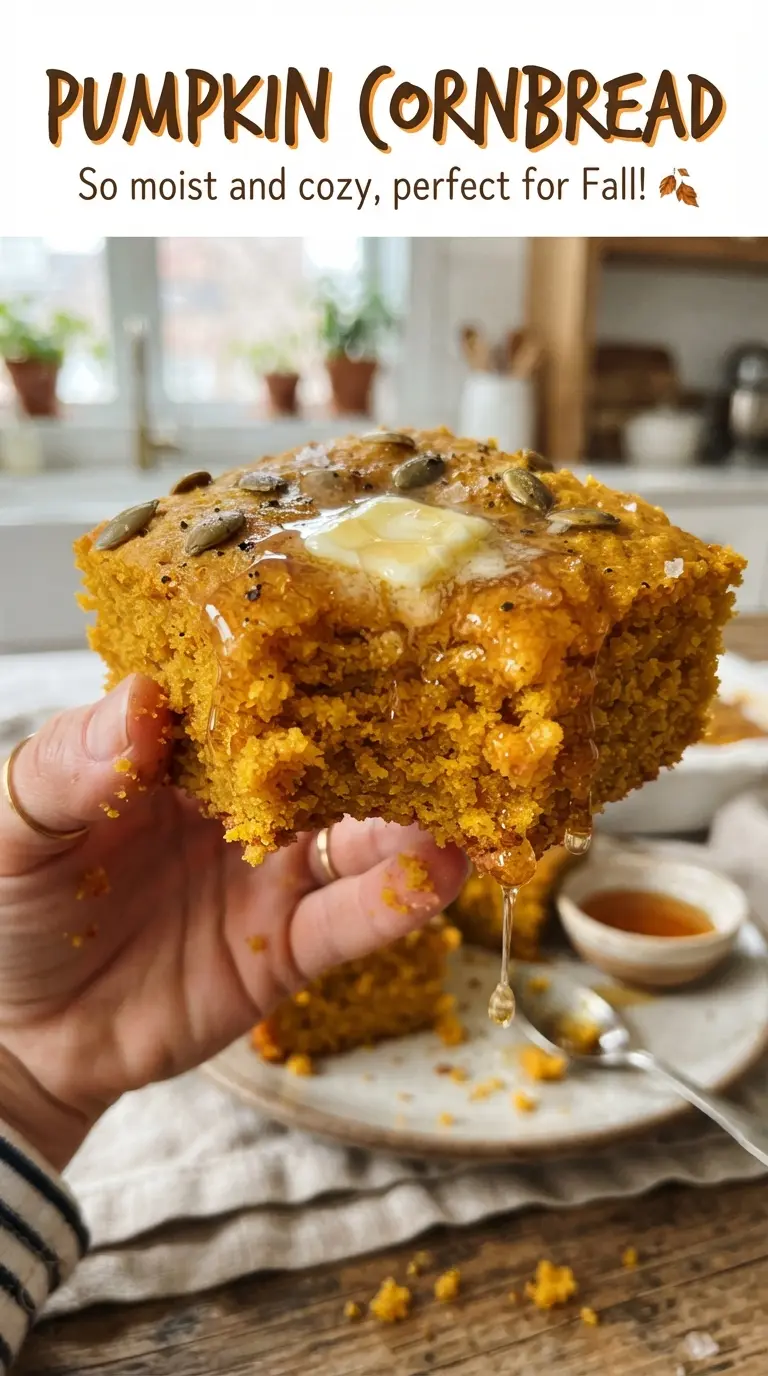
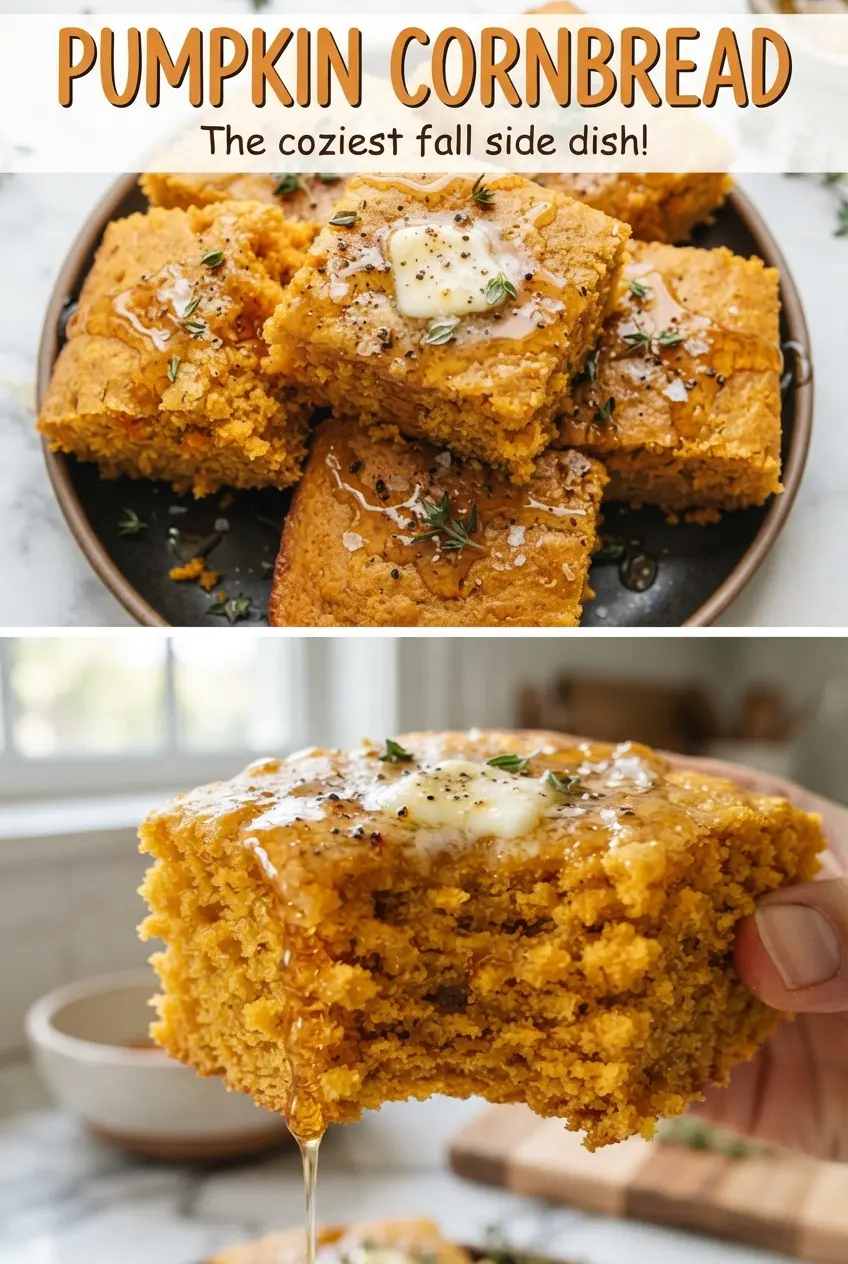
Golden pumpkin cornbread lands with the best kind of contrast: a tender, almost custardy crumb inside and crisp edges where the batter meets a hot pan. The pumpkin doesn’t turn it cakey or heavy here. It gives the bread a deeper color, a little natural sweetness, and enough moisture to keep every square soft for days.
Brown sugar and maple syrup lean the flavor toward warm and rounded instead of plain cornbread sharp, while pumpkin pie spice gives it that familiar bakery smell the moment it starts to bake. Buttermilk matters too. It keeps the crumb light and adds a quiet tang that stops the pumpkin from tasting flat. I like this in a cast iron skillet when I want extra edge, but an 8×8 pan works just as well.
Below, I’ve included the part that matters most for a good texture: how to keep the batter from getting tough, plus a few swaps if you need to work with what’s in the pantry.
The crumb stayed incredibly tender and the maple butter on top melted into the warm squares just like the picture. Mine baked in 24 minutes in a cast iron skillet and the edges came out crisp without drying out the center.
Like this pumpkin cornbread? Save it to Pinterest for a golden, tender side with crisp edges and warm maple flavor.
The Reason Pumpkin Cornbread Stays Tender Instead of Dense
The most common mistake with pumpkin cornbread is treating it like a quick bread batter that needs a lot of stirring. It doesn’t. Once the wet and dry ingredients meet, gluten starts building fast in the flour, and that’s how you end up with a tight, rubbery crumb instead of something soft and spoon-tender. Stir only until the last streaks of flour disappear.
Hot oven heat helps the edges set before the center overworks or dries out. That’s why this bakes at 400°F. The higher temperature gives you better rise from the baking powder and a browned top without needing a long bake that steals moisture from the pumpkin.
- Yellow cornmeal — This gives the bread its grit and cornbread character. Fine cornmeal makes a softer crumb, while stone-ground cornmeal adds more texture.
- Pumpkin puree — Use pure pumpkin puree, not pumpkin pie filling. Pie filling already contains sugar and spices, which throws off both flavor and structure.
- Buttermilk — The acidity reacts with the baking powder and keeps the crumb lighter. If you don’t have it, mix 3/4 cup milk with 2 teaspoons lemon juice or vinegar and let it sit 5 minutes.
- Butter and maple syrup — Melted butter adds richness without needing creaming, and maple syrup rounds out the brown sugar with a softer sweetness.
What Each Ingredient Is Doing in the Batter
- Cornmeal — This is the backbone of the texture. It keeps the bread from becoming a plain pumpkin snack cake.
- Flour — Just enough to hold everything together. Too much flour makes the crumb dry and stiff, so measure carefully.
- Brown sugar — Adds molasses depth and helps the top brown. You can reduce it slightly, but don’t cut it out completely or the bread tastes flat.
- Pumpkin pie spice — This gives the bread its warm spice note without requiring a whole spice cabinet. If you’re out, use 1/2 teaspoon cinnamon plus 1/4 teaspoon each ginger and nutmeg.
- Eggs — They bind the batter and add lift. Two eggs are enough to keep the loaf cohesive without making it cakey.
How to Mix, Bake, and Stop the Crumb from Turning Tough
Building the Dry Base
Whisk the cornmeal, flour, brown sugar, baking powder, salt, and pumpkin pie spice until the mixture looks even and the brown sugar has broken up. That step matters because baking powder clumps can leave bitter pockets, and spice in one spot can taste harsh instead of balanced. If you’re using coarse cornmeal, a thorough whisk also helps distribute it so the texture bakes evenly.
Bringing the Wet Ingredients Together
In a separate bowl, whisk the pumpkin puree, eggs, buttermilk, melted butter, and maple syrup until smooth and glossy. The melted butter should be warm, not hot, or it can scramble the eggs. A smooth wet mixture helps the batter come together quickly, which keeps you from overmixing at the next stage.
The Short Stir That Protects the Texture
Pour the wet mixture into the dry ingredients and stir just until combined. A few small flour streaks disappearing late is fine; a smooth, fully beaten batter is not what you want here. The batter should be thick but spreadable. If you keep stirring after it’s mixed, the cornbread bakes up dense and bouncy instead of tender.
Baking to the Right Finish
Spread the batter into the prepared pan and bake until the top is golden and a toothpick comes out clean, usually 22 to 25 minutes. In a cast iron skillet, the edges may brown a little faster than in an 8×8 pan, which is exactly what you want. Pull it when the center is set and the top springs back lightly under your finger. Let it sit a few minutes before cutting so the crumb can settle.
How to Adapt This Pumpkin Cornbread for Different Kitchens and Diets
Cast Iron Skillet Version
Use a well-greased 10-inch cast iron skillet for the darkest edges and the most crackly crust. The center stays soft, but the outer squares get extra color and a little more structure. Watch the bake time closely, since cast iron can brown the bottom faster than a glass or metal pan.
Dairy-Free Swaps
Replace the buttermilk with an unsweetened plant milk plus 2 teaspoons lemon juice or vinegar, and use melted coconut oil or a neutral oil instead of butter. You’ll lose a little of the buttery finish, but the crumb still bakes up moist and the pumpkin flavor stays front and center.
Less Sweet, More Savory
Cut the brown sugar down to 2 tablespoons and skip the maple syrup if you want a cornbread that leans more toward dinner than breakfast. The pumpkin still gives it color and tenderness, but the flavor becomes more restrained, which works well with chili or roasted vegetables.
Gluten-Free Version
Swap the all-purpose flour for a 1:1 gluten-free baking blend that includes xanthan gum. The texture will be slightly more delicate, but it still slices well if you let it cool before cutting. Don’t use almond flour on its own; it won’t hold the same structure.
Storage and Reheating
- Refrigerator: Store in an airtight container for up to 4 days. The crumb stays moist, though the edges soften after the first day.
- Freezer: Freeze slices tightly wrapped for up to 2 months. Thaw at room temperature or overnight in the fridge.
- Reheating: Warm slices in a 300°F oven for 8 to 10 minutes or toast them lightly. The common mistake is microwaving too long, which makes the cornbread rubbery instead of soft.
Answers to the Questions Worth Asking
Pumpkin Cornbread
Ingredients
Equipment
Method
- Preheat the oven to 400F and grease an 8x8-inch pan or a 10-inch cast iron skillet so the cornbread releases cleanly.
- Whisk the yellow cornmeal, all-purpose flour, brown sugar, baking powder, salt, and pumpkin pie spice until evenly combined and no dry streaks remain.
- Whisk the pumpkin puree, large eggs, buttermilk, melted butter, and maple syrup until smooth and well blended.
- Stir the wet ingredients into the dry just until combined, stopping when the batter looks thick with no visible dry flour.
- Spread the batter into the prepared pan and bake for 22-25 minutes at 400F, until golden and a toothpick comes out clean with minimal crumbs.
- Serve warm with butter for the best moisture and flavor.


