Moist pumpkin bread with a crackly sugar top earns its place in the rotation because it slices cleanly, stays tender for days, and fills the kitchen with the kind of cinnamon-spiced smell that makes people hover by the counter. The crumb lands somewhere between soft quick bread and a bakery-style loaf: plush, dense enough to hold together, but never heavy.
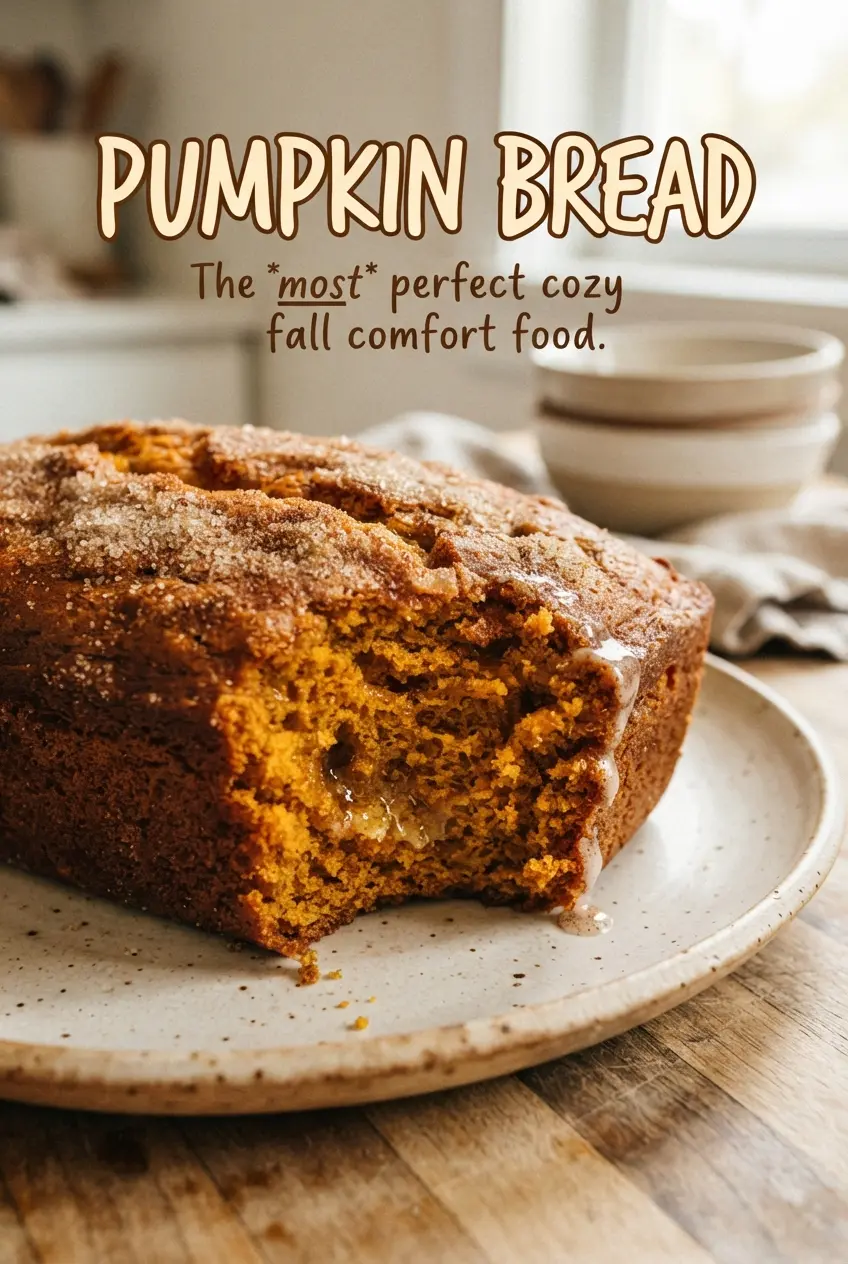
The trick is in the balance. Pumpkin puree brings moisture and body, while oil keeps the loaf soft even after it cools. Brown sugar deepens the flavor and adds a little chew, and the tablespoon of sugar on top bakes into a thin, crisp lid that gives each slice a nice little crackle against the soft crumb.
Below, you’ll find the small details that matter most here: how to keep the loaf from turning gummy, why the batter should stay slightly streaky-free but not overmixed, and a few easy swaps if you need to adjust what’s in your pantry.
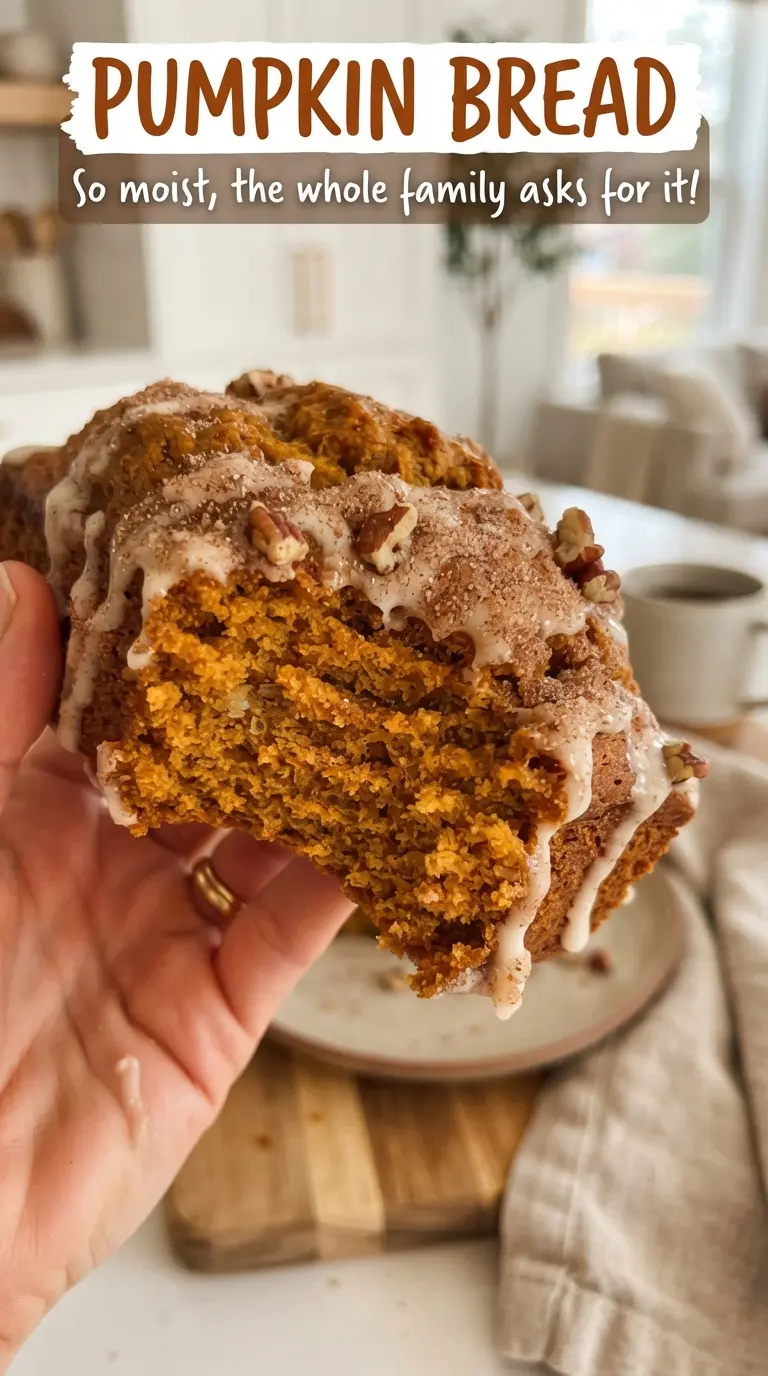
The loaf came out incredibly moist, and the sugar on top baked into that perfect little crackly crust. I sliced it while it was still just warm and it held together beautifully without getting gummy.
Love a loaf with a crackly sugar top and a soft, moist pumpkin crumb? Save this Pumpkin Bread for your next baking day.
The Reason This Loaf Stays Moist Without Turning Dense
Pumpkin bread goes wrong when it’s treated like a cake batter and beaten smooth. The flour needs only the briefest fold once it hits the wet ingredients. If you keep mixing after the flour disappears, the loaf tightens up and bakes with a gummy center instead of a tender crumb.
The other common mistake is baking until the center looks fully set in the pan. Quick breads keep cooking from carryover heat, so pull this one when a toothpick comes out clean or with a few moist crumbs, not wet batter. The top should be domed and crackly, and the loaf should spring back lightly when pressed.
What Each Ingredient Is Doing in This Pumpkin Bread
- Pumpkin puree — This is the backbone of the loaf, bringing moisture, color, and that earthy pumpkin flavor. Use canned puree, not pumpkin pie filling; pie filling is already sweetened and spiced, which throws off the balance.
- Vegetable oil — Oil keeps the crumb soft for days. Butter gives more flavor, but it can make the loaf feel drier once cooled, so this is one place where oil wins.
- Brown sugar and granulated sugar — Brown sugar adds a deeper molasses note and helps the loaf stay moist, while granulated sugar keeps the sweetness clean. The tablespoon on top is there for texture, not just decoration.
- Pumpkin pie spice and cinnamon — These seasonings should be warm, not loud. If your pumpkin pie spice is old and faded, the loaf tastes flat, so use fresh spice if you can.
- Milk — Just enough to loosen the batter so it bakes up evenly. Any milk works here, including dairy-free milk, as long as it’s unsweetened.
Building the Batter So the Loaf Bakes Up Tender, Not Gummy
Mix the dry ingredients first
Whisk the flour, baking soda, salt, pumpkin pie spice, and cinnamon until the color looks even and there are no clumps of spice hiding in the bowl. That step matters because baking soda needs to be spread evenly or you’ll get uneven rise and a slightly soapy bite in one corner of the loaf.
Whisk the wet ingredients until smooth
The pumpkin, oil, eggs, sugars, milk, and vanilla should look glossy and fully blended before the flour goes in. You’re not looking for a whipped batter here, just a uniform mixture with the sugar mostly dissolved so the finished bread doesn’t bake up gritty.
Fold just until the flour disappears
Add the dry ingredients to the wet and stir only until no dry streaks remain. A few small lumps are fine. If you keep going past that point, gluten develops and the bread turns tight instead of soft. Pour it into the pan right away so the baking soda starts working in the oven, not on the counter.
Watch the center, not the clock
Bake until the top is deeply golden, the loaf is domed, and a toothpick comes out clean from the center. Ovens vary, so start checking near the 55-minute mark. If the top browns too quickly before the middle is done, lay a loose piece of foil over it for the rest of the bake.
Let it cool before slicing
The loaf needs time to set as it cools. Leave it in the pan for 15 minutes, then move it to a rack. If you cut too soon, the crumb can collapse and look underbaked even when it’s finished.
How to Adapt This Loaf When You Need a Different Finish
Dairy-Free Pumpkin Bread
Swap the milk for an unsweetened non-dairy milk like almond, oat, or soy. The loaf bakes up the same because the milk here is just loosening the batter, not adding richness.
A Little More Spice, a Little Less Sweet
If you like a sharper spice profile, add an extra 1/2 teaspoon cinnamon or a pinch of ground ginger. You can also reduce the granulated sugar by 2 tablespoons without affecting the structure, though the sugar top will be a little less crackly.
Muffin-Style Bake
Divide the batter among lined muffin cups and bake until the centers spring back and a tester comes out clean, usually much faster than the loaf. The edges set sooner, so the texture turns a touch lighter and the sugar top becomes more delicate.
Storage and Reheating
- Refrigerator: Store tightly wrapped at room temperature for up to 3 days, or refrigerate for up to 5 days if your kitchen runs warm. The crumb stays moist, but the sugar top softens a bit in the fridge.
- Freezer: This loaf freezes well. Wrap slices or the whole cooled loaf tightly, then freeze for up to 3 months. Thaw at room temperature while still wrapped so the bread doesn’t dry out.
- Reheating: Warm slices in a toaster oven or microwave just until heated through. Don’t overheat them or the crumb turns tough and loses that soft, fresh-baked texture.
Answers to the Questions Worth Asking
Pumpkin Bread
Ingredients
Equipment
Method
- Preheat oven to 350F. Grease and line a 9x5-inch loaf pan.
- Whisk together all-purpose flour, baking soda, salt, pumpkin pie spice, and ground cinnamon until evenly combined. The mixture should look uniformly speckled with spices.
- Whisk pumpkin puree, vegetable oil, eggs, brown sugar, granulated sugar, milk, and vanilla extract until smooth. Pause and scrape the bowl so no egg streaks remain.
- Fold the dry ingredients into the wet just until no flour streaks remain. Stop mixing as soon as the batter looks cohesive.
- Pour the batter into the loaf pan and sprinkle the remaining 1 tablespoon granulated sugar over the top. Look for an even dusting across the surface.
- Bake for 55-65 minutes at 350F until a toothpick comes out clean. The top should be domed and crackly, with no wet batter on the skewer.
- Cool for 15 minutes in the pan. The loaf should feel set enough to hold its shape.
- Transfer to a rack to cool before slicing. Wait until the loaf is warm, not hot, for clean slices.


