Warm, tender Pennsylvania Dutch apple dumplings give you the best parts of apple pie without the fuss of rolling a full crust. The pastry bakes up pale at first, then turns deeply golden where it meets the hot syrup, while the apples inside soften into spoonable layers of cinnamon and brown sugar. What comes out of the oven is half dumpling, half sauce, all comfort.
The trick is keeping the dough cold enough to stay flaky while still rolling it thin enough to wrap cleanly around each apple. The syrup does more than sweeten the pan; it steams the fruit from the outside in and keeps the bottoms from drying out. Small apples matter here because they cook through at the same pace as the pastry browns, which keeps the whole dessert in balance.
Below you’ll find the few details that make these dumplings work the way they should, plus the little things that help prevent leaking, tearing, or a thick syrup that turns grainy. If you’ve ever had apple dumplings that came out heavy or soggy, this version will show you exactly where things usually go off track.
The pastry stayed crisp on the outside and the apples turned perfectly tender in the syrup. I loved how the cinnamon sugar melted into the sauce instead of staying grainy.
Save these Pennsylvania Dutch apple dumplings for the days when you want whole baked apples, flaky pastry, and cinnamon syrup in one pan.
The Reason the Pastry Stays Tender Instead of Tough
The difference between a good apple dumpling and a heavy one starts with the dough. Shortening gives the pastry a little more tenderness and a slightly softer bite, while butter brings more flavor and a firmer, richer crust. Either works, but both need to stay cold so the dough doesn’t turn elastic when you roll it. Once the water goes in, stop as soon as the dough holds together. If you keep working it, the crust bakes up tighter and loses that delicate edge people want in this dessert.
The other place these go wrong is the seam. If the dough is rolled too thin, it tears when you lift it. Too thick, and the pastry can stay doughy where it folds underneath the apple. Aim for a circle that wraps with a little overlap, then pinch the top firmly so the syrup can’t sneak inside and wash away the structure before the crust sets.
What the Apples and Syrup Are Each Doing Here
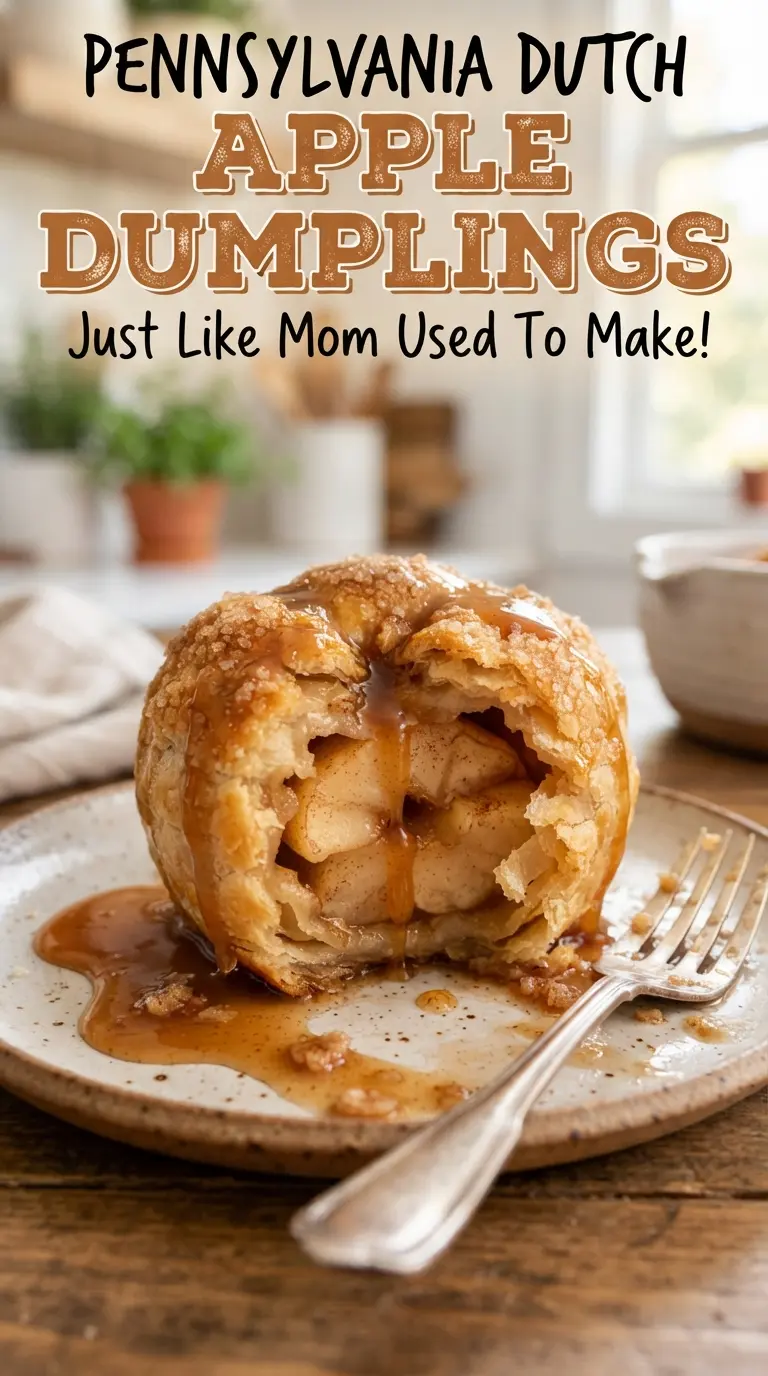
- Small apples — Smaller apples cook through at the same pace the pastry browns. Use firm baking apples that hold their shape; soft apples collapse before the dumplings are done.
- Brown sugar in the filling — This melts into the apple core and gives you a caramel note in the center of each dumpling. Granulated sugar won’t give the same depth, and the filling will taste flatter.
- Cinnamon — You need it in both the filling and the syrup so the spice reads all the way through the dessert instead of sitting only in the middle.
- The syrup — This is what keeps the baking dish from drying out and turns the bottom edges of the pastry glossy and tender. Boil it before pouring so the sugars dissolve completely; if you skip that, the syrup can bake up grainy around the dumplings.
Building the Dumplings So the Apples Bake Cleanly Through
Mixing the Dough
Stir the flour and salt together first, then cut in the shortening or butter until you have a crumbly mix with pea-sized bits. Those little fat pockets are what turn into tenderness later, so don’t grind the mixture into a paste. Add the ice water a spoonful at a time and stop when the dough just comes together. If it feels sticky, it needs a minute in the fridge, not more flour.
Wrapping the Apples
Roll each portion into a circle that gives you enough room to bring the dough up and over the apple without stretching it thin. Set the apple in the center, spoon the brown sugar and cinnamon into the core, and tuck the butter piece in last so it melts down through the filling. Pull the pastry up around the apple and pinch the top seam shut. Any open gap will let syrup flood in and can make the crust split before the apple softens.
Boiling the Syrup and Baking
Bring the syrup ingredients to a true boil so the sugars dissolve and the butter emulsifies. Pour it around the dumplings, not over the tops, so the pastry can brown instead of turning soggy. Bake until the crust is deeply golden and the apples yield when pierced through the side with a paring knife. If the tops are browning too fast before the apples are done, tent the dish loosely with foil for the last stretch.
How to Adapt These Dumplings Without Losing What Makes Them Work
All-Butter Pastry
Use cold butter in place of shortening if you want a more pronounced buttery flavor and a slightly flakier, more structured crust. The dough may be a little less forgiving, so chill it if it starts to soften while you’re shaping the apples.
Dairy-Free Version
Swap the butter for a plant-based baking stick and use shortening in the pastry if you need to keep the recipe dairy-free. The flavor will be a little cleaner and less rich, but the texture stays close as long as the fat stays cold.
Changing the Fruit
Pears can stand in for apples if they’re firm, but they soften faster and need careful timing so they don’t collapse. The result is sweeter and a little softer, with less of the classic tart-apple contrast.
Storage and Reheating
- Refrigerator: Store covered for up to 4 days. The pastry softens as it sits, but the flavor deepens overnight.
- Freezer: Freeze baked dumplings individually after cooling, then wrap tightly. They hold up for about 2 months, though the crust will be less crisp after thawing.
- Reheating: Reheat in a 325F oven until warmed through, about 15 to 20 minutes. The microwave softens the pastry fast and makes the crust rubbery, so use the oven if you want the edges to wake back up.
Answers to the Questions Worth Asking
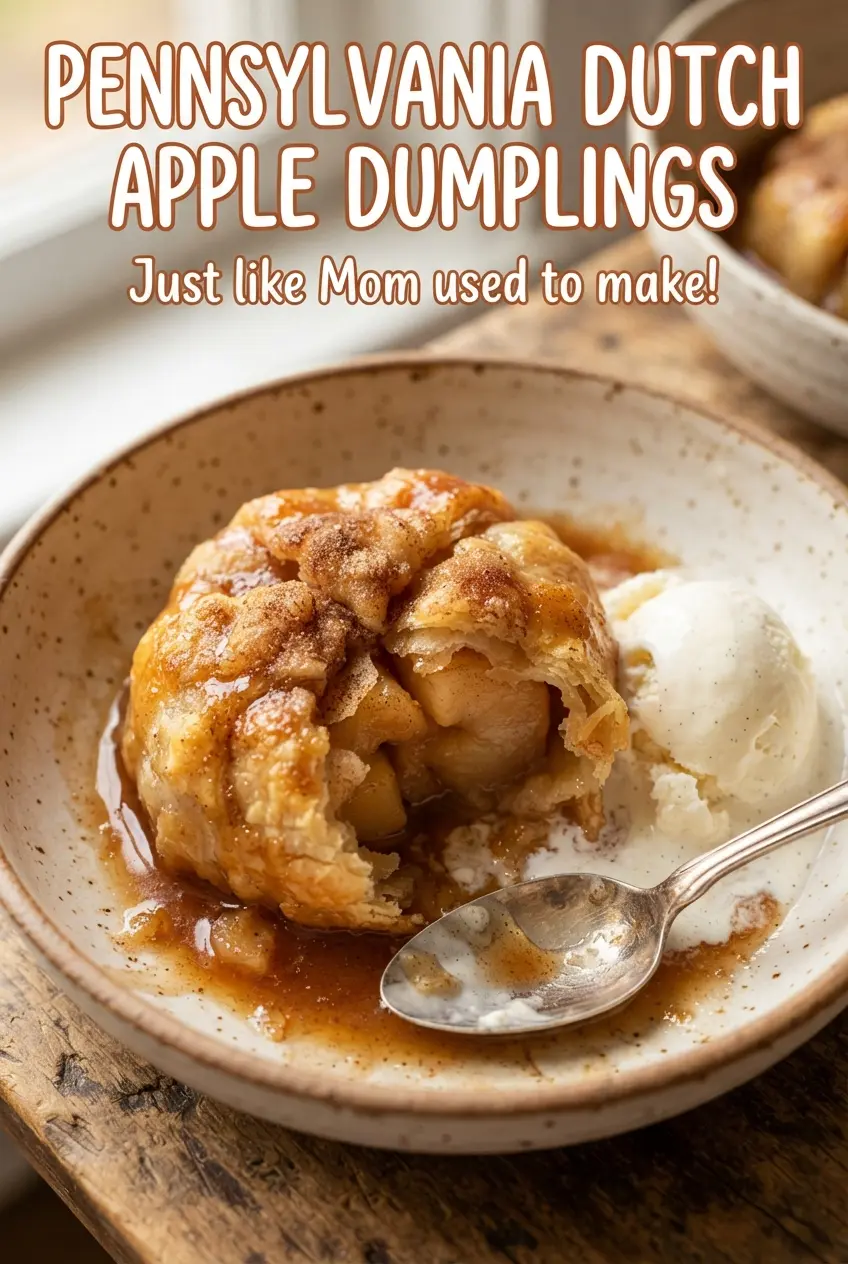
Pennsylvania Dutch Apple Dumplings
Ingredients
Equipment
Method
- Preheat the oven to 375F and grease a 9x13 baking dish, then set it aside for assembly.
- In a mixing bowl, combine all-purpose flour and salt, then cut in cold shortening or butter until the mixture looks crumbly and sandy.
- Add ice water 1 tablespoon at a time until the dough comes together, then divide it into 6 portions.
- Roll each portion into a circle large enough to wrap one apple.
- Place an apple on each pastry circle.
- Fill the core cavity of each apple with 1 tablespoon brown sugar, 1/2 teaspoon cinnamon, and a pat of butter.
- Wrap the pastry around each apple, pinching the edges to seal, then place each dumpling seam-side down in the prepared dish.
- In a saucepan, combine water, granulated sugar, brown sugar, unsalted butter, and cinnamon, then bring to a boil.
- Pour the hot syrup around the dumplings, avoiding drenching the tops as much as possible.
- Bake for 40-45 minutes at 375F until the pastry is golden and the apples are tender.


