Parmesan herb roasted acorn squash comes out with caramelized edges, tender centers, and a salty, crisp crust that clings to every curve of the squash ring. The shape does half the work for you: those scalloped slices roast evenly, catch the cheese in all the right spots, and turn into a side dish that looks like you spent far more time on it than you did.
The trick is roasting the squash first so it softens and picks up color before the Parmesan goes on. If the cheese hits the pan too early, it can scorch before the squash is tender. A light hand with the oil helps the herbs stick, and grating the Parmesan finely gives you that lacy, golden finish instead of thick melted clumps.
Below, I’ve included the small details that keep the squash from steaming and the cheese from sliding off. Once you’ve made it once, it’s the kind of side you’ll remember without needing to check the recipe again.
The squash stayed tender in the middle and the Parmesan crisped up instead of turning greasy. I made it with roast chicken and there wasn’t a single slice left.
Save this Parmesan Herb Roasted Acorn Squash for a crisp, savory side with caramelized edges and a golden Parmesan crust.
The Reason the Cheese Goes on After the First Roast
Acorn squash has enough moisture to soften into something silky, but that same moisture can work against you if the Parmesan is added too early. Cheese needs direct heat and a drier surface to crisp. Put it on at the halfway point and you get a browned, brittle crust instead of a puddle of oily cheese that clings to the pan.
Spacing matters here too. If the squash rings are crowded, they steam and the edges stay pale. A single layer gives you the caramelization that makes this side dish taste roasted instead of boiled and makes the Parmesan stick where it should.
What Each Ingredient Is Doing in the Pan
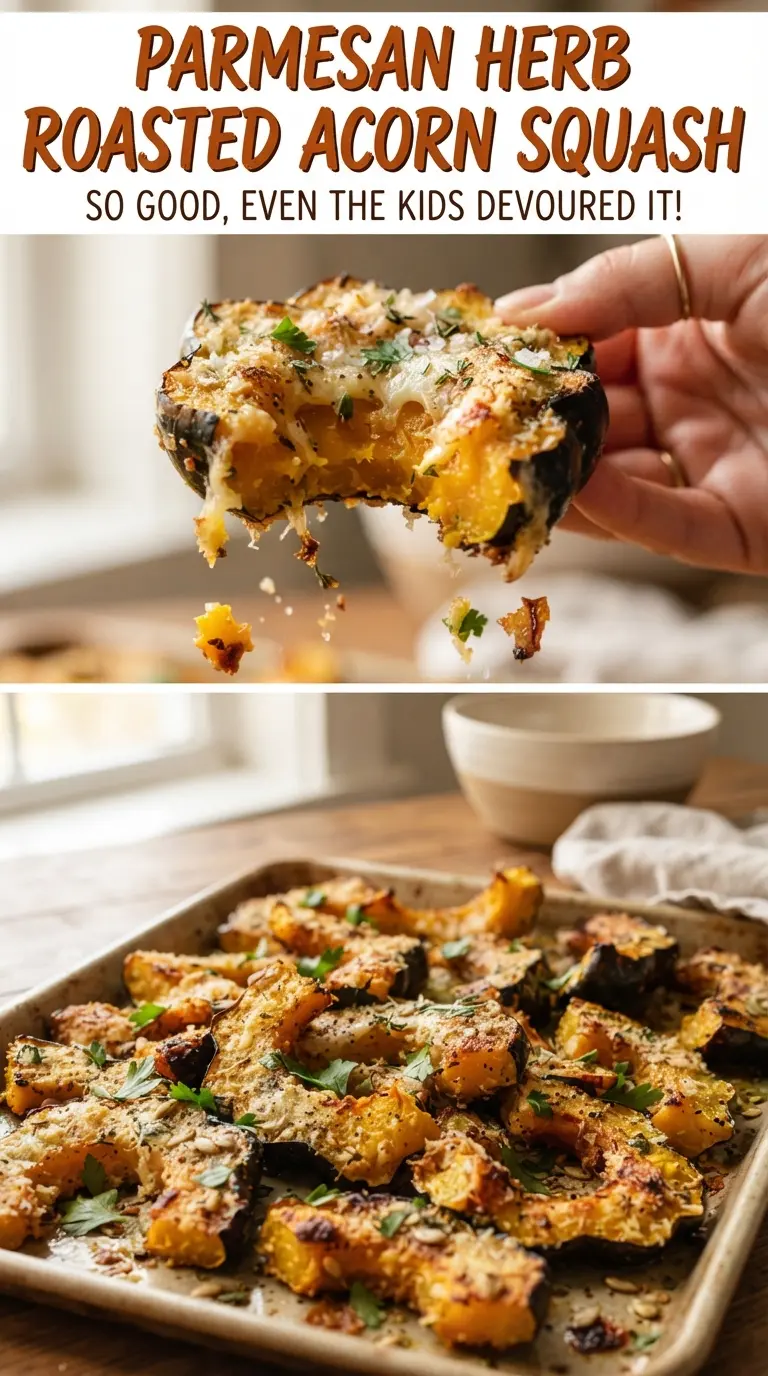
- Acorn squash — The natural sweetness turns deep and nutty in the oven, and the ring shape gives you more browned surface than wedges would. Slice it into even 1/2-inch rings so everything finishes at the same time.
- Olive oil — This helps the herbs adhere and promotes browning on the cut edges. Use enough to lightly coat the squash, not enough to pool on the pan.
- Garlic, thyme, and rosemary — These bring the savory backbone. Fresh herbs taste cleaner and more fragrant here than dried ones; if you need to substitute, use half the amount of dried herbs and crush them between your fingers first.
- Parmesan — Freshly grated Parmesan melts and crisps in a way pre-shredded cheese usually doesn’t because it doesn’t have the same anti-caking coating. If pre-grated is what you have, use a light hand and expect a slightly less even crust.
Roasting the Squash in Two Stages for the Best Crust
Coating the Rings Evenly
Toss the squash with olive oil, garlic, thyme, rosemary, salt, and pepper until every slice looks lightly glossed and speckled with herbs. If the seasoning sits in clumps, those spots can burn before the squash softens. Arrange the rings with a little space between them so hot air can move around the edges.
Letting the First Roast Set the Texture
Roast the squash at 400F for about 20 minutes before touching the cheese. At this point the edges should be taking on color and the centers should be starting to soften, but not collapsing. If your slices are cut thicker than 1/2 inch, they may need a few extra minutes before flipping.
Adding the Parmesan at the Right Moment
Flip the rings, then sprinkle the Parmesan generously over the top. Return the pan to the oven and roast until the cheese is golden and crisp and the squash is tender all the way through. If the cheese is browning too fast, move the pan up one rack or lower the oven temperature by 25 degrees for the last few minutes.
Serving While the Crust Is Still Crisp
Let the squash rest for a minute or two after it comes out of the oven so the cheese can set slightly. Serve it warm, while the crust still has that brittle edge. If it sits too long on the pan, trapped steam will soften the Parmesan, so get it onto a platter instead of leaving it in the hot sheet pan.
How to Adapt This for a Bigger Table or a Different Diet
Dairy-Free Version with a Savory Crumb Topping
Swap the Parmesan for a mix of seasoned breadcrumbs and a little nutritional yeast if you want that savory, toasty finish without dairy. The topping won’t melt into a crust the same way, but it will still brown nicely and add a pleasant crunch.
Gluten-Free and Naturally Vegetarian as Written
This recipe is already gluten-free and vegetarian, which makes it an easy side for mixed-diet dinners. Just check that your Parmesan is made with vegetarian rennet if that matters for your table.
Using Butternut Squash Instead
Butternut squash works, but the texture will be a little denser and sweeter. Cut it into similar-sized slices so it roasts evenly, and watch the timing closely because thinner cuts can soften faster than acorn squash rings.
Making It Ahead for a Holiday Table
You can slice and season the squash a few hours ahead, then roast just before serving. If you fully cook it ahead, the Parmesan crust will soften on reheating, so it’s better to do the final bake at the last minute.
Storage and Reheating
- Refrigerator: Store leftovers in an airtight container for up to 3 days. The Parmesan will lose some crunch, but the flavor stays good.
- Freezer: I don’t recommend freezing this one. The squash turns watery when thawed and the cheese crust won’t stay crisp.
- Reheating: Warm on a sheet pan in a 375F oven until heated through. The oven brings back some of the crust; the microwave softens everything and makes the cheese greasy.
Answers to the Questions Worth Asking
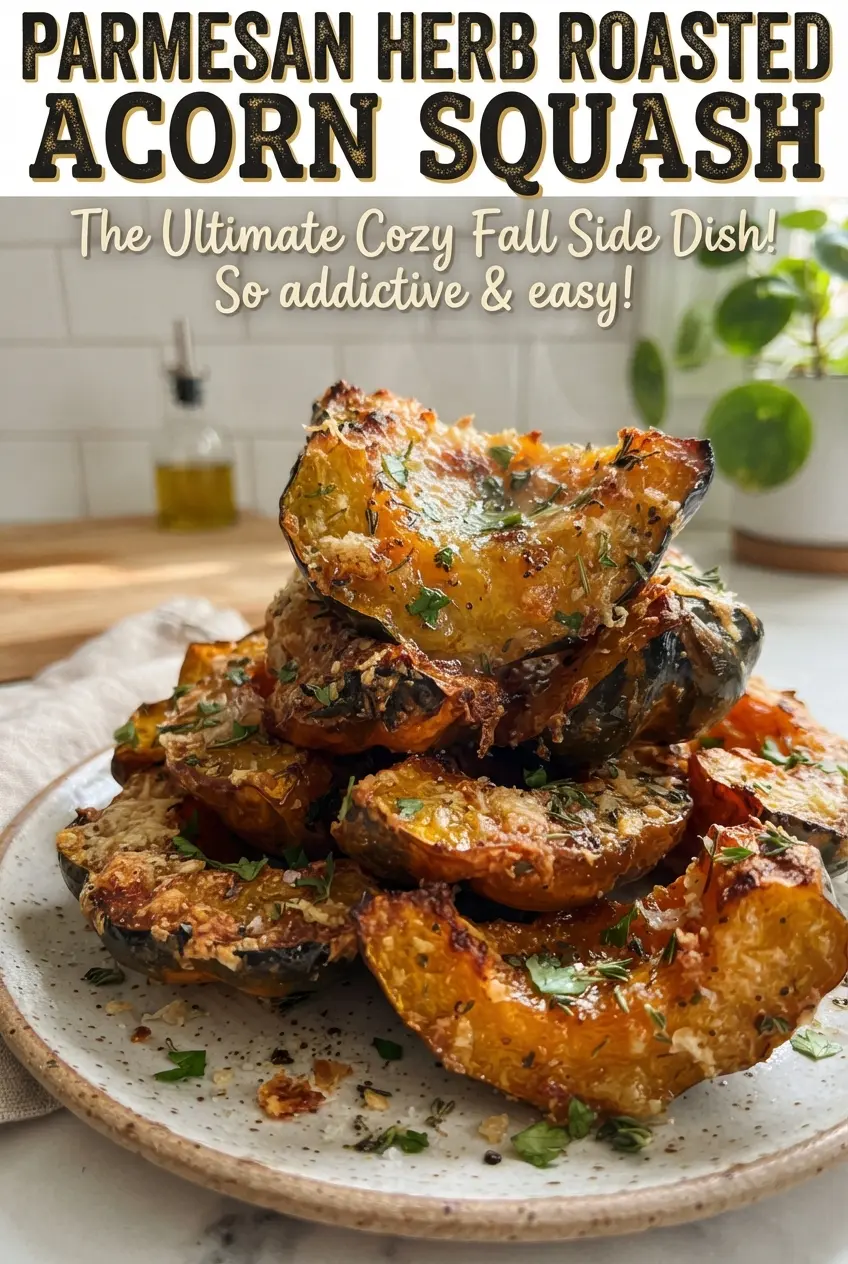
Parmesan Herb Roasted Acorn Squash
Ingredients
Equipment
Method
- Preheat oven to 400F and line a sheet pan with parchment, creating a nonstick roasting surface and preventing sticking.
- Toss the acorn squash rings with olive oil, garlic, thyme leaves, rosemary, salt, and black pepper until evenly coated.
- Arrange squash in a single layer on the sheet pan and roast for 20 minutes until the edges begin to caramelize.
- Flip the slices and sprinkle generously with grated Parmesan so it adheres to the hot surface.
- Roast 12-15 minutes more at 400F until the squash is tender and the Parmesan is golden and crisp.


