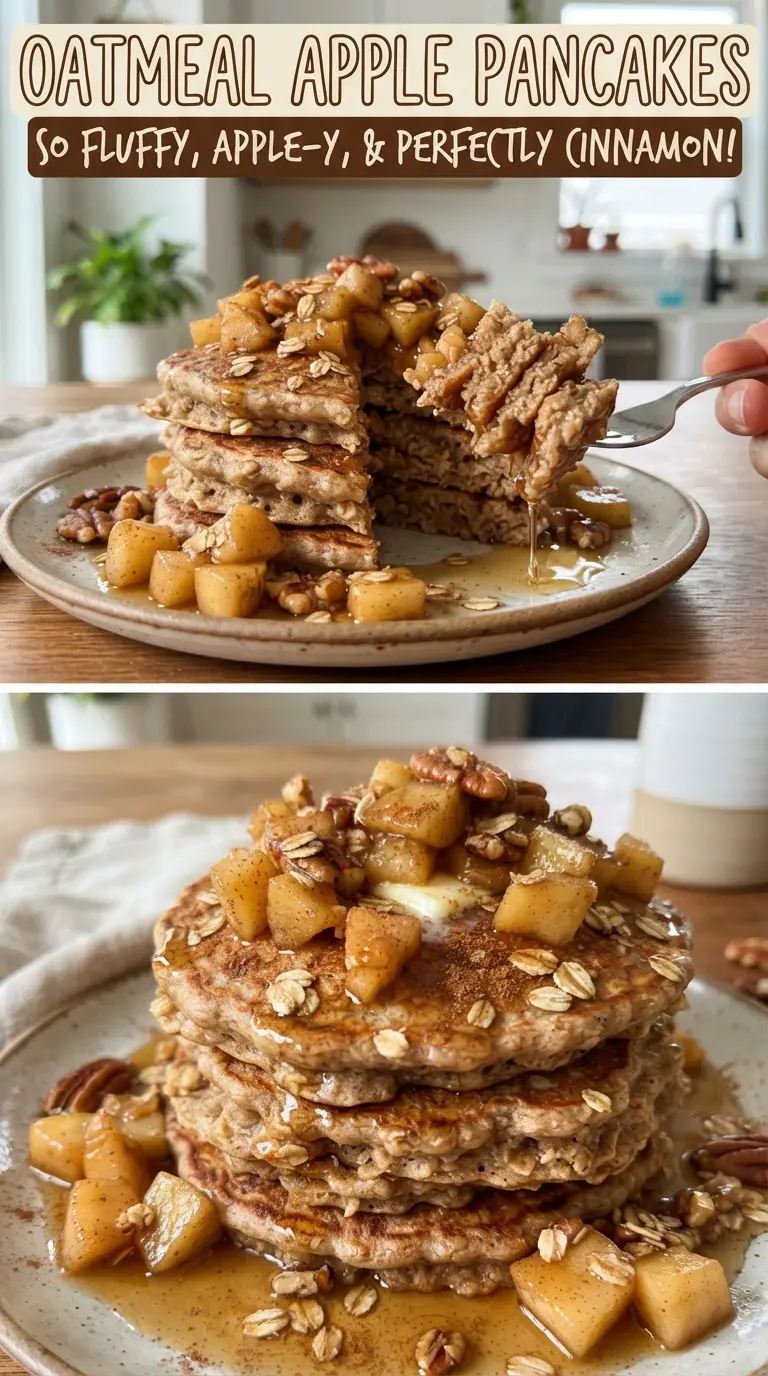
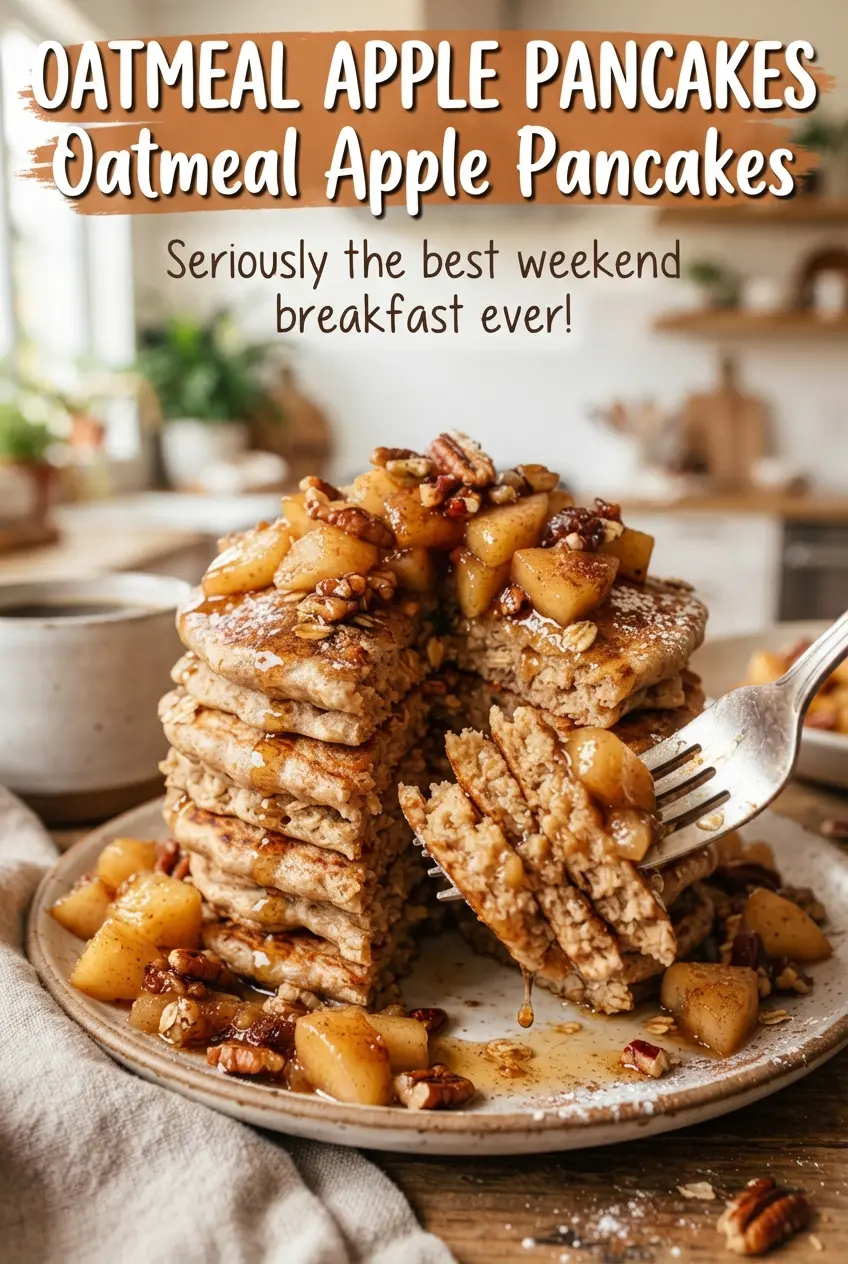
Oatmeal apple pancakes come off the griddle with crisp, golden edges, a tender middle, and little pockets of softened apple in every bite. The oats give them a heartier chew than standard pancakes, but they still stay light enough to stack high and soak up maple syrup without falling apart. They’re the kind of breakfast that feels a little more substantial than the usual weekend flapjack, without asking for any fussy steps.
The trick is keeping the oats coarse instead of grinding them into flour. That gives the batter texture and prevents the pancakes from turning pasty. The apple goes in at the end, after the wet and dry ingredients are just combined, so it doesn’t leak too much moisture into the batter. A short rest helps the oats hydrate and gives the baking powder time to wake up, which is what makes these pancakes cook up fluffy instead of dense.
Below, I’ll walk you through the one step that changes the texture the most, plus the best apple choices and a few smart swaps if you need them. If you’ve ever had apple pancakes turn gummy or flat, the notes here will help you avoid both.
The oats gave these such a nice texture, and the grated apple melted right into the batter without making them soggy. Mine browned evenly in about 3 minutes per side and held up beautifully with maple syrup.
Save these oatmeal apple pancakes for a breakfast with crisp edges, tender oats, and caramelized apple in every stack.
The Reason These Pancakes Stay Tender Instead of Gummy
The two places these pancakes usually go wrong are the oats and the apple. If you grind the oats too fine, you lose the texture that makes them different from standard pancakes, and the batter starts acting like a heavy flour mix. If you skip the rest, the oats stay dry and the pancakes can taste flat in the center even when the outside looks done.
The apple matters too. Grated apple melts into the batter and gives you more even moisture, while finely diced apple gives distinct bites of fruit. Both work, but they behave differently on the pan. The biggest mistake is adding too much fruit or overmixing after it goes in; that’s how you end up with batter that turns dense and wet before it ever hits the skillet.
- Rolled oats — Pulse them just 5 to 6 times. You want broken oats, not oat flour, because the coarse bits help the pancakes stay fluffy and keep a little chew.
- Buttermilk — This gives the pancakes lift and a subtle tang that balances the apple and cinnamon. Regular milk works in a pinch, but the texture is less tender and the flavor is flatter.
- Apples — A firm, sweet-tart apple like Honeycrisp, Fuji, or Granny Smith holds its shape best. Softer apples can disappear into the batter and make the pancakes wetter.
- Brown sugar — It does more than sweeten. It adds a little moisture and helps the edges brown with that light caramel note that works so well with the fruit.
What Each Part of the Batter Is Doing
- Rolled oats bring the hearty texture. They also absorb liquid as the batter rests, which is why that 5-minute pause changes the final crumb.
- Flour gives the pancakes enough structure to hold the apples without falling apart. All-purpose flour is the right choice here because it keeps the pancakes light.
- Baking powder and baking soda work together for lift. The baking powder provides steady rise, while the baking soda reacts with the buttermilk for a little extra browning and tenderness.
- Cinnamon and nutmeg give warmth without overpowering the apples. Nutmeg is stronger than it looks on paper, so keep it at the small amount listed.
- Butter and eggs carry the richness. The butter keeps the pancakes from tasting dry, and the eggs help the batter set cleanly when you flip it.
- Vanilla rounds out the apple and spice. It doesn’t read as a separate flavor, but you’d miss it if it were gone.
Getting the Batter and Griddle in Sync
Pulsing the Oats
Start by pulsing the oats until they look coarsely chopped, with some pieces smaller than others. Stop before they turn into a powder, because that rough texture is what makes these pancakes taste homemade instead of bland and mealy. If your food processor runs hot, pulse in short bursts so the oats don’t start to warm and clump.
Mixing Without Beating the Batter
Whisk the dry ingredients together first, then add the buttermilk mixture and stir only until no dry flour streaks remain. A few lumps are fine and better than overmixing, since stirring too long develops gluten and makes the pancakes tough. Fold in the apple last so it stays evenly distributed instead of getting smashed into the batter.
Letting the Batter Rest
Five minutes is enough for the oats to hydrate and the leavening to get going. You’ll notice the batter thicken slightly, which is exactly what you want. If it seems too thick after resting, loosen it with a spoonful of buttermilk rather than adding a splash of water, which will thin the flavor too much.
Cooking Until the Center Sets
Use medium heat, not high. High heat browns the outside before the oats and apple cook through, and then the middle stays damp. Pour about 1/3 cup per pancake and wait for bubbles to form across the top and the edges to look set and slightly dry before flipping; that’s the signal that the pancake will turn cleanly and finish evenly on the second side.
Ways to Change the Flavor Without Losing the Texture
Dairy-Free Version
Swap the buttermilk for unsweetened almond milk or oat milk mixed with 1 tablespoon lemon juice or vinegar, then let it sit for 5 minutes before using. The pancakes will still rise and brown well, though they’ll taste a little less rich than the buttermilk version.
Gluten-Free Adjustment
Use a good 1:1 gluten-free flour blend in place of the all-purpose flour. The pancakes will still work, but they may need an extra minute on the first side because gluten-free batters often set a little more slowly.
Grated Apple for a Softer Bite
Grate the apple if you want it to disappear more into the pancake. That gives you a softer texture and more even apple flavor in every bite, while diced apple leaves more distinct fruit pieces and a little more bite.
Storage and Reheating
- Refrigerator: Store cooked pancakes in an airtight container for up to 3 days. They’ll soften slightly as they sit, especially around the apple pieces.
- Freezer: These freeze well. Freeze in a single layer, then stack with parchment between layers and seal tightly for up to 2 months.
- Reheating: Warm them in a toaster or a 325°F oven until heated through. The mistake to avoid is microwaving too long, which turns the oats rubbery and makes the apple bits watery.
Answers to the Questions Worth Asking
Oatmeal Apple Pancakes
Ingredients
Equipment
Method
- Pulse rolled oats in a food processor 5-6 times until coarsely ground; do not make a fine flour.
- Combine ground oats with all-purpose flour, brown sugar, baking powder, baking soda, cinnamon, nutmeg, and salt.
- Whisk buttermilk, eggs, melted unsalted butter, and vanilla extract, then fold into the dry ingredients until just combined.
- Fold in the peeled apple, then rest the batter 5 minutes so it thickens slightly.
- Heat a griddle or cast iron skillet over medium heat and grease lightly.
- Pour 1/3 cup batter per pancake and cook until bubbles form and edges look set, about 3 minutes.
- Flip and cook 2 more minutes until golden.
- Serve pancakes with maple syrup, extra apple slices, and a dusting of powdered sugar.


