Mustard potato salad lands on the table with that unmistakable tangy bite that makes people go back for a second spoonful before they’ve finished the first. The potatoes stay tender but intact, the dressing clings instead of sliding off, and the yellow mustard keeps the whole bowl bright instead of heavy. It’s the kind of side dish that wakes up grilled meats, sandwiches, and anything else sitting beside it.
The balance matters here. Yukon gold potatoes hold their shape better than waxy potatoes that turn crumbly or starchy varieties that fall apart, and the mix of mayonnaise with yellow mustard and a little Dijon gives you both the classic color and a deeper, sharper finish. The vinegar and sugar don’t make it sweet; they keep the dressing from tasting flat once it chills.
Below you’ll find the one chill time that makes the dressing settle into the potatoes instead of sitting on top, plus a few easy ways to adjust the salad if you want it creamier, sharper, or more egg-heavy.
The mustard flavor came through without being harsh, and chilling it for two hours made the dressing thicken up perfectly. The potatoes held their shape and the eggs gave it that classic deli-style texture we were after.
Creamy mustard potato salad with that tangy yellow dressing is the kind of side dish worth keeping close.
The Chilling Step That Keeps the Dressing From Turning Watery
Potato salad goes wrong when the potatoes are dressed while still steaming hot or the bowl gets rushed to the table before the flavors settle. Hot potatoes soak up some dressing, then release moisture as they cool, and that’s when you end up with a loose, thin sauce instead of a creamy coating. Letting the salad rest for two hours gives the mayonnaise time to cling and the mustard time to mellow into the potatoes without losing its bite.
Another thing that matters here is the cut. Cubes that are too small break apart when you toss them, while oversized chunks stay bland in the middle. Aim for pieces that are all about the same size so they cook at the same pace and hold together when the dressing goes in.
What the Mustards, Mayo, and Vinegar Are Each Doing Here
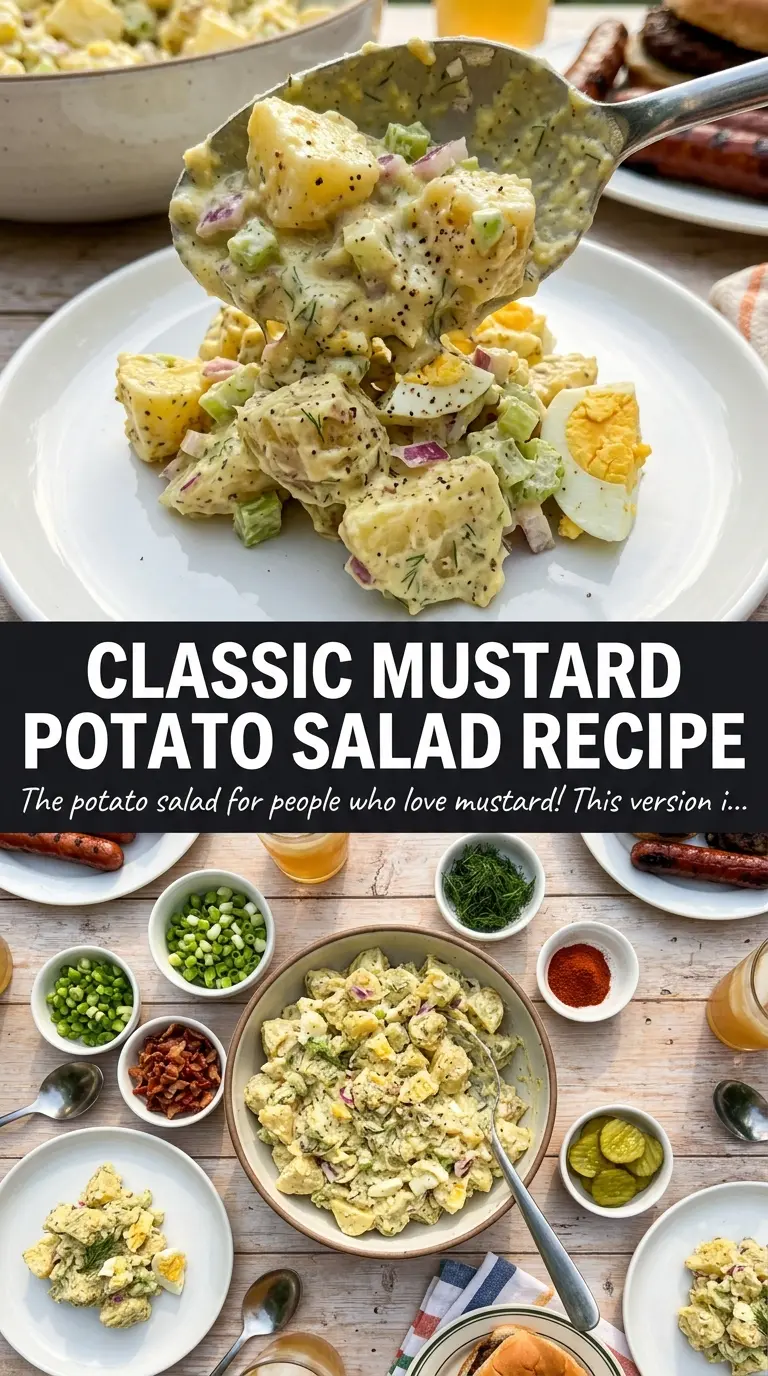
- Yellow mustard — This is the flavor and color you notice first. It gives the salad that classic deli-style sharpness, and there isn’t a substitute that brings the same bright, familiar taste. If you want a milder salad, reduce it slightly rather than replacing it.
- Dijon mustard — Dijon adds depth and a little heat that yellow mustard doesn’t have on its own. It keeps the dressing from tasting one-note. Stone-ground mustard works if that’s what you have, but the finish will be grainier and a little less smooth.
- Mayonnaise — Mayo is the base that helps the dressing coat the potatoes instead of pooling in the bowl. Use a good-quality mayo here because it’s carrying most of the texture. If you’re using a lighter mayo, expect a thinner dressing.
- White vinegar — The vinegar sharpens everything and keeps the salad from tasting heavy after chilling. Apple cider vinegar works in a pinch, but it brings a softer, fruitier edge. White vinegar keeps the flavor clean and classic.
- Yukon gold potatoes — These hold their shape and stay creamy inside without turning gummy. Russets break down too easily for this style of salad. If Yukon golds aren’t available, red potatoes are the next best choice, though they’ll be a bit firmer.
Building the Salad So the Potatoes Stay Whole
Cooking the Potatoes Just Until Tender
Start the potatoes in salted water and cook them until a fork slides in without resistance, but the pieces still feel firm enough to pick up without crumbling. If you boil them until they’re falling apart in the pot, they’ll disintegrate when you toss in the dressing. Drain them well and let the steam escape before mixing anything in.
Mixing the Dressing Before the Potatoes Go In
Whisk the mayonnaise, yellow mustard, Dijon, vinegar, sugar, salt, and pepper in a large bowl first. That gives you a smooth, balanced dressing instead of streaks of mustard trapped in the potatoes. If the dressing tastes a little sharp now, that’s fine; the chill time softens it.
Folding, Not Smashing
Add the potatoes, celery, onion, and eggs, then pour the dressing over the top and toss gently with a wide spoon or spatula. The goal is to coat every piece without breaking the potatoes into mash. If the salad looks dry right away, wait a few minutes before adding more dressing; the potatoes will absorb some of it as they sit.
Letting the Flavor Settle in the Fridge
Cover the bowl and chill the salad for at least two hours before serving. This is when the mustard flavor mellows, the dressing thickens, and the whole bowl starts tasting like one dish instead of separate ingredients. Give it one final stir before serving and check the seasoning, because cold food always needs a little more salt and pepper than it did at the start.
How to Adjust This Salad for Different Tables
Make It More Tangy
Add another teaspoon or two of vinegar and a little more yellow mustard. The salad will taste brighter and less creamy, which works well if it’s serving alongside rich mains like barbecue or fried chicken.
Egg-Free Version
Leave out the hard-boiled eggs and add a little extra diced celery for crunch. You lose some of that classic picnic texture, but the salad still holds together well because the dressing is doing the heavy lifting.
Dairy-Free and Gluten-Free Friendly
This recipe is naturally gluten-free as written, so the main swap is only for the mayonnaise if you need a dairy-free or egg-free-style condiment base for a different diet. Use your preferred egg-free mayo and keep the rest of the dressing the same; the texture will be slightly lighter but still creamy.
Storage and Reheating
- Refrigerator: Store covered for up to 4 days. The dressing thickens as it sits, and the potatoes may soften a little on day two.
- Freezer: Don’t freeze it. Mayo-based potato salad turns grainy and watery after thawing.
- Reheating: Serve it cold or let it sit at room temperature for 15 to 20 minutes before serving. Don’t heat it, or the dressing will separate and the potatoes will go mealy.
Answers to the Questions Worth Asking
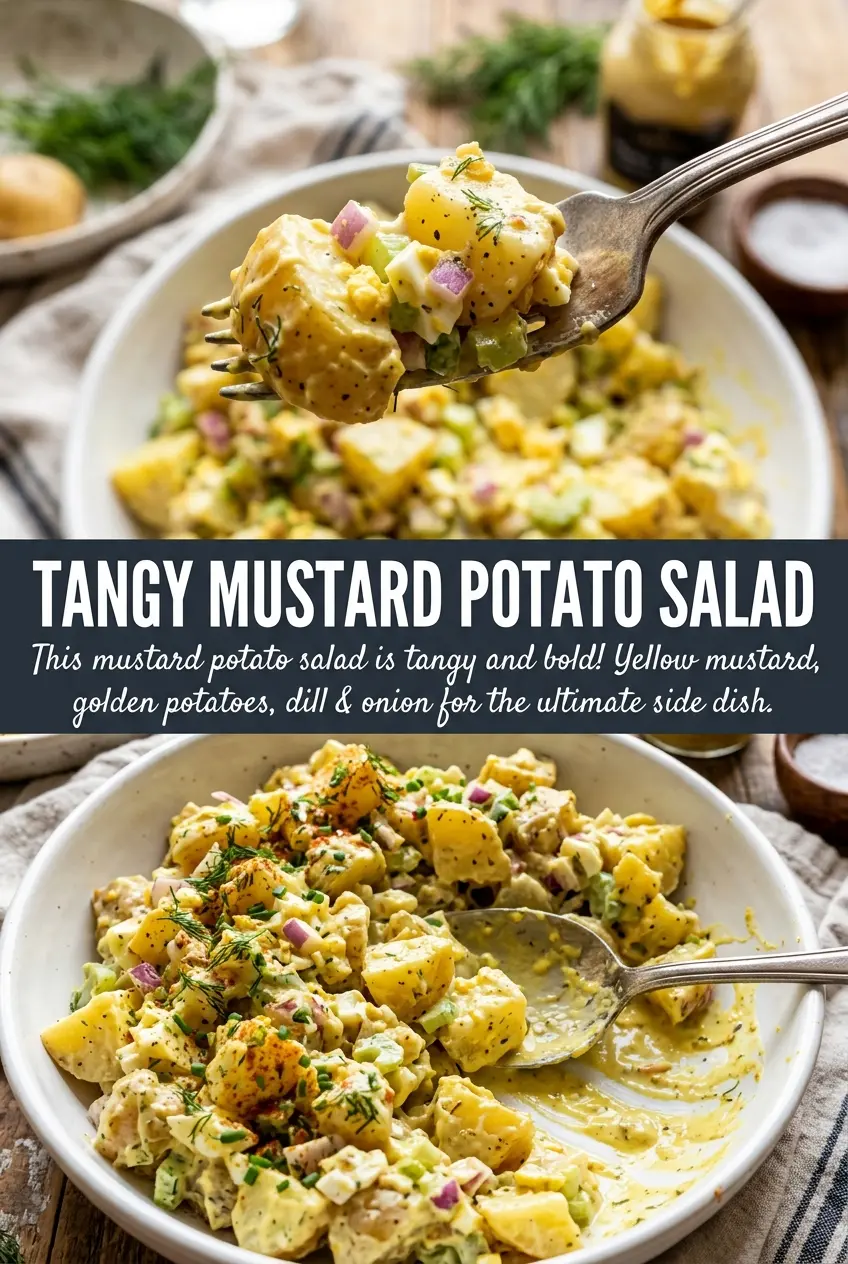
Mustard Potato Salad
Ingredients
Equipment
Method
- Bring a pot of water to a boil in a Dutch oven, then add the cubed Yukon gold potatoes and cook until tender, about 10-12 minutes, with a steady simmer and fork-tender cue. Drain the potatoes and cool them completely so they don’t break or thin the dressing.
- Mix mayonnaise, yellow mustard, Dijon mustard, white vinegar, sugar, salt, and pepper in a bowl until smooth and glossy, with no mustard streaks left behind.
- Add the cooled potatoes, celery, onion, and chopped hard-boiled eggs to the bowl, then toss gently just until everything is evenly distributed, with vegetables visible throughout.
- Pour the mustard dressing over the potato mixture and toss well until all pieces look coated, with a uniform yellow tint.
- Cover and refrigerate for 2 hours (chilling) before serving so the potatoes absorb flavor, with the salad looking thicker and more set after resting.